





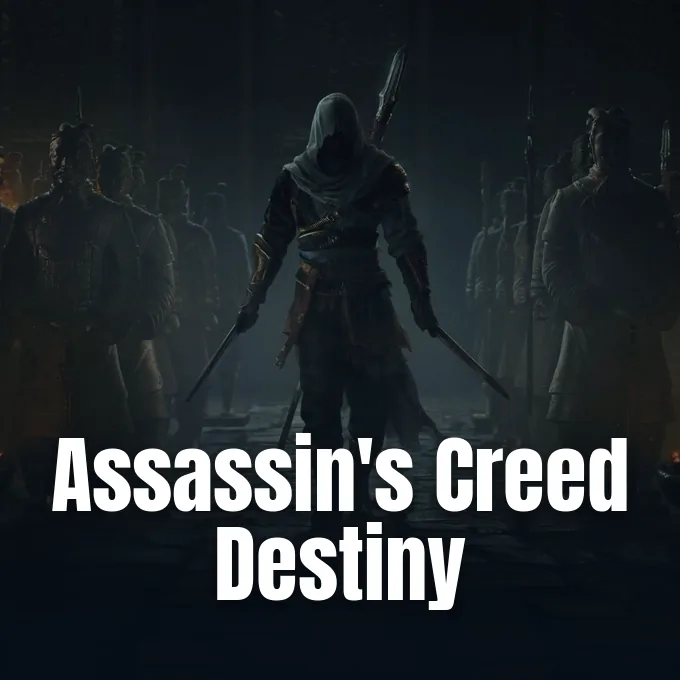
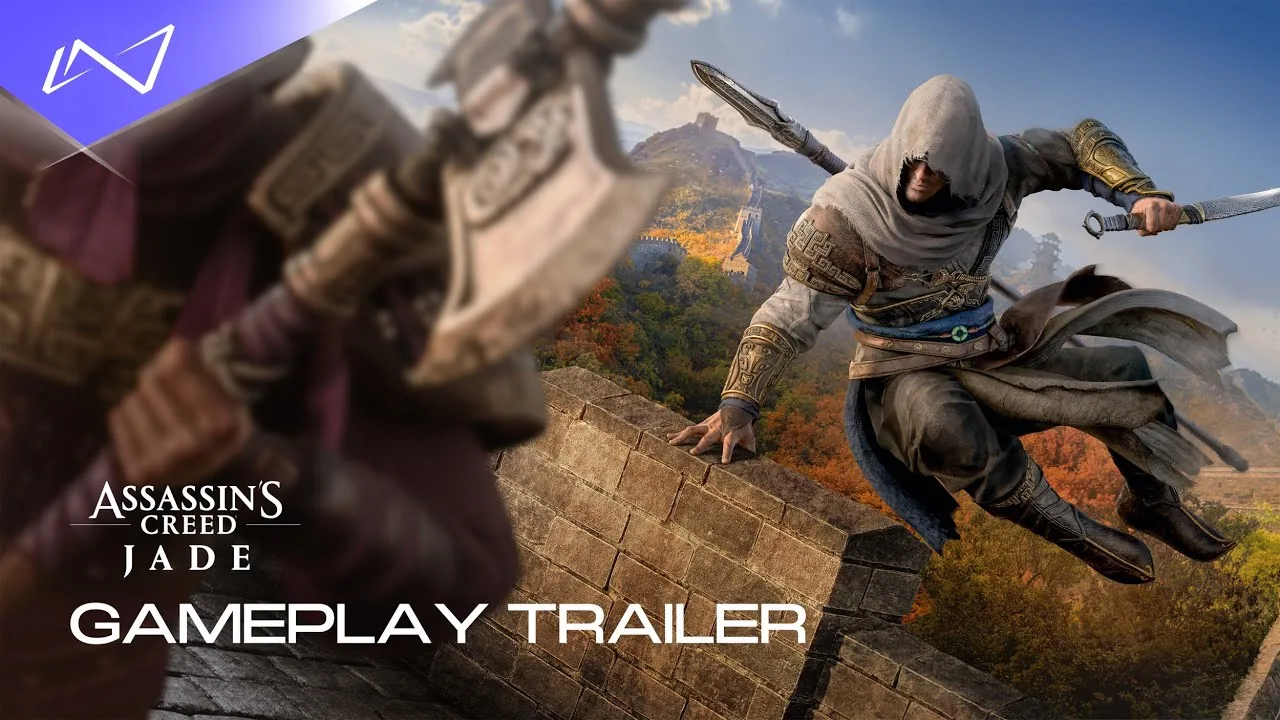
Gaming outlet MP1st uncovered video clips and test images from developer portfolios showing Assassin’s Creed Destiny, a cancelled open-world game built for PlayStation 5, Xbox Series X, and PC [2]. TiMi Studio Group headed work with Ubisoft before company heads quietly pulled the plug [1]. While mobile spin-off Assassin’s Creed Jade moves ahead in slow development, Destiny was meant to bring big-budget stealth action back to ancient China [3].
Uncovering the Assassin’s Creed Destiny Prototype
The leaked assets surfaced through online portfolios of developers who worked on Destiny before its quiet cancellation [5]. Joelle Daniels of GamingBolt reported that early video clips trace back to a test build assembled in February 2025, showing an open-world action framework aimed at PlayStation 5, Xbox Series X, and PC [1]. It wasn’t a small test. Instead, TiMi built expansive environments with full-scale architectural assets designed specifically for PlayStation and Xbox hardware [3]. The clips show that Destiny reached an advanced prototyping phase before studio heads decided to halt further work [1]. Footage shows the assassin exploring fortified courtyards, scaling watchtowers, and using vertical level layouts designed to give players multiple infiltration routes [3].
Opening scenes introduce the core story premise through on-screen text. Players take control of an assassin breaking into a heavily defended sacred palace to secure a mysterious artifact before warlord Xiang Yu and his invading army reach the inner sanctum [1].
Mission text indicates that warlord Xiang Yu may be working as an agent for the Templars, making his capture of the relic a catastrophic threat to the assassin brotherhood fighting to protect the dynasty. Tencent partnered with Ubisoft on the build. The video follows the hero scaling high palace walls while artillery barrages crash into stone ramparts during an ongoing siege. The assassin dispatches a guard, leaps from a wooden beam, and fights off Qin sentries before the entire palace burns to the ground [1].
Setting the Action in Ancient China
Destiny unfolds during 206 BCE. That turbulent era marked the collapse of the Qin dynasty and the rise of the Han dynasty following a brutal civil war in China [2]. That timeline puts the story roughly nine years after the narrative of Assassin’s Creed Jade, which takes place in 215 BCE [1]. Liu Bang later founded the Han dynasty [2].
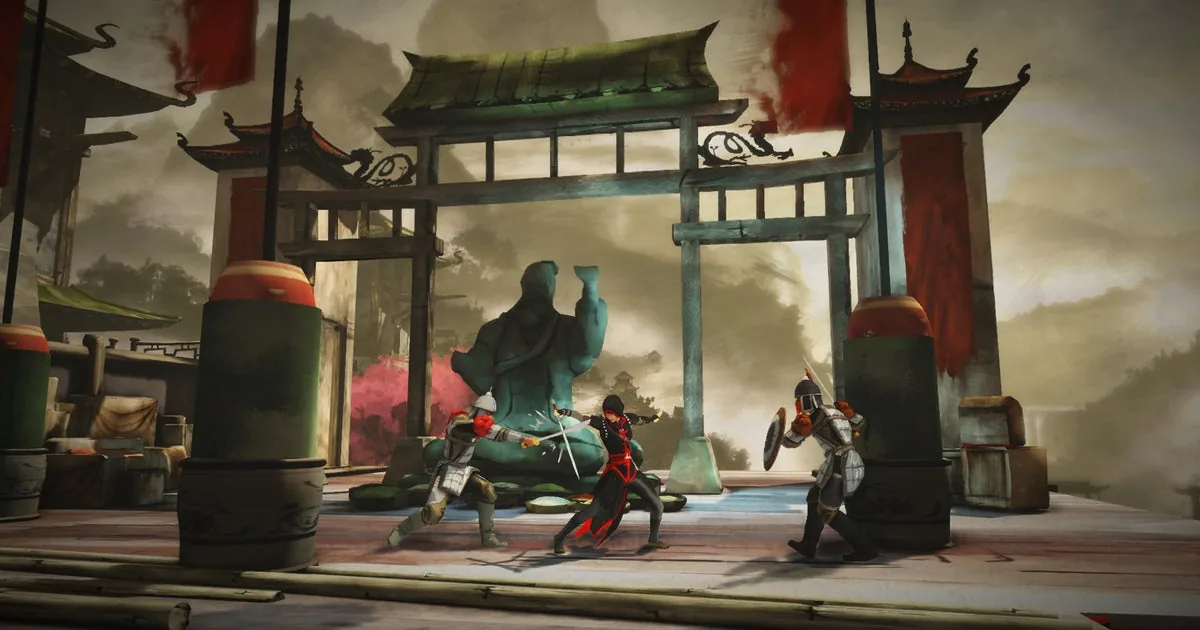
Ubisoft previously visited imperial China in the 2015 side-scrolling platformer Assassin’s Creed Chronicles: China, where Ezio-trained assassin Shao Jun fought enemies across the Ming dynasty [4]. Anthony McGlynn of GamesRadar+ noted that Destiny offered a much earlier setting, trading 16th-century intrigue for ancient dynastic clashes [3]. Kirk McKeand of IGN reported that the plot focused on the rise of Liu Bang as he fought against rival warlords to unite the empire [2]. Similar production shifts have reshaped other major game franchises over the years, just as the Western release of Ace Combat 3 lost its campaign and narrative depth during international localization decisions [4].
Classical Chinese art heavily inspired the visual design of the user interface [2]. Health bars featured yin-yang icons. Skill icons displayed flowing black ink-brush strokes rather than standard digital gauges [5]. Developers wanted the look to feel firmly rooted in classical imagery rather than generic fantasy styling [2].

Testing Assassin’s Creed Destiny Combat Systems
Beyond standard stealth takedowns, the leaked greybox testing clips revealed an unusual tool in the assassin’s arsenal [5]. Alessio Palumbo of Wccftech reported that the hero could wield a spinning umbrella weapon that doubled as an offensive blade and a shield against incoming enemy strikes [1]. In test animations, the hero spins the umbrella to deflect arrows and spear thrusts before slicing through groups of palace guards [5]. It offered a fresh combat rhythm. Players gained a versatile option for both close-range duels and crowd defense. Close-quarters combat also featured weighty sword and spear animations that felt punchier than typical mobile combat systems [3].
In addition to standard sentry encounters, the prototype included early development frames for a boss battle against warlord Xiang Yu himself [5]. The combat sandbox tested fluid transitions between rooftop parkour and ground skirmishes, letting players slip into shadows when heavily armed reinforcements arrived [3]. Warlord Xiang Yu leads the invading troops in the sequence [1].
Developer reels also showcased both male and female character models performing assassinations and wall-running sequences [2]. That detail suggests players might have had the choice to select their assassin’s gender at the start of the adventure. Alternatively, the game may have planned a dual-protagonist structure similar to Assassin’s Creed Shadows, switching between two different leads through the campaign [5]. TiMi didn’t clarify that feature before cancellation, leaving the exact character setup unconfirmed [2]. Swordplay emphasized parries, dodges, and swift counterattacks designed to keep enemy mobs at bay during high-stakes palace infiltrations [5].
Restructuring Shifts at TiMi Studio Group
The cancellation of Destiny stemmed from internal reorganization at TiMi Studio Group in January 2025 [1]. Mark Warren of Rock Paper Shotgun reported that Tencent decided to scale back partnerships based on Western intellectual properties to avoid paying chunky royalty fees to foreign publishers like Ubisoft. Tencent refocused on domestic games [4].
Instead of paying licensing fees, Tencent chose to focus its production budgets on wholly owned gaming brands where it doesn’t have to share earnings with external license holders [4]. Destiny wasn’t the only casualty of this strategic pullback at TiMi. Reports from MP1st revealed that TiMi also scrapped an action game based on Greek mythology codenamed Athena. Another high-profile cancellation was Invictus, an open-world cyberpunk project led by Ashraf Ismail, a former game director on Assassin’s Creed Valhalla. These simultaneous cancellations show how quickly Tencent shifted its corporate priorities away from large-scale licensed productions during that early 2025 reshuffle [1].
The corporate partnership between Ubisoft and Tencent remains complex. Tencent holds a 25% stake in Vantage Studios, the corporate entity that oversees key Ubisoft franchises [2]. While Destiny was terminated, both companies continue to cooperate on mobile platforms where microtransactions offer stronger financial returns [1]. Tencent executives decided that licensing big-budget console games simply didn’t fit their long-term profit calculations [4].
Future Direction of the Franchise
While Destiny was scrapped, Ubisoft is still moving forward with mobile title Assassin’s Creed Jade with Tencent and publisher Level Infinite. First announced in 2022, Jade faced internal delays that pushed its launch past initial estimates, leaving it without a confirmed release date [1]. Ubisoft head of content Jean Guesdon last mentioned Jade during a franchise update in March, assuring fans that work on the title continues behind closed doors [4]. Ubisoft also made major leadership changes on upcoming flagship game Assassin’s Creed Hexe. Game director Benoit Richer recently left Hexe, following the earlier departure of creative director Clint Hocking [2].
Those departures triggered a broader internal reorganization that saw Guesdon step into his overarching leadership role. Development reports also indicate that the development team chose to rework Hexe by stripping out supernatural and magical abilities from its combat framework, steering Hexe back toward grounded historical mystery. Ubisoft appointed Jean Guesdon as Head of Content [2].
According to leaks from Ubisoft leaker Rogue, Hexe’s story takes place during the Würzburg witch trials between 1625 and 1631. The leak names the protagonist as Anika, identifying her as Claudia Auditore’s descendant while linking the lineage back to Ezio Auditore. The report adds that an aged version of Ezio may appear as a mentor figure, with the game currently targeting a launch window around June 2027 [5]. Fans hoping for a full-scale console journey in ancient China, however, will have to wait much longer, as Ubisoft has not greenlit any other Chinese-set games for modern consoles [3].
- ONLINE NEWS Daniels, J. (2026, October 16). Another Assassin’s Creed Game Set in Qin Dynasty China Has Been Secretly Canceled – Rumor. GamingBolt. [Article Link]
- ONLINE NEWS McKeand, K. (2026, October 16). Apparent Leaked Footage Shows Canceled Assassin’s Creed Game Set in Qin Dynasty China. IGN. [Article Link]
- ONLINE NEWS McGlynn, A. (2026, October 16). We finally get to see the canceled Assassin’s Creed game set in China, and darn it, it looks pretty good. GamesRadar+. [Article Link]
- ONLINE NEWS Warren, M. (2026, October 16). Ubisoft were working on a second Assassin’s Creed game set in Qin Dynasty China, if this allegedly leaked footage is to be believed. Rock Paper Shotgun. [Article Link]
- ONLINE NEWS Palumbo, A. (2026, October 16). Canceled Assassin’s Creed Destiny Footage Shows Leap of Faith and Stealth Kills in Ancient China, Plus an Umbrella-Like Spinning Weapon. Wccftech. [Article Link]


