



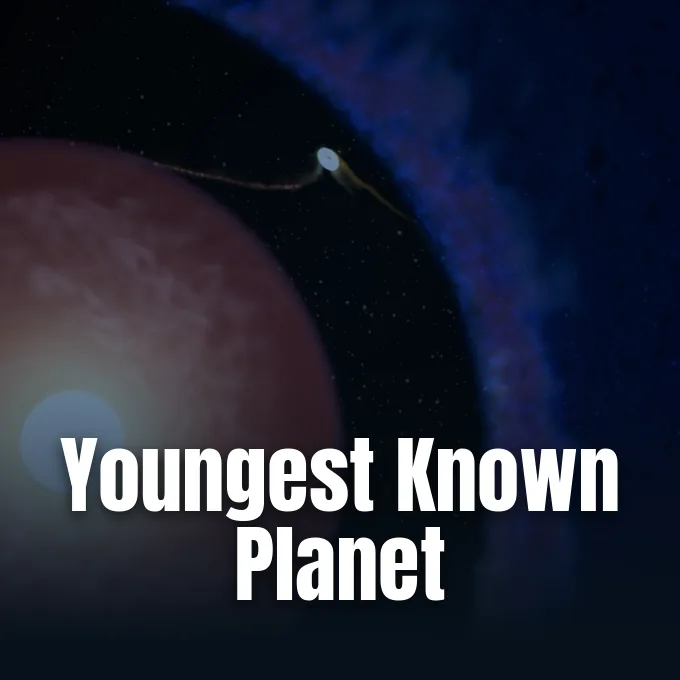
Astronomers analyzing deep infrared archival data have confirmed the discovery of the youngest known planet ever detected in our galaxy [1]. Could an infant gas world really assemble while its parent star is still swaddled in embryonic dust and gas? The newfound exoplanet, designated Elias 2-24 b, is less than a million years old and still whirling inside its natal debris disk roughly 450 light-years from Earth [2].
Shattering Records in Natal Circumstellar Disks
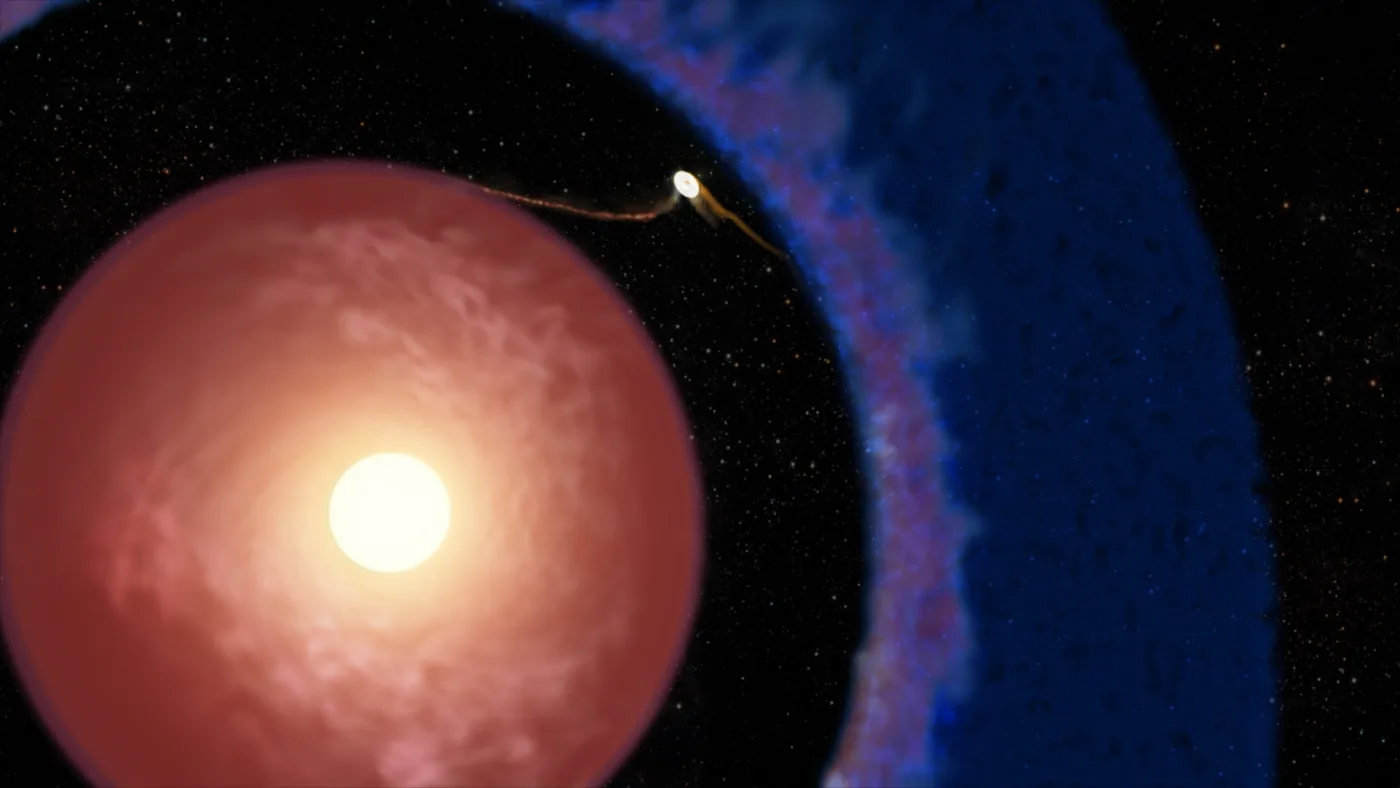
The discovery shatters previous astronomical benchmarks for planetary youth. Prior to this confirmation, the record for the youngest known planetary bodies belonged to a four-way tie shared between two worlds orbiting the star PDS 70 and two planets circling the star WISPIT 2 [2]. All four of those distant worlds exceed 5 million years in age [3]. The record fell quickly. In stark comparison, Elias 2-24 b is under one million years old, existing in a formative epoch where giant planets were previously thought incapable of reaching maturity [1].
Gas still feeds the world. Orbiting within a dense debris disk chock-full of dust, gas, and chunks of ice and rock, the infant world is actively carving out an orbital lane around its host star. Lucas Cieza, a professor at the Instituto de Estudios Astrofísicos in Chile and study co-author, explained that existing theoretical models already struggled to explain the 5-million-year-old worlds around PDS 70 and WISPIT 2. The presence of Elias 2-24 b demonstrates that current simulations are missing vital physical mechanisms [2].
According to the research published by lead author Andrea Bernardi in The Astrophysical Journal Letters, the planet is roughly as massive as Jupiter [1]. The system operates as a cosmic nursery. Because the central star Elias 2-24 is only about 450 light-years away, studying this newborn system offers a time machine of sorts for scientists exploring what our own planetary neighborhood may have looked like billions of years ago [2].
Why Elias 2-24 b Is the Youngest Known Planet
Finding baby worlds remains extraordinarily rare in modern astrophysics [2]. An overwhelming majority of the 6,000 currently confirmed exoplanets across the Milky Way are billions of years old and orbit exceptionally close to their parent stars [3]. Most of these mature alien worlds were cataloged using orbital transits, an indirect detection technique that watches for the periodic dimming of starlight as a planet crosses in front of its stellar host. That transit method fails when nascent worlds are buried deep inside opaque clouds of dust [2].
To overcome this observational barrier, an international team led by Andrea Bernardi, a doctoral candidate at the Universidad Diego Portales in Chile, homed in on archival observations of seven stars observed using the coronagraph at the W. M. Keck Observatory in Hawaii [1]. The facility operates under a cooperative agreement partnering with NASA [2]. By employing the specialized Vortex Coronagraph (an optical instrument designed to mask intense starlight) on the Keck/NIRC2 system, astronomers blocked the overwhelming stellar glare to search for faint, embedded planets [1]. Andrea Bernardi pointed out that forming worlds should reside directly inside cleared gaps because the planets themselves carve those paths [2]. That prediction was confirmed when the team detected the youngest known planet inside the narrow gap of the Elias 2-24 disk [1].
Direct imaging pierced the haze. Archival measurements proved that the glowing point of light was a developing world rather than an imaging defect [1].
How Infant Gas Giants Challenge Formation Theories
How can an infant planet grow so rapidly at such extreme distances from its star? Standard astrophysical frameworks rely on the process of core accretion, where icy and rocky fragments slowly coagulate into a solid core before drawing in surrounding hydrogen and helium gas [1]. Current planetary models predict that it takes about 5 million years to form a Jupiter-size planet at Jupiter’s distance from the Sun. That required timescale lengthens considerably farther out in a circumstellar disk [2].
Yet the glowing dot confirmed by the research team orbits at an incredible 55 times the distance between Earth and the Sun. That orbital radius is just over ten times larger than Jupiter’s orbital separation in our own Solar System [2]. Under existing theoretical timelines, a nascent world under one million years old should not have accumulated enough core mass to carve a massive gap [1]. Lucas Cieza noted that the galaxy continuously churns out stars and planets in every stage of evolution. Astronomers have simply remained blind to these earliest infant phases [2].
Core accretion takes time. The discovery reveals that large planets can assemble far faster than standard simulations ever anticipated [1].


Connecting Decade-Long Clues Across Global Telescopes
The confirmation of Elias 2-24 b resolves an observational mystery that has puzzled astronomers for a decade. About a decade ago, observations from ALMA (the Atacama Large Millimeter/submillimeter Array) in Chile revealed a conspicuous gap in the young star’s dusty disk. Subsequently, the European Southern Observatory’s Very Large Telescope in Chile detected a faint point of light sitting directly inside that gap. At that juncture, researchers debated whether the signal indicated a bona fide planet or a transient clump of warm dust [2].
Archival records solved the puzzle. To verify the candidate, Bernardi and collaborators examined the Keck Observatory Archive, a NASA-funded partnership between the W. M. Keck Observatory and the NASA Exoplanet Science Institute at Caltech/IPAC [2]. The investigators searched the archives for the same faint point of light and successfully retrieved observations from 2018 and 2020 [1]. By stitching these separate epochs together, the team analyzed the object’s orbital motion over time, verifying that its physical trajectory matched a revolving planet rather than an instrumental flaw or stationary background star [2].
Teamwork made the difference. Andrea Bernardi pointed out that while astronomical observatories often function independently, confirming Elias 2-24 b required harmonizing archival measurements from multiple ground-based facilities [2]. Operating at the extreme sensitivity frontier of modern hardware, the collaborative effort validated the youngest known planet [1].

Contrasting Early Planetary Systems with Planet Earth
Examining the embryonic environment around Elias 2-24 provides valuable comparative context for how our own Solar System developed billions of years ago. While astronomers study the gradual evolutionary history that transformed our home planet Earth over geological eons, infant systems show how gas giants command the early architecture of planetary disks. Understanding these developmental pathways helps scientists compare Earth with other rocky worlds, such as Venus as Earth’s sister planet, where divergent atmospheric outcomes created hostile greenhouse conditions [2]. Furthermore, theoretical investigations into the orbital demise of a hypothetical Venusian moon demonstrate how primordial gravitational forces continually reshape planetary environments over time [1]. By studying newborn gas giants, researchers gain a benchmark for the violent beginnings that precede planetary stability [2].
Gas giants act fast. In our Solar System, Jupiter sits roughly five times farther from the Sun than Earth, whereas Elias 2-24 b orbits at 55 times that baseline distance [2]. The vast orbital separation shows that giant planet assembly can succeed in distant, freezing disk reservoirs. The youngest known planet proves that gas giants can gather their envelopes long before the natal disk dissipates [1].
Planet Earth formed much later. Rocky worlds require tens of millions of years to agglomerate, whereas infant gas giants consolidate mass almost immediately [1].
Future Discoveries with the Roman Space Telescope
While the confirmation of Elias 2-24 b marks a monumental breakthrough, astronomers emphasize that current observatories are operating at their detection limits. Lucas Cieza highlighted that modern technology is finally revealing planet formation in action, but telescopes remain largely blind to the broader population of baby worlds [2]. High-contrast imaging across dusty disks requires specialized coronagraphic instrumentation capable of suppressing overwhelming stellar glare [1].
Roman will expand the hunt. That technological horizon will broaden substantially with NASA’s Nancy Grace Roman Space Telescope, which launched on Aug. 30, 2026. Outfitted with an ultra-sensitive coronagraph (a system engineered to achieve unprecedented contrast ratios), Roman will detect young planets that are currently impossible for existing observatories to discern. This cutting-edge platform will allow astrophysicists to explore planets in much tighter orbits around young stars [2].
By employing these advanced imaging capabilities, Roman will search for true Jupiter analogs that currently remain hidden within stellar glare. Because Elias 2-24 b is located about ten times farther out than a true Jupiter analog, Roman will bridge a crucial observational divide. As Lucas Cieza summarized, astronomers are entering a transformative era of discovery where newborn worlds will finally clarify the origins of planetary systems [2].
- ACADEMIC JOURNAL Bernardi, A., Zurlo, A., Cieza, L. A., Ruane, G., Christiaens, V., Dasgupta, A., Guidi, G., Mawet, D., Mesa, D., Pérez, S., & Williams, J. P. (2026). Searching for Embedded Protoplanets with the Keck/NIRC2 Vortex Coronagraph: Confirmation of a Core-accretion Planet in the Narrow Gap of the Elias 2-24 Disk. The Astrophysical Journal Letters, 1009(1), L3. [Article Link]
- ONLINE NEWS Balzer, A. (2026, September 16). Newfound ‘baby’ planet smashes record for youngest known world. Phys.org. [Article Link]
- PRESS RELEASE Balzer, A. (2026, September 16). Newfound ‘Baby’ Planet Smashes Record for Youngest Known World. NASA Science. [Article Link]
APA 7: TWs Editor. (2026, September 17). How the Youngest Known Planet Was Found Around Elias 2-24. PerEXP Teamworks. https://perexpteamworks.com/en/youngest-known-planet-elias/


1 comment