






In late April 2026, asteroid 2026 QQ8 crossed into Earth’s gravitational domain, becoming our planet’s newest temporary mini-moon. Hungarian astronomer Krisztián Sárneczky detected the faint object months later on August 20, prompting sky surveys to reconstruct its orbital path. The Minor Planet Center confirmed that the tiny space rock entered a looping trajectory around Earth that will last through December before solar gravity pulls it back into open space [3].
Discovery by Krisztián Sárneczky
Astronomer Krisztián Sárneczky spotted the dim traveler on August 20 during routine sky monitoring from Hungary. Archival tracking revealed that the object had been orbiting Earth since late spring rather than rushing straight past our planet. The International Astronomical Union’s Minor Planet Center officially designated the body as 2026 QQ8 on October 29. Its diameter spans just one meter [2].
Early orbital back-calculations puzzled researchers who tried to determine when the capture began. Data compiled by observers showed that the space rock entered Earth’s gravitational pull in late April, slipping past undetected for nearly four months before telescopes flagged its coordinates. Because near-Earth objects of this scale reflect very little sunlight, spotting them often depends on favorable viewing angles and lucky timing before they slip away into the sun’s glare. While public interest grew around the discovery, science writer Robert Lea pointed out that the visitor is staying through the holiday season, writing, “Meet QQ8. It’s staying for Christmas!” Observational teams quickly mobilized to collect precise positional data [8].
Astronomers often track small celestial bodies flying near our planet, but only a tiny fraction become gravitationally bound. Most space rocks pass Earth at speeds high enough to escape capture. In contrast, this visitor entered a temporary orbit because its speed matched Earth’s orbital pace [7].

Confirming Asteroid 2026 QQ8 as Natural Rock
Whenever a meter-sized object appears in Earth orbit, astronomers must first rule out discarded human technology. Decades of space exploration have left thousands of spent rocket boosters and retired satellite fragments drifting in cislunar space. Some artificial rocket stages from past space missions have previously returned to Earth orbit, temporarily masquerading as natural satellites before detailed spectral scans exposed their manufactured materials [3].
To settle the origin of the object, astronomers directed powerful ground-based observatories to its path. Targeted observations using the University of Hawaii 2.2-meter telescope on Mauna Kea and the Lowell Discovery Telescope in Arizona gathered key photometric measurements. Observers initially debated the finding, with orbital analyst Tony Dunn writing on social media, “Even the Minor Planet Center isn’t sure. The astronomy community is divided.” By analyzing light curves and velocity profiles, astronomers proved that asteroid 2026 QQ8 is indeed a natural stony body rather than orbiting hardware junk. The Minor Planet Center then officially designated the object as a temporary natural mini-moon [6].
Confirming the natural origin resolved doubts about safety. The space rock poses zero risk to Earth or satellites. At its closest point, the visitor remains about 0.0038 astronomical units away, or roughly 353,000 miles (568,000 kilometers), placing it about 110,000 miles (177,000 kilometers) further out than our regular Moon. Even if the rock entered the atmosphere, it would burn up into a bright shooting star [4].

Crossing the Hill Sphere Boundary
Snagging an asteroid into orbit depends on the Hill sphere, a gravitational zone surrounding our planet. Inside this zone, Earth’s gravity dominates the motion of small bodies against the competing pull of the Sun. Outside the Hill sphere, solar gravity controls orbital trajectories [1].
Most asteroids passing near Earth move too fast to be caught by our gravitational field. They sweep through our neighborhood and continue along heliocentric paths without slowing down. In the case of this asteroid, its path around the Sun matched Earth’s orbital period unusually well. The object takes 359 days, or about 0.98 of an Earth year, to complete one solar circuit. Because its speed relative to Earth remained low, our planet’s gravity was able to seize the rock when it crossed inside the Hill boundary in late April. That delicate balance between velocity and distance allowed Earth to capture the visitor as a temporary companion [2].
Orbital data shows that the asteroid approaches Earth roughly once every decade. It came relatively close in 1965, but stayed outside the Hill sphere and escaped capture. Projections show that another close pass in 2058 will also stay too far away to become a mini-moon [5].


How Asteroid 2026 QQ8 Loops Around Earth
Unlike our permanent Moon, which follows a neat circular orbit, temporary satellites trace erratic loops. Gravitational tugs from both the Sun and Earth pull the small rock in alternating directions. The mini-moon traces a wide, kidney-shaped loop around our planet [1].
Such dynamic gravitational interactions shape small bodies in the solar system, connecting with research on how a Venusian moon might spiral into its host planet under tidal forces. For Earth’s current visitor, tidal effects do not draw the space rock inward into a collision course. Instead, the looping path allows the asteroid to gain energy as solar gravity tugs on it during outer swings. That steady pull alters the orbital path over several months, steadily preparing the body to break free. By late December 2026 or early January 2027, the asteroid will cross back outside the Hill sphere and resume its journey around the Sun. Earth’s grip will simply let go [8].
Once it escapes, the rock will continue orbiting the Sun on an independent track. Its total stay as a mini-moon will span approximately eight to nine months. Astronomers will keep tracking its path to refine orbital models before it departs [3].
Distinguishing Mini-Moons from Quasi-Satellites
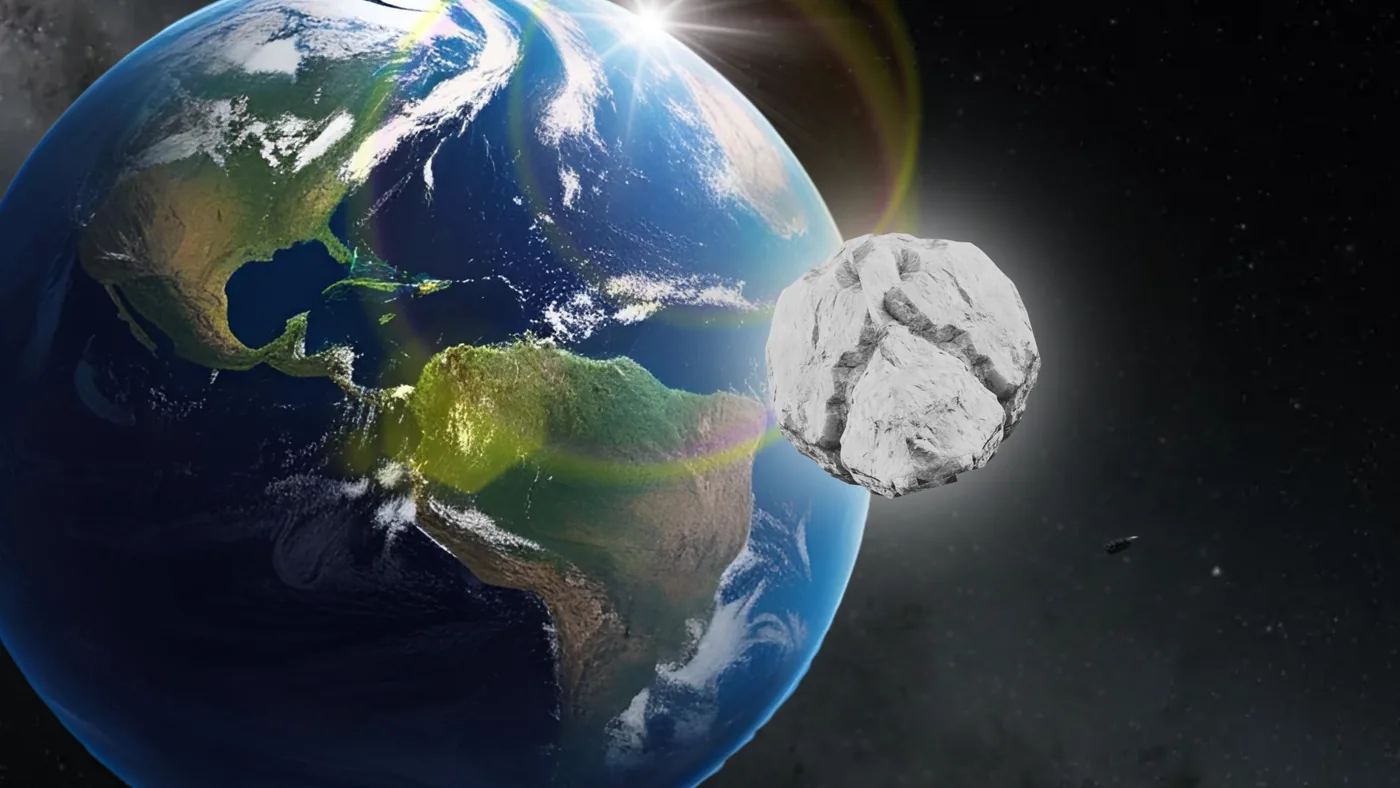
Astronomers separate temporary companions into separate groups based on how they move. A true mini-moon becomes physically bound inside Earth’s gravity well, completing loops around our planet before drifting away. A quasi-moon behaves differently, never becoming captured by Earth at all [5].
Instead of circling Earth, a quasi-moon orbits the Sun along a track that closely mirrors our own. Because the orbits are not identical, the object appears to loop around Earth from our perspective on the ground, shifting so that it sometimes sits ahead of us and sometimes trails behind. In August 2025, the Pan-STARRS observatory on Haleakala in Hawaii discovered the quasi-moon 2025 PN7. Archival data showed that 2025 PN7 has shared our orbit for 60 years and will stay in place for another 60 years. Other known quasi-moons include Cardea and Kamo‘oalewa [6].
Investigating how transient satellites interact with Earth provides context for wider lunar science, including measurements indicating the Moon’s age is older than previously estimated by earlier geological studies. Unlike our ancient natural satellite, mini-moons come and go quickly. Modeling suggests that Earth may host as many as six temporary mini-moons at any time, with several being fragments blasted off the Moon by meteorite impacts [1].
Past Captures and Future Departures
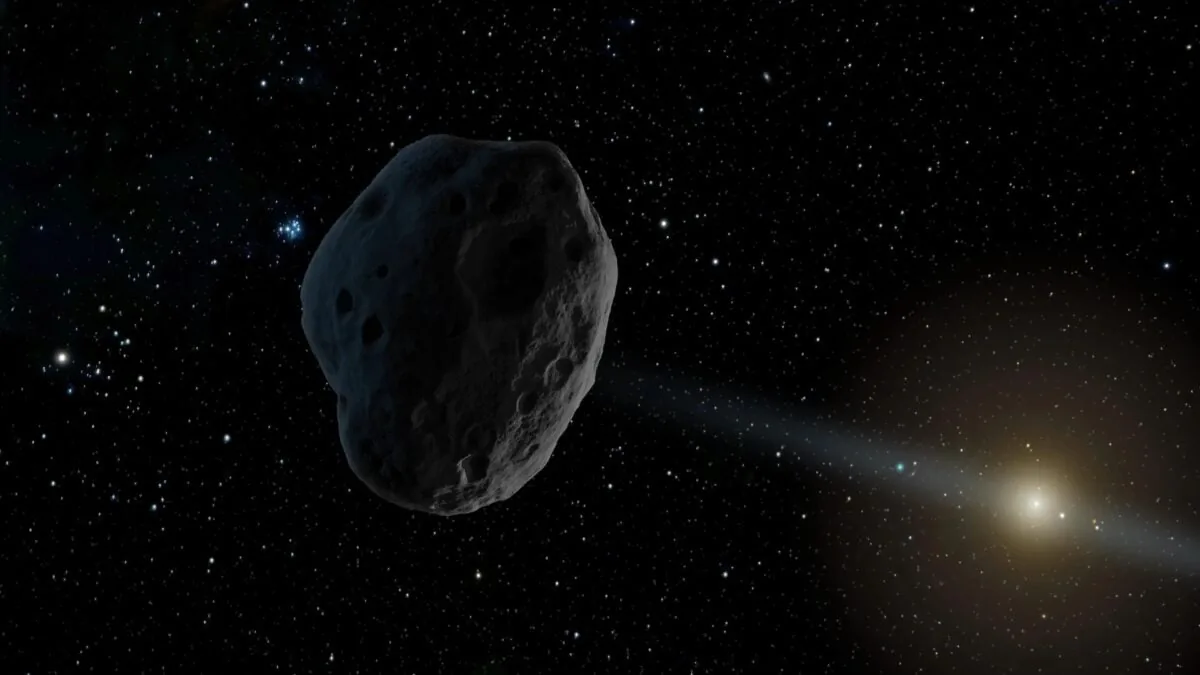
Astronomers have cataloged several temporary mini-moons over the past two decades, building a clearer picture of transient captures. In 2006, the Catalina Sky Survey detected asteroid 2006 RH120, which circled Earth for roughly a year before breaking free into interplanetary space. A second confirmed natural mini-moon arrived with asteroid 2020 CD3, which orbited Earth for several years prior to its departure in 2020. More recently, the 37-foot space rock 2024 PT5, an asteroid from the Arjuna belt discovered on August 7 by Carlos and Raúl de la Fuente Marcos at Universidad Complutense de Madrid using the ATLAS survey, circled Earth from September 29 to November 25, 2024 [5].
Sky surveys also tracked the artificial visitor 2020 SO, which entered a temporary orbit before spectral tests proved it was a discarded Centaur rocket stage from 1966. That discovery showed why observatories must verify every new object. Rigorous follow-up observations confirmed that asteroid 2026 QQ8 is a natural rock [4].
Theoretical modeling suggests that the average temporary satellite measures about 75 centimeters (30 inches) across and stays bound to Earth for around nine months. Asteroid 2026 QQ8 fits this expected profile closely, measuring about one meter (three feet) wide and staying for eight to nine months before escaping in December or January. Researchers calculate that if Earth captured a space rock spanning ten feet (three meters) across, it could orbit as a mini-moon for ten to twenty years. For now, 2026 QQ8 gives scientists a valuable opportunity to observe meter-scale asteroid dynamics before it returns to deep space [1].
- ONLINE NEWS Lea, R. (2026, November 5). Earth has captured a new mini moon — but it won’t stick around for long. Space.com. [Article Link]
- WEBSITE Whitt, K. K. (2026, November 4). A new mini-moon for Earth! Meet 2026 QQ8. EarthSky. [Article Link]
- ONLINE NEWS Rabie, P. (2026, November 4). Earth Has a Temporary New Mini-Moon. Gizmodo. [Article Link]
- ONLINE NEWS India Today Science Desk. (2026, November 5). Earth has a new moon: Meet 2026 QQ8 captured by planet’s powerful gravity. India Today. [Article Link]
- ONLINE NEWS Singh, A. (2026, November 5). 10-year cosmic visitor: Earth has a new ‘Lilliputian’ mini-moon. Wion. [Article Link]
- ONLINE NEWS Saclao, C. (2026, November 5). Earth has a new moon and it vanishes next month. Yahoo Tech. [Article Link]
- ONLINE NEWS Shah, P. (2026, November 5). 2026 QQ8: Earth’s New Mini-Moon Discovery. The CSR Journal. [Article Link]
- ONLINE NEWS Azatyan, H. (2026, November 5). Earth Captures Tiny Asteroid 2026 QQ8 as Temporary Mini-Moon. Azat TV. [Article Link]
APA 7: PerEXP Teamworks. (2026, November 6). Earth Gravity Traps Asteroid 2026 QQ8 in Temporary Orbit. PerEXP Teamworks. https://perexpteamworks.com/en/asteroid-2026-qq8-temporary-earth-orbit/


