





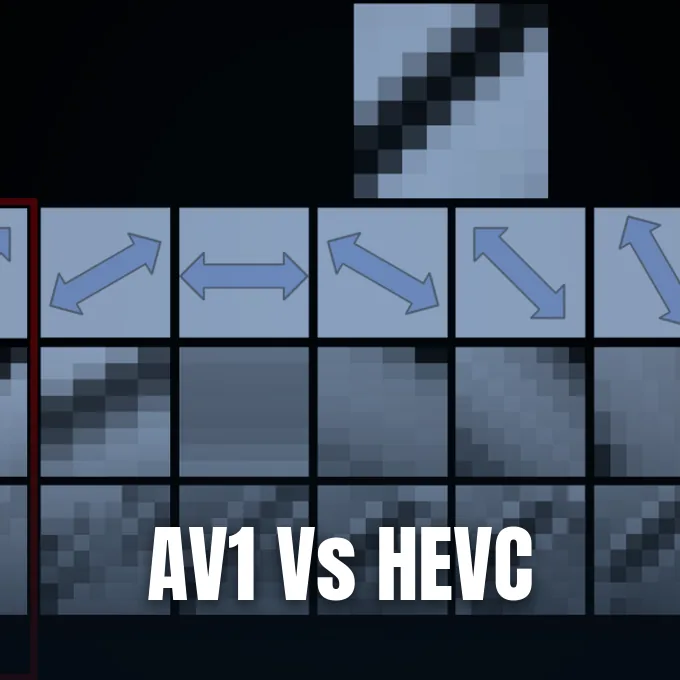
An AV1 vs HEVC evaluation reveals a clear split between royalty-free open standards and legacy media licensing. When the Alliance for Open Media finalized the AV1 video format, internet video platforms gained an alternative capable of matching or exceeding the bitrates of HEVC without paying patent royalties. While HEVC found early adoption in television sets and broadcast decoders, AV1 spread through Google Chrome, Mozilla Firefox, and streaming libraries. Both video codecs use block-based transform coding to lower bitrates, but their real-world adoption depends on the trade-off between bandwidth savings and hardware support [16].
How AV1 vs HEVC Bitrates Compare
Comparing AV1 vs HEVC bitrates shows measurable data savings across test resolutions. In an academic study in Electronics, M. Uhrina evaluated coding performance across seven video clips at 8K, Ultra HD, and Full HD resolutions. AV1 achieved average bitrate savings of 63% relative to H.264/AVC, whereas H.265/HEVC reached 53% savings under identical quality metrics [5].
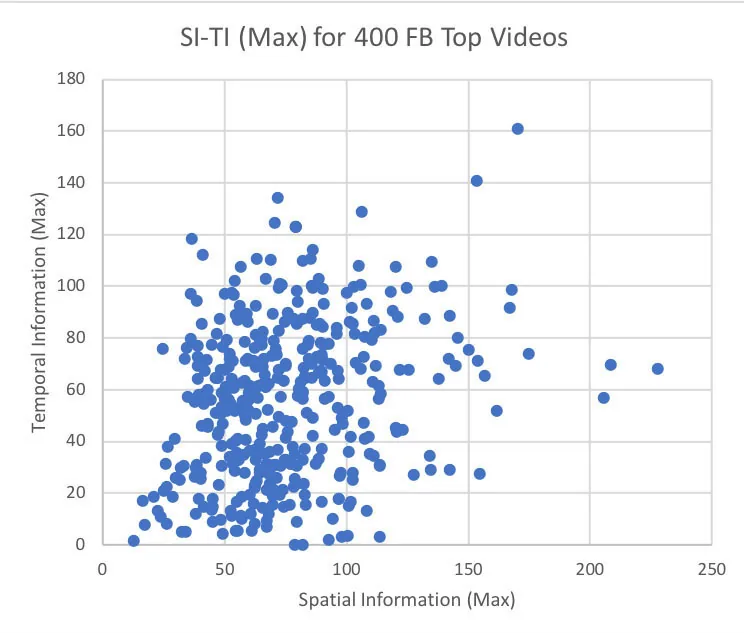
Production testing on mobile clips confirmed strong gains for the open standard. Video engineers Yu Liu and Changigi at Meta tested AV1 against practical encoders using four hundred Facebook video uploads. These clips were shot on Apple iOS and Android smartphones and had already undergone client-side compression before reaching data centers. Their findings showed that AV1 achieved 50.3% bitrate savings compared to the x264 main profile and 46.2% savings against the x264 high profile. When tested against Google libvpx-vp9, the new codec lowered bitrates by 34.0% for the same decoded visual quality. Test data confirmed that data savings grew as video resolution climbed from 360p up to 1080p and 4K [9].
Reports in IEEE publications show that the open codec achieves over 30% bitrate reduction compared to VP9. To test real-world delivery at the NAB Show in Las Vegas, Netflix showed 720p video running at a data rate of 207 kbps. That test showed that web platforms could serve clear high-definition streams over slow cellular connections where HEVC streams often buffered or required higher data plans [1].

Patent Pools and Royalty Costs
Why did web companies spend years building an open video format? The answer lies in the fractured licensing model that trapped HEVC after its release. Unlike H.264, which was licensed through MPEG LA, HEVC split into three separate patent pools run by MPEG LA, HEVC Advance, and Velos Media. Paul Gray, a research director at IHS Markit, said: “The worry for adopters of HEVC (as I see it) is three different patent administrators, enduring uncertainty if anyone else will appear and make demands [10].”
The Alliance for Open Media formed on September 1, 2015, just 42 days after HEVC Advance posted higher royalty rates than earlier AVC fees. Founding members Google, Cisco, Microsoft, Mozilla, Netflix, Amazon, and Intel agreed to create a royalty-free codec under W3C patent terms. Ian LeGrow at Microsoft said that an open standard was the cleanest way to clear legal doubt for software distributors. Free Software Foundation Europe had pointed out that FRAND terms made it impossible to bundle proprietary codecs into free web browsers like Mozilla Firefox. By waiving per-unit software royalties, the alliance helped open platforms build and distribute modern video decoders without legal risk from unexpected third-party patent claims [16].
To protect software builders, AOMedia set up a legal defense fund for its members and licensees. Patent attorney David W. Long said that patent owners can license patents royalty-free to open groups while collecting pool fees in other markets. Gabe Frost from Microsoft said that engineers reviewed every patent before adding any tool to the specification [13].
Encoding Load on Silicon
High coding efficiency adds heavy processing work during video encoding. When Meta engineers tested the reference encoder against legacy tools, they found that AV1 took 5721.5 times more processing time than x264 main profile under constant rate factor settings. In adaptive bitrate modes, AV1 encoding run time took 9226.4 times longer than x264 [9].
Software developers cut these encoding delays by improving encoder presets and threading code. Testing on an HP ZBook with an Intel Xeon E3-1505M v5 processor showed that updating FFmpeg cut libaom-av1 encoding time from 226,080 seconds down to 18,196 seconds. Shifting the preset to cpu-used 5 reduced encoding time to just 6.63% of maximum while keeping 99.64% of top visual quality on the VMAF scale. This practical setting allowed web publishers to encode large catalogs without using slow passes. Running balanced presets helped video services process large libraries without overloading backend cloud clusters or losing visible sharpness on high-resolution screens [12].
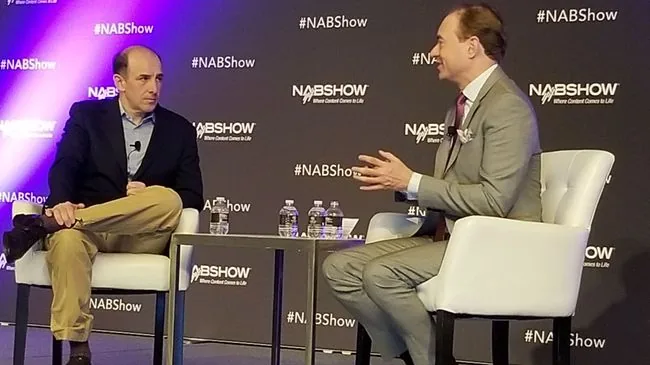
Hardware decode support took time to work through silicon roadmaps. Matt Frost, head of strategy for Chrome Media at Google, said at the NAB Streaming Summit: “We have the code; it’s frozen.” Because mobile phone batteries drain fast during software decoding, fixed-function silicon was needed for mass adoption. Semiconductor makers including Intel, Nvidia, AMD, and ARM added hardware AV1 decoders to PC graphics cards and smartphone processors around 2020 [14].
Why AV1 vs HEVC Matters for Web Video
How can streaming networks handle growing video traffic without choking consumer broadband? Jonathan Rosenberg, technology chief at Cisco Systems, pointed out that rising demand for 4K video, screen sharing, and virtual reality created an urgent need for better compression. In the debate over AV1 vs HEVC, open standards offered cloud platforms a path to upgrade from H.264 without paying fees on every browser copy or video player install [11].
Internet platforms picked the open codec because bandwidth savings directly cut delivery bills. When services stream millions of clips daily, saving 30% on data saves huge cloud transit costs. For video providers like Netflix and YouTube, encoding popular titles once offsets the initial compute cost of the new format [4].
Web browsers gave AV1 an immediate distribution edge over rival standards. Google Chrome and Mozilla Firefox built software decoders into standard browser releases, giving developers reliable video playback across Windows, macOS, and Linux PCs. By contrast, royalty costs kept open-source browsers from bundling HEVC decoders out of the box. This built-in browser support made AV1 the top choice for web video players, WebRTC calling tools, and game streaming services. Because every modern browser could play AV1 video files natively, web publishers could reach desktop users without forcing visitors to buy third-party extensions or install proprietary media packages from app stores [10].

Bitstream Syntax
Key syntax differences explain why AV1 achieves higher data savings than older codecs. The format organizes video frames into large superblocks of up to 128×128 pixels, compared to 64×64 pixel units in HEVC. Larger block sizes help encoders compress flat skies and background walls using fewer bits. Kieran Kunhya, founder of Motion Spell, said that AV1 divides frames into tiles rather than slices, removing network abstraction layer units to speed up parallel decoding on multi-core chips. By avoiding slice headers and complex parameter sets, decoders can parse video tiles in parallel without tracking changing stream configurations during live playback [15].
Frame packaging relies on Open Bitstream Units, known as OBUs. These syntax blocks package sequence headers, frame data, tile groups, and metadata into a unified bitstream. Danil Chapovalov and Bernard Aboba documented that the RTP transport specification packages OBUs using an aggregation header with leb128 length fields. This packet structure includes a Dependency Descriptor header extension that lets selective forwarding boxes route video layers without decrypting the underlying media stream [16].
Reference frame management gives the codec extra flexibility during playback. AV1 stores up to eight reference frames in memory and can use up to seven references for a single frame. It also allows resolution scaling across reference frames, letting encoders change video sizes on the fly without inserting large key frames [1].
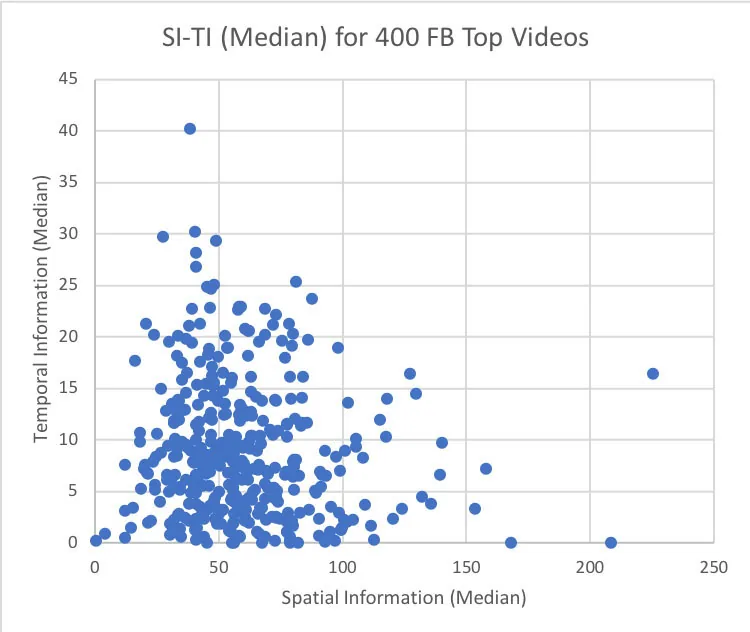
Tests on Smartphone Videos
Comparing AV1 vs HEVC on smartphone clips shows how each codec handles mobile camera noise. Meta engineers picked four hundred popular Facebook videos shot on handheld devices to test compression under real conditions. Re-encoding tests showed that AV1 preserved facial details and sharp lines without amplifying noise from earlier compression passes [9].
Laboratory tests at Elecard tracked codec performance as the specification took shape. Testing on an Intel Core i7-7700 PC, Elecard engineers found that early AV1 builds matched HEVC compression efficiency on standard test clips. While early encoders ran slowly, the math tools delivered matching visual quality at identical bitrates. Myra Moore, president of Digital Tech Consulting, told EE Times: “Basically, until the specification is available for independent testing from unbiased parties, all is speculation.” Later tests by independent university teams confirmed that AV1 held up well at low bitrates where HEVC showed blocky artifacts, proving that open formats could match commercial video standards [10].
Market analysts saw video streaming and traditional broadcast moving in different directions. Conference chairman Dan Rayburn said at the NAB Streaming Summit that AV1 served as a practical successor to HEVC for web streaming rather than broadcast TV. Broadcasters kept their HEVC hardware chains, while internet streaming platforms rolled out AV1 software decoders across apps and web browsers. Both formats found stable homes in different media sectors [14].
Measuring AV1 vs H265 Software Speed
Early encoding delays prompted consortium members to invest heavily in software optimization. Martin Smole from Bitmovin said that computational speed was the largest challenge after the bitstream was frozen in 2018. Because the original reference software prioritized coding math over execution speed, early encodes took days. Engineers across AOMedia member firms replaced slow reference routines with hand-tuned assembly instructions, tile-based threading, and processor-specific vector extensions [16].
A major advance arrived with the launch of SVT-AV1. Developed by Intel and AOMedia, the Scalable Video Technology design split encoding work across multiple CPU threads with low overhead. At the IBC Convention in Amsterdam, AOMedia took home a 2025 IBC Innovation Award for making SVT-AV1 practical on consumer PCs and servers [8].

Academic research validated dedicated silicon designs for intra prediction and motion compensation. In IEEE Transactions on Circuits and Systems, Corrêa and co-authors presented a hardware layout for non-directional intra modes built on a TSMC 40nm cell library. Running at 648MHz, their design processed 4K video at 30 frames per second using just 65.5 mW of power. In a companion study, Domanski and colleagues created a multifilter interpolation architecture for motion compensation that handled 4320p video at 30 frames per second using 81.31 mW. These circuit tests proved that fixed-function silicon decoders could deliver smooth ultra-high-definition playback with minimal battery draw on portable devices [6].
The Path to AV2
Ten years after forming the alliance, AOMedia announced work on its next-generation video codec, named AV2. Dr. Pierre-Anthony Lemieux, Executive Director of AOMedia, reported strong member backing for the open format, saying: “At AOMedia, we believe innovation thrives when it’s open.” An internal survey revealed that 88% of member firms viewed AV1 as essential for their ongoing software roadmaps. AOMedia designed AV2 to deliver another big jump in coding efficiency while keeping the royalty-free patent licensing model. By building on ten years of shared work, the alliance prepared its next format to meet the higher bandwidth demands of future streaming platforms [7].
Adoption roadmaps point to fast deployment schedules across member platforms. The survey showed that 53% of AOMedia partners plan to deploy AV2 within twelve months of release, with 88% planning deployment within two years. AV2 adds native support for augmented reality, virtual reality, and split-screen multi-video streams [7].
Broader industry recognition confirmed the impact of the open format movement. The National Academy of Television Arts & Sciences awarded AOMedia a Technology and Engineering Emmy Award for developing AV1. Started in 1948, the annual awards honor technical breakthroughs that shape television and media engineering. By bringing together 49 tech leaders around an open standard, AOMedia proved that collaborative royalty-free engineering can reshape global video distribution [8].
- ACADEMIC JOURNAL Han, J., Li, B., Mukherjee, D., Chiang, C., Grange, A., Chen, C., Su, H., Parker, S., Deng, S., Joshi, U. B., Chen, Y., Wang, Y., Wilkin, P., Xu, Y., & Bankoski, J. (2021). A Technical Overview of AV1. Proceedings of the IEEE, 109(9), 1435-1462. [Article Link]
- ACADEMIC JOURNAL Chen, Y., Mukherjee, D., Han, J., Grange, A., Xu, Y., Parker, S., Chen, C., Su, H., Joshi, U. B., Chiang, C., Wang, Y., Wilkin, P., Bankoski, J., Trudeau, L., Egge, N. E., Valin, J., Davies, T. I., Midtskogen, S., A, A. N.,. Liu, Z. S. (2020). An Overview of Coding Tools in AV1: the First Video Codec from the Alliance for Open Media. APSIPA Transactions on Signal and Information Processing, 9(1). [Article Link]
- ACADEMIC JOURNAL Domanski, R., Göebel, J., Penny, W., Porto, M., Palomino, D., Zatt, B., & Agostini, L. V. (2019). High-Throughput Multifilter Interpolation Architecture for AV1 Motion Compensation. IEEE Transactions on Circuits & Systems II Express Briefs, 66(5), 883-887. [Article Link]
- ACADEMIC JOURNAL Trow, I. (2020). AV1: Implementation, Performance, and Application. SMPTE Motion Imaging Journal, 129(1), 51-56. [Article Link]
- ACADEMIC JOURNAL Uhrina, M., Sevcik, L., Bienik, J., & Smatanova, L. (2024). Performance Comparison of VVC, AV1, HEVC, and AVC for High Resolutions. Electronics, 13(5), 953. [Article Link]
- ACADEMIC JOURNAL Corrêa, M. M., Waskow, B., Göebel, J., Palomino, D., Corrêa, G., & Agostini, L. V. (2020). A High-Throughput Hardware Architecture for AV1 Non-Directional Intra Modes. IEEE Transactions on Circuits and Systems I Regular Papers, 67(5), 1481-1494. [Article Link]
- PRESS RELEASE Alliance for Open Media. (2025, September 15). AOMedia Announces Year-End Launch of Next Generation Video Codec AV2 on 10th Anniversary. [Article Link]
- PRESS RELEASE Alliance for Open Media. (2025, September 30). Alliance for Open Media Wins Prestigious Technology and Engineering Emmy® Award for the AV1 Video Codec. [Article Link]
- WEBSITE Liu, Y., & Changigi. (2018, April 10). AV1 beats x264 and libvpx-vp9 in practical use case. Engineering at Meta. [Article Link]
- ONLINE NEWS Yoshida, J. (2018, March 28). Streaming Group to Pit AV1 Against H.265. EE Times. [Article Link]
- WEBSITE Rosenberg, J. (2018, March 28). Introducing the Industry’s Next Video Codec: AV1. Cisco Systems. [Article Link]
- ONLINE NEWS Streaming Media Magazine. (2019, March 4). Good News: AV1 Encoding Times Drop to Near-Reasonable Levels. [Article Link]
- ONLINE NEWS Streaming Media Magazine. (2018, March 28). AV1 Is Finally Here, but Intellectual Property Questions Remain. [Article Link]
- ONLINE NEWS Baumgartner, J. (2018, April 11). NAB 2018: Hardware Support a Big Step Ahead for AV1. Multichannel News. [Article Link]
- WEBSITE Kunhya, K. (2016, July 12). A view on VP9 and AV1 part 1: specifications. Motion Spell. [Article Link]
- WEBSITE Wikipedia. AV1. [Article Link]
Cover image: Christopher Montgomery / Wikimedia Commons, CC BY-SA 3.0


