




A sudden firmware rollout crippled premium Samsung smart fridge hardware across South Korea, cutting off refrigeration and spoiling household groceries right before a major national holiday. The glitch disabled the flagship Bespoke AI 4-Door model, an appliance that retails for nearly $4,000 and relies on networked internal software [1]. Frustrated households discovered dark compartments, failing compressors, and frozen digital displays as the annual Chuseok harvest celebration approached [3]. Unplugging the appliance changed nothing. Families were forced to discard expensive festive dishes while cooling systems remained completely inactive [1].
- Flawed Firmware Update Freezes Samsung Smart Fridge Screens
- Spoiled Holiday Food Triggers Outcry Across South Korea
- Motherboard Replacements Address the Samsung Fridge Update Glitch
- How Unfinished Software Code Reached Connected Household Kitchens
- Connected Appliance Risks Resurface Ahead of Chuseok Festivities
Flawed Firmware Update Freezes Samsung Smart Fridge Screens
The disruption surfaced when display screens on affected Samsung smart fridge units began locking up and presenting persistent system failure messages. As reported by Star News Korea, users found that touch consoles remained entirely unresponsive for consecutive hours, leaving households unable to adjust temperatures or access basic digital controls. The breakdown stripped away both computerized features and baseline mechanical chilling, transforming connected kitchens into silent, warming storage lockers. Cool air continued to escape [1].
Standard home troubleshooting proved entirely futile for the Samsung smart fridge line. Disconnecting the power cord for hours failed to revive the operating system once electricity returned [1].
Frustrated consumers documenting the failure noted that the malfunctioning software incapacitated auxiliary mechanisms as well as primary compressors. Automated door-opening systems stopped triggering when tapped, while interior LED lighting remained dark whenever family members manually pulled doors ajar. Internal lights refused to turn on [3]. Owners discovered that the convenience of automated appliance management created acute vulnerabilities when central code crashed, because ordinary mechanical overrides do not exist on panels stripped of analog dials. Rather than retaining default cooling thresholds during software anomalies, the appliances completely dropped refrigeration cycles while the digital interface stayed frozen on error codes, accelerating temperature increases across insulated compartments and endangering stored perishables [1].
Spoiled Holiday Food Triggers Outcry Across South Korea
The timing of the firmware breakdown magnified consumer outrage because it struck every Samsung smart fridge owner immediately ahead of Chuseok, one of South Korea’s most important traditional holidays. The annual mid-autumn harvest festival celebrates the full Moon and spans three consecutive days, during which extended families gather across the country to share elaborate home-cooked meals [1]. The Chuseok festival begins Friday [3]. In preparation for the upcoming ceremonies, households had stocked their refrigerators with costly regional delicacies, fresh meats, and specialized festive ingredients that required uninterrupted temperature control [1]. With cooling mechanisms shut down, families were forced to discard vast quantities of celebration provisions as food spoiled inside unpowered compartments [3].
Complaints rapidly inundated the Samsung Korea Community discussion forum as affected owners shared identical accounts of total system paralysis. Users described the acute distress of discovering thawed freezers, rancid produce, and non-functional digital panels hours before hosting holiday visitors [3]. One user described the sudden appliance failure as ‘so absurd and embarrassing’ while detailing the chaos of throwing out ruined festive dishes [2]. Many customers urged Samsung to compensate them for the spoiled food. Discussion threads filled with urgent demands for financial restitution, noting that the monetary losses of ruined luxury food items compounded the immense inconvenience of owning an unresponsive machine [3].

Frustration escalated further when owners contacted official maintenance channels seeking emergency repairs ahead of the holiday weekend. Service representatives informed calling customers that the earliest available technician appointments would not take place until October 1, nearly a full week after the Chuseok break concludes. Service centers offered October 1 appointments. That multi-day delay meant households faced the entire holiday period without any operational cold food storage. For owners who had invested thousands of dollars in high-tech appliances, being left without working refrigeration during peak family celebrations triggered sharp resentment [1].


Motherboard Replacements Address the Samsung Fridge Update Glitch
As user reports mounted regarding the Samsung smart fridge malfunction, an official company representative posted a statement on the community forum acknowledging the widespread defect. The representative confirmed that an error had occurred during software testing: ‘Yesterday (9/22), an error occurred during the testing process for a Samsung refrigerator software update. Abnormal symptoms have been observed in the refrigerator power and screen of some customers’. The company announced it was taking emergency measures as a top priority through Samsung Electronics Service Centers to remediate affected appliances across the country [3].
Samsung moved quickly to contain the distribution of the corrupted build. As reported by ZDNet Korea, the manufacturer halted the rollout of the SmartThings update once domestic customer service portals registered widespread device shutdowns. Samsung halted distribution on Tuesday. Industry reporting indicated that the experimental firmware escaped testing environments and reached retail consumer appliances as the direct result of an unexpected internal system error. A company spokesperson confirmed to media outlets that all distribution had ceased immediately while technical teams investigated how unfinished code managed to bypass deployment safeguards [3].
Remediating the corrupted appliances required far more than a simple over-the-air patch. Because the flawed code completely disabled networking chips and boot sequences, field technicians had to perform physical interventions in customer homes. Technicians began replacing internal motherboards. Affected consumers reported that service personnel dispatched by Samsung were systematically unmounting rear panels to swap out ruined mainboards with entirely fresh circuit components. This intensive hardware remedy illustrated how a software deployment error could inflict severe physical disruption on everyday kitchen machinery [3].
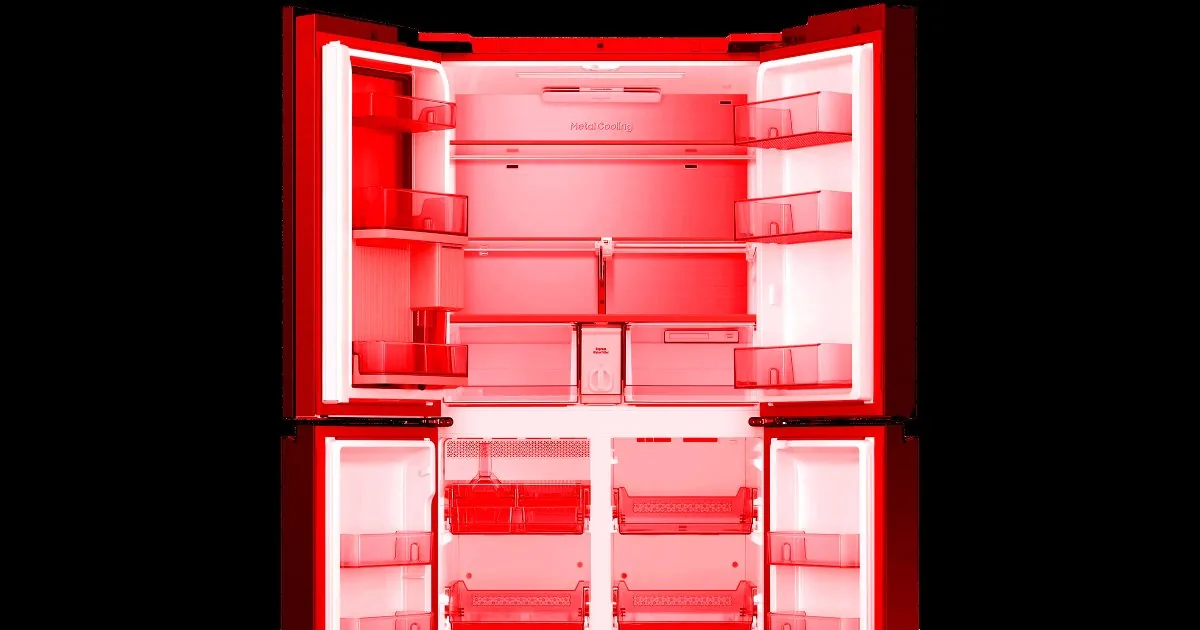
How Unfinished Software Code Reached Connected Household Kitchens
The incident raised serious technical questions regarding quality assurance and staging protocols within modern consumer device ecosystems. In conventional software engineering, test iterations remain segregated within isolated laboratory partitions to prevent unvetted code from reaching commercial products. Yet in this unfortunate instance, an unvetted work-in-progress build designed strictly for internal laboratory evaluation was transmitted directly over consumer Wi-Fi networks into residential kitchens. ZDNet Korea confirmed that an unexpected system error triggered the unintended distribution, leaving everyday domestic users abruptly exposed to unstable developmental software without any prior notice [3].
Modern smart homes increasingly rely on shared background pipelines where appliances communicate constantly with manufacturer cloud servers. While Samsung expands unified data connections across its broader platform, such as when Samsung Gallery sync arrived for Google Photos backup, unexpected firmware breakdowns in domestic hardware demonstrate the operational vulnerabilities of centralized software delivery. When smart hubs automatically download background payloads without rigorous gating, a single flawed deployment file can compromise hundreds of physical units simultaneously. Automated convenience quickly converts into vulnerability [3].
The sudden outage highlighted an ironic contrast between traditional kitchen durability and modern connected fragility found in a Samsung smart fridge. Electric refrigerators have provided dependable, largely uncomplicated food preservation for over a century, operating continuously on simple mechanical compressors that rarely demand computerized supervision or cloud oversight. Introducing complex operating systems, Wi-Fi radios, and background update engines into these essential utilities introduces catastrophic failure modes that never existed in conventional cooling appliances. A single corrupted digital packet now possesses the power to disable what was once an extraordinarily reliable household staple [1].
Connected Appliance Risks Resurface Ahead of Chuseok Festivities
Manufacturers have aggressively promoted artificial intelligence as a necessary evolution for major home appliances. In promotional material, Samsung markets each Samsung smart fridge as an intelligent hub capable of scanning internal contents, recommending recipes based on available ingredients, and streaming music across kitchen spaces. Yet critics pointed out that few consumers actually demand generative algorithms or multimedia streaming inside cooling appliances. When these auxiliary smart features fail, they often drag down the refrigerator’s primary function of preserving fresh food [1].
The Korean refrigerator outage reflects a wider trend across consumer technology, where manufacturers integrate networked chips into previously standalone household items. Tech reporting has noted the proliferation of overengineered devices, ranging from artificial intelligence toothbrushes and automated toasters to facial recognition video doorbells. While these gadgets offer novel conveniences, each network connection adds another point of failure subject to remote software bugs. Consumers increasingly face precarious situations where their essential household equipment becomes completely unusable due to technical problems originating hundreds of miles away in a remote corporate server farm [1].
For hundreds of Korean households entering the Chuseok holiday, the immediate focus remains on securing functioning kitchens and seeking restitution for wasted holiday meals [3]. With service center repairs stretching into October, affected families owning a disabled Samsung smart fridge must rely on coolers or temporary arrangements while their luxury appliances stand silent [1]. Technicians continue replacing motherboards across the region, but persistent customer demands for groceries compensation highlight the tangible financial toll of connected household appliance failures [3]. The incident serves as a stark reminder that when intelligent appliances fail, the consequences are felt directly at the family dinner table [1].
- ONLINE NEWS Tangermann, V. (2026, September 23). Software update turns Samsung’s “AI fridges” into useless bricks. Futurism. [Article Link]
- ONLINE NEWS Ars Technica. (2026, September 23). Owners mourn spoiled food after firmware update bricks Samsung smart fridges. Ars Technica. [Article Link]
- ONLINE NEWS Simons, H. (2026, September 23). Samsung accidentally freezes its smart fridges with a software update. Android Authority. [Article Link]


