





Modern wireless audio relies on radio frequencies to send sound between mobile phones, Apple laptops, and personal earbuds without cumbersome cords. The emergence of Bluetooth LE Audio establishes an updated architecture built on the Bluetooth Low Energy radio rather than the older Bluetooth Classic standard. By pairing an efficient codec with isochronous data channels, the system lowers battery drain and keeps high acoustic clarity across connected hardware [1]. It lets consumer electronics stream independent sound channels straight to multiple earbuds and public speakers at the same time [2].
- How Bluetooth LE Audio Replaces Classic Radios
- The LC3 Compression Codec
- How Multi-Stream Transmission Operates
- Auracast Broadcast Features
- Why Bluetooth LE Audio Matters for Hearing Aids
- Basic Audio Profile Specifications
- Physical Layer and Energy Consumption
- Bluetooth LE Audio Defenses Against Packet Flooding
How Bluetooth LE Audio Replaces Classic Radios
Bluetooth began in 1989 when Dr. Nils Rydbeck and Dr. Johan Ullman developed short-link radio technology at Ericsson in Lund. The Bluetooth Special Interest Group later introduced low energy radio in 2010 within Bluetooth 4.0, integrating earlier project work begun by Nokia, STMicroelectronics, and Logitech under the Wibree banner. Classic Bluetooth used Basic Rate channels that demanded heavy electrical power. Mobile systems such as Apple iOS and Google Android quickly adopted the radio for fitness trackers [6].
At the CES trade show in Las Vegas, the Bluetooth SIG announced that wireless audio would expand to low energy channels. Ken Kolderup, vice president of marketing at the Bluetooth SIG, said that developers had pushed classic audio profiles to their limits when building complex features like voice control into wireless earbuds [2]. The updated Bluetooth LE Audio standard operates within the 2.4 GHz spectrum but reorganizes packet handling. Both systems coexist. Dual-mode hardware from companies like Qualcomm and Nordic Semiconductor can run classic and low energy protocols over a shared radio antenna without mutual interference [6]. This allows legacy gear to function alongside modern devices without requiring duplicate internal transceivers on the host phone [2].
Power conservation represents the main goal of shifting audio tasks to low energy channels. Engineers designed the transport layer to send compressed sound in short bursts rather than continuous high-drain streams. Small coin cells can supply enough current for prolonged playback. According to Bluetooth SIG specs, latency drops to between 20 and 30 milliseconds, compared to the 100 to 200 milliseconds typical of classic Bluetooth links on older consumer gear [6].
The LC3 Compression Codec
The Low Complexity Communications Codec, known as LC3, serves as the primary compression engine for Bluetooth LE Audio. Classic Bluetooth relied on the Subband Codec (SBC) designed decades ago. By contrast, LC3 provides clear sound reproduction at half the data rate of the legacy codec, giving engineers practical flexibility when balancing acoustic fidelity against battery life [1].
Engineers can configure LC3 across multiple bitrates and sampling frequencies depending on wireless conditions and product design goals [1]. When streaming multichannel music or speech, the codec packs pulse-code modulation data into frames that fit inside low energy packets. The specification supports both 7.5-millisecond and 10-millisecond frame intervals, allowing developers to adapt latency for different use cases [3]. Shorter frame intervals minimize transmission lag for interactive mobile games, conference calls, and live monitoring, and standard frames optimize packet throughput for passive media playback on portable headphones. Fraunhofer IIS helped specify these low-delay algorithmic profiles. This flexible compression model helps consumer brands balance audio performance against battery drain without sacrificing connection stability on compact gear [1].
Reduced bitrates lower radio transmission time and cut electrical consumption in compact hardware. Because the transceiver runs for fewer microseconds during each burst, overall energy drain falls. Empirical radio evaluations published by Gómez, Oller, and Paradells confirm that transmission burst intervals dominate overall electrical draw across small, battery-powered wireless nodes operating on button cells [10]. By cutting data requirements by half, LC3 preserves cell life [2].
How Multi-Stream Transmission Operates
Legacy Bluetooth audio handles true wireless earbuds through an indirect relay mechanism. In a classic setup, the phone sends a single stereo stream to the primary earbud, which decodes one channel and re-transmits the second channel to the opposite ear. This slingshot design causes audio lag between ears, wastes battery, and causes dropped connections [2].
Multi-stream audio overcomes this limitation by sending synchronized, independent channels directly from a host device to multiple receivers [1]. Using Connected Isochronous Streams (CIS), the central controller coordinates timing so that separate left and right earbuds receive their audio frames simultaneously without passing data between themselves [3]. Ken Kolderup at the Bluetooth SIG pointed out that multi-stream support lets people connect between several host devices without interrupting playback. A listener can stay connected to a Lenovo ThinkPad laptop as an incoming voice prompt arrives from an Android phone. Qualcomm and Intel controllers support these parallel channels natively [2]. The system manages multiple channels cleanly without forcing manual disconnection steps [1].

Hardware synchronization relies on precise timing clocks embedded within the Bluetooth link layer protocol [3]. Each audio packet carries a presentation timestamp that tells the peripheral device exactly when to convert digital data into sound, ensuring perfect channel alignment across both ears. If an earbud drops a packet, an elastic buffer reconstructs the segment without desynchronizing playback between both ears [4].
Auracast Broadcast Features
Auracast introduces a broadcast audio mode that allows a single transmitter to stream multichannel sound to an unlimited number of nearby receivers without prior device pairing [1]. Unlike unicast connections, broadcast channels send audio openly over advertising frequencies, allowing any compatible headphone to tune in. The Bluetooth SIG completed the underlying technical specifications in 2022, branding the broadcast capability as Auracast [6].
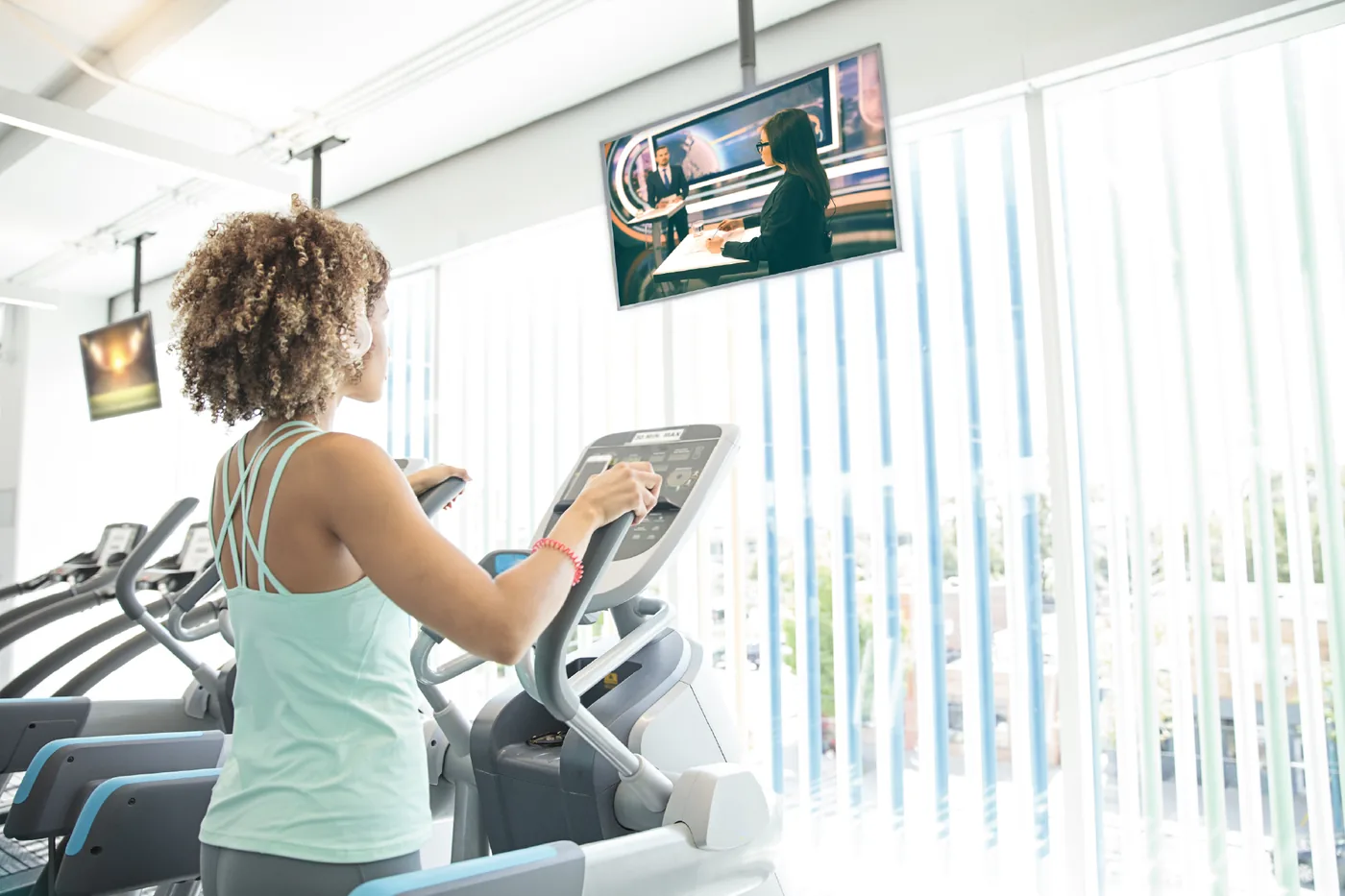
Public venues benefit from this connectionless architecture. In sports lounges, airport gates, and fitness clubs, television screens often play on mute because traditional Bluetooth can’t broadcast separate audio to dozens of visitors at once. With Auracast transmitters plugged into displays, visitors wearing compatible earbuds can scan for local streams and listen to their chosen screen. Public spaces like London Heathrow airport and Planet Fitness gyms install silent screens across waiting areas [2]. Conference venues can stream live translations across multiple channels, allowing attendees to select their language from an Android or Apple phone [6]. This turns quiet spaces into shared listening environments where visitors hear clear audio without disturbing others around them [1]. Municipal transit stations can also broadcast gate alerts directly to passengers [6].
Receivers discover and join public broadcasts through wireless metadata or simple physical triggers. Transmitters broadcast program titles, language tracks, and codec parameters using extended ad packets. Listeners can join an open or protected stream by scanning a printed QR code or tapping an NFC tag, an interaction method marketed as Scan to Listen [6].



Why Bluetooth LE Audio Matters for Hearing Aids
Improving accessibility for people with hearing loss served as an essential priority during the design of Bluetooth LE Audio [2]. Older hearing instruments depended on proprietary radio dongles or bulky gear to connect with consumer hardware [4]. By incorporating native hearing aid support directly into core Bluetooth specifications, mobile devices can stream phone calls, spoken navigation, and media playback straight to certified clinical instruments [1].
Google Android implements low energy hearing aid connectivity through connection-oriented L2CAP channels operating over the Audio Streaming for Hearing Aid (ASHA) protocol. In this topology, the central phone connects to two separate peripheral units, one left and one right, and treats both as a single unified sound sink. The system uses an elastic buffer holding up to eight audio packets, which absorbs radio interference and maintains unbroken sound at the cost of slight latency. If connection to one hearing aid drops, the central device mixes both stereo channels into the remaining ear. This prevents complete sound loss when an individual walks away from one hearing unit [4].
Volume control operates through standardized GATT characteristics on the hearing aids. The ASHA GATT service, assigned UUID 0xFDF0, provides AudioControlPoint, AudioStatusPoint, and Volume endpoints. Volume adjustments use values from -128 to 0, representing attenuation from -48 dB to 0 dB where -127 equals -47.625 dB, and hardware streams audio at 64 kbit/s using G.722 or LC3 codecs [4].

Basic Audio Profile Specifications
The software architecture of Bluetooth LE Audio relies on the Basic Audio Profile (BAP) 1.0.1, which establishes rules for how devices discover, configure, and consume audio streams. The specification defines distinct roles for unicast clients, servers, broadcast sources, and broadcast sinks. To guarantee cross-vendor compatibility, the Bluetooth SIG made Errata Corrections 23224, 19096, and 22266 mandatory for all commercial hardware [3].
Profile implementations depend on the Generic Attribute Profile (GATT) and Attribute Protocol (ATT) to structure device capabilities into readable services. Attributes are identified by standard 128-bit UUID strings, enabling operating systems to discover supported audio bitrates and channel configurations [5]. Errata Correction 19096 clarifies state transitions for bidirectional isochronous streams, and Errata Correction 22266 standardizes configuration rules for mono audio streams, ensuring that headsets respond consistently when switching between media streams and voice calls [3]. Google and Microsoft engineer their Bluetooth software stacks to enforce these transition rules strictly. Host mobile operating systems handle these GATT attribute queries automatically upon connection [5].
Hardware coordination across gear uses complementary service layers defined within the Bluetooth core framework. The Coordinated Set Identification Service (CSIS) allows a phone to recognize two separate earbuds as a unified audio pair sharing one identity. At the same time, the Published Audio Capabilities Service (PACS) exposes supported compression formats. These shared profiles replace proprietary pairing software [6].
Physical Layer and Energy Consumption
Energy efficiency in Bluetooth Low Energy traces back to decisions made in the radio layer [10]. The system communicates across forty radio channels spaced 2 MHz apart in the 2.4 GHz spectrum, reserving three specific frequencies for advertising packets and thirty-seven channels for connected data transfers [6]. In 2016, the Bluetooth SIG announced Bluetooth 5, which doubled data rates to 2 Mbit/s through the 2M PHY and quadrupled theoretical transmission range [8].
Commercial wristwatches and early prototypes demonstrated the power advantages of low energy radio links. In 2011, Casio Computer Co. demonstrated a prototype wristwatch powered by a single CR2032 button-cell battery linked to a Nordic Semiconductor µBlue nRF8001 chip. Etsuro Nakajima, senior manager within Casio’s Timepiece Division, said that the watch maintained continuous phone synchronization while providing up to two years of battery life from its coin cell. Geir Langeland, sales director at Nordic Semiconductor in Oslo, Norway, said that the watch realized the ultra-low-power vision conceived during the original development of Wibree. The device linked to phones without draining small batteries. The prototype confirmed that low energy radio stacks could maintain wireless connections for months on coin cells [7].
Academic evaluations confirm these hardware measurements under simulated and lab conditions. Research published in Sensors by Gómez, Oller, and Paradells showed that coin-cell powered BLE devices can run between 2.0 days to 14.1 years depending on connection intervals and slave latency parameters [10]. A systematic review by J. Tosi and colleagues noted that real-world applications throttle throughput around 100 kbit/s to preserve battery life [12].
Bluetooth LE Audio Defenses Against Packet Flooding
Although Bluetooth LE Audio brings clear advantages, its reliance on open advertising channels creates security challenges. Because ad packets travel unencrypted without pairing, attackers can craft rogue ad bursts to overwhelm nearby phones. At DEF CON 31 in 2023, researchers demonstrated how a compact rig built with a Raspberry Pi could spoof Apple TV prompts and disrupt devices running Apple iOS 16 [9].
Subsequent denial of service attacks weaponized portable multi-tools such as the Flipper Zero running third-party Xtreme firmware. The handheld tool flooded nearby iPhones and iPads with rapid ad packets, triggering persistent popup notifications that froze mobile operating systems. A similar incident occurred at the Midwest FurFest convention in 2023, where an attendee reported that an unsolicited BLE broadcast crashed an Android phone used to monitor an insulin pump. Apple issued firmware updates in iOS 17.2 to filter advertising floods, and the open-source Wall of Flippers project released Python scanning scripts for Linux and Windows. Independent developers continue to monitor rogue advertising packets across public gatherings [9].
Defending against these threats requires strict adherence to Bluetooth security rules. Core standards mandate link-layer encryption and LE Secure Connections for unicast streams, and the Android ASHA standard requires authenticated cryptographic channels before any audio streaming operations can proceed [4]. Users can protect devices by turning off Bluetooth inside system settings rather than using quick-toggle widgets [9].
- ONLINE NEWS Zhao, S. (2026, June 9). LE Audio. Bluetooth Technology Website. [Article Link]
- ONLINE NEWS Ashworth, B. (2020, January 6). The New Version of Bluetooth Is Here to Fix Your Headphones. WIRED. [Article Link]
- REPORT Bluetooth SIG. (2022, June 27). Basic Audio Profile 1.0.1. [Article Link]
- REPORT Google. (2026, October 9). Hearing aid audio support using Bluetooth LE. Android Open Source Project. [Article Link]
- REPORT Google. (2026, October 23). Bluetooth Low Energy. Android Developers. [Article Link]
- WEBSITE Wikipedia contributors. (2026). Bluetooth Low Energy. Wikipedia, The Free Encyclopedia. [Article Link]
- WEBSITE Naumann, H. (2011, March 7). Casio Bluetooth Low Energy Watch communicates with smartphones. M2M / IoT hints and tips. [Article Link]
- ONLINE NEWS Aufranc, J.-L. (2016, June 10). Bluetooth 5 Promises Four times the Range, Twice the Speed of Bluetooth 4.0 LE Transmissions. CNX Software. [Article Link]
- WEBSITE Wikipedia contributors. (2026). Bluetooth Low Energy denial of service attacks. Wikipedia, The Free Encyclopedia. [Article Link]
- ACADEMIC JOURNAL Gómez, C., Oller, J., & Paradells, J. (2012). Overview and Evaluation of Bluetooth Low Energy: An Emerging Low-Power Wireless Technology. Sensors, 12(9), 11734-11753. [Article Link]
- WEBSITE Wikipedia contributors. (2026). Bluetooth Low Energy beacon. Wikipedia, The Free Encyclopedia. [Article Link]
- ACADEMIC JOURNAL Tosi, J., Taffoni, F., Santacatterina, M., Sannino, R., & Formica, D. (2017). Performance Evaluation of Bluetooth Low Energy: A Systematic Review. Sensors, 17(12), 2898. [Article Link]


