





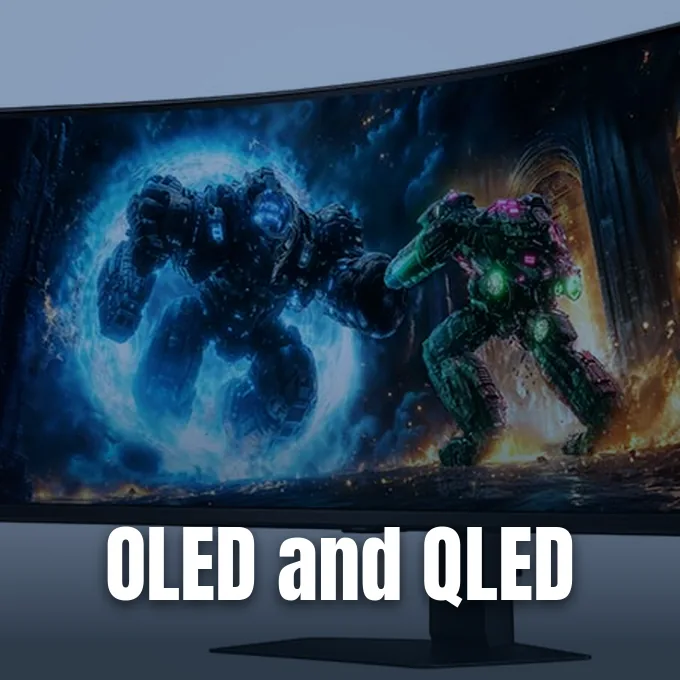
Evaluating oled vs qled hardware centers on a fundamental engineering divide: organic self-lit pixels compete against backlit liquid crystal panels filtered by microscopic inorganic quantum dots for consumer living rooms [3]. An organic light-emitting diode TV illuminates each subpixel on its own, shutting off completely to produce true pure black, perfect shadow depth, and an infinite contrast ratio [15]. In contrast, a quantum dot screen uses an auxiliary diode backlight shining through semiconductor crystals, delivering superior peak brightness and saturated color volume in high dynamic range content [3]. Buyers weigh these two approaches based on room lighting, viewing angles, and retail price limits.
Early Display Research and Milestones
Evaluating oled vs qled hardware begins with an understanding of how separate material research projects evolved from academic laboratories into retail consumer displays over more than four decades [1]. In 1979, chemists Steven Van Slyke and Ching Wan Tang began developing organic diodes at Eastman Kodak in Rochester, New York, building a double-layer device that laid the foundation for emissive panels in consumer electronics. Van Slyke earned degrees from Ithaca College and Rochester Institute of Technology, earning 40 patents and winning the 2004 American Chemical Society Award with Tang before serving as chief technology officer at Kateeva [5]. Display hardware diversified further in the mid 2010s when Samsung Electronics adopted quantum dot filtration over liquid crystal displays to market QLED screens, responding to rival organic panels produced by LG Display [3].
Pioneer brought the first retail product with an organic display to market in a 1997 car stereo. Kodak followed in 2003 with the full-color EasyShare LS633 digital camera for consumer photography [5]. Sanyo built the pilot lines in Gifu [7].
Sanyo Electric joined Eastman Kodak in 1999 to build active-matrix panels through SK Display in Gifu, where CEO Sadao Kondo converted LCD lines at Tottori Sanyo under an investment of $403 million. Marketing director Shusuke Hayashi of Techno Systems Research tracked this expansion as ELDis, formed by Tohoku Pioneer, Semiconductor Energy Laboratory, and Sharp, also constructed competing manufacturing facilities in Japan. These early partnerships between Kodak, Sanyo Electric, and Sharp proved that active-matrix organic screens could be mass-produced for retail buyers [7]. Hardware makers then shifted toward large screens.
Light Generation Mechanics
The physics of pixel light marks the fundamental split between both systems, dictating how electrical energy transforms into visible photons on thin glass substrates inside modern high-definition consumer TVs. In an organic panel, electric current passes through thin organic films positioned between two conductive electrodes, causing electrons and electron holes to recombine within an emissive layer without requiring an external lamp. Early research began in the 1950s when André Bernanose observed organic electroluminescence at Nancy-Université, followed by Martin Pope at New York University who studied anthracene crystals in 1963 and Wolfgang Helfrich at the National Research Council in Canada in 1965. Roger Partridge later developed polymer diodes at the National Physical Laboratory in the United Kingdom, while J. H. Burroughes demonstrated green polymer electroluminescence at Cambridge University in 1990 to expand device chemistry [15].
Quantum dots function through an entirely different optical process by converting light from a blue diode backlight into pure colors. Engineers tune crystal diameters to emit over a billion distinct shades with full quantum dots color volume [3]. Liquid crystals can’t block every single photon [15].
Because liquid crystals physically twist to block illumination from an active backlight, minor light leakage occurs in high-contrast scenes, preventing backlit panels from matching the pure dark tones of emissive pixels [15]. LG Display solved blue emitter aging in large TVs by using white organic subpixels with color filters, while Samsung Display engineered QD-OLED panels that merge blue organic diodes with printed quantum dots to bypass color filters [6].
Contrast and Black Levels
Contrast ratio measures the light gap between the brightest white and the deepest black a panel can generate, serving as the most critical benchmark for perceived image realism and dynamic depth. Because organic subpixels extinguish entirely when displaying black, emissive screens achieve an infinite contrast ratio that prevents the washed-out gray appearance common to liquid crystal panels in dark rooms [3]. When Sony released the 11-inch XEL-1 TV in October 2007 for $2,500, the company specified an official contrast ratio of 1,000,000:1 to highlight this true black performance [8].
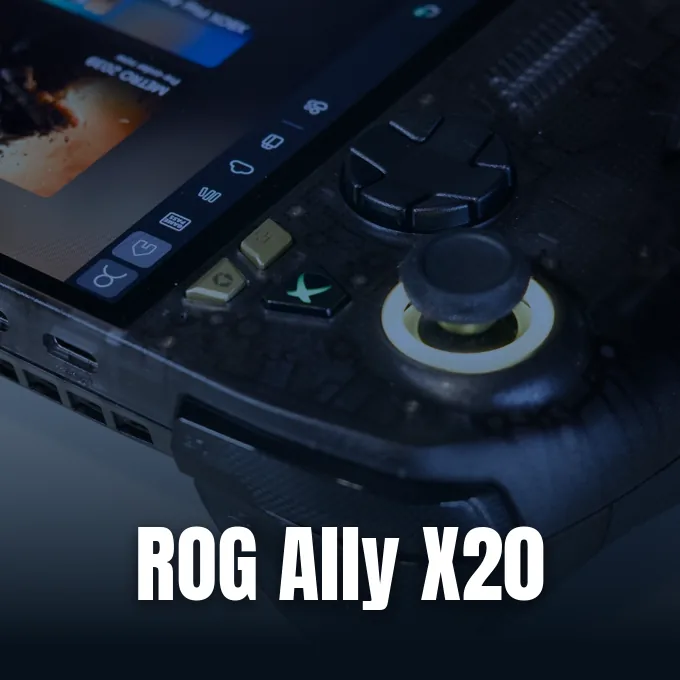
Halo effects and blooming remain common drawbacks on backlit displays. When bright white text appears over a black sky on a QLED panel, light spreads beyond the illuminated pixels into neighboring dimming zones, producing a noticeable glow around high-contrast edges in dark rooms. Professional film colorists and video editors favor organic screens because per-pixel illumination prevents this halo distortion, preserving intricate shadow details in cinematic content without bleeding into adjacent screen sectors [3]. Active-matrix OLED (AMOLED) panels use thin-film transistors with storage capacitors to maintain pixel charge states independently, keeping boundary lines sharp as seen in the ROG Xbox Ally X20 handheld which runs an OLED screen for crisp gaming visuals. Sony later incorporated large organic panels from LG Display into premium TVs like the 55-inch Sony Bravia XR A80J to deliver this same per-pixel contrast to home theater buyers [8].
In the ongoing discussion of oled vs qled contrast performance, ambient room light determines how much difference a viewer sees. In a dark room, black bars on widescreen movies shown on a QLED panel glow dark gray from backlight transmission [3]. On an organic screen, those border pixels emit zero photons, blending seamlessly into the dark ambient room environment [15].
Daylight Output in QLED vs OLED Rooms
While organic panels dominate black depth, QLED hardware holds a commanding lead in total light output, making it exceptionally well suited for sunlit living rooms with uncovered windows. Premium quantum dot TVs frequently reach between 1,500 and 2,000 nits of peak brightness, whereas standard consumer OLED panels typically reach between 350 and 1,000 nits on small specular highlight windows [3]. At SID Display Week 2024, Samsung Display showcased prototype tandem organic panels achieving over 4,000 nits of brightness, but consumer sets remain far below those laboratory demonstrations due to steep production costs and thermal limits. Market research firm Intel Market Research reports that the global tandem OLED display market reached $423 million in 2025 and is projected to reach $1,029 million by 2034 [11].
Automatic brightness limiters restrict organic screens during sustained full-screen bright scenes to manage heat dissipation and protect sensitive diode materials from degradation [6]. QLED displays shed heat through metal frame components, maintaining steady brightness during daytime sports broadcasts. Diodes behind quantum dots run without dimming [3].
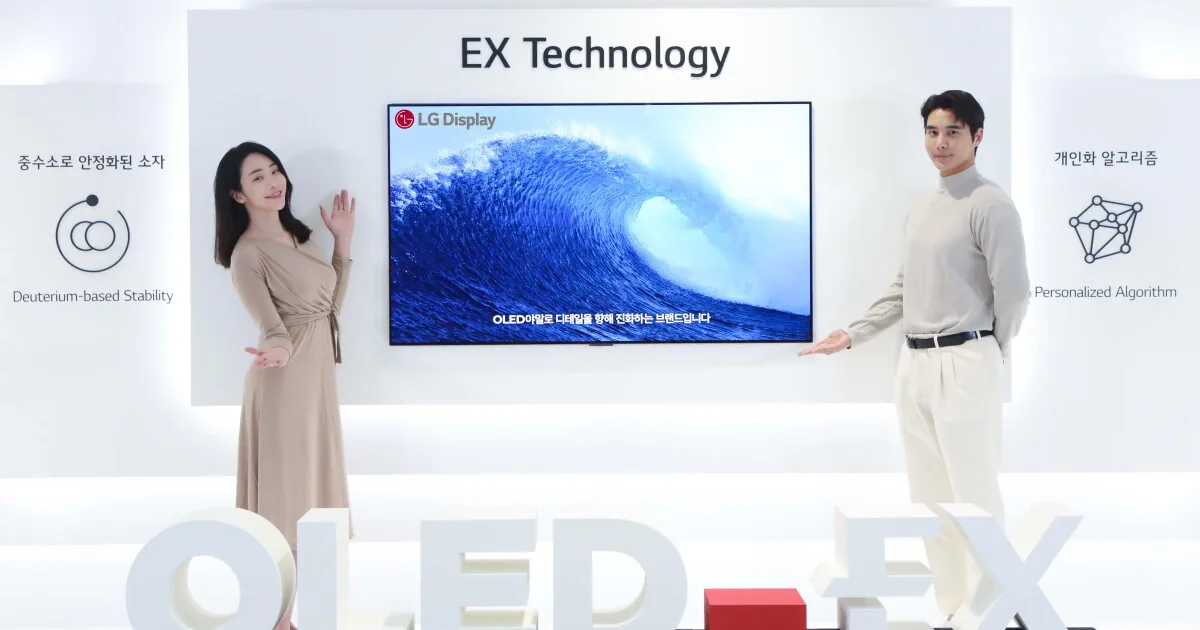
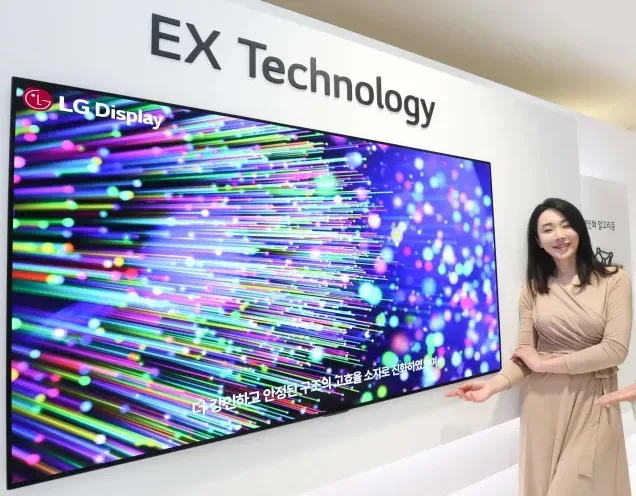
In 2021, LG Display announced OLED EX technology, replacing standard hydrogen in organic materials with heavier deuterium extracted from water to strengthen chemical bonds against elevated operational energy. Dr. Oh Chang-ho oversaw the deployment of deuterium panels at LG Display factories in Paju, South Korea, and Guangzhou, China, boosting peak brightness by up to 30 percent while trimming 65-inch TV bezels to 4 mm. This chemical upgrade allowed large organic TVs to compete more effectively against high-output quantum dot panels [12].

Color Accuracy Across Angles
Color performance encompasses both the range of reproducible hues and how well those shades maintain their chromatic saturation when viewers watch content from off-center seating positions inside family living rooms. QLED TVs deliver outstanding color volume because microscopic crystals convert light into pure primary wavelengths, allowing Samsung Electronics to achieve full coverage across the DCI-P3 color space. However, liquid crystal shutter layers direct light primarily forward, causing color saturation and perceived contrast to drop noticeably when viewers sit away from the center axis [3].
Organic panels excel in off-axis viewing consistency because each self-emissive subpixel generates light right at the front glass surface, dispersing photons evenly over a wide viewing cone. A viewer seated at a sharp off-center angle observes virtually identical color balance, contrast, and black levels as someone sitting directly in front of the TV, making organic screens ideal for wide living room arrangements [3]. In medical imaging and surgical theaters where off-axis viewing accuracy is essential for patient diagnosis, Japanese display specialist JOLED shipped 21.6-inch printed organic panels with 204 pixels per inch and 350 cd/m² output to Sony. JOLED chief technology officer Yoneharu Takubo noted that printed manufacturing solved subpixel uniformity challenges, drawing financial support from Japan Display Inc, JDI, Innovation Network Corporation of Japan, INCJ, Sony, and Panasonic in 2014 [10].
Creative artists working on laptops like the HP OmniBook 5 laptop count on organic screens to preserve true colors when tilting the lid. Narrow viewing cones on basic liquid crystal screens can skew subtle color grading during professional travel workflows. Liquid crystal colors shift when viewed from side seats [3].

Burn-in Risks and Panel Lifespan
The primary durability concern surrounding organic displays is permanent image retention, commonly known as burn-in, which occurs when static on-screen graphics cause uneven cumulative wear across individual subpixel arrays. Because organic light-emitting diodes rely on carbon materials that slowly degrade with use, subpixels that continuously show static elements like news chyrons, station logos, or gaming interfaces decay faster than surrounding pixels. When Samsung Electronics withdrew from large-scale OLED TV manufacturing in 2014, corporate leadership cited this blue pixel degradation problem as their primary technical justification for pivoting toward quantum dot liquid crystal screens instead. Blue organic subpixels have shorter operating lifespans than red or green elements, accelerating visible color shifts and permanent silhouette artifacts under continuous operating loads [6].
QLED displays use inorganic semiconductor crystals that do not suffer from chemical degradation under prolonged static image loads on desktop monitors. Reliability remains a key factor in oled vs qled evaluations for retail spaces where screens run twelve to twenty-four hours daily. Trading desks and retail storefronts run quantum dot screens without ghosting [3].
LG Display addressed panel longevity by signing long-term licensing agreements through 2022 with Universal Display Corp (UDC), with LG spokesman Hyun Dong-hoon confirming non-exclusive rights to purchase durable phosphorescent materials for premium TVs [9]. LG Display later received the Technology Award at the HiVi Grand Prix in 2022 after broadening deuterium application across red and green layers to extend operational panel lifespan in consumer product lines [13]. Software protections including pixel shifting, localized logo dimming, and automated background cleaning cycles further reduce the risk of permanent burn-in on modern consumer TVs [10].
Production Costs in OLED vs QLED Lines
Manufacturing economics heavily favor QLED hardware in large screen sizes because quantum dot displays build on decades of mature, highly optimized liquid crystal fabrication lines with exceptional production yields. In 2018, Chinese manufacturer BOE launched 10.5th generation LCD fabrication lines that sliced large motherglass sheets with minimal perimeter scrap, driving global LCD panel costs down to an average of $508 by early 2019. Samsung Electronics Chairman Kwon Oh-hyun rejected proposals to expand older 8th generation lines, opting instead to purchase cheap commodity LCD glass from external suppliers and apply proprietary quantum dot enhancement films for lucrative profit margins. This strategy allowed Samsung to dominate premium TV retail sales, outmaneuvering rivals by delivering large-screen sets at competitive consumer price points while maintaining healthy corporate operating profits [6].
Fabricating large organic panels requires capital-intensive vacuum thermal deposition equipment and expensive precursor materials that lower early factory yield rates [10]. Initial high-resolution organic manufacturing lines operated at yields below 70 percent, driving retail costs upward for early adopters. Early organic panel yields remained low [11].
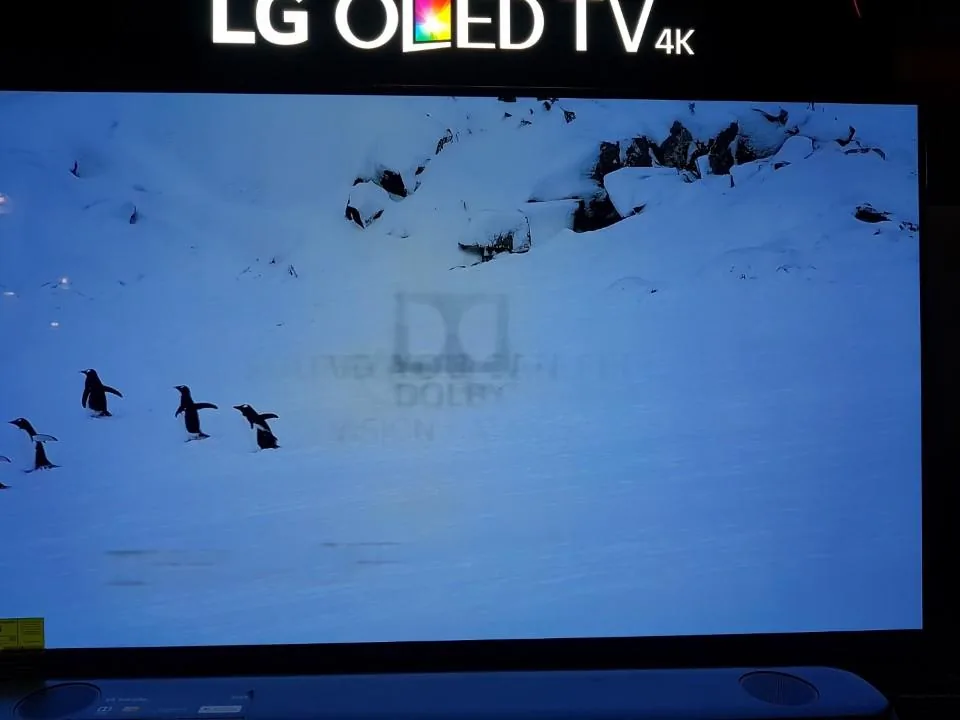
In 2013, LG Electronics launched its first commercial 55-inch OLED TV at CES in Las Vegas for KRW 11 million, representing a retail price of approximately $10,000. Valerie Coffey of Optics & Photonics News reported that the ultra-thin 4 mm panel weighed only 10 kg, demonstrating immense aesthetic appeal despite its steep initial retail price. Samsung also showcased a curved 55-inch OLED prototype at the same exhibition, though Samsung later abandoned that production approach in favor of cost-effective quantum dot architectures [14].
Finding the Best OLED vs QLED Fit
Retail price reductions have narrowed the cost gap in smaller dimensions, with promotions on the Roku OLED TV lineup making organic picture quality accessible to budget-conscious shoppers seeking mid-sized TVs. However, manufacturing an 88-inch organic panel remains vastly more expensive than fabricating an equivalent quantum dot LCD screen, keeping budget-conscious large home theaters centered on QLED technology [6]. In dedicated media rooms with controlled blackout shades, organic screens deliver an unmatched cinematic experience through pure black levels, infinite contrast, and zero halo blooming around subtitles [3].
Bright living rooms with open windows and overhead light require the high sustained peak brightness delivered by quantum dot backlights. QLED displays cut through daytime reflections, preserving rich color saturation and picture clarity during afternoon family viewing sessions. Quantum dot panels resist static image burn-in [3].
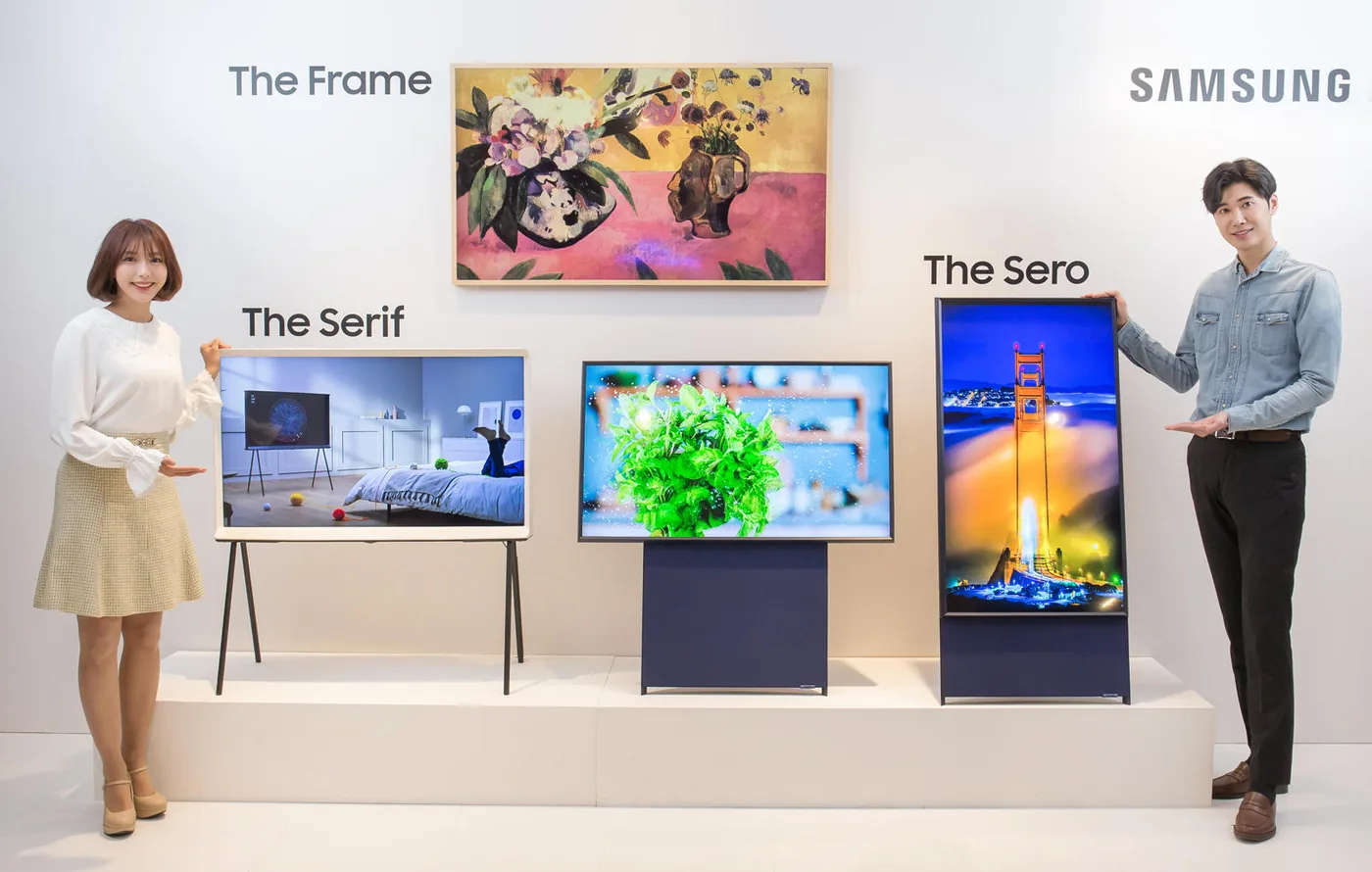
Samsung Display now manufactures hybrid QD-OLED panels that merge blue organic emitters with quantum dot color converters, combining the infinite contrast of self-lit pixels with the rich color volume of quantum dots. Cho Mu-Hyun reported for ZDNET that LG Display shipped 2.9 million OLED TV panels in 2018 before targeting 4 million units under LG Corp Chairman Koo Kwang-mo and Vice Chairman Kwon Yong-soo [6]. Ultimately, choosing between oled vs qled comes down to room lighting conditions, content viewing habits, and household display budget limits [3].
- ACADEMIC JOURNAL Hong, G., Gan, X., Leonhardt, C., Zhang, Z., Seibert, J., Busch, J. M., & Bräse, S. (2021). A Brief History of OLEDs—Emitter Development and Industry Milestones. Advanced Materials, 33(9), e2005630. [Article Link]
- ACADEMIC JOURNAL Salehi, A., Fu, X., Shin, D., & So, F. F. (2019). Recent Advances in OLED Optical Design. Advanced Functional Materials, 29(15), 1808803. [Article Link]
- WEBSITE Dunphy, M. (2026). OLED vs. non-OLED: Choosing the right monitor. Samsung Business Insights. [Article Link]
- WEBSITE OLED-Info. (2025). PMOLED vs AMOLED – what’s the difference? [Article Link]
- WEBSITE National Inventors Hall of Fame. (2026). Steven Van Slyke. [Article Link]
- ONLINE NEWS Cho, M.-H. (2019). Fear and Trembling: LG Display faces the axe for OLED burn-in and market squeeze. ZDNET. [Article Link]
- ONLINE NEWS EETimes. (2001). Sanyo, Kodak ramp OLED production line. [Article Link]
- WEBSITE OLED-Info. (2024). Sony XEL-1 OLED TV. [Article Link]
- ONLINE NEWS Kim, Y.-C. (2015). LG extends OLED pact with UDC. The Korea Times. [Article Link]
- ONLINE NEWS Raikes, B. (2017). JOLED Starts Commercial Shipments Printable OLEDs. Display Daily. [Article Link]
- REPORT Intel Market Research. (2026). Tandem OLED Display Market: Growth Analysis, Dynamics, Key Players and Innovations, Outlook and Forecast 2026-2034. [Article Link]
- ONLINE NEWS Ridden, P. (2021). LG Display swaps hydrogen for deuterium for brighter OLED screens. New Atlas. [Article Link]
- ONLINE NEWS Kale, E. (2023). LG Display Enhances OLED Panels with Expanded Deuterium Application. Display Daily. [Article Link]
- ONLINE NEWS Coffey, V. (2013). First OLED TVs Reach Consumer Market. Optics & Photonics News. [Article Link]
- WEBSITE Wikipedia contributors. (2026). OLED. Wikipedia, The Free Encyclopedia. [Article Link]


