






Microsoft released a preview update for DirectX ray tracing that targets one of the heaviest bottlenecks in modern PC gaming. The company announced the update through the official DirectX developer blog, adding two graphics features designed to cut video memory consumption during real-time rendering [1]. Microsoft paired Clustered Geometry with Partitioned Top-Level Acceleration Structures to reduce ray tracing memory footprints by up to 89.7 percent in preliminary tests [2]. Shipping games won’t see these gains right away. Still, the build lays groundwork for faster lighting on modern GPUs [1].
How DirectX Ray Tracing Uses Mesh Clusters
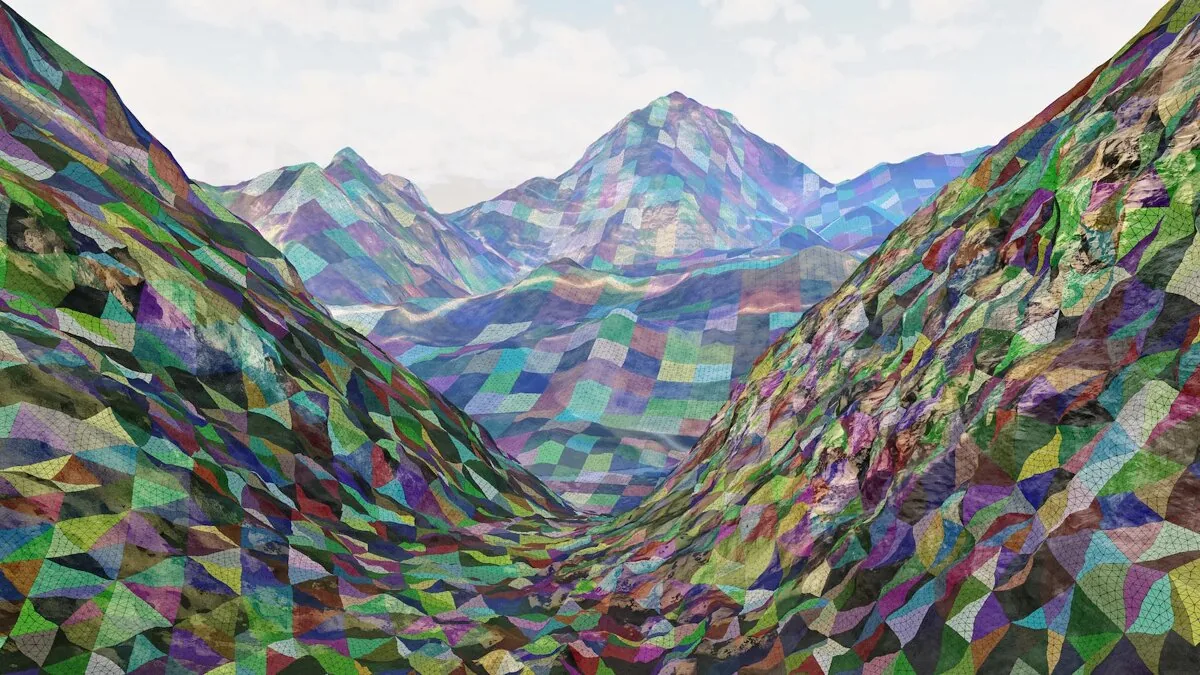
Ray tracing simulates realistic lighting by bouncing rays through 3D scenes, but testing intersections against millions of single triangles creates severe hardware bottlenecks. Engines use Bounding Volume Hierarchies to help. In current setups, DirectX ray tracing splits this scene data into Bottom-Level Acceleration Structures for single models and Top-Level Acceleration Structures for world placement [3].
Standard bottom-level trees often store duplicate polygon data when engines switch between high-detail models and lower level-of-detail meshes during play. Microsoft created Clustered Geometry to remove this wasted storage by breaking complex scene meshes into small, reusable triangle groups [3]. Dr Volker Zota reported for Heise Online that each Cluster Level Acceleration Structure (CLAS) holds no more than 256 triangles and 256 vertices within a fixed unit. Engines build detailed models by linking these pre-built clusters instead of remaking entire meshes from scratch when objects enter view. Because many visual instances can share the same clusters across varied distances, studios avoid duplicating geometry tables for every detail tier [1].
This clustering setup lets ray tracing tap the exact meshes drawn during raster passes instead of relying on simplified proxy models, which AleksandarK at TechPowerUp reported helps ray-traced shadows match visible game assets without building separate geometry trees [4]. When shapes move, the engine simply swaps cluster links [1]. This direct mesh reuse avoids visual errors where ray-traced reflections fail to align with high-polygon models drawn during standard rasterization passes [4].

Partitioned Acceleration Structures for Dynamic Scenes
While Clustered Geometry optimizes single models, top-level hierarchies create a tough hurdle in large game worlds. Fahd Temsamani at Club386 likened Bounding Volume Hierarchies to finding a teacup inside a cardboard box inside a cargo truck: the ray test checks the truck first, then the box, and only tests teacup triangles if outer bounds hit. But in standard setups, moving an object forces the GPU to rebuild the entire top-level tree [3]. That full rebuild consumes valuable frame time because static buildings undergo needless checks alongside moving targets [2].
Microsoft resolved this bottleneck by creating Partitioned Top-Level Acceleration Structures (PTLAS), which divide the virtual world into distinct regions [3]. When an animated model moves, the graphics chip only recalculates the specific partition holding that model. Static world regions stay in memory untouched [2]. In a domino simulation tested by Microsoft, a full structure rebuild required 2.88 milliseconds, but updating the partitioned structure with 4,702 local write operations took just 0.79 milliseconds [1].
The update also introduces ExecuteIndirectRTASOperations, allowing compute shaders to generate acceleration structure instructions straight on the graphics hardware without relying on central processor dispatch. The design frees CPU cores for physics [2]. Interdependent build steps still need explicit synchronization passes [1].


Benchmark Results in Agility SDK 1.722
The performance gains showed up in developer benchmarks released with Agility SDK 1.722-preview [1]. Testing the code on an AMD Radeon RX 9070 graphics card, Microsoft recorded an 89.7 percent drop in video memory allocated to acceleration trees [3]. Dedicated tree memory shrank from 7,519 MiB down to 774 MiB in the test scene. Microsoft explicitly cautioned that this metric applies only to ray tracing data structures, meaning game textures and render buffers still occupy normal VRAM pools [1].
Build times dropped sharply under synthetic testing. In a test scene run on the same Radeon hardware, structure creation time fell from 788 milliseconds down to 3.11 milliseconds, allowing benchmark frame rates to jump from 1.2 frames per second to 79 frames per second [3]. On a Radeon RX 9070 XT inside a dedicated benchmark playground, Microsoft achieved a 7.83-fold speed increase in per-frame ray tracing passes [2].
Microsoft warned engineers that commercial games won’t see “this magnitude of wins” because real-world workloads balance geometry updates against raster passes, game logic, and physics pipelines [2]. The test measured memory used strictly by acceleration structures, leaving out texture buffers and geometry tables [1]. Zak Killian wrote for HotHardware that the test playground shows architectural efficiency rather than an automatic framerate fix for shipping games [2].
Hardware Support Across Modern Graphics Platforms
Players won’t see instant gains in existing games because the changes ship as a preview API instead of an automatic driver patch. Studios must integrate the cluster pipelines into their game engines before released games can benefit. Microsoft confirmed that upcoming releases, including Gears of War: E-Day, already use cluster methods through Nvidia’s RTX Mega Geometry interface. The regular Agility SDK 1.620 release shipped at the same time for immediate production needs, delivering Partial Graphics Programs, Fence Barriers Tier 1, and batched memory commands [1].
The architecture avoids proprietary silicon requirements because modern graphics cards already carry the necessary compute features. Microsoft confirmed support across Nvidia GeForce RTX series cards, AMD Radeon RX 9000 graphics, Intel Arc B-Series hardware, and Intel Core Ultra processors spanning the 200V and Series 3 lines. Qualcomm plans drivers for Snapdragon X2 platforms in early 2027 [1].
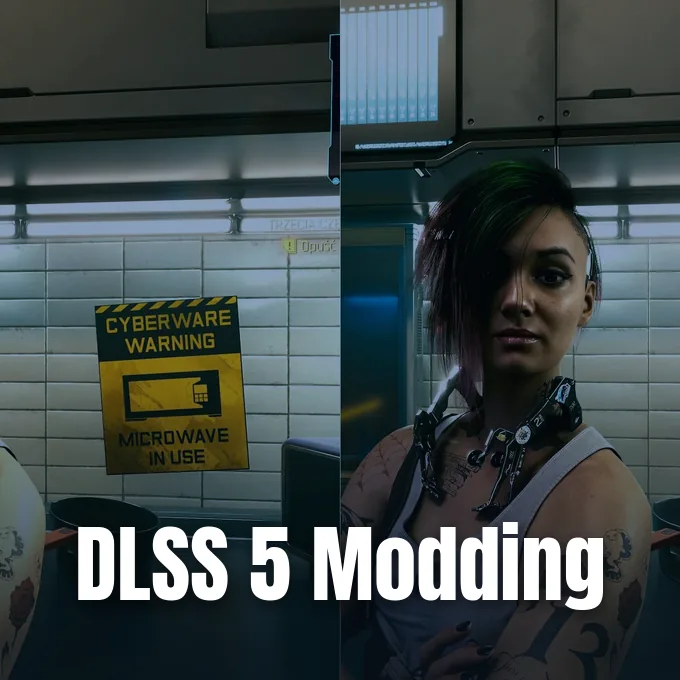
Upscaling tools and frame generation soften hardware penalties, seen in efforts where PC modders inject NVIDIA DLSS 5 into unsupported games to sustain playable speeds. But driver-level acceleration efficiency tackles the underlying memory ceiling [5]. Standardizing these methods inside DirectX allows game studios to target multiple hardware families through a single codebase instead of writing vendor-specific paths [2].
Earlier DirectX Ray Tracing Milestones
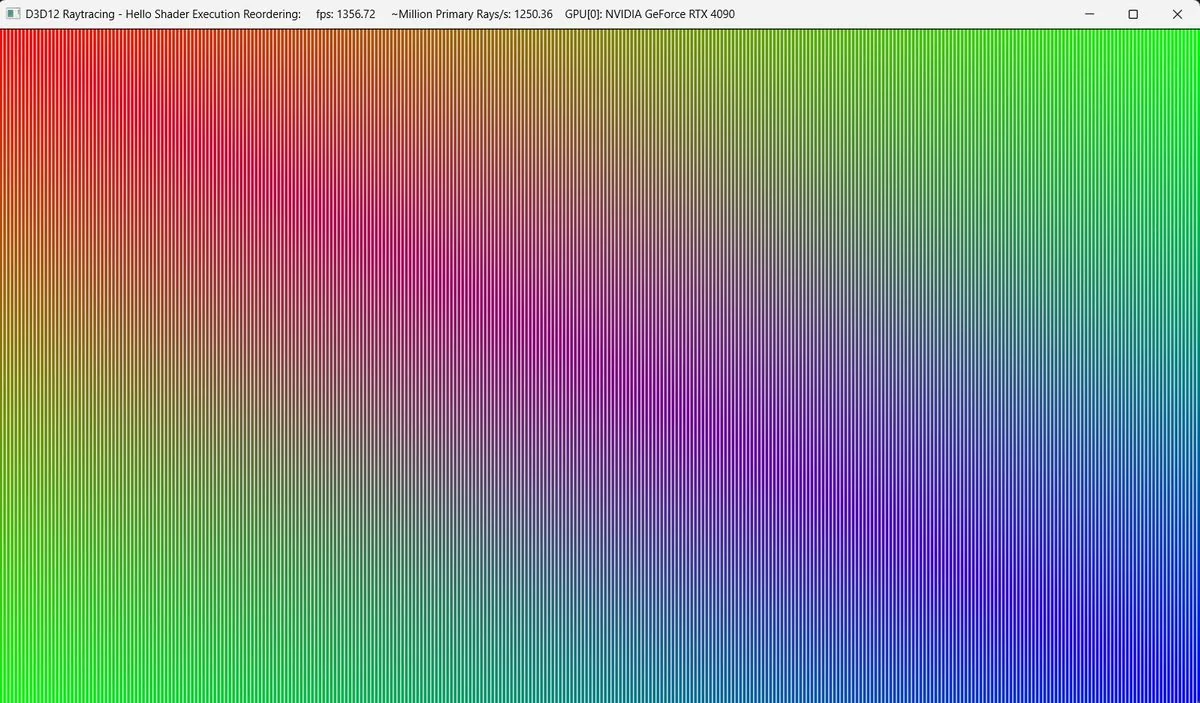
This preview builds on earlier milestones aimed at taming ray calculation costs across PC hardware. In March 2026, Microsoft rolled out Shader Execution Reordering inside Agility SDK 1.619 for DirectX Raytracing 1.2 after previewing the tech at GDC 2025. Cale Hunt at Windows Central explained that ray divergence happens when light bounces off surfaces unpredictably, forcing GPUs to process fragmented rays in serial order rather than parallel batches. Reordering groups divergent rays into coherent clusters before dispatching shaders, which keeps graphics hardware running in parallel [6].
Testing that earlier tool on an Nvidia RTX 4090 produced a 40 percent framerate gain, according to Microsoft engineer Amar Patel. Patel said: “Using SER with the settings below running on an Nvidia RTX 4090 showed a 40 percent frame rate increase versus not using SER,” and noted configurations of Intel Arc B-Series GPUs achieved 90 percent gains [5]. The reordering tool worked alongside Opacity Micromaps, which let hardware skip ray tests on transparent textures [6].
By combining clustered geometry with earlier sorting tools, Microsoft continues refining the DirectX ray tracing pipeline for future PC games [4]. While the regular Agility SDK 1.620 brought practical tools like DirectX Dump Files and Fence Barriers Tier 1, the 1.722 preview previews the next major architectural evolution [1]. Game engines that adopt these structures could make ray-traced lighting practical on mainstream gaming rigs [6].
- ONLINE NEWS Zota, V. (2026, October 30). DirectX preview aims to slash memory use for ray-tracing data. Heise Online. [Article Link]
- ONLINE NEWS Killian, Z. (2026, October 31). Microsoft’s DirectX Raytracing Trick Could Slash VRAM Use By Up To 90%. HotHardware. [Article Link]
- ONLINE NEWS Temsamani, F. (2026, October 30). Microsoft DirectX update drastically boosts ray tracing performance while reducing VRAM usage by up to 90%. Club386. [Article Link]
- ONLINE NEWS AleksandarK. (2026, October 29). DirectX Raytracing Gets Clustered Geometry for Higher FPS and Up to 90% VRAM Savings. TechPowerUp. [Article Link]
- ONLINE NEWS Crider, M. (2026, March 5). DirectX updates could boost ray tracing performance up to 90%. PCWorld. [Article Link]
- ONLINE NEWS Hunt, C. (2026, March 4). Microsoft just unlocked massive ray‑tracing speed boosts on Windows. Windows Central. [Article Link]


1 comment