



OpenAI revealed that its high-profile ChatGPT Siri integration struggled to attract users after its debut, falling far short of early internal growth targets. When Apple introduced the capability inside iOS in December 2024, the partnership looked like a pivotal bridge between generative models and consumer hardware. Instead, court documents submitted by OpenAI disclose that the arrangement was “persistently underperforming” throughout its lifecycle [2]. Rather than delivering a sudden surge of consumer engagement, the feature registered minimal adoption across Apple devices [1].
Court Filings Reveal ChatGPT in Siri Struggles
The disclosures surfaced within court documents that OpenAI submitted in an ongoing legal battle initiated by Elon Musk and his artificial intelligence venture, SpaceXAI (formerly known as xAI). Musk filed an antitrust suit targeting the collaboration, alleging that an exclusive arrangement between Apple and OpenAI unlawfully suppressed rival ventures and stifled market competition [2]. In its legal rebuttal, OpenAI argued that Musk could not demonstrate competitive harm because consumer interest in the tool barely registered. By the time SpaceXAI lodged its formal complaint, OpenAI stated that “it was clear that Apple’s integration of ChatGPT was dramatically underperforming” [1].
The filing remains heavily redacted [1]. Even with extensive portions withheld from public review, the legal brief prepared by OpenAI portrays an arrangement that failed to meet expectations from its earliest weeks. The company specifically described the Apple integration as “persistently underperforming,” showing that sluggish demand persisted across multiple software cycles rather than clearing up after an initial rollout [2].
Internal expectations within OpenAI shifted almost immediately after the December 2024 launch. As reported by Juli Clover for MacRumors, OpenAI formally acknowledged by January 2025 that the rollout was “off to a slow start” [2]. Confronted with lagging user numbers, OpenAI quickly slashed its internal projections regarding the incremental logged-in weekly active users it expected the Apple deal to generate. The anticipated flood of daily queries never arrived.
Multistep Friction Slayed Early Momentum
Tech industry analyst Alex Blake observed in TechRadar that the technical execution of the rollout introduced significant obstacles for everyday smartphone owners [1]. Apple integrated ChatGPT as an external extension rather than baking the model directly into local system processes. Consequently, iPhone owners had to navigate through a cumbersome, multistep opt-in procedure inside the Settings application before Siri could route queries to OpenAI servers. Each additional prompt and confirmation dialog created friction that discouraged casual users from ever completing the setup.
Even when users agreed to enable the extension, the system repeatedly asked for explicit permission whenever Siri prepared to send image data or text prompts outside the device. Apple introduced this capability into Visual Intelligence, allowing the camera to send visual queries to OpenAI for broader context [1]. Yet the constant interruption of permission dialogs disrupted the conversational experience that mobile users expected from conversational agents. Instead of receiving quick answers, owners faced repeated pauses.
Many smartphone owners simply chose to bypass Siri entirely. Rather than wrestling with device settings, millions of consumers downloaded the standalone ChatGPT app from the App Store or relied on standalone AI voice chat tools from OpenAI that operated without operating system friction. The dedicated mobile app provided seamless conversation histories and advanced reasoning capabilities that the Siri bridge failed to match.

Why Did the ChatGPT Siri Integration Falter?
Broader systemic shortcomings across the entire Apple Intelligence launch compounded the operational troubles facing OpenAI [1]. When Apple introduced its suite of machine learning features, the initial software releases drew criticism for delayed functionality and underwhelming utility. Because consumer reception to the initial operating system release remained tepid, the auxiliary services connected to it suffered identical neglect. If mobile owners did not find Apple Intelligence compelling, they had little incentive to discover the third-party integrations buried deep inside system menus.
Did the brand reputation of Siri drag down partner tools? Consumer perceptions had hardened over a decade of inconsistent voice assistant interactions, creating skepticism that a simple software update could resolve fundamental voice accuracy issues [1]. Users who attempted complex inquiries through the assistant often received basic web searches or encountered system timeouts, prompting them to abandon voice prompts in favor of typing queries into browser search engines.

The technical gap became more visible as Apple revamped its architecture with advancements in Siri across Apple operating systems under the newly branded Siri AI initiative [1]. While earlier iterations leaned on external handoffs, Apple began shifting its primary foundation toward Google Gemini models to handle complex mobile tasks. This transition left the Siri ChatGPT integration sidelined as Apple restructured its machine learning roadmap around more deeply integrated foundation systems.
Apple Refused OpenAI Demands for Exclusivity
Behind closed doors, the business relationship between the two Silicon Valley giants grew increasingly strained as engagement metrics lagged. Court records show that OpenAI approached Apple in an effort to secure a two-year exclusivity agreement, seeking to lock out rival frontier lab providers from gaining direct access to iOS users. Apple refused the request [2].
The written contract between both corporations explicitly preserved Apple’s legal right to “integrate products or services that provide the same or similar functionality as [ChatGPT]” [2]. Apple executives told OpenAI during contract negotiations that they planned to start with one partner and subsequently introduce competing foundation models over time. Apple made identical statements to the press during its initial product unveilings, making clear that its platform would remain open to multiple AI vendors.
Apple had different plans. Both companies met in March 2026 [2]. Although details surrounding that discussion remain redacted from court documents, the conversation followed months of persistent underperformance and Apple’s concurrent agreement to incorporate Google Gemini technology. OpenAI found itself without the exclusivity it sought, facing an ecosystem where device manufacturers maintain leverage over model providers.
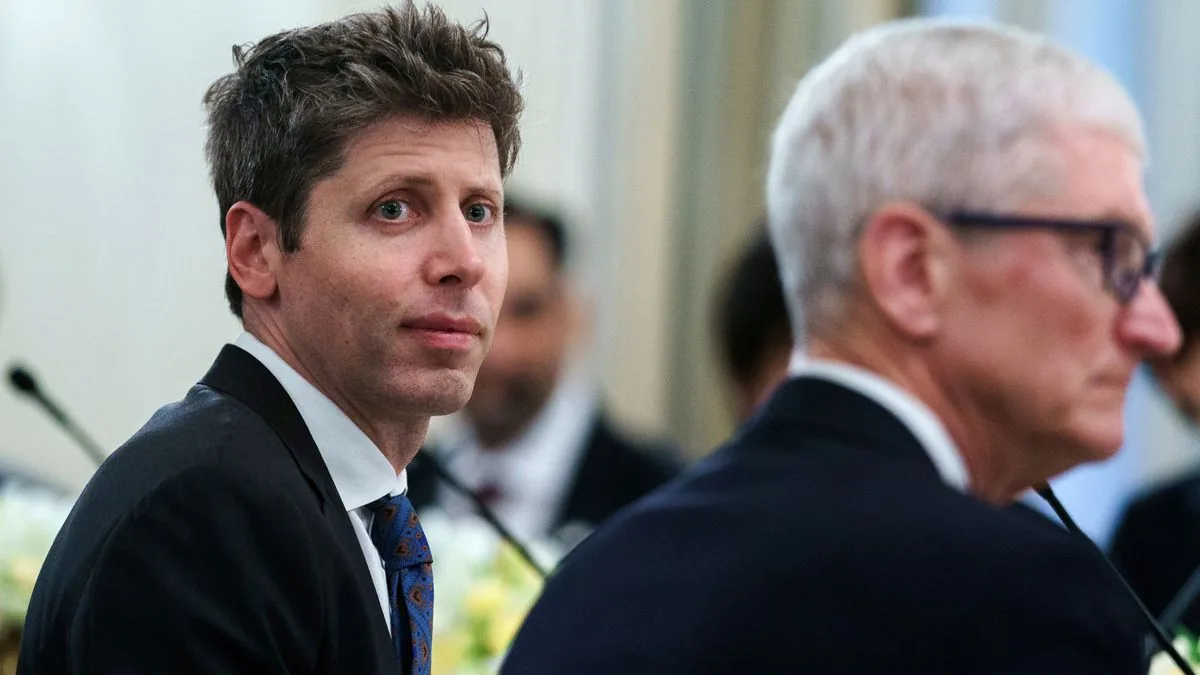
Apple guarded its platform independence closely. The technology titan rejected exclusivity clauses, welcoming competing foundation models instead [2].
Antitrust Defense Argues Damage Was De Minimis
The core of OpenAI’s legal strategy in the SpaceXAI litigation rests upon the tangible failure of the Siri integration. In court filings seeking dismissal of the lawsuit, OpenAI argued that Elon Musk cannot claim commercial harm or foreclosure from an ecosystem that generated almost no meaningful consumer activity [2]. The brief asserts that even if the court assumes iOS users who enabled ChatGPT were foreclosed from competing services, the actual volume of foreclosure caused by the contract was “indisputably de minimis” [1].
To substantiate this defense, OpenAI retained economic expert Dr. Catherine Tucker to evaluate consumer engagement across multiple industry metrics. While expert witnesses representing the plaintiffs declined to calculate specific foreclosure shares, Dr. Tucker evaluated the exact proportion of generative AI consumers who accessed ChatGPT via Apple Intelligence using the plaintiffs’ own economic definitions and dataset. Although the precise numerical percentages in her report remain redacted in public court records, her analysis concluded that foreclosure shares across all metrics were negligible, aligning directly with OpenAI’s internal assessment that Apple Intelligence saw minimal usage [2]. The empirical findings indicated that competitors like xAI suffered no demonstrable disruption to their user acquisition channels.
The legal dynamics shifted significantly when Musk’s companies dropped their claims against Apple earlier this month, leaving OpenAI as the sole defendant confronting the antitrust litigation. OpenAI has formally petitioned the presiding judge to dismiss xAI’s remaining claims before the case proceeds to a full evidentiary trial scheduled for January 2027 [2].
- ONLINE NEWS Blake, A. (2026, September 24). ‘Apple Intelligence saw minimal usage’: OpenAI complains that ChatGPT in Siri was ‘dramatically underperforming’ as hardly anyone was using Apple’s AI. TechRadar. [Article Link]
- ONLINE NEWS Clover, J. (2026, September 23). ChatGPT in Siri ‘Persistently Underperforming,’ Says OpenAI. MacRumors. [Article Link]
- ONLINE NEWS AppleInsider. (2026, September 24). ChatGPT as an extension in Siri dramatically underperformed, says OpenAI. [Article Link]


