



Maintaining effective cholesterol control represents a primary clinical priority across modern cardiovascular medicine, prompting physicians to update long-standing prevention strategies. At least a quarter of Americans live with elevated circulating blood lipids, an atherogenic condition clinically classified as dyslipidemia (an abnormal accumulation of cholesterol or fatty acids in the bloodstream). While historic public health advice relied on uniform lipid thresholds, recent clinical insights emphasize individualized patient biology. In March 2026, the American Heart Association and the American College of Cardiology published revised clinical guidelines in Circulation establishing personalized risk targets [1].
Why Control Cholesterol?
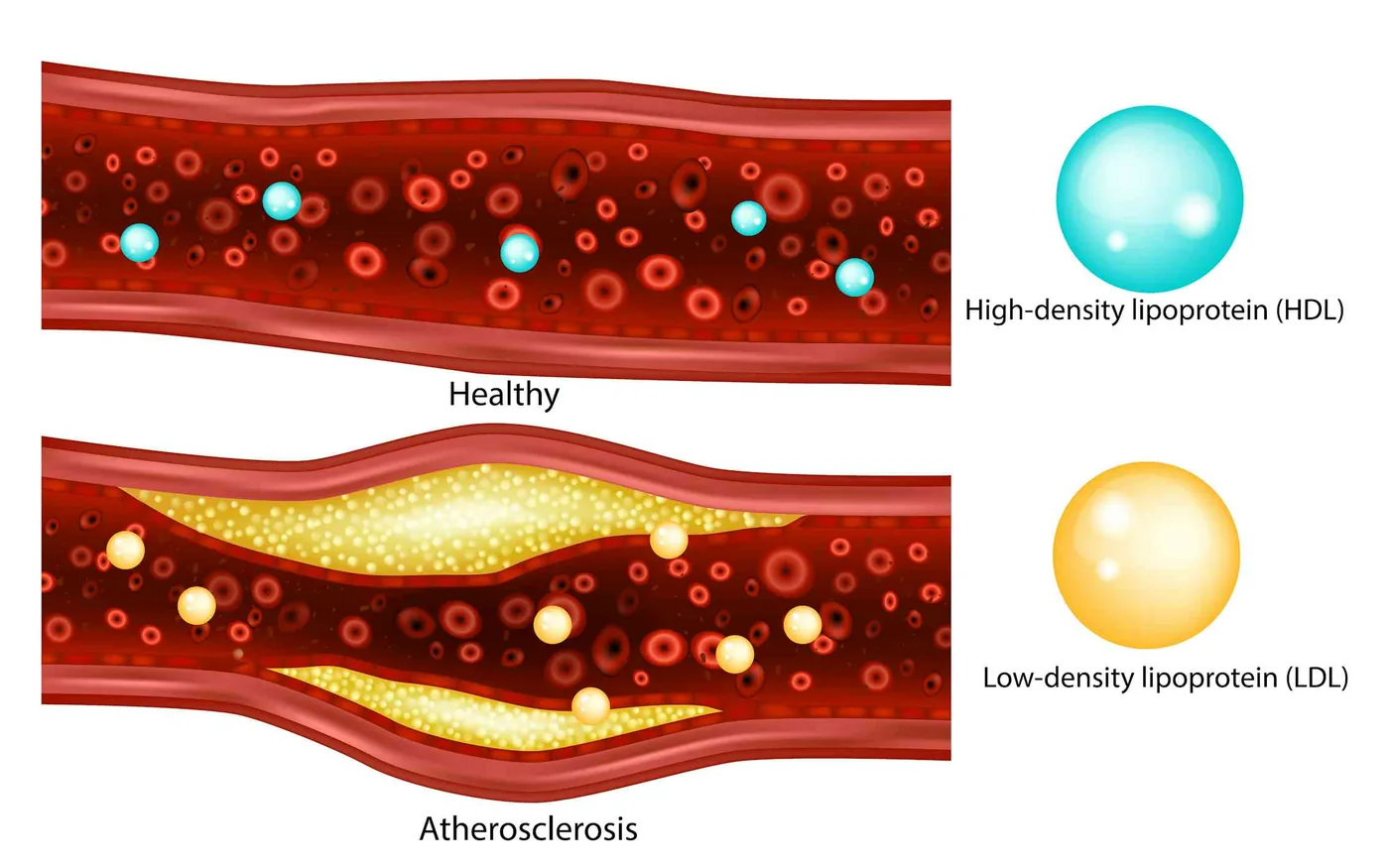
Clinicians emphasize cholesterol control because persistent elevations in circulating blood fats allow atherosclerotic plaques to accumulate inside arterial walls, clinically designated as atherosclerosis, progressively obstructing blood flow to vital organs and precipitating acute myocardial infarction or stroke. Atherosclerotic Cardiovascular Disease develops silently across decades as circulating low-density lipoprotein particles penetrate the delicate endothelial lining of major coronary vessels. When arterial walls sustain chronic vascular inflammation and continuous lipid deposition, major blood vessels lose elasticity and narrow significantly. This progressive narrowing directly threatens oxygen delivery to working cardiac muscle and vulnerable cerebral tissue [1].
When unstable arterial plaques rupture unpredictably, sudden luminal obstruction halts oxygenated blood delivery to myocardial tissue, precipitating acute coronary events [1].
Cumulative lifetime exposure represents the most critical biological determinant in developing severe vascular pathology across aging populations. Comprehensive epidemiological records demonstrate a direct proportional relationship between the total duration of elevated blood cholesterol and subsequent Cardiovascular Disease morbidity, proving that unmanaged circulating fats cause lasting arterial injury long before noticeable clinical symptoms emerge. In an analytical report released as an unreviewed preprint prior to formal media publication, cardiologist William Cornwell examined how decades of lipid exposure compound arterial risk. William Cornwell summarized the clinical evidence. Scientific Editor Gaby Clark and Chief Editor Andrew Zinin of Medical Xpress highlighted that uncontrolled dyslipidemia inflicts silent damage that accelerates without timely intervention. Furthermore, the investigative authors noted that Preventive Medicine and Exercise Science provide vital clinical perspectives for establishing early cardiovascular defense [2].
What Changed in the 2026 Dyslipidemia Guidelines?
The March 2026 clinical update shifts cardiovascular management decisively toward earlier screening and aggressive therapeutic intervention to prevent cumulative arterial damage before symptoms ever manifest. Compared with prior recommendations issued in 2018, the American Heart Association and the American College of Cardiology established that delaying therapy until middle age allows decades of irreversible atherogenesis to take root. High cholesterol levels inflict proportional Cardiovascular Disease harm over the span of a lifetime. Consequently, therapeutic timelines now focus on younger patient cohorts to suppress atherogenic lipid exposure throughout adult life [1].
To implement this proactive strategy, the 2026 guidelines incorporate advanced diagnostic blood tests and non-invasive anatomical imaging tools that were absent from older practice frameworks. Clinicians no longer depend exclusively on standard lipid panels; instead, medical teams evaluate circulating apolipoproteins and measure coronary calcification. Healthcare providers are explicitly encouraged to use an online risk assessment tool called PREVENT-ASCVD to categorize patient vulnerability into low, intermediate, or high tiers. The PREVENT-ASCVD tool guides risk stratification. This digital calculator estimates ten-year Cardiovascular Disease risk beginning at age 30 while simultaneously forecasting cumulative risk trajectories over the subsequent 30 years [2].
Personalized Cardiovascular Medicine requires evaluating verified biological vulnerability rather than relying strictly on chronological age. When clinicians identify premature arterial stress through comprehensive lipid profiling and objective imaging, targeted medical therapies preserve long-term vascular elasticity and protect vital organs. High-risk adults start preventive therapy at 30. Proactive clinical protocols ensure that younger individuals maintain healthy circulatory function and sustained cholesterol control throughout their adult lives [1].
Advanced Biomarkers: Evaluating ApoB and LpA
In the mid-20th century, cardiovascular physiologists pinpointed low-density lipoprotein (LDL) and high-density lipoprotein (HDL) as central molecules governing human circulatory health. Subsequent epidemiologists observed that elevated circulating LDL concentrations directly correlated with higher rates of myocardial infarction. A historic conceptual breakthrough occurred in the 1980s, when two physiologists received the Nobel Prize for discovering the LDL receptor (a cell-surface protein regulating cellular cholesterol uptake). Nobel laureates identified the LDL receptor. While standard lipid panels track total cholesterol and triglycerides, modern cardiology recognizes that traditional mass measurements cannot fully capture individual Cardiovascular Disease vulnerability [1].
The updated guidelines establish apolipoprotein B (ApoB) as a decisive biomarker for refining clinical Cardiovascular Disease risk evaluation. Structurally embedded on every atherogenic lipid particle, ApoB directly reflects the exact particle count circulating through the bloodstream, contrasting with routine LDL tests that merely calculate aggregate lipid mass. Clinicians evaluate both ApoB and LpA. This quantitative particle metric provides superior predictive precision for patients diagnosed with diabetes or metabolic syndrome, as well as individuals presenting with normal LDL concentrations accompanied by elevated triglycerides [1].

Lipoprotein A (LpA) introduces another essential dimension of individualized risk stratification under the revised clinical recommendations. Structurally analogous to LDL, LpA features an attached surface protein called apolipoprotein A that makes the particle sticky and prone to accelerating vascular blockages. Elevated circulating LpA substantially amplifies lifetime Cardiovascular Disease risk, with vulnerability climbing steadily as concentrations increase. Because LpA levels remain governed by inherited genetics, mirroring clinical research where individuals possess a genotype linked to reduced lifespan, routine nutritional adjustments rarely lower these atherogenic particles. Consequently, the American Heart Association recommends measuring LpA at least once across all adult patients to establish an enduring baseline of lifetime cardiovascular risk [2].


Managing Cholesterol Levels Through the CPR Model
Modern Preventive Cardiology organizes personalized patient care around a structured clinical framework known as the CPR protocol for long-term cholesterol control. Healthcare teams begin by calculating an individual’s baseline ten-year Cardiovascular Disease risk through the PREVENT-ASCVD algorithmic equation. Practitioners subsequently personalize that statistical projection by integrating unique modifying factors, such as family histories of premature coronary disease, metabolic comorbidities, and specialized blood biomarkers. Clinicians then reclassify patient vulnerability using non-invasive imaging scans before they ultimately reassess targeted pharmacological and lifestyle interventions [1].
Diagnostic imaging plays an expanded clinical role by reclassifying patient risk through Coronary Calcium Score assessments and non-contrast computed tomography scans (coronary artery calcium). These specialized radiological measurements directly quantify calcified plaque deposits embedded within coronary arteries supplying the myocardium. While earlier dyslipidemia protocols omitted routine calcium scans, the 2026 update establishes arterial calcium as an objective indicator of established Cardiovascular Disease. Elevated calcium deposits indicate greater atherosclerotic plaque burden. When calcification appears in asymptomatic intermediate-risk adults, physicians recalibrate treatment goals to arrest disease progression [2].

Structured screening schedules ensure that emerging dyslipidemia receives clinical attention during formative developmental years. The guidelines advise pediatricians to conduct an initial lipid panel for children between ages 9 and 11 to identify severe hereditary cholesterol disorders before vascular inflammation causes lasting damage. Children require diagnostic screening by age 11. Adult lipid evaluations commence at age 19, requiring repeat screening every 5 years throughout adulthood. Adults repeat lipid testing every 5 years. For individuals with documented early plaque accumulation or elevated lifetime risk, clinicians consider initiating preventive pharmacotherapy starting at age 30 [1].
Cholesterol Control Medicine and Statin Therapies
When dietary and behavioral modifications prove insufficient to reach clinical targets, medical therapy becomes necessary to suppress atherogenic lipid synthesis and achieve cholesterol control. Statins—such as atorvastatin (marketed as Lipitor) and rosuvastatin (marketed as Crestor)—remain the foundational standard of care in Cardiovascular Medicine. Patients often receive atorvastatin or Crestor. These pharmaceutical agents work primarily by inhibiting cholesterol synthesis within hepatocytes, stimulating liver cells to clear larger volumes of circulating LDL particles [1].
Cardiologists emphasize that treatment intensity must reflect documented arterial plaque burden rather than arbitrary age thresholds. While debates persist regarding the preventive role of statins for healthy people without prior cardiovascular events, the 2026 guidelines recommend calibrating pharmaceutical intensity directly to measured biological risk. When clinicians detect high Coronary Calcium Score values or elevated ApoB, aggressive statin regimens stabilize vulnerable arterial lesions. Physicians calibrate statin doses to documented plaque severity [1].

For individuals who cannot achieve optimal lipid levels through statins alone, or who develop intolerable muscular adverse effects, the updated guidelines incorporate several newer classes of non-statin medications. Introducing non-statin therapies allows clinicians to lower circulating atherogenic particles substantially without escalating statin dosages beyond patient tolerance. Medical teams tailor combination regimens to unique patient tolerances. By pairing proven statins with targeted non-statin pharmaceuticals, cardiologists ensure that high-risk individuals achieve substantial plaque stabilization and reduce their long-term susceptibility to coronary events [2].
How to Control Cholesterol with Diet and Routine Exercise?
Cardiologists recommend achieving cholesterol control with diet by sharply reducing daily consumption of added sugars, refined carbohydrates, saturated fats, and alcohol while increasing nutrient-dense whole foods. Nutritional modifications remain the foundational baseline of Cardiovascular Disease prevention across every clinical risk tier. The American Heart Association emphasizes that dietary changes help stabilize arterial endothelium and lower circulating triglycerides. When individuals substitute saturated animal fats with unsaturated vegetable oils and fiber-rich meals, physiological lipid clearance improves measurably [1].
Structured Physical Activity provides an equally vital mechanism for optimizing metabolic health and clearing atherogenic blood lipids. The 2026 guidelines recommend completing at least 150 minutes per week of moderate-intensity exercise, or 75 minutes per week of vigorous physical exertion throughout adulthood. Patients should also engage in resistance exercise at least 2 days each week to sustain skeletal muscle mass and improve metabolic efficiency. Yet routine exercise is not enough. These structured fitness targets complement broader epidemiological research demonstrating how daily step counts and cadence lower mortality risk across diverse adult demographics [2].
Broader lifestyle habits integrate into the American Heart Association framework termed Life’s Essential 8, which prioritizes adequate restorative sleep, total tobacco cessation, and rigorous blood pressure control. For patients categorized as overweight or obese, achieving Weight Management goals through an intentional weight loss of 5% to 10% of total body weight produces substantial improvements in circulating lipid profiles. By integrating earlier diagnostic screening, objective Coronary Calcium Score imaging, and sustainable daily habits, personalized cholesterol control provides patients with an effective, enduring defense against Cardiovascular Disease [1].
- ONLINE NEWS Cornwell, W. (2026). Cholesterol control gets personalized – a cardiologist explains how new guidelines tailor treatment to your unique risk profile. The Conversation. [Article Link]
- ONLINE NEWS Cornwell, W., Clark, G., & Zinin, A. (2026). Cholesterol control gets personalized—how new guidelines tailor treatment to your unique risk profile. Medical Xpress. [Article Link]
APA 7: PerEXP Teamworks. (2026). Cardiologists Personalize Cholesterol Control in 2026 Update. PerEXP Teamworks.


