



Players stepping into the haunted corridors of Control Resonant face an immediate balancing overhaul from Remedy Entertainment. The Finnish developer behind 2019’s Control deployed a swift update after early access feedback revealed punishing damage curves across opening sectors. Reviewers and players navigating the Control Resonant day one launch reported that hostile encounters felt exhausting rather than thrilling, requiring excessive ammunition to defeat standard patrol squads. Remedy responded by pushing Hotfix 1.33 to reshape combat across PC and consoles on September 24 [3].
Control Resonant Day One Combat Adjustments
Early access opened on September 22 for enthusiasts who pre-ordered the Digital Deluxe Edition on PlayStation 5 and Windows PC. Players exploring early zones quickly discovered that standard adversaries absorbed immense punishment before collapsing. In an official blog post, Remedy explained that early feedback and internal playtesting highlighted severe pacing bottlenecks during opening chapters. The studio noted that enemy health pools felt too high during the opening hours of the sequel [1].
Dylan Faden awakens from a coma. That narrative premise initially left the protagonist feeling fragile when confronting aggressive squads during early Control Resonant day one encounters. Pedro Peres at Destructoid noted that basic enemies demanded excessive hits to reach Falter (the vital stun threshold required for executing signature finishing blows). To restore momentum, Remedy targeted enemy durability and execution mechanics directly. Hotfix 1.33 arrived today [2].
Remedy did not merely depress opposing health bars to resolve combat friction. The team simultaneously increased Dylan’s maximum Aberrant Strength and Ability Strength so that unlocked upgrades provide palpable offensive power. These offensive boosts follow an ascending mathematical curve, yielding progressively larger rewards as players invest deeper into their skill progression. Willa Rowe at Polygon noted that scaling damage higher prevents Dylan from feeling frail while preserving intense combat pacing during later stages of the campaign [1].

Boss Health Nerfs for Dancer and Deserter
The most dramatic combat encounters in the opening chapters revolve around two formidable adversaries: the Dancer and the Deserter. Reviewers encountering these early bosses found that their prolonged health bars turned tactical duels into grueling endurance tests where single positioning errors brought sudden, frustrating defeats. Zack Zwiezen at Kotaku observed that before the patch arrived, these confrontations contributed heavily to complaints that the early hours were an exhausting slog. Both bosses absorbed excessive punishment before entering vulnerable states, exhausting ammunition supplies and punishing aggressive positioning. By trimming base vitality and lowering stun requirements for both early encounters, the update ensures that players test their mastery of dodges and counterattacks without feeling trapped in circular, exhausting battles against spongy foes [3].
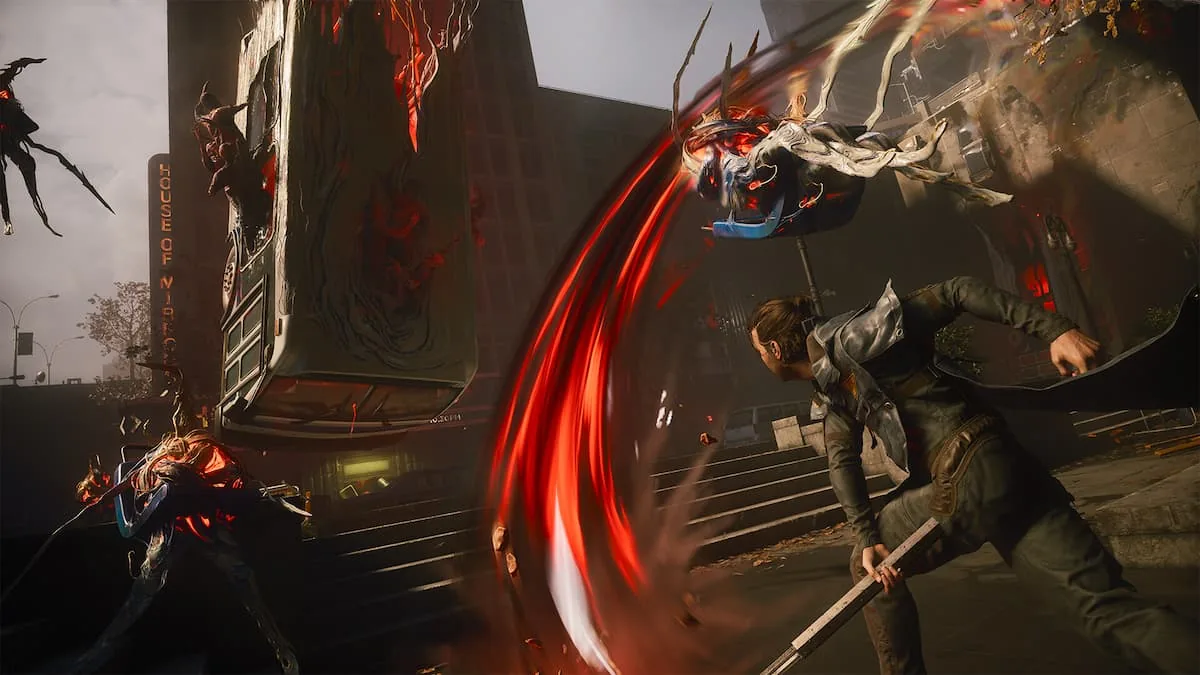
The Deserter unleashes lava attacks across ruined avenues. Following Hotfix 1.33, lower Falter thresholds allow Dylan Faden to stagger him quickly [2].
Remedy maintained that these targeted boss reductions do not dilute mechanical difficulty because attack patterns, projectile speeds, and environmental hazards remain entirely uncompromised throughout each phase. Instead of allowing bosses to absorb endless volleys of gunfire, the revised balance rewards players who coordinate Aberrant weapon transformations with kinetic telekinesis to trigger decisive stagger states. Destructoid highlighted that Dylan’s Aberrant forms unlock stylish combat skills that feel significantly more satisfying once enemies react realistically to incoming kinetic impacts. Furthermore, Pedro Peres noted that conquering these early guardians opens access to valuable upgrades hidden across Central Manhattan. By tuning the Dancer and Deserter encounters, Remedy demonstrated a commitment to fine-tuning early gameplay flow without compromising the high-stakes tension that defines its surreal cinematic universe [2].

Control Resonant Patch Lowers Respec Barriers
Beyond direct damage tweaks, the Control Resonant patch tackles progression flexibility by removing punitive costs associated with reallocating character talent points. Previously, redistributing Dylan’s combat attributes required substantial currency reserves, discouraging fans from pivoting away from initial build choices during opening chapters. Remedy permanently slashed respec fees across all platforms to motivate players to test diverse ability combinations against varied supernatural threats. Reset items now stock vendors [1].
In-game merchants across every district received increased inventories of these essential Reset Items, ensuring that explorers never find themselves locked out of build adaptations due to supply shortages. Furthermore, the development team modified early reward structures to deliver immediate utility after major milestones. Defeating the first Resonant boss now awards two Reset Items instead of a solitary drop. This change grants newcomers instant freedom to reconfigure Core Upgrades, weapon forms, and psychic disciplines before entering increasingly treacherous sectors of the city [1].
Clarifying mechanical systems also required revisions to the game’s English user interface. Polygon reported that Remedy updated confusing menu phrasing that previously obscured how character strength statistics accumulated across different gear slots. In the revised interface, Build Power no longer displays an ambiguous ‘Multiplier X%’ label, appearing instead as ‘Damage and Falter X%’ to convey practical combat value. Similarly, Aberrant Strength descriptions now explicitly credit unlocked Combat Abilities, Aberrant forms, Talents, and Core Upgrades rather than citing equipped weapon components [1].
Assist Mode Sliders and Interface Revisions
Beyond baseline hotfixes, Remedy reminded the community that Control Resonant features a granular Assist Mode inherited from the 2019 original. Players who still find combat pacing too demanding or wish to construct an even steeper challenge can adjust fine-tuning sliders in the options menu. These toggles allow custom calibration for incoming player damage, outgoing offensive output, and required Falter thresholds. Our editorial team examined these accessibility mechanics in a detailed breakdown of the Control Resonant assist mode, showing how custom toggles preserve narrative progress while letting skilled players design brutally punishing gauntlets [2].
Destructoid noted that while early access players used Assist Mode sliders to bypass spongy health pools, veteran players invert those settings for brutal New Game Plus (NG+) runs. Can accessibility coexist with hardcore action design? Remedy insisted that modular options empower diverse playstyles without forcing sweeping overcorrections. Remedy promised further balance adjustments [2].
Zack Zwiezen at Kotaku pointed out that deploying immediate day-one calibrations reflects a responsive development philosophy where live player telemetry and reviewer critiques guide rapid post-launch balance updates. Remedy gathered data from external reviews and early access impressions as well as internal staff observing final release candidate performance. This rapid response prevents initial friction from overshadowing the sequel’s ambitious technical achievements across PlayStation 5, Xbox Series X, and Windows PC. By addressing execution hurdles immediately, the studio preserved critical goodwill across its expanding player base [3].

Launch Reception and Steam Preload Reinstalls
Critical reception for the supernatural adventure remained strongly favorable despite early combat friction. Destructoid awarded the title a score of nine out of ten, praising its fluid kinetic encounters and spectacular urban environments. Reviewers singled out the rewarding nature of exploring Manhattan, where hidden upgrades and brain-teasing secrets reward thorough navigation. Explorers navigating this shifting metropolis can read our analysis of the open Manhattan world design of Control Resonant to understand its dense spatial layout. Destructoid highlighted humorous environmental challenges like the pesky laundry puzzle in Central [2].
The launch rollout did encounter a technical snag on PC digital storefronts. While console players downloaded Hotfix 1.33 seamlessly, certain Steam users reported that the day-one update triggered a complete redownload of pre-loaded game files. Zack Zwiezen at Kotaku documented widespread community frustration on Steam discussion forums. Valve platform users expressed irritation [3].
Despite the installation hiccup for PC pre-loaders, the hotfix achieved its primary objective by softening early combat barriers without diminishing core mechanical depth. Remedy affirmed that the development team will closely follow player feedback and make further adjustments as needed throughout coming weeks. With enemy durability adjusted, respec costs minimized, and clear interface indicators installed, players entering the Control Resonant day one campaign encounter a far smoother balance curve. Metacritic logged an 84 score [2].
- ONLINE NEWS Rowe, W. (2026, September 24). Control Resonant’s Day-One Patch Makes the Game Easier ‘While Still Providing a Challenge’. Polygon. [Article Link]
- ONLINE NEWS Peres, P. (2026, September 24). CONTROL Resonant fixes biggest early-game issue in day-one patch, and it’s even better now. Destructoid. [Article Link]
- ONLINE NEWS Zwiezen, Z. (2026, September 24). Control Resonant Gets Day-One Patch Making Enemies Easier To Kill. Kotaku. [Article Link]


