




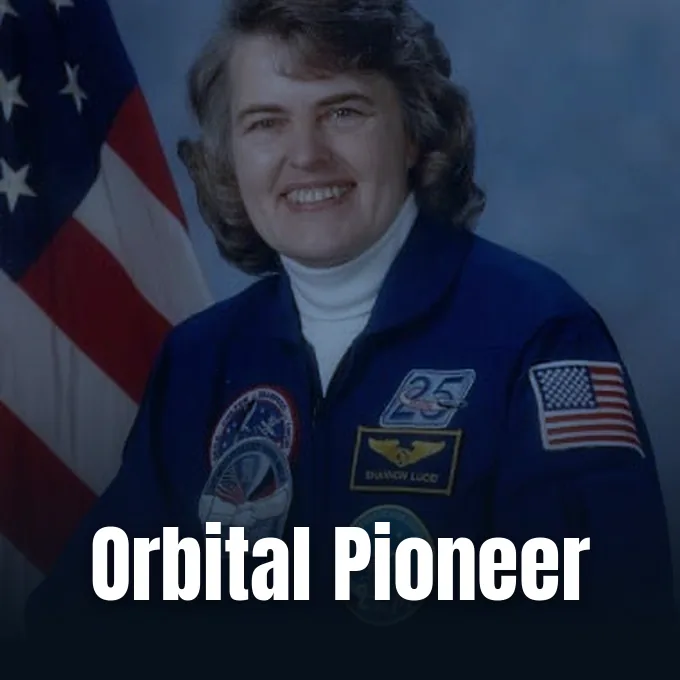
Shannon Lucid logged 188 days aboard Russia’s Mir space station and completed five Space Shuttle missions, transforming rigorous biochemical laboratory training into decades of landmark orbital exploration. How did a researcher who began her career isolating enzymes in Oklahoma become one of NASA’s most durable space explorers? Her work redefined mission endurance [3]. Across more than five thousand hours in space, she gathered critical data on human adaptation to weightlessness [4].
Shannon Lucid and Her Early Laboratory Career
Shannon Matilda Wells was born on January 14, 1943, in Shanghai, China, where her parents, Joseph Oscar Wells and missionary nurse Myrtle Wells, served as American Baptist missionaries. When she was six weeks old, Japanese forces interned the family during the Second World War. An exchange of prisoners permitted their return to the United States later that year aboard the Swedish ocean liner MS Gripsholm, where they remained until the war ended. The family settled in Bethany, Oklahoma, where she graduated from high school in 1960. Inspired by rocket pioneer Robert Goddard, she sold her bicycle to buy a telescope [3]. She built homemade rockets [4].
Aviation and chemistry shaped her youth. She earned a private pilot’s license at age twenty and purchased a preowned Piper PA-16 Clipper. After commercial airline carriers rejected her employment applications because federal aviation regulations and company policies barred female commercial pilots, Wells completed a chemistry degree at the University of Oklahoma in 1963. She worked as a senior laboratory technician at the Oklahoma Medical Research Foundation before joining the Kerr-McGee oil company, where she married fellow research chemist Michael F. Lucid in 1967 [3].
Returning to graduate study, Lucid completed a master’s degree in 1970 and earned a doctorate in biochemistry in 1973 under supervisor A. Chadwick Cox [3]. Between 1974 and 1978, she investigated biomembranes (lipid bilayer assemblies that regulate cellular signaling) as a research associate at the Oklahoma Medical Research Foundation [6]. Her doctoral dissertation investigated the biochemical impact of cholera toxin on phosphorylation and kinase activity within intestinal epithelial cells and their brush border membranes under supervisor A. Chadwick Cox [3]. She published peer-reviewed findings demonstrating cyclic nucleotide regulation of protein kinase activity in cultured mammalian cells [6]. That rigorous laboratory foundation prepared her for space research.
Selection for NASA Astronaut Group 8
In July 1976, NASA issued a nationwide call for applicants to support the emerging Space Shuttle program, expanding recruitment beyond military test pilots to include civilian mission specialists with technical doctorates [3]. More than 8,000 candidates applied for the opportunity [6]. On January 16, 1978, NASA announced the selection of thirty-five candidates in Astronaut Group 8, establishing the agency’s historic first class of astronaut candidates to include female mission specialists. The cohort adopted the informal title TFNG (Thirty-Five New Guys), splitting into red and blue classroom teams led by Rick Hauck and John Fabian. Of the six women selected, Shannon Lucid was the only mother at the time of appointment. Flight Crew Operations Director George Abbey confirmed that family status was never a factor in the selection deliberations [3].
Training transformed the academic biochemist into an operational crewmember. Candidates logged flight hours in supersonic T-38 Talon jet trainers, completed water survival drills with the 3613th Combat Crew Training Squadron at Homestead Air Force Base, and executed parasail exercises at Vance Air Force Base. The group completed instruction in fourteen months instead of the anticipated two years. On August 31, 1979, NASA officially designated Lucid an astronaut qualified for spaceflight [3]. Operations began swiftly.
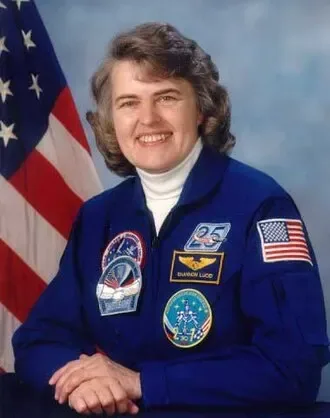
Technical support roles occupied her initial years in the astronaut office. Lucid contributed to software and systems verification at the Shuttle Avionics Integration Laboratory at Johnson Space Center and supported testing at Rockwell International’s Flight Systems Laboratory in Downey, California. She worked on rendezvous proximity operations and supported payload preparations for the Hubble Space Telescope. At Kennedy Space Center, Lucid served as an astronaut support person for STS-8, strapping flight crews into their orbiter seats before launch [3].
Early Space Shuttle Flights and Satellite Deployments
Shannon Lucid launched on her first spaceflight on June 17, 1985, serving as a mission specialist aboard the Space Shuttle Discovery on STS-51-G [6]. Commanded by Daniel C. Brandenstein, the seven-day flight featured an international crew that included French payload specialist Patrick Baudry and Saudi Arabian prince Sultan bin Salman Al Saud. The crew deployed three commercial communications satellites: Morelos I for Mexico, Arabsat-1B for the Arab League, and Telstar 303 for AT&T [3]. Lucid conducted middeck scientific experiments and assisted Baudry’s postural adaptation studies before Discovery landed at Edwards Air Force Base after 112 orbits [6].
Subsequent shuttle assignments placed Lucid at the center of NASA’s planetary exploration and orbital communications programs. On October 18, 1989, she launched aboard Atlantis on STS-34, commanded by Donald E. Williams [6]. The crew deployed the nuclear-powered Galileo spacecraft toward Jupiter using an Inertial Upper Stage, sending the planetary probe on its historic multi-year exploratory voyage into the outer solar system. In August 1991, Lucid flew aboard Atlantis on STS-43, deploying the primary Tracking and Data Relay Satellite (TDRS-E) to support orbital communications across nine days in flight [4]. Deployments proceeded smoothly [3].
In October 1993, Lucid flew her fourth mission on STS-58 aboard the Space Shuttle Columbia, a dedicated fourteen-day Spacelab Life Sciences-2 flight [4]. Researchers conducted extensive investigations into neurovestibular adaptation, fluid shifts, and muscle atrophy under prolonged microgravity. Lucid managed middeck and Spacelab biological hardware, collecting metabolic specimens to evaluate mammalian responses to weightlessness. The empirical data confirmed that physiological adjustments begin within hours of entering orbit, providing critical reference points for the extended orbital expedition that lay ahead in her career [7].

Living Aboard the Russian Mir Space Station
Lucid’s defining career milestone began on March 22, 1996, when she launched aboard the Space Shuttle Atlantis on STS-76, docking with Russia’s space station Mir to begin a residency as board engineer two [4]. Joining Mir-21 cosmonauts Yuri Onufrienko and Aleksandr Y. Kaleri, she became the only American woman ever to serve aboard the Russian station [3]. Living in the Base Block and Priroda modules, she conducted all routine station communications in Russian [1]. Daily life was austere, requiring crewmembers to rehydrate vacuum-packaged meals and manage ambient environmental hardware without modern comforts [5].
Her orbital stay spanned 188 days. This prolonged endurance established both an American spaceflight record and an international benchmark for female astronauts [4].
Orbital isolation tested personal discipline over six months. To counteract rapid bone demineralization and cardiovascular deconditioning during six months in microgravity, Lucid adhered to demanding daily exercise protocols matching modern exercise protocols designed for orbital missions. During off-duty periods, she read paperback books and used microgravity to fabricate an improvised easy chair inside the Spektr and Spacehab modules [5]. Shuttles faced mechanical delays, stretching her stay weeks past its original timeline. When Atlantis docked on STS-79 in September 1996, astronaut John E. Blaha arrived as her relief [1]. Lucid returned to Earth on September 26, 1996 [4].
Scientific Research in Orbital Microgravity
Agricultural research occupied a central place in her station schedule. Lucid regularly inspected dwarf wheat plants growing inside the Svet greenhouse within the Kristall module, tracking moisture uptake and vegetative growth cycles under microgravity conditions without gravitational vectors. How could future explorers survive multi-year voyages to Mars without self-replenishing food supplies? Her systematic observations provided empirical evidence that crops can complete vegetative growth cycles without gravitational orientation. Lucid tracked moisture distribution and root development across successive developmental stages [1].
Biochemical experiments examined the fundamental behavior of macromolecules and human tissues in orbit. Working inside gloveboxes, Lucid managed protein crystallization chambers designed to grow higher-purity protein structures for pharmaceutical analysis than terrestrial gravity allows [6]. Her blood and urine samples formed valuable longitudinal data points for modern astronaut ageing research, tracing how sustained weightlessness mimics accelerated musculoskeletal decline [7]. She preserved biological specimens under strict temperature protocols. Her analytical diligence ensured experimental reproducibility [6].
Cooperative science required bridging stark differences in engineering culture and institutional procedure. Russian cosmonauts and American flight controllers frequently operated with contrasting operational philosophies and communication protocols. Lucid used diplomatic patience and technical fluency to navigate unexpected equipment glitches and scheduling friction [3]. Her steady operational performance throughout the mission demonstrated that multinational crews could collaborate safely and effectively despite contrasting engineering doctrines and intense orbital pressures. The operational lessons learned on Mir established procedural foundations for the International Space Station [4].
Legacy Across International Spaceflight and NASA
National recognition followed her return home [6]. In December 1996, President Bill Clinton presented Shannon Lucid with the Congressional Space Medal of Honor at the White House, making her the tenth person and first woman accorded the distinction [3]. Russian authorities awarded her the Order of Friendship Medal to acknowledge her cooperative service aboard Mir [6]. In 1989, she was inducted into the Oklahoma Aviation and Space Hall of Fame [5]. Her 188-day endurance record remained the American benchmark until Sunita Williams surpassed it in 2007 [3].
Leadership positions marked the later stages of her NASA career. Lucid served as NASA Chief Scientist from 2002 to 2003, shaping agency research priorities across astrophysics, Earth observation, and life sciences [3]. In December 2002, she represented NASA at the national Centennial of Flight kickoff at the National Air and Space Museum in Washington, D.C. [5]. Lucid spent years serving as a capsule communicator (CAPCOM) in Mission Control, providing the critical operational voice link between Houston flight controllers and active space shuttle crews in orbit. She served as lead CAPCOM during STS-135, the final space shuttle mission in July 2011 [3].
Lucid retired from NASA in 2012 after thirty-four years of agency service. Across five missions, she logged 5,354 cumulative hours in space (equivalent to 223 days, two hours, and fifty minutes) [3]. Her journey from an Oklahoma biochemistry laboratory to the frontier of long-duration space exploration established that rigorous scientific methodology and steady operational endurance could expand the boundaries of human spaceflight [4].
- WEBSITE Johnson, S. L. (2026, September 17). Shannon Lucid. NASA. https://www.nasa.gov/gallery/shannon-lucid/ [Article Link]
- REPORT National Aeronautics and Space Administration. (2017, May 3). Biographical data: Shannon W. Lucid (Ph.D.) NASA astronaut (former). NASA. https://www.nasa.gov/wp-content/uploads/2019/03/lucid_shannon_0.pdf [Article Link]
- WEBSITE Wikimedia Foundation, Inc. (2004, March 3). Shannon Lucid. Wikipedia. https://en.wikipedia.org/wiki/Shannon_Lucid [Article Link]
- WEBSITE SpaceOdysseyHub. (1996, March 22). Shannon Lucid: Astronaut profile. SpaceOdysseyHub. https://spaceodysseyhub.com/astronauts/shannon-lucid [Article Link]
- ONLINE NEWS Denwalt, D. (2026, July 18). Oklahoma astronaut Shannon Lucid, a look back on high-flying career. The Oklahoman. https://www.oklahoman.com/picture-gallery/news/state/2026/07/18/shannon-lucid-oklahoma-astronaut-who-flew-on-russian-space-station-mir/90773391007/ [Article Link]
- WEBSITE Grokipedia. (2026, January 14). Shannon Lucid. Grokipedia. https://grokipedia.com/page/Shannon_Lucid [Article Link]
- ACADEMIC JOURNAL Huff, W. (1994). Spacelab Life Sciences-2: Early results are in. Life Support & Biosphere Science, 1(1), 3-11. https://pubmed.ncbi.nlm.nih.gov/11538579/ [Article Link]
APA 7: TWs Editor. (2026, September 18). Shannon Lucid logged 188 days on Mir across five flights. PerEXP Teamworks. https://perexpteamworks.com/en/shannon-lucid-mir-space-records/


