



Can deep space travel succeed if astronauts cannot farm their own food? Systematic crop health monitoring has emerged as a fundamental operational requirement for long-duration spaceflight (bioregenerative life-support systems engineered to sustain crews off-planet). As missions reach toward the Moon and Mars, fresh agricultural yields must replace prepackaged rations that degrade over time. NASA committed more than $7 million across fiscal years 2026–2030 to fund 12 targeted investigations advancing space crop cultivation and astronaut precision health [1].
Designing Sustainable Farms for Orbit
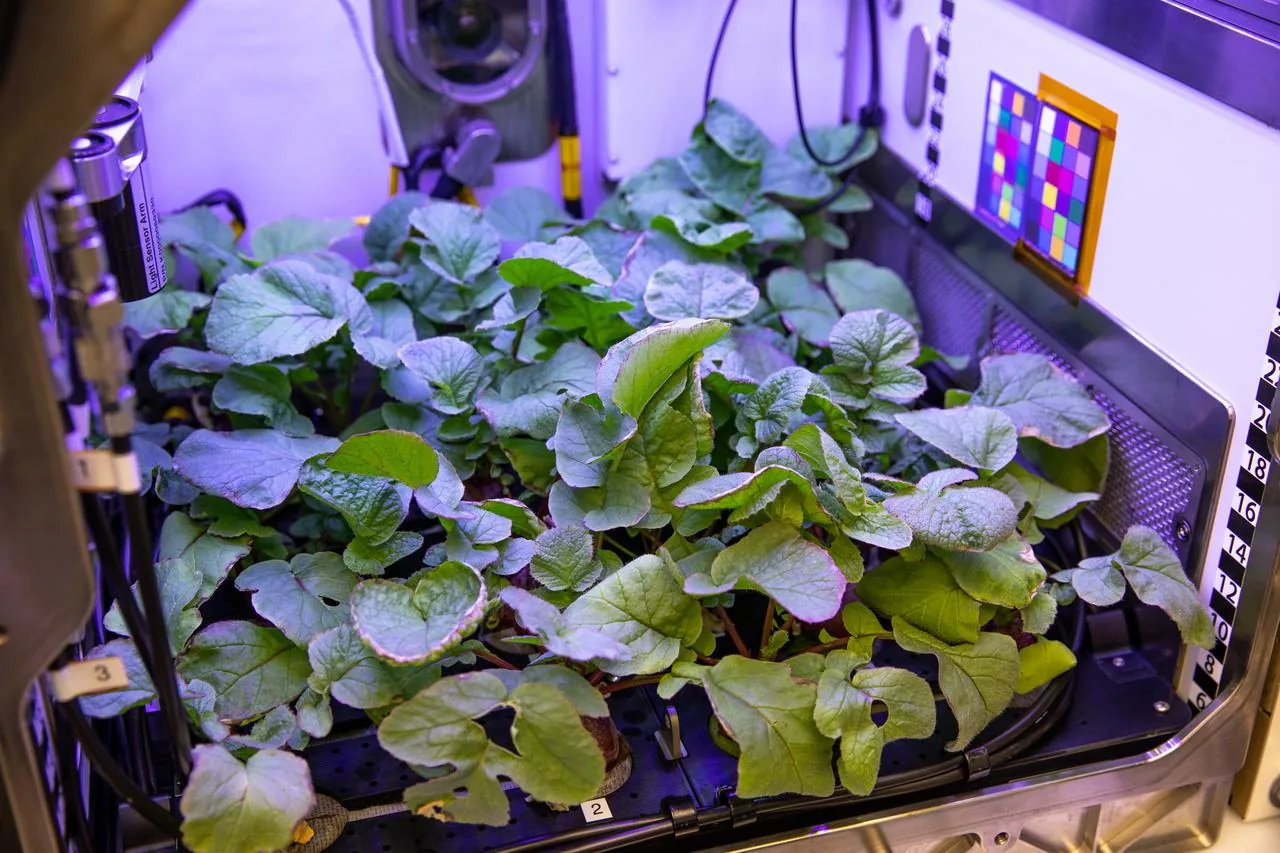
Producing fresh nutrients off-planet represents one of the stiffest engineering challenges in modern space biology. Four of the six food-focused proposals selected under the Space Crops program target edible plants, investigating how microgravity, altered radiation, and ambient microbiology alter vegetative physiology to establish rigorous baseline protocols for crop health monitoring [1]. At Texas A&M AgriLife Research, Shuyang Zhen leads an effort optimizing environmental controls and cultivar selection for dwarf tomatoes, seeking to maximize nutritional yield per cubic meter of pressurized spacecraft volume.
Space agriculture demands resilient crops. Without reliable off-planet harvests, extended planetary expeditions face nutritional shortfalls that packaged food stores cannot prevent indefinitely.
Cultivating crops on lunar or Martian bases requires scientists to understand how terrestrial plants interact with unrefined extraterrestrial soils. Miranda Haus at Michigan State University investigates legume crop rotations and microbial partnerships within regolith simulants (crushed mineral mixtures designed to mimic lunar and Martian surface dust). Her project evaluates how nitrogen-fixing bacteria survive in mineral grounds that lack organic matter, while Jannell Bazurto at the University of Minnesota explores plant-microbe dynamics to stabilize rhizosphere ecosystems. Complementing these synthetic soils, terrestrial innovations such as electronic soil that benefits plants demonstrate how controlled electrical stimulation can enhance root nutrient uptake in artificial substrates [1].
Crop Health Monitoring in Extreme Environments
What does crop health monitoring mean when applied to closed life-support systems thousands of miles away from terrestrial greenhouses? In space biology, monitoring crop health involves tracking physiological stress indicators, transpiration rates, and root-associated microbial shifts before visual symptoms of disease appear [1]. Automated sensors and genetic diagnostics allow closed habitats to maintain vigorous vegetation with minimal crew intervention. By identifying stress markers early, automated systems help astronauts protect delicate crops against rapid system failure.
Microorganisms in extraterrestrial hydroponic systems encounter low-carbon atmospheres and intense cosmic radiation that rarely occur together on Earth. Christopher Taylor at Ohio State University investigates water- and plant-associated microbial survival to isolate genetic determinants that allow beneficial microbes to persist in extraterrestrial loops. Unreviewed preprints on bio-ISRU microorganisms emphasize that introduced microbial communities face substantial genetic pressure and contamination risks in closed habitats [3]. Taylor’s research identifies how radiation shapes hydroponic biofilms, revealing which bacterial strains protect root surfaces and which risk pathogenic shifts under spaceflight stressors [1].
Maintaining sanitary closed loops presents a delicate microbiological balancing act during multi-year space journeys. Terrestrial agriculture routinely relies on soil biodiversity to suppress disease, but spacecraft hydroponics must operate within tightly sterile, closed loops. Spaceflight alters bacterial gene expression. Investigators must determine how water-borne microbial flora adapt when ambient carbon concentrations plunge while background radiation climbs. If protective bacterial strains fail, opportunistic fungal pathogens could wipe out entire food chambers before corrective measures can restore baseline biological equilibrium [1].
Harnessing Algae and Resurrection Plants
Some terrestrial organisms survive severe environmental dehydration by shutting down metabolic activity without suffering permanent cellular death. Robert VanBuren at Michigan State University examines resurrection plants (species capable of withstanding near-total desiccation and reviving upon rehydration) to integrate their protective mechanisms into space bioregenerative systems. VanBuren isolates the genetic and biochemical pathways that protect cellular structures when water is abruptly withdrawn. Applying these survival traits informs autonomous crop health monitoring protocols, allowing space crops to endure sudden environmental interruptions or water system failures during interplanetary transit [1].
Single-celled photosynthetic organisms offer complementary advantages for closed-loop life support due to their rapid growth and high metabolic efficiency. Andrew Settles at NASA Ames Research Center directs an investigation into genetic mitigation of spaceflight stressors on the green alga Chlamydomonas [1]. Settles builds upon earlier research aboard the International Space Station to decipher functions of specific algal genes whose expression changes in orbit. Similar to how microbial systems convert waste into food, microalgae can scrub excess carbon dioxide while producing digestible biomass.
Modelling multi-species biological loops requires careful mathematical analysis of organism interactions under altered gravity. Closed ecological life-support systems depend on stable trophic balances between photosynthetic producers and decomposers. Space ecologies remain volatile. An unreviewed theoretical preprint examining gravity-driven eco-epidemiological dynamics notes that altered gravitational environments can destabilize tri-trophic food chains by altering consumer movement and resource consumption rates [5]. Settles and VanBuren provide empirical genetic data that life-support engineers need to prevent such ecological collapses in orbital biospheres [1].


Protecting Astronaut Physiology Beyond Earth
Astronauts traveling beyond Earth’s protective magnetosphere encounter harsh physical stressors that challenge human physiology. The Biological and Physical Sciences Division at NASA awarded six precision health investigations to clarify how microgravity and deep-space radiation disrupt normal cellular homeostasis. At the University of California, Grace O’Connell examines the persistent spine health impacts of microgravity and radiation exposure following recovery, determining whether intervertebral disc degeneration persists long after crews return to gravity [1].
Surface operations on the Moon introduce direct exposure risks to abrasive, chemically reactive lunar regolith. Andrij Holian at the University of Montana investigates how inhaling fine lunar dust particles drives respiratory, immune, and chronic inflammatory reactions. Holian’s work evaluates how biological aging influences the severity of particle-induced inflammation, establishing whether older astronauts face elevated pulmonary risks during surface sorties. Lunar dust particles penetrate deep into bronchial tissues, where jagged mineral edges trigger prolonged macrophage activation and oxidative stress cascades [1].
At the cellular level, genetic material adapts dynamically to environmental radiation and the absence of mechanical loading. Archana Dhasarathy at the University of North Dakota studies epigenetic memory (heritable molecular modifications to DNA packaging that alter gene expression without changing the genetic code) as an adaptive mechanism. Dhasarathy analyzes whether cells retain transcriptional adaptations formed in orbit after re-entering terrestrial gravity. Unraveling these persistent chromatin modifications clarifies why certain physiological alterations resolve quickly while others persist for years [1].
Cellular Stress and Early Warning Systems
Predicting biomolecular damage caused by cosmic rays requires atomic-level computational modeling. Mert Gur at the University of Pittsburgh probes pathogenic mutations under spaceflight-relevant stressors using all-atom molecular dynamics simulations (computational methods calculating the physical movements of every individual atom in a macromolecule over time). Gur simulates how cosmic radiation alters structural conformations of critical regulatory proteins, identifying structural failure points before physical experiments occur. These simulations help engineers anticipate which cellular enzymes degrade first when shielded habitats experience sudden radiation surges [1].
Complex physiological deterioration rarely stems from a single isolated spaceflight stressor. Sanghee Yun at The Children’s Hospital of Philadelphia investigates how spaceflight-relevant hypercapnia (elevated carbon dioxide levels in enclosed cabin air) interacts with cosmic radiation and social isolation. Yun utilizes a systems biology framework to analyze multiple biological aging hallmarks simultaneously. Tissue vulnerability varies significantly across organs. In a related finding on systemic tissue recovery, an unreviewed preprint indicates that post-weaning gut microbiota colonization drives divergent recovery trajectories between skeletal muscle fibers and peripheral nerves [4].
Finding immediate medical countermeasures for multi-year missions requires screening existing pharmaceuticals rather than waiting decades for novel compounds to complete clinical trials. At the University of Pittsburgh, Satoshi Okawa investigates spaceflight-induced aging across the brain-heart axis while screening repurposed drugs to counteract tissue deterioration [1]. Screening repurposed pharmaceutical compounds offers an accelerated pathway to protect cardiovascular and neurological function. Okawa’s team pairs pharmacological mitigation with early-warning detection systems to notify crew members of cellular degradation before irreversible clinical pathology takes hold.
From Space Biology to Earthly Solutions
The newly funded investigations represent a major demographic expansion for NASA’s Space Biology Program. Nine of the twelve principal investigators receive grant funding from the program for the first time, bringing fresh analytical methods from ten research institutions across eight American states [1]. Selected through the rigorous peer review of ROSES-2024 Program Element E.9 (Space Biology Research Studies, call NNH24ZDA001N-SBR), these projects reflect NASA’s commitment to cultivating broad academic expertise for deep space exploration.
Technological solutions developed to sustain astronauts on Mars often provide immediate dividends for resource-stressed agricultural regions on Earth. Research into dwarf tomato cultivars and desiccation-tolerant resurrection plants equips agronomists with genetic blueprints to combat terrestrial drought and topsoil degradation. Space science aids terrestrial growers. Advances in automated crop health monitoring and closed-loop hydroponics enable vertical farms in urban centers to recycle water and minerals with unprecedented efficiency, demonstrating that orbital agricultural research directly enriches terrestrial food security [1].
Human exploration of the Moon and Mars hinges on solving the biological equations of nourishment and cellular defense. Spaceflight strips away terrestrial protective buffers, forcing organisms to survive under microgravity, elevated carbon dioxide, and chronic radiation. By tracking the molecular mechanisms of plant-microbe interactions and astronaut aging, NASA’s 12 investigations establish the biological foundation needed to sustain permanent human settlements beyond Earth’s atmosphere [1].
- PRESS RELEASE Pritchard, C., & NASA Science Editorial Team. (2026, September 14). New crops, health research proposals to help NASA advance exploration. NASA Science. [Article Link]
- WEBSITE NASA. (2026). Biological and physical research in space. NASA Science. [Article Link]
- PREPRINT A framework for evaluating forward contamination risk for bio-ISRU microorganisms. (2026). arXiv [Preprint – not peer reviewed]. [Article Link]
- PREPRINT Post-weaning gut microbiota colonization reveals divergent recovery of skeletal muscle and peripheral nerves. (2026). bioRxiv [Preprint – not peer reviewed]. [Article Link]
- PREPRINT Gravity-driven eco-epidemiological dynamics in tri-trophic food chains. (2026). arXiv [Preprint – not peer reviewed]. [Article Link]
- WEBSITE NASA. (2020, December 14). Plant research at Kennedy Space Center [Photograph]. NASA Science. [Article Link]
APA 7: TWs Editor. (2026, September 15). Why Crop Health Monitoring Guides NASA Exploration Beyond Earth. PerEXP Teamworks. https://perexpteamworks.com/en/crop-health-monitoring-nasa-exploration/


