





London’s Natural History Museum named the champions of its sixty-second annual contest, honoring photographers who documented animal behavior and threatened ecosystems around the globe [3]. From a record field of competitors, the 2026 wildlife photography winners showcase moments ranging from maternal sorrow in desert riverbeds to microbial life surviving in toxic brine [7]. Italian photographer Federico Veronesi earned the overall title for his monochrome picture of a female African elephant carrying her dead offspring across the arid plains of Damaraland [6]. The selection brings together field researchers, emerging youth, and seasoned artists whose images will tour international galleries through mid-2027 [5].
Top Honors for Elephant Grief Portrait
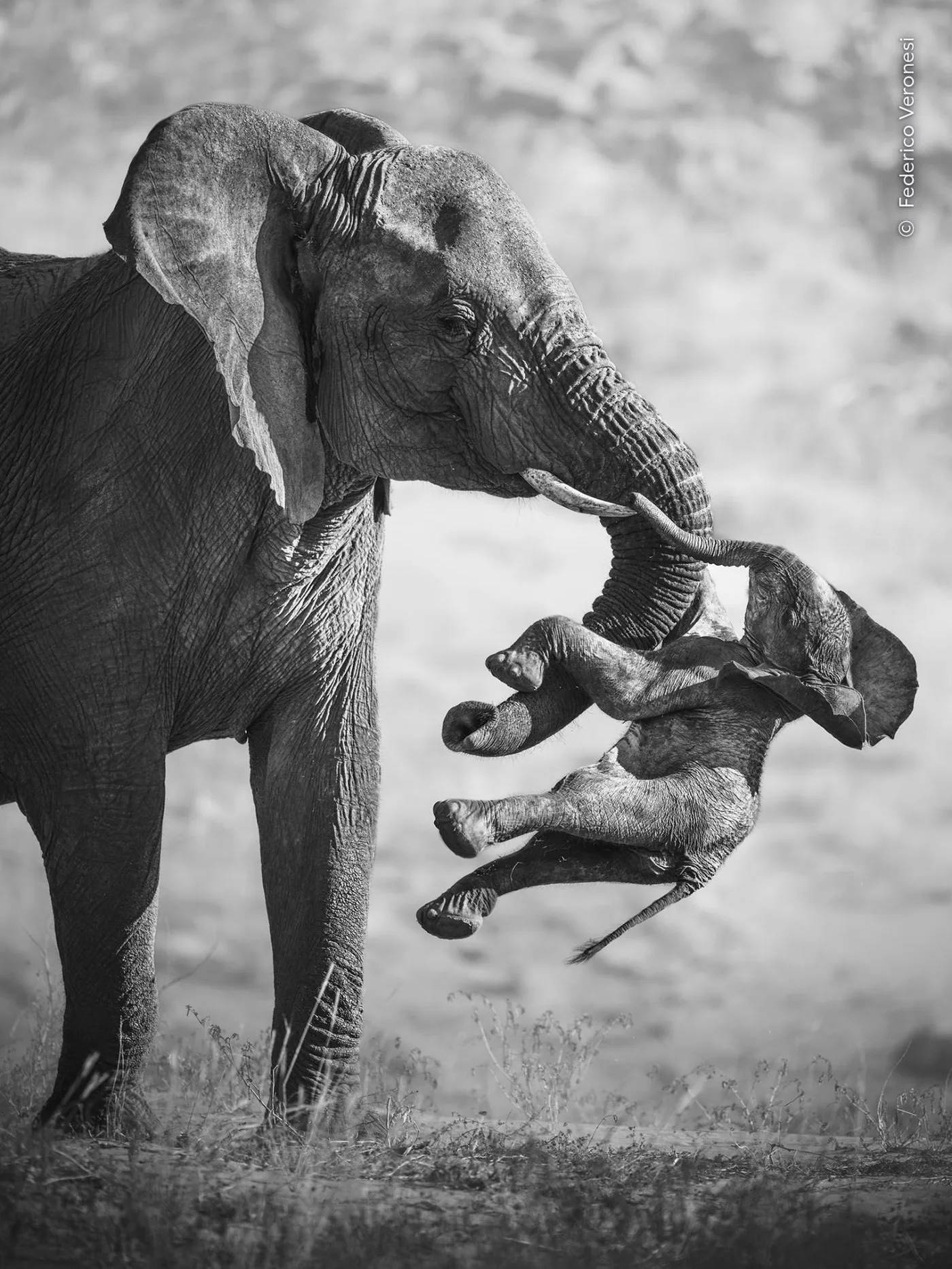
Veronesi followed the drag marks while guiding visitors through the Huab River Valley in northwestern Namibia (Damaraland, Namibia). He first thought the deep furrows came from a mature bull elephant dragging tree branches as a show of strength, but the true source emerged when he caught up with the family group [6]. An adult female moved slowly ahead while carrying the limp body of a dead calf, its small leg wedged firmly between her trunk and ivory tusk [2]. Veronesi paused before lifting his camera to document the sorrowful trek, later saying, “It was really such a private moment, I almost thought maybe I shouldn’t take these photographs.” He soon realized that recording the private scene offered a rare window into animal consciousness, preserving an encounter that few field observers ever witness during years of work in the wild [6].
The female carried the small body up a rocky ridge under the morning sun. She rested the dead calf for brief pauses only to eat leaves from a bush before lifting it again. Biologists from a local project explained that this female lost her calf years ago and has since carried other deceased young. Her actions suggest an enduring need to process grief [6].
Wildlife Photography Winners in Mammal Behavior
Veronesi earned both the top contest prize and first place in the Behaviour: Mammals category for his monochrome composition, titled The Aftermath [7]. He captured the scene using a Nikon Z8 body paired with a 400mm f2.8 lens, setting his shutter to 1/1000 of a second at f2.8 with an ISO speed of 72 [5]. The black-and-white finish accentuates dusty ground, deep shadows, and the rough texture of the mother’s wrinkled hide. Contest chair Kathy Moran praised the frame in an official museum release, saying, “Emotionally it’s a gut punch, heartbreakingly poignant. Intellectually it’s proof that animals have cognition [6].” Field naturalists have recorded African and Asian elephants vocalizing, standing guard over bodies, and touching bones, yet seeing an adult female transport deceased young across rocky terrain remains exceptionally rare in published behavioral literature [2]. The portrait captures that complex bond with quiet clarity [6].
Other mammal portraits in the contest illustrate how wild animals interact around shrinking water supplies [1]. In Kenya’s Chyulu Hills, photographer James Lewin converted a camera to infrared light to document a young bull elephant spraying zebras at an ol Donyo Lodge waterhole [5]. African mammal populations face conservation pressures beyond park borders, where field surveys track cheetah populations outside reserves. Nearby, Ernest Porter recorded a red-billed oxpecker cleaning its bill on a rhinoceros horn [1].
Youth Division Winners
Fourteen-year-old Oscar Whitfield of Zimbabwe won Young Wildlife Photographer of the Year (11–14 Years) for his monochrome study, Labour of Love. Lying in the dirt of Zambezi National Park, Whitfield photographed a dung beetle rolling a manure ball. These insects bury dung, speeding up breakdown and limiting methane emissions [2]. The 2026 contest marked the first time both overall winners won with black-and-white pictures. British entrant Amelie Davis won the 10 Years and Under division with Flight of the Bumblebee, using her father’s smartphone in Surrey to freeze a carder bee at 1/895 of a second. Her picture shows that great nature documentation needs patience rather than expensive gear [5].
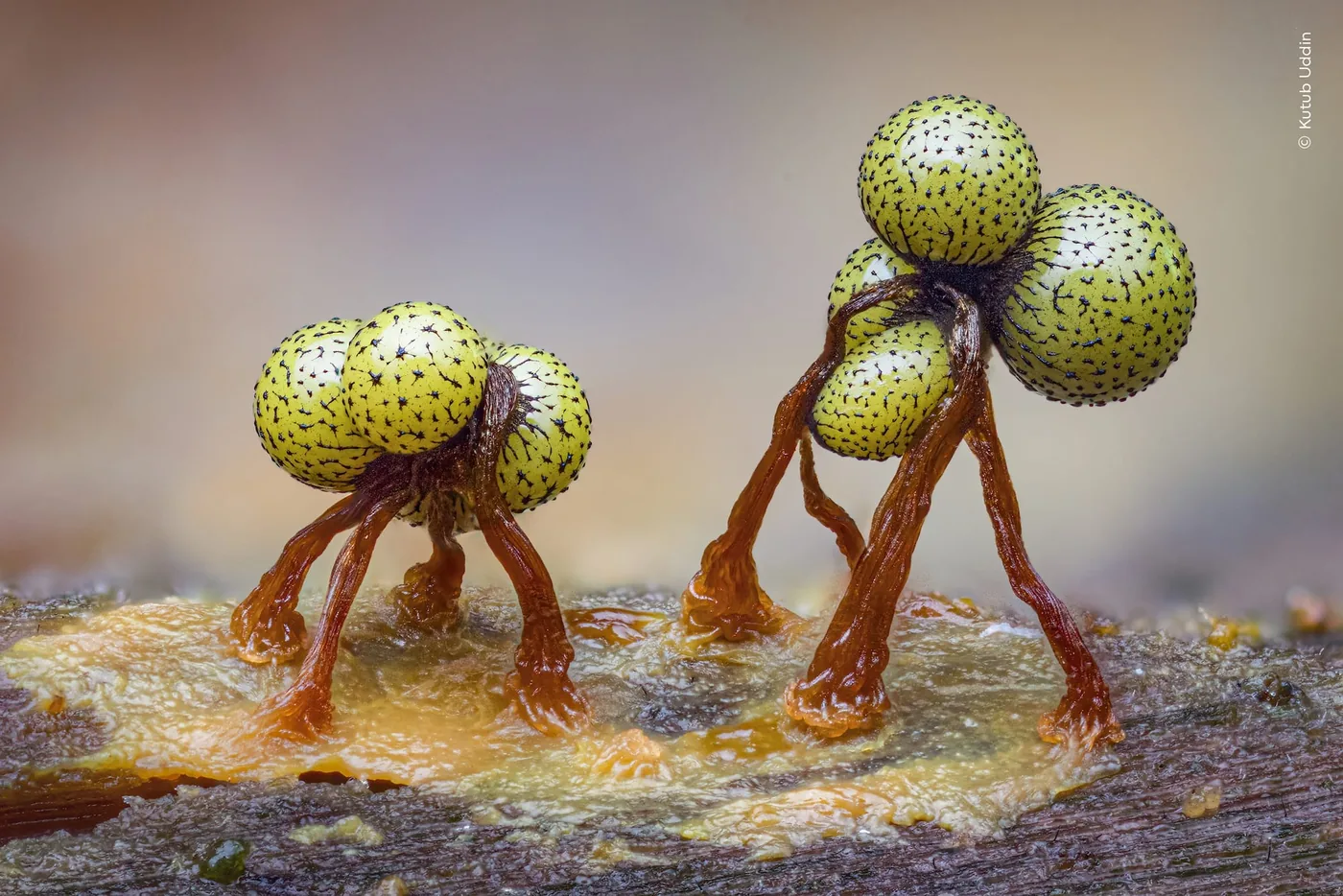
Macro photography finalists captured intricate species that human eyes routinely overlook [2]. Alexis Tinker-Tsavalas claimed the Rising Star Award for photographing a robber fly feeding on a flesh fly, using a 24-image focus stack to reveal digestive bubbles in the prey’s eyes [5]. Kutub Uddin won the Portfolio Award for his studies of slime moulds in West Sussex woodlands [2]. Fine threads called capillitium emerge on the tiny spores to help them disperse [5].
Threatened Habitats
Winning photographers also examined natural habitats altered by human activity and industrial water diversions [2]. Colombian photographer Alex Visbal took top honors in the Wetlands category for The Great Divide, showing Stansbury Bay in Utah’s Great Salt Lake. Mineral extraction and water diversions cut the northern bay off from freshwater inflows, creating salinity levels that support bright pink microbes. Visbal flew overhead with a Canon EOS R5 Mark II and a 70-200mm f2.8 lens to document the sharp border separating pink brine from darker water [5]. The State of Utah placed the surrounding wetland under conservation management after the photograph was recorded. In San Francisco, Loren Elliott documented roughly 100 urban coyotes sharing parks with 800,000 human residents, showing how adaptable canines thrive near busy roads. His series reflects mixed community attitudes toward metropolitan carnivores [2].
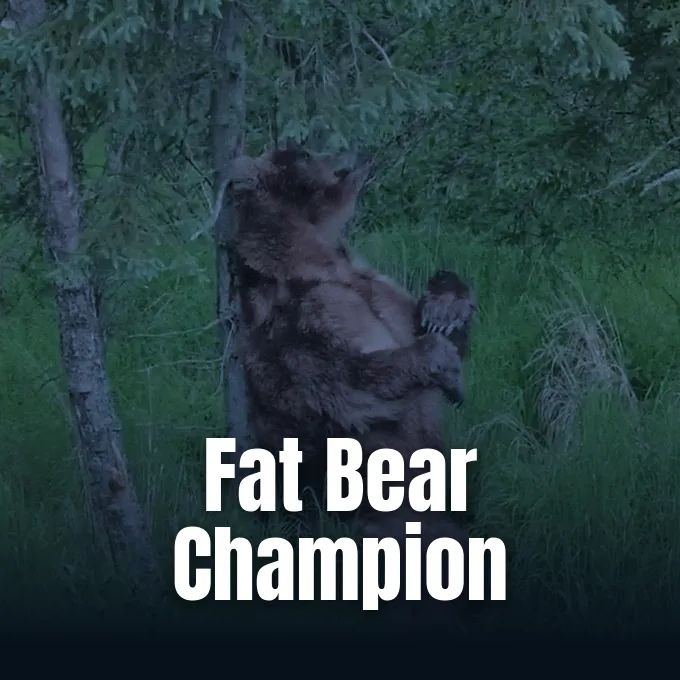
In Argentine Patagonia, Chilean photographer Francisco Negroni won the Photojournalism category with a sobering scene of rural predator conflict. His entry showed a dead puma tied to a ranch wire fence as a warning. Santa Cruz province outlawed puma hunting in 2025, but sheep ranchers continue illegal persecution. Public fascination with wild mammals also appears in North America, where Bear 89 won Fat Bear Week during annual voting [2].
How Judges Selected the Wildlife Photography Winners
A record total of 65,403 entries from 121 countries arrived for the sixty-second edition of the competition. To choose the wildlife photography winners, an international panel of photographers, conservationists, and science filmmakers reviewed all submissions anonymously based on technical skill, originality, and ethical field conduct [5]. Natural History Museum director Dr. Doug Gurr praised the entries, saying, “This year’s winning photographs demonstrate the extraordinary power of wildlife photography to help us see nature differently.” Gurr said the collection shows how diverse organisms help maintain functioning ecosystems [7]. How do judges verify that pictures avoid animal harassment? The panel disqualifies any submission that relies on live bait, digital fabrications, or habitat damage, enforcing clear standards for animal welfare. Field authenticity guides every decision in the gallery selection [5].
The competition has grown far beyond its origins six decades ago. Launched in 1965, the event began as a magazine competition that drew only 361 entries before turning into a worldwide conservation benchmark [3]. In India’s Thar Desert near Sam village, Sitaram Raul photographed a Buthacus scorpion using leg combs to dig into shifting dunes [5]. In Hungary, Bence Máté captured thousands of red-billed queleas beating their wings, feeling the rush of air ninety-eight feet away [1].
Museum Exhibition Dates
The Natural History Museum in London opens the official competition exhibition on October 16, 2026, running until July 11, 2027. Visitors can view 100 chosen photographs before the exhibition travels to regional galleries across the United Kingdom and overseas [5]. Nuveen chief executive Bill Huffman commented on the enduring impact of wildlife images, saying, “To me, this is a photo about resiliency in a world clouded by uncertainty. It’s a reminder that foresight and determination will get us through even the most challenging times if we stay focused on a better future [3].” The annual showcase connects museum visitors with scientific realities that field biologists study year-round, turning gallery walls into spaces for environmental education [1]. Curators hope the international tour inspires fresh support for conservation projects worldwide [3].
By linking visual storytelling with field research, the 2026 wildlife photography winners bring biodiversity realities to wide audiences [7]. Public engagement through annual competitions mirrors celebrations in other fields, such as when the Royal Observatory named its astronomy photographer winners [3]. In an era of shifting climates and lost habitats, observing how animals grieve and adapt offers valuable perspective on our living world [7]. The London gallery honors that quiet vigilance and the wild lives behind every lens [3].
- ONLINE NEWS Nield, D. (2026, October 19). The Wildlife Photo of the Year May Break Your Heart. Nautilus. [Article Link]
- ONLINE NEWS Fidler, M. (2026, October 14). Wildlife photographer of the year 2026 winners – in pictures. The Guardian. [Article Link]
- WEBSITE Natural History Museum. (2026, October 6). Wildlife Photographer of the Year. Natural History Museum. [Article Link]
- WEBSITE Natural History Museum. (2021, May 17). Wildlife Photographer of the Year Gallery. Natural History Museum. [Article Link]
- ONLINE NEWS Hidrėlėy. (2026, October 14). NHM’s Wildlife Photographer Of The Year 2026 Winners Capture Nature’s Beauty And Heartbreak (19 Pics). AOL.com. [Article Link]
- ONLINE NEWS Kemeny, R. (2026, October 13). 16 Striking Photos From This Year’s Best Wildlife Photographers. National Geographic. [Article Link]
- ONLINE NEWS Mothes, K. (2026, October 15). The Wildlife Photographer of the Year 2026 Winners Showcase Nature’s Power and Vulnerability. Colossal. [Article Link]
APA 7: PerEXP Teamworks. (2026, October 20). Natural History Museum Reveals 2026 Wildlife Photography Winners. PerEXP Teamworks. https://perexpteamworks.com/en/wildlife-photography-winners-2026-nhm/


