





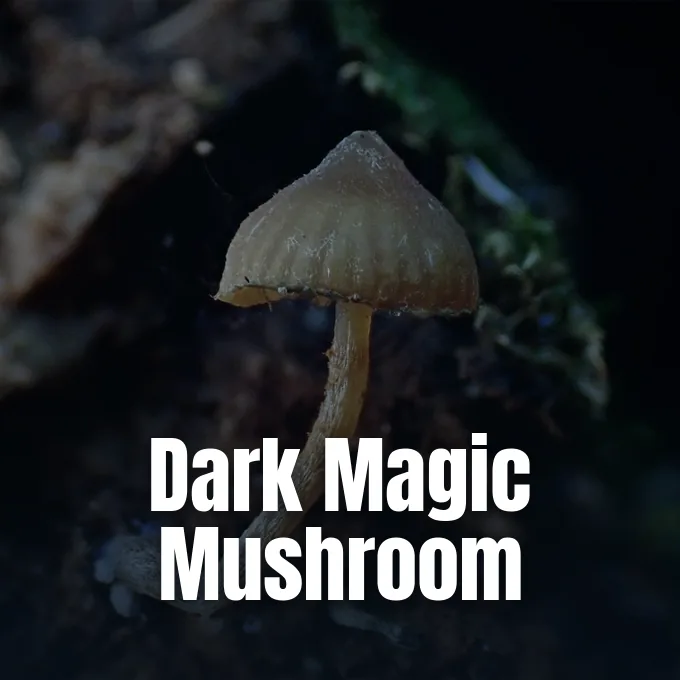
A tiny wild fungus discovered in the wetlands of Florida is the first known mushroom to produce both psychedelic psilocybin and deadly amatoxins. Scientists identified the specimen as Galerina indica, a rare species nicknamed the dark magic mushroom that grows on decaying palm trunks [1]. Field surveys led by the University of Florida revealed that the mini mushroom unites two potent chemical families previously considered mutually exclusive across the fungal kingdom. The study published in Current Biology illustrates how natural selection and ancient gene swapping can assemble distinct biological defenses inside a single living organism.
Discovery in Florida Wetlands
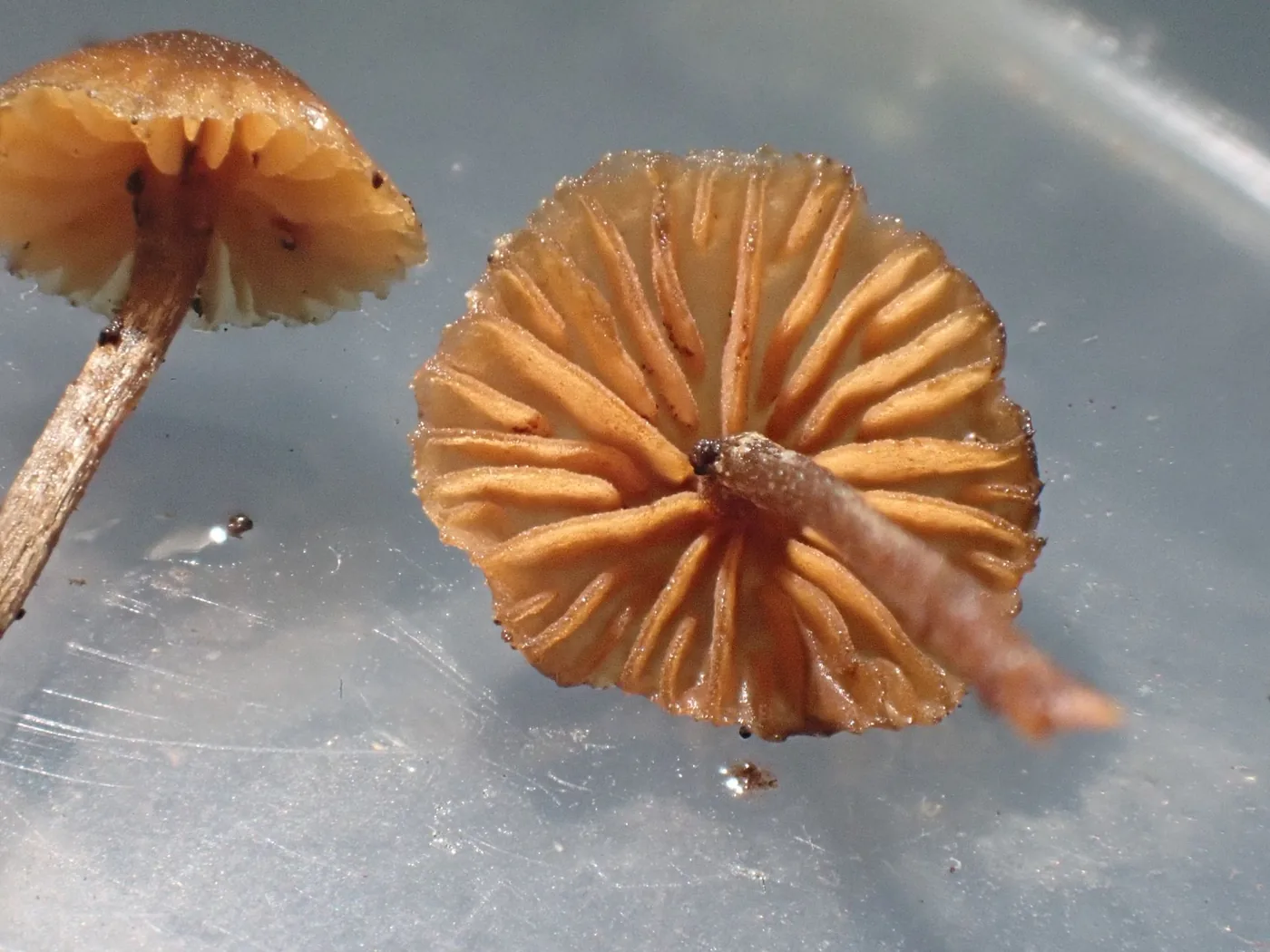
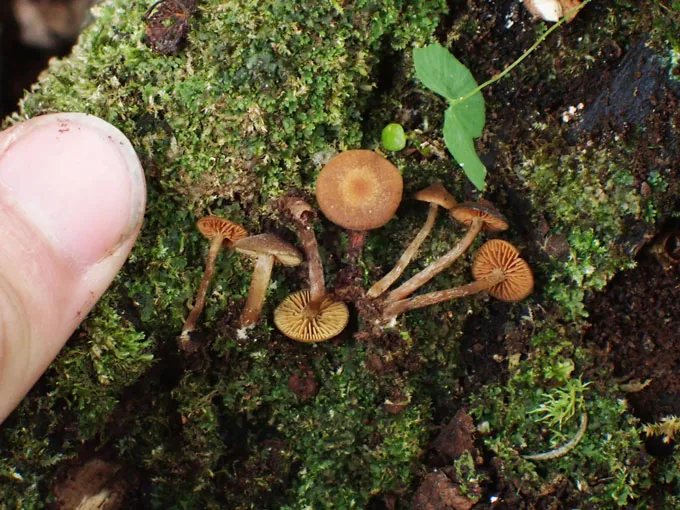
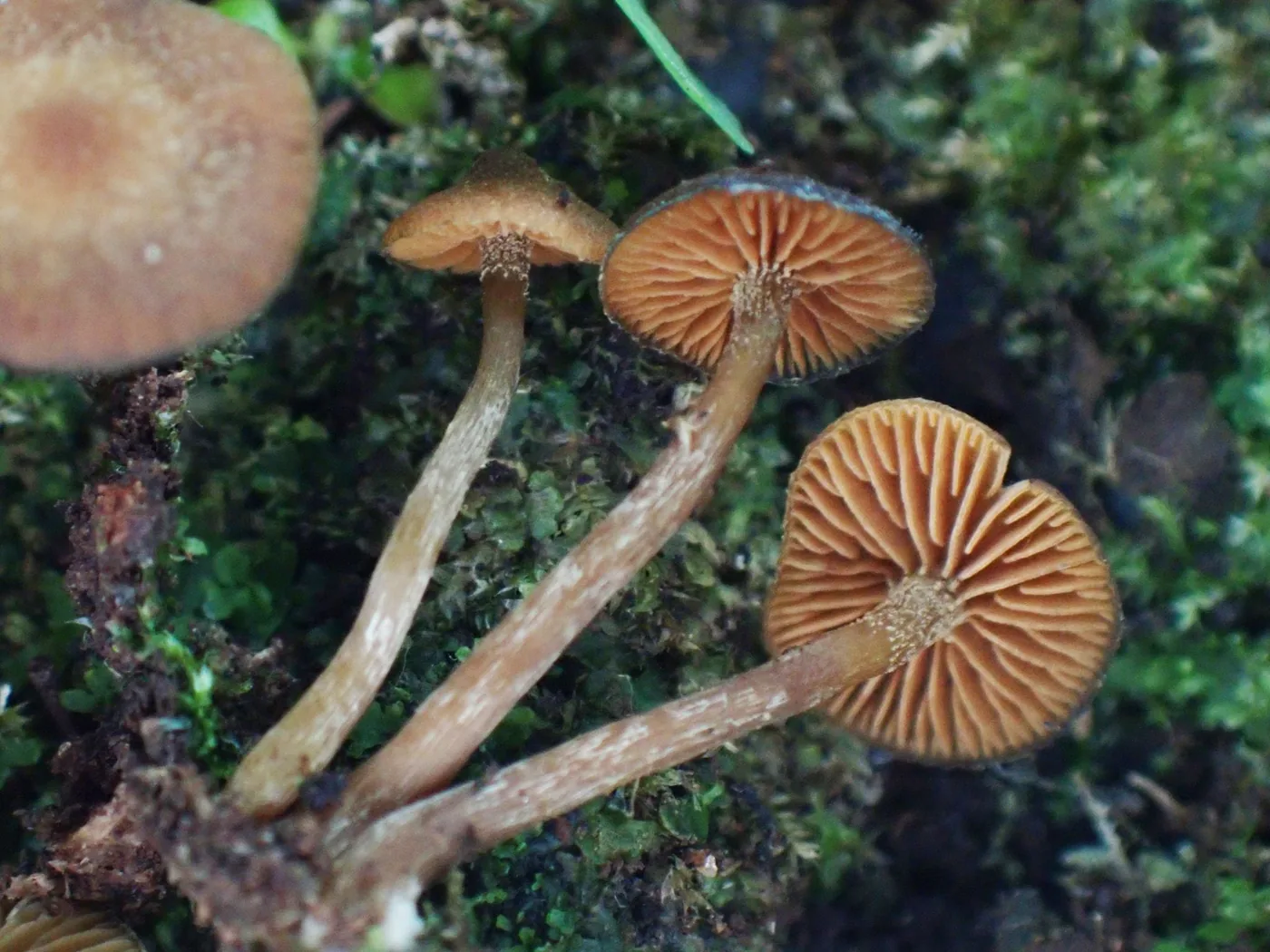
Chemist and fungal biology researcher Andrew Kunik spotted the tiny brown mushroom in 2025 during field surveys in central Florida wetlands. Kunik was conducting post-baccalaureate research in the laboratory of plant pathologist Matthew Smith at the University of Florida in Gainesville [3]. The research team collected five wild specimens of the genus Galerina between January 2024 and September 2025 from moss-covered palm trunks in damp cypress habitats across the region [4]. These mature fruiting bodies were remarkably small, measuring only about 0.2 inches (0.5 centimeters) tall, with caps reaching about 0.1 inches (0.25 centimeters) wide. A cluster of full-grown caps can easily fit on a person’s thumbnail, making the fungus difficult to detect without careful searching.
While handling the fresh specimens in the field, Kunik saw that the mushroom tissue developed blue bruises. That color change suggested psilocybin, which oxidizes into blue compounds when fungal cells break [3]. Kunik and Michael Christopher analyzed the tissues to identify the active molecules.
Chemical tests confirmed that Galerina indica contained psilocybin and lethal amatoxins. Smith said: “To find them both together in one mushroom, I never expected to find that.” Smith added: “We were shocked.” [2] The survey also identified two related species in the wetlands, provisionally called Galerina species 1 and Galerina species 2. While species 1 made psilocybin without amatoxins and species 2 made neither chemical, only G. indica synthesized both [3].
Dark Magic Mushroom Chemistry
The dual chemistry brings together two bioactive families that serve very different functions in nature. Psilocybin binds to serotonin receptors in animal brains, creating vivid sensory changes and psychedelic hallucinations that have made magic mushrooms famous in modern medicine and human culture. Amatoxins, by contrast, attack RNA polymerase II inside vulnerable animal cells, halting cellular protein synthesis and causing fatal liver failure when consumed by foraging animals. These lethal toxins are the same compounds found in death cap mushrooms like Amanita phalloides. Kunik discussed this unusual chemical overlap during an interview with Live Science. Kunik said: “There is no species of mushroom anywhere, in any group, that has been known to produce both at the same time.” Kunik added: “So it’s quite remarkable.” [2]
High-resolution mass spectrometry performed by the Florida researchers also detected an amatoxin variant that had never before been documented in any wild mushroom species. The team named this new compound alpha-proamanitin [3]. Related Galerina species synthesize similar cyclic peptides, but finding this novel molecule with psilocybin surprised the team.
Early findings regarding the dual chemistry first circulated in a July 2026 preprint on bioRxiv [6]. The preprint noted that acquiring psilocybin pathways in G. indica might have coincided with lower amatoxin potency. Because preprint manuscripts do not undergo formal peer review, mycologists waited for independent scientific evaluation before treating the early chemical data as fully verified research findings. The peer-reviewed paper in Current Biology subsequently confirmed the dual chemical profile with extensive genomic sequencing and high-resolution chromatographic evidence from multiple specimens.
Genetic Evidence for Horizontal Transfer
To understand how G. indica acquired two complex chemical systems, the researchers sequenced its complete genome. They discovered full biosynthetic gene clusters for both amatoxins and psilocybin embedded in the fungal chromosomes [1]. Most organisms inherit traits vertically from parents, but fungi also swap genes with distant relatives.
Fungal genomes can absorb functional genetic sequences through horizontal gene transfer, acquiring complex metabolic capabilities from unrelated species in a single evolutionary leap rather than gradual mutation. This mechanism is famous in bacteria, where microbes swap plasmids to spread antibiotic resistance between unrelated strains. Bryn Dentinger, a mycologist at the University of Utah and co-author of the study, used a vivid comparison to describe how genes jump between unrelated species. Dentinger said: “Horizontal gene transfer is like if we shook hands and some of my DNA incorporated into your genome.” [5] In G. indica, horizontal transfer allowed genes from distantly related lineages to operate side by side in one organism.
When the researchers examined the psilocybin gene cluster in G. indica, they found that its individual genes were arranged in a different order than those in other psilocybin-producing mushrooms [2]. This rearranged sequence provides a clear genetic fingerprint of gene jumping. It indicates that the entire biosynthetic cassette was excised from an unrelated donor and shuffled during evolutionary history. Such structural shifts confirm that the dark magic mushroom acquired psilocybin through horizontal transfer rather than independent evolution.

How Galerina indica Evolved
Phylogenetic reconstructions based on fungal DNA suggest that the ancestor of G. indica picked up psilocybin genes approximately 15.5 million years ago [2]. This timeline places the genetic acquisition within the Miocene epoch, a period spanning between 23 and 5 million years ago when diverse fungal lineages flourished in warm forest ecosystems [4]. Fungal ancestors had already established amatoxin production long before this event occurred, meaning that psilocybin synthesis arrived as a secondary addition to an already poisonous evolutionary lineage.
The evolutionary history may involve more than one genetic transfer. Kunik noted that psilocybin genes could have entered the Galerina lineage through two separate horizontal transfer events, possibly occurring as recently as 6 million years ago [2]. Earlier research showed that amatoxin genes had similarly moved between the genera Amanita, Galerina, and Lepiota through ancient horizontal gene transfer [7]. In the dark magic mushroom, these successive genetic acquisitions yielded a rare dual chemical profile.
External mycologists found the genetic rearrangement and dual synthesis compelling. Hannah Reynolds, a fungal ecologist at Western Connecticut State University who was not involved in the study, praised the genomic evidence. Reynolds said: “What was exciting about this paper was seeing both of these [compounds] present, seeing that this gene cluster jumped in, got rearranged, maybe came in twice — it’s very cool.” [2] Reynolds noted that untangling these historical gene transfers will require sequencing many more fungal specimens from subtropical swamps, where wild fungal diversity remains largely undocumented.
Defensive Value in Nature
Why did a single mushroom evolve such an unusual pairing of bioactive substances? Evolutionary biologists suspect that producing two distinct classes of defensive chemicals helps protect small mushrooms from hungry forest predators [4]. In humid wetlands, fungi face constant grazing from slugs, snails, and microscopic soil nematodes that consume fruiting bodies.
While some predators might develop physiological resistance against amatoxins, overcoming both liver-destroying toxins and mind-altering alkaloids at the same time is far more difficult for a small grazer. Despite the intuitive appeal of this defense hypothesis, concrete proof remains elusive in mycological field studies. Anne Pringle, a mycologist at the University of Wisconsin–Madison who was not part of the research team, pointed out how little is known about fungal poisons. Pringle said: “We still don’t know why mushrooms are poisonous.” [3] She noted that while chemical defense against hungry animals is widely assumed, scientists still lack direct experimental evidence showing which wild animals are deterred by specific fungal toxins.
Kunik and his team suggested that future researchers could test the defense hypothesis using modern gene-editing tools. By disabling the psilocybin pathway or the amatoxin pathway in laboratory cultures of Galerina indica, scientists could observe how fungivorous snails and worms react to mushrooms bearing only one chemical weapon [4]. Tracking feeding preferences in controlled chambers would clarify whether the dual chemistry provides a measurable boost to evolutionary fitness in wetland environments.

Risks for Foragers and Pets
For people who forage wild mushrooms, the existence of G. indica creates a dangerous hazard in the woods. Wild psilocybin mushrooms and deadly poisonous mushrooms have long been viewed as separate categories by casual collectors [4]. Because G. indica is an unassuming little brown mushroom that bruises blue, an inexperienced forager searching for psychedelic fungi could easily mistake it for an edible or hallucinogenic species, suffering lethal liver poisoning instead of a recreational high.
Matthew Smith discussed the public health value of identifying new toxic fungi during his work as Florida’s state mycologist. Smith said: “Part of my job as Florida’s state mycologist is to identify poisonous or potentially poisonous species. So it is important to know what species we have and whether they might cause problems for people or pets.” [5]
To avoid fatal errors in the wild, the researchers gave clear advice to anyone encountering tiny brown mushrooms on decaying logs. Kunik said: “Do not eat this mushroom!” [4] With more than 300 species in the genus Galerina distributed in wetlands worldwide, distinguishing toxic species from harmless ones requires microscopic analysis and DNA sequencing [2]. Foragers should leave wild little brown mushrooms untouched, as their small caps can hide lethal chemical surprises. Learning how fungi combine these potent chemicals may advance biotechnology, but consuming them in the wild carries deadly consequences.
- ACADEMIC JOURNAL Kunik, A. R., Christopher, M. W., Lemmond, B., Dentinger, B. T., Slot, J. C., Garrett, T. J., & Smith, M. E. (2026). The “dark magic mushroom” co-produces amatoxins and psilocybin. Current Biology. [Article Link]
- ONLINE NEWS Ferrari, O. (2026). Florida’s ‘dark magic’ mushrooms have a deadly combination of chemicals never seen before. Live Science. [Article Link]
- ONLINE NEWS Saey, T. H. (2026). This magic mushroom can kill. Science News Magazine. [Article Link]
- ONLINE NEWS Cara, E. (2026). Scientists Discovered a Mushroom That’s Both Toxic and Trippy. Gizmodo. [Article Link]
- ONLINE NEWS Paul, A. (2026). World’s first ‘dark magic mushroom’ discovered in Florida. Popular Science. [Article Link]
- PREPRINT Kunik, A. R., Christopher, M. W., Lemmond, B., Dentinger, B. T., Slot, J., Garrett, T. J., & Smith, M. E. (2026). The “dark magic mushroom” co-produces amatoxins and psilocybin. bioRxiv. [Article Link]
- ACADEMIC JOURNAL Luo, H., Hallen-Adams, H. E., Lüli, Y., Sgambelluri, R. M., Li, X., Smith, M., Yang, Z. L., & Martin, F. M. (2022). Genes and evolutionary fates of the amanitin biosynthesis pathway in poisonous mushrooms. Proceedings of the National Academy of Sciences, 119(20). [Article Link]
- ACADEMIC JOURNAL Nature. (2026). This little brown mushroom is laced with a hallucinogen — and lethal toxins. Nature. [Article Link]
APA 7: PerEXP Teamworks. (2026, November 15). Galerina Indica Produces Psilocybin and Deadly Amatoxins. PerEXP Teamworks. https://perexpteamworks.com/en/dark-magic-mushroom-psilocybin-amatoxins/


