





Can a high school student with the face of a terrifying villain find peace when his only real desire is to make friends and pick up campus litter? The Darkroom streaming service added Angel Densetsu to its digital lineup, bringing the two-episode anime adaptation from Toei Animation to international subscribers after years of scarcity [2]. Based on the manga by Norihiro Yagi, the release introduces Seiichiro Kitano as an innocent teenager who accidentally becomes the most feared fighter on campus [3].
Darkroom Streaming Service Adds Angel Densetsu
Darkroom announced the arrival of Angel Densetsu to deliver vintage Japanese animation to subscribers seeking alternatives to mainstream catalogs [1]. The platform operates on the web at http://www.darkroom.film. Viewers can download mobile applications from Apple and Google storefronts. Both distribution paths provide full access to the video catalog [3].
The service curates an intriguing catalog of independent, foreign, arthouse, and cult genre productions that seldom find viewing slots on larger subscription networks or mainstream broadcast outlets [3]. To support the launch, Darkroom released a promotional trailer that allows viewers to preview the comedic animation and voice work before pressing play on the first episode. Subscribers who discover the title encounter an eccentric story that earned praise among vintage animation enthusiasts but remained difficult to find through legal channels [1].
Finding obscure anime releases often frustrates collectors who refuse to rely on illicit piracy websites. Darkroom addresses that problem by licensing vintage Japanese video animation and delivering smooth streaming playback on phones, tablets, and desktop browsers [3]. With a $2.99 monthly subscription, the model presents an accessible gateway for curious viewers wanting to explore rare comic adaptations from the 1990s without long commitments. The service requires no annual contract [1].
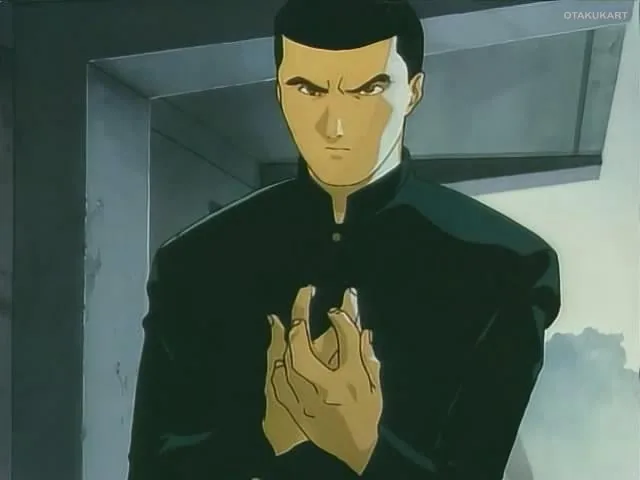
Seiichiro Kitano and the School Guardian Comedy
The narrative premise of Angel Densetsu turns delinquent school fiction upside down through a relentless series of comical misunderstandings [1]. Protagonist Seiichiro Kitano enters Hekikuu High School harboring wholesome intentions, hoping to make friends, clean up campus litter, and study diligently in peace [4]. Yet nature gave him bleached pale skin, sunken sharp eyes, and awkward social mannerisms that make him look like a hardened criminal or heroin addict rather than an innocent teenager [3]. Whenever he smiles or attempts to speak politely to classmates, his frightening face terrifies onlookers, who interpret his trembling voice and awkward gestures as a murderous threat [1]. Wild rumors spread fast. Frightened students believe a brutal gang leader arrived to conquer Hekikuu High [3].
Misunderstandings escalate whenever local troublemakers interpret Kitano’s peaceful presence as an open challenge for territorial control of the school [1]. When student bullies confront him in hallways or alleyways, Kitano tries to bow and apologize, but his sheer clumsiness, awful luck, and startling facial expressions cause the brawlers to stumble, trip over obstacles, or knock themselves out in panic [3]. Because onlookers only see the aftermath of bloodied ruffians lying unconscious at the feet of an uninjured Kitano, the student body concludes that he defeated them through superhuman martial violence [4]. Without understanding what transpired around him, Kitano earns the feared reputation of campus champion and receives the unrequested title of “School Guardian” [3].
The comedic irony deepens because Kitano never learns about his terrifying legendary status. He walks to school with a trash bag in hand, hoping to sweep streets and assist teachers. This enormous gap between how society perceives him and who he genuinely is anchors every comedic situation in the story [1].

Norihiro Yagi and the Monthly Shōnen Jump Run
Long before gaining international acclaim for the dark fantasy series Claymore, manga author Norihiro Yagi built his career through schoolyard comedy [1]. Yagi launched Angel Densetsu (lit. “Legend of Angel”) in Shueisha’s publication Monthly Shōnen Jump, where the manga ran from 1993 to 2000. Shueisha compiled the serialized chapters into 15 tankōbon volumes, released between August 4, 1993, and April 4, 2000. The narrative sustained Japanese readership for seven years by combining exaggerated facial expressions, dynamic slapstick martial arts, and heartwarming moments of loyalty among high school companions. The manga debuted in 1993 [4].
The manga populated its comedic world by surrounding Kitano with memorable classmates and eccentric adversaries at Hekikuu High School. Fellow students like Seikichi Kuroda and Yūji Takehisa begin as hostile brawlers before mistaking Kitano’s accidental victories for martial supremacy, becoming his loyal companions. Martial artist Ryoko Koiso and karate club advisor Murakami gradually look past Kitano’s terrifying appearance to recognize his gentle kindness. The story even introduces special guidance counselors working for the Education Committee, known as the “Shadowy Seven”, whose strict disciplinary interventions against Kitano collapse into confusion. Counselors Irie, Kumagai, Shirataki, and Haruka Hishida fail to subdue him [4].

Readers familiar with Yagi through Claymore often express surprise when discovering his earlier work. While Claymore delivered grim swordplay, monstrous adversaries, and dark fantasy tragedy, Angel Densetsu proved that Yagi possessed superb comedic timing for physical slapstick and eccentric school parody. Dan Whitfield of OtakuKart said that the adaptation shows a completely different side of Yagi’s storytelling than his darker fantasy projects [1].
Toei Animation Produces the 1996 Anime Adaptation
In 1996, studio Toei Animation produced a two-episode original video animation adaptation that translated Yagi’s dynamic manga artwork into colorful motion. The first episode debuted on September 13, 1996, followed three months later by the second installment on December 13, 1996 [4]. Toei Animation leaned into the visual absurdity of the comic, capturing Kitano’s ghastly grimaces and the exaggerated panic of everyone who crosses his path. Animators juxtaposed gloomy facial shadows on Kitano against bright high school backgrounds, creating visual jokes that land effortlessly without requiring lengthy dialogue or spoken exposition [1]. Both episodes adapt early chapters [4].
Much of the comedy succeeds because of veteran voice talent. Nobuo Tobita delivers an expressive performance as Seiichiro Kitano, contrasting a polite, timid speaking voice with the terrifying villain that classmates imagine standing before them. Kōji Ishii voices the hotheaded Kuroda, while Kyousei Tsukui plays Takehisa. Actress Tomo Sakurai voices Ryoko Koiso, providing a grounded presence opposite Takaya Hashi as the suspicious school principal. Hisashi Izumi voices teacher Shiraishi [4].

Despite covering only introductory arcs of Yagi’s manga, the OVA gained lasting esteem among anime reviewers. Writing for Anime News Network, reviewer Justin Sevakis praised the two-episode anime adaptation, calling the animated production “easily one of my top 10 anime comedies of all time” [4]. The concise runtime packs punchlines into every scene, avoiding filler and delivering a sharp delinquent parody of the nineties [1]. Josh Piedra of The Outerhaven said that the comedy peaks as Kitano attempts to balance his terrifying public image with his gentle personal nature [3].
Darkroom Streaming Platform Expands Classic Anime Access
Adding Angel Densetsu reflects an evolving pattern in how vintage Japanese animation reaches international viewers [1]. While massive global streaming platforms focus on seasonal television broadcasts, smaller independent outlets revive forgotten anime gems that lacked official viewing options for decades [3]. Similar digital initiatives appear elsewhere in the anime ecosystem, such as REMOW expanding anime channel distribution on streaming outlets to connect worldwide viewers with catalog titles [1].
For subscribers, the Darkroom streaming platform offers a straightforward path to experience nineties animation without hunting down rare laserdiscs or expensive videotapes [3]. The Darkroom streaming service enables subscribers to watch both episodes of the two-episode anime adaptation, check out the trailer, and browse foreign cinema for just $2.99 a month. Low monthly subscription pricing invites casual curiosity from fans who want a quick, laugh-out-loud anime experience between longer seasonal shows [1]. The catalog features international productions [3].
Whether Seiichiro Kitano will ever clear his fierce reputation at Hekikuu High School is a delightful question that loyal comic readers followed during seven years of monthly serialization [4]. For anime fans who appreciate sharp comedic timing, watching Kitano accidentally conquer a campus full of hostile bullies while trying to pick up litter provides timeless slapstick entertainment [1]. Viewers interested in checking out Angel Densetsu can visit http://www.darkroom.film or download the Darkroom mobile app to stream both episodes today. Kitano stays completely oblivious to his reputation [3].
- ONLINE NEWS Whitfield, D. (2026, October 3). Darkroom Adds Angel Densetsu OVA to Its Streaming Library With Two-Episode Anime Adaptation. OtakuKart. [Article Link]
- PRESS RELEASE Anime News Network. (2026, October 2). Darkroom Streaming Platform Premieres Anime OVA Angel Densetsu. Anime News Network. [Article Link]
- ONLINE NEWS Piedra, J. (2026, October 3). Darkroom Streaming Platform Premiers Angel Densetsu Anime OVA. The Outerhaven. [Article Link]
- WEBSITE Wikipedia contributors. (2026). Angel Densetsu. Wikipedia, The Free Encyclopedia. [Article Link]


