




Digital music distributor DistroKid confirmed on October 10, 2026, that it has quietly pulled tracks from major music apps in response to legal claims from Universal Music Group [1]. The purge follows claims that the service ran an AI pipeline for low-grade bot songs. While company leaders say only a tiny fraction of their catalog was touched, indie acts say human releases vanished without notice. The unannounced distrokid song takedowns have cut off vital streaming earnings for working artists who cannot get help from customer service.
Independent Artists Face DistroKid Music Removals
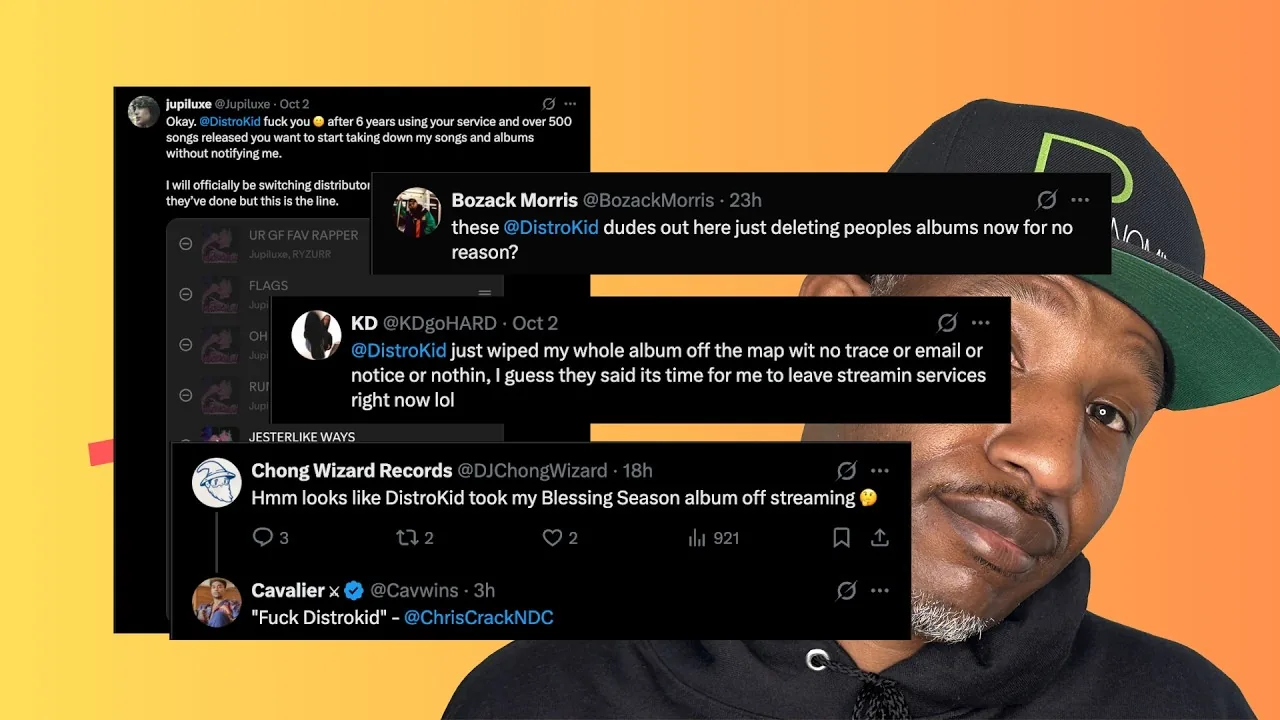
Indie artists in the United States and North America shared stories on social media after discovering their catalog entries had vanished from digital storefronts without prior notice [1]. Many creators logged into their dashboards only to find empty track listings and withheld payouts. Because DistroKid serves as an entry point for grassroots acts seeking delivery on Spotify and Apple Music, the silent drops left artists without direct answers about why their work had been flagged. DistroKid gave no warning.
Digital aggregators place songs on international streaming apps, and when a service pulls releases without warning, it breaks the link between indie acts and their fans while halting royalty streams [4]. Grassroots musicians lost income.
Financial analyst Emily Thompson from IntellectiaAI reported that catalog purges reflect mounting tension over automated content within the music industry, noting that artists voice deep frustration when human creations are pulled with suspected AI tracks [7]. The catalog cleanup shows how platform policies disrupt ordinary creators whenever music delivery firms face legal threats from dominant entertainment companies. The Verge confirmed these artist reports across the industry.

Universal Music Group Lawsuit Targets AI-Slop Pipeline
The wave of removals stems from a major lawsuit that Universal Music Group filed in September against DistroKid, claiming that the distributor had built an “AI-slop pipeline” by letting low-quality bot music flood streaming services [1]. Universal Music Group alleged that DistroKid failed to police mass uploads of computer-generated audio, arguing that the distributor bore responsibility for catalog pollution. The label filed in September.
In its filing, Universal Music Group accused DistroKid of “blatant copyright infringement” and deceptive trade practices, pushing the platform to cleanse its network [2]. The legal fight emerged even as Universal Music prepared its own commercial venture into artificial intelligence through a partnership with voice firm ElevenLabs. That simultaneous move reveals a split in the industry: major record labels want to control licensed generative tools while shutting down independent uploads that compete for listener attention across streaming services. For self-service digital delivery firms that handle massive upload volumes every week, trying to appease major corporate labels while protecting small creators has become an unsustainable daily challenge. Universal Music pressed forward.
Reporting from Tech AI Magazine and The AI Chronicle explained that the dispute shifts digital distribution standards [3]. When legacy record labels initiate litigation, delivery firms often pull content broadly rather than conducting careful track reviews. Tech AI Magazine tracked the fallout.
How DistroKid Song Takedowns Caught Human Musicians
Despite claims targeting AI audio, real creators say DistroKid song takedowns swept up purely human work [1]. Indie musician McGwire, a self-described Video Game boy, reported to The Verge that digital stores had dropped six of his songs with zero notice. McGwire spent hours navigating automated bot menus before finding out why his work had disappeared. One of his removed tracks was a licensed cover of Stevie Wonder’s Isn’t She Lovely, while another used a beat purchased legally through an online marketplace. Stevie Wonder songs require specific mechanical licenses.
Most baffling for McGwire was an original track flagged for an uncleared sample, especially since the track tied to the alleged uncleared sample reached store shelves two years after his own piece had debuted [1]. The firm didn’t provide human review. McGwire lost six tracks.
Other artists described unannounced catalog drops that wiped out years of creative work [6]. Nerdcore rapper Insane Ian shared online that an original track disappeared without advance notice, and customer staff refused to explain the cause. Meanwhile, rapper King Chase told The Verge that an entire album he produced for another artist vanished after sitting peacefully on streaming services for 3-4 years without a single copyright strike. King Chase waited weeks for answers. The album had zero strikes.
Support Failures and DistroKid Music Takedowns Outcry
Much of the outrage surrounding DistroKid music takedowns stems from customer service, as producer Jesse Cannon told The Verge that former employees revealed the company viewed user assistance as an unnecessary expense because its market share made it ubiquitous [1]. “They should have allowed artists to have recourse in this and a warning to debate,” Jesse Cannon said. Jesse Cannon criticized the firm.
DistroKid defended its actions while trying to downplay the scope of the purge [1]. Amanda Ferri, DistroKid’s VP of Artist Services, told The Verge: “A very small number of recordings distributed through DistroKid have been removed in response to claims made by UMG. We strongly dispute the allegations underlying UMG’s lawsuit and regret the disruption to affected artists. We are working to minimize that disruption while protecting artists’ ability to release their music.” Amanda Ferri defended the firm.
Analysis from Lumien noted that DistroKid’s silence toward affected musicians made the situation worse [5]. When digital distributors make errors during complex legal battles, artists understand the pressure, but cutting off communication leaves creators stranded. It’s a harsh outcome.
Platform Liability and DistroKid Catalog Policies Ahead
The legal fight in the United States between DistroKid and Universal Music Group shows how major record labels use litigation to hold digital aggregators accountable [4]. As automated content spreads across streaming apps, legacy publishers fear losing royalty pools to synthetic material, which has already triggered broader copyright disputes over automated digital material in other creative sectors. Distributors that rely on self-service models now face rising liability if they fail to police their catalogs. PerEXP Teamworks continues tracking digital rights cases.
Industry observers at Pay Us No Mind advise independent musicians to take early steps to protect their creative catalogs against platform actions by auditing uploads, documenting human creation, and building direct audience connections through mailing lists [5]. Rather than waiting for notification emails that may never arrive, artists should regularly monitor their distributor dashboards. Having direct listener relationships means that unannounced platform cuts won’t completely destroy a career. Pay Us No Mind urged caution.
DistroKid has not announced an automated appeals process for artists caught in the current sweep, leaving many catalog entries offline for now [2]. While Universal Music Group pursues its legal claims and develops its commercial partnership with ElevenLabs, independent creators in the United States remain caught in the crossfire. DistroKid song takedowns show that until distributors build clear check tools, innocent artists will continue to bear the cost of corporate copyright battles. The AI Chronicle covered the standoff.
- ONLINE NEWS O’Brien, T. (2026, October 10). DistroKid has been quietly taking down songs in response to UMG lawsuit. The Verge. [Article Link]
- ONLINE NEWS The AI Chronicle. (2026, October 11). DistroKid Removes Songs Following UMG AI Lawsuit. The AI Chronicle. [Article Link]
- ONLINE NEWS Tech AI Newsdesk. (2026, October 11). DistroKid Removes Songs Amid UMG Lawsuit Over AI Concerns. Tech AI Magazine. [Article Link]
- WEBSITE AIToolly. (2026, October 11). DistroKid Removes Tracks Amid UMG AI-Slop Lawsuit. AIToolly. [Article Link]
- ONLINE NEWS Lumien. (2026, October 11). DistroKid Is Pulling Songs Over UMG’s AI Lawsuit, Catching Human Artists. Lumien. [Article Link]
- ONLINE NEWS La Primera en Línea. (2026, October 10). DistroKid has been quietly taking down songs in response to UMG lawsuit. La Primera en Línea. [Article Link]
- ONLINE NEWS Thompson, E. J. (2026, October 10). DistroKid discreetly removes songs following UMG lawsuit. IntellectiaAI. [Article Link]


