





Dependency injection is a software design approach where an object receives its helpers from an outside source instead of creating them on its own. Instead of hardcoding concrete tools inside constructors, classes accept them as inputs. This practice moves object construction out of the consuming class, letting systems stay flexible and simple to change over time. By turning hidden assumptions into explicit arguments, codebases gain clear boundaries between distinct parts of a program [3].
What Is Dependency Injection?
In object-oriented programming, classes rarely work alone to carry out business tasks. To handle bills, show user profiles, or send receipts, a service needs helpers that talk to databases, networks, and disk storage. In 2004, author Martin Fowler popularized the term dependency injection to describe how lightweight tools wire application pieces together, clarifying the wider idea of inversion of control. When one class creates another class, like an order processor creating a database logger, both become tightly coupled. Passing that logger into the processor from the outside breaks the direct bond, allowing callers to supply alternate loggers whenever working needs change without editing the original processor code [1].
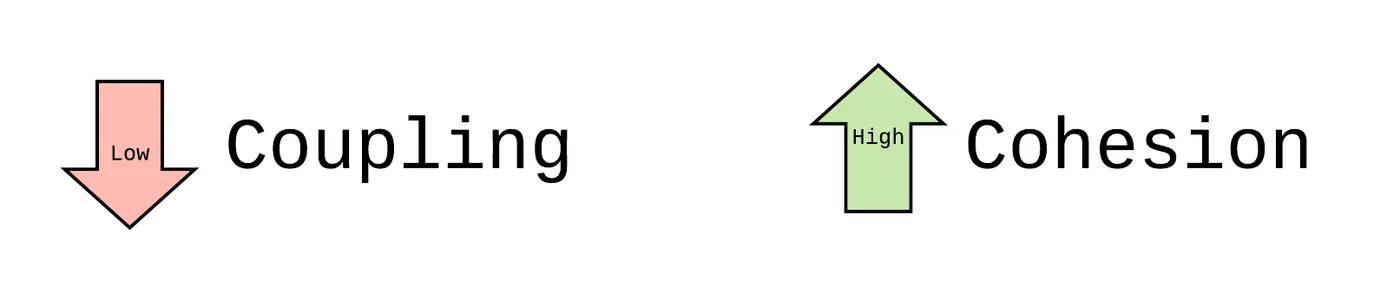
Software architect Mark Seemann pointed out that dependency injection is first and foremost about loose coupling and separation of concerns. The technique lets developers apply the Open/Closed Principle (OCP) by extending class behavior through decorators instead of editing existing source files [2].
Software design history links dependency injection directly to principles created over thirty years ago. As outlined in the 1994 book by Erich Gamma, Richard Helm, Ralph Johnson, and John Vlissides, known as the Gang of Four, designing to an interface keeps programs adaptable [2, 3]. Dependency injection puts that advice into practice by passing interfaces at runtime. Does this indirection complicate class creation? While manual setup takes effort, it stops hardcoded bindings from freezing an app into inflexible setups [3].

Core Roles in Object Wiring
Four primary roles define every injection setup: services, clients, interfaces, and injectors. A service holds reusable business capabilities. The client uses those capabilities to complete its work. An interface defines the public contract both sides share, hiding whether an email service communicates over IMAP or POP3 behind the scenes. Because the client talks strictly to an interface, changing the underlying service implementation never breaks the caller [3].
An injector coordinates these pieces into a working system. Often called an assembler, container, or factory, the injector builds the concrete service and delivers it to the client [3]. In Java ecosystems, specification leads Bob Lee and Rod Johnson created standard annotations under JSR 330, introducing markers like @Inject and @Singleton to standardize how injectors recognize injection points across different vendor libraries. The receiving class stays unaware of the injector’s identity, keeping business logic clean and portable. By automating the setup of nested helpers, the injector constructs complete object graphs at app launch, freeing individual classes from configuration boilerplate and manual loops. This separation ensures that changes in helper creation never force edits on consuming business code [11].
Removing construction code from the client prevents circular dependencies and bloated classes. Shifting that work to an external injector helps classes obey the Single Responsibility Principle (SRP), making sure each unit does one job well without managing surrounding components [7].
Three Dependency Injection Forms
Programmers pass dependencies through three main injection techniques: constructor injection, setter injection, and method injection [1, 3]. Among these options, constructor injection stands as the most reliable approach in object-oriented software engineering. Under this pattern, a class declares all its required helpers as arguments in its public constructor, making sure the instance can’t exist in an incomplete or broken state [3]. If a billing class needs a payment processor and an audit log, the caller must supply both upfront. This arrangement turns dependencies into permanent class invariants that stay valid for the entire life of the object, preventing sudden runtime errors caused by missing references [2].
Setter injection offers an alternative when classes need optional helpers or dynamic configuration updates during execution. The class provides setter methods that an injector or test harness calls after running the default constructor [1, 3]. While setter injection offers flexibility for complex inheritance trees, it brings a drawback: an object might run before an injector populates all its properties. Because missing dependencies can trigger null reference errors, teams often restrict setter injection to non-critical configuration options that carry safe fallback values [3].
Method injection supplies dependencies into specific methods rather than holding them in fields [3]. In older tools like PicoContainer, interface injection also appeared, but programmers dropped it because it forced classes to adopt heavy custom interfaces from container libraries [1].
Why Hardcoded Collaborators Hurt Unit Testing
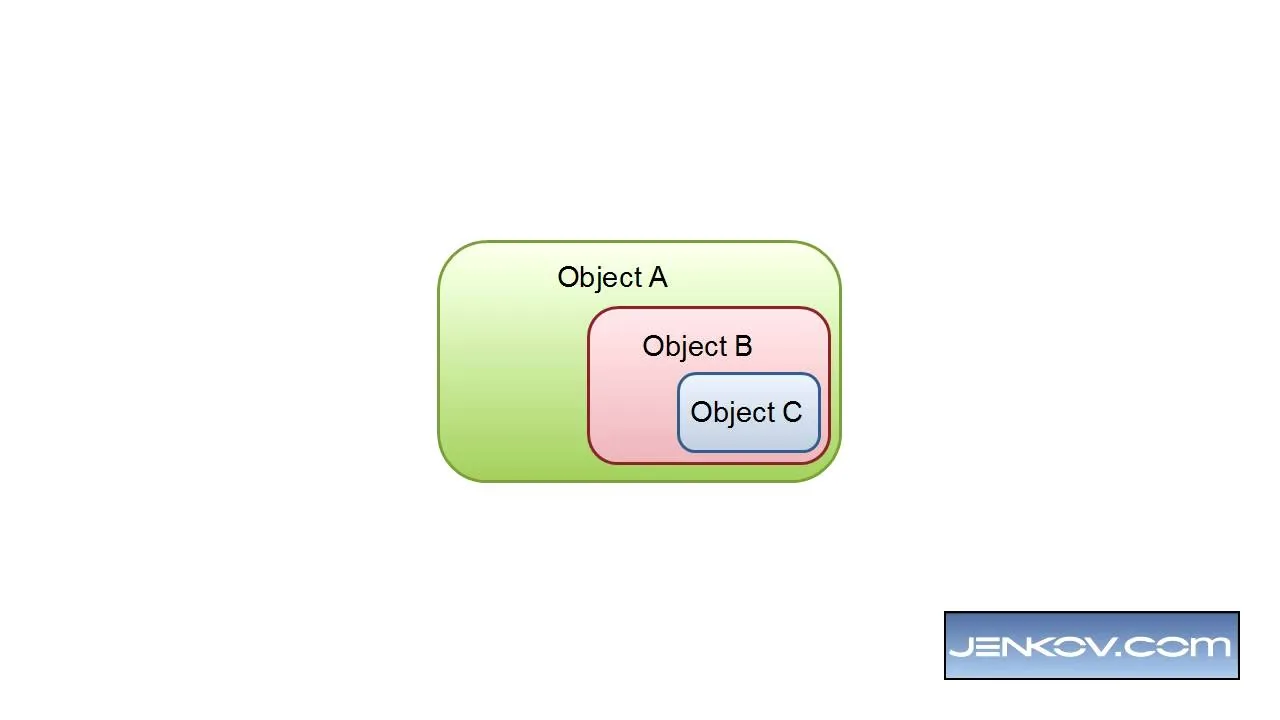
Hardcoded dependencies present a major hurdle to fast automated unit tests. In an educational guide, educator Jakob Jenkov showed how a data access object that creates its own database driver internally creates an immovable test roadblock. Because the class satisfied its own database needs internally, developers couldn’t verify query logic without connecting to a live database server. When tests need real network links and database engines, test suites run slowly and fail whenever external environments change [8].
Injecting abstractions removes this friction by letting test suites swap in fake helpers. In a June 2011 article for Windows Communication Foundation, Microsoft developer Alex Culp showed how dependency injection allows coders to replace complex databases with mocked objects. This isolation lets unit tests focus entirely on the logic within a single method without relying on physical network hosts. A test suite can verify that an order calculator applies discounts properly without sending HTTP requests to a payment gateway or writing rows to disk. By controlling the inputs and outputs of dependencies in memory, automated tests run in milliseconds, giving fast feedback during builds. Reliable mock objects eliminate flaky test runs caused by remote network drops [4].
Manual test doubles run faster than heavy reflection tools. In an essay on test design, author Robert C. Martin showed how passing lightweight mock objects into constructors tests business rules cleanly without leaving behind corrupted static variables [6].


Newables Versus Injectables
Software engineer Misko Hevery clarified object creation boundaries by dividing classes into two groups: newables and injectables, concepts drawn from Domain-Driven Design. Newables are objects that hold application state and domain data, such as customer records, invoice items, or temperature readings. Because newables don’t run complex workflows, developers can instantiate them with new wherever needed [7].
Injectables represent stateless services that execute operations across the system. Classes like authenticators, repositories, formatters, and payment processors belong here. Under Hevery’s rules, injectables must only request other injectables in their constructors, while newables must never receive injected services. Injecting a database service into a customer entity creates tight coupling, forcing every test that creates a customer object to mock out database infrastructure and wire dummy network handlers. Entities stay clean when kept free of services. This keeps domain models easy to serialize, letting teams pass objects between system boundaries without dragging along database connections or heavy background infrastructure [7].
Software developer Bryan Cook noted that passing a primitive connection string into a service constructor is safe as long as the service treats it as a constant. Small internal helpers without external dependencies can also remain private implementation details [6].
How Containers Manage Object Lifetimes
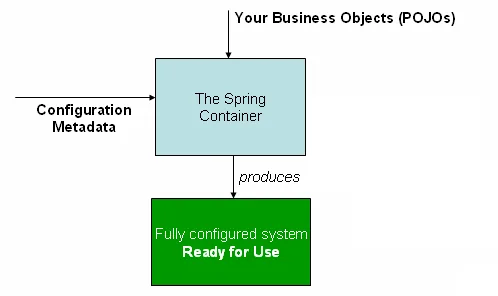
Large applications often contain hundreds of collaborating classes. Assembling these sprawling object graphs by hand becomes tedious and error-prone, prompting teams to adopt automated inversion of control containers that inspect constructors and wire dependencies in topological order. In the Spring Framework, the core IoC container reads metadata from Java annotations or configuration files to construct an ApplicationContext. It delivers fully configured beans on demand [12].
Containers also manage the lifecycles of the objects they build, categorizing services to prevent resource exhaustion and unintended state sharing. In Microsoft .NET, built-in dependency injection tools like Unity and Microsoft.Extensions.DependencyInjection support three primary service lifetimes: transient, scoped, and singleton. Transient services are created fresh each time an injection occurs. Scoped services are created once per client connection or incoming web request, while singleton instances persist for the entire lifespan of the host app. For lazy startup, containers often support Func<T> factories so expensive components load only when first called. Using singletons for stateless services saves memory, but mutable state inside singletons needs explicit thread locks to prevent race conditions during concurrent work [5].
When a container builds types implementing cleanup interfaces like IDisposable, it tracks those instances and triggers disposal when their scope concludes. Developers shouldn’t manually dispose of container-managed services, letting the runtime release database connections and stream handles safely [5].
Framework Decoupling at the Composition Root
Business classes often suffer when container calls spread through a codebase. If business classes invoke container methods like container.Resolve() or injector.getInstance(), the app exchanges a direct link on a service for a direct link on the container. Robert C. Martin cautioned that framework code shouldn’t be smeared across business classes. Applications should keep frameworks at arm’s length so that core logic stays isolated and easy to test without specialized tooling [6].
To keep application code container-agnostic, Mark Seemann coined the term Composition Root. The Composition Root is a single unified location near the program entry point where the entire object graph is assembled. In a console program, this occurs in the main method; in a web service, it happens during startup bootstrapping. After the container connects all classes at the root, it releases execution to the application, ensuring that downstream services never call the container directly. Keeping wiring centralized in this manner guarantees that switching to a different library or testing framework requires modifying only the application boundary rather than dozens of domain classes. The application core remains free from container references and vendor lock-in [6].

Teams can also practice Pure DI, building dependencies manually without any container library [2, 6]. Author J B Rainsberger observed that moving new expressions up the call stack concentrates all construction logic at the application entry point with zero reflection overhead [9].
Documented Dependency Injection Anti-Patterns
While dependency injection improves maintainability, misusing it can introduce serious architectural flaws. In an empirical software study on dependency injection anti-patterns by R. Laigner and colleagues, static analysis revealed that at least nine anti-patterns appear frequently in both open-source and industrial projects. The most widespread defect is the Service Locator anti-pattern, where classes query a central registry for dependencies instead of receiving them via constructors [2, 10]. This practice obscures true coupling and complicates unit testing [10].
Constructor over-injection, colloquially known as the Russian doll problem, represents another frequent defect. When a class demands seven or eight constructor parameters, it usually indicates that the component has accumulated too many responsibilities, violating the Single Responsibility Principle. In addition, lifetime mismatch errors can cause subtle bugs: if a long-lived singleton service captures a short-lived scoped dependency, that scoped object gets unintentionally promoted to a singleton, potentially triggering data corruption across distinct user requests. Detecting these scope mismatches during startup prevents difficult multi-threading bugs from slipping into production environments. Refactoring bloated classes into smaller, focused collaborators restores clean constructor signatures and simplifies object assembly [5].
Academic research on software quality by P. Sun and colleagues showed how object coupling metrics track maintainability as injection spreads [3, 10]. Keeping object graphs transparent and relying on simple constructor parameters preserves software clarity without unnecessary runtime complexity [10].
- WEBSITE Fowler, M. (2004). Inversion of control containers and the dependency injection pattern. martinfowler.com. [Article Link]
- WEBSITE Seemann, M. (2010). Dependency injection is loose coupling. Ploeh Blog. [Article Link]
- WEBSITE Wikipedia contributors. (n.d.). Dependency injection. Wikipedia, The Free Encyclopedia. [Article Link]
- WEBSITE Culp, A. (2011). The dependency injection design pattern. Microsoft Learn. [Article Link]
- WEBSITE Microsoft Learn. (2026). Dependency injection guidelines -.NET. Microsoft Learn. [Article Link]
- WEBSITE Martin, R. C. (2010). Clean coder – dependency injection inversion. Clean Coder Blog. [Article Link]
- WEBSITE Loose Couplings. (2011). How to write testable code. Loose Couplings. [Article Link]
- WEBSITE Jenkov, J. (2015). Dependency injection. Jenkov.com. [Article Link]
- WEBSITE Rainsberger, J. B. (2011). Refactor your way to a dependency injection container. The Code Whisperer. [Article Link]
- ACADEMIC JOURNAL Laigner, R., Mendonça, D., Garcia, A., & Kalinowski, M. (2021). Cataloging dependency injection anti-patterns in software systems. Journal of Systems and Software, 184, 111125. [Article Link]
- WEBSITE JSR 330 Expert Group. (2009). JSR 330: Dependency injection for Java. Java Community Process. [Article Link]
- WEBSITE Spring Framework Documentation. (2004). The IoC container. docs.spring.io. [Article Link]


