




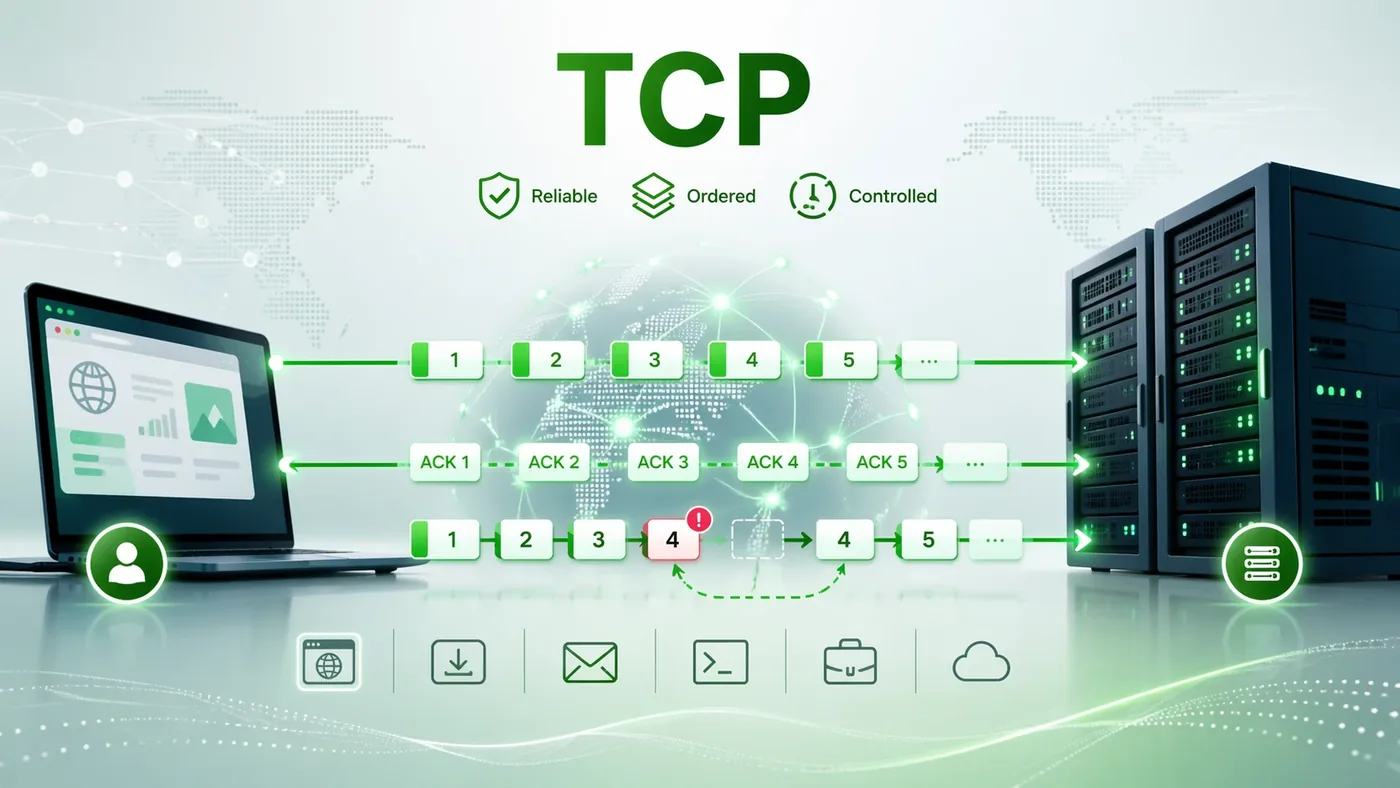
Network systems rely on transport standards to move data between computing hosts over the internet. The Open Systems Interconnection (OSI) model places Transmission Control Protocol (TCP) and User Datagram Protocol (UDP) at Layer 4 to handle host-to-host data transfer. With tcp vs udp explained through foundational architecture, software engineers evaluate essential trade-offs between delivery guarantees and transmission speed. TCP forms a connection-oriented channel that tracks packet order and recovers missing bytes, while UDP delivers fast datagrams without session overhead [10].
Understanding TCP vs UDP Transport Architecture
At Layer 4 of the OSI model, transport protocols manage end-to-end delivery above the network layer where Internet Protocol routes raw datagrams. In August 1968, DARPA selected BBN to build Interface Message Processors under Frank Heart and Bob Kahn, leading to the first ARPANET nodes at UCLA and Stanford Research Institute in autumn 1969. In May 1974, Vint Cerf and Bob Kahn published the core concepts of internetwork packet sharing in RFC 675 with researchers Yogen Dalal and Carl Sunshine, drawing on ideas from Gérard Le Lann on CYCLADES. In 1978, Jonathan Postel, Danny Cohen, and Bob Metcalfe at Xerox PARC helped divide the Transmission Control Program into IP and TCP [17]. Operating systems inspect incoming IP headers to identify transport protocols, reading decimal value 6 for TCP and decimal value 17 for UDP [16].
Both protocols use 16-bit port numbers to multiplex concurrent data streams on a single host, allowing a device with one IP address to manage web traffic, file transfers, and voice sessions simultaneously. Port numbers run from 0 to 65535 [9]. Internet Assigned Numbers Authority guidelines divide these into privileged system ports spanning 0 to 1023, registered user ports covering 1024 to 49151, and private dynamic ports spanning 49152 to 65535 for transient client sockets.
The two protocols serve divergent engineering goals in computer networking. TCP offers a connection-oriented service where two hosts agree on state parameters before exchanging data bytes. UDP delivers independent datagrams across computer networks without prior negotiation between hosts. Network engineers align these transport choices with routing boundaries, often deploying a reverse proxy and forward proxy architecture to manage traffic streams efficiently. Understanding how each transport protocol formats packets and handles network loss helps teams build dependable systems that remain stable under fluctuating line conditions [11].
TCP vs UDP Connection Setup
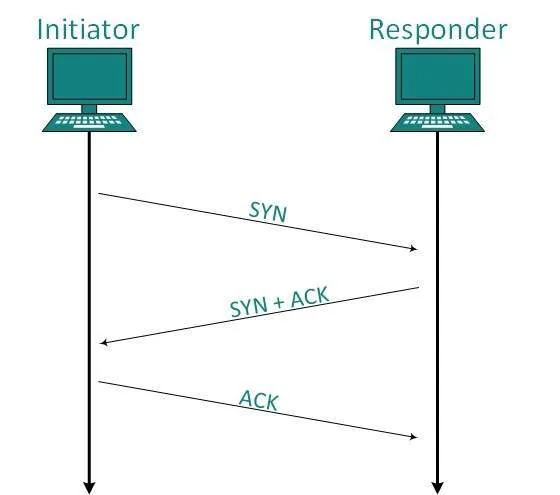
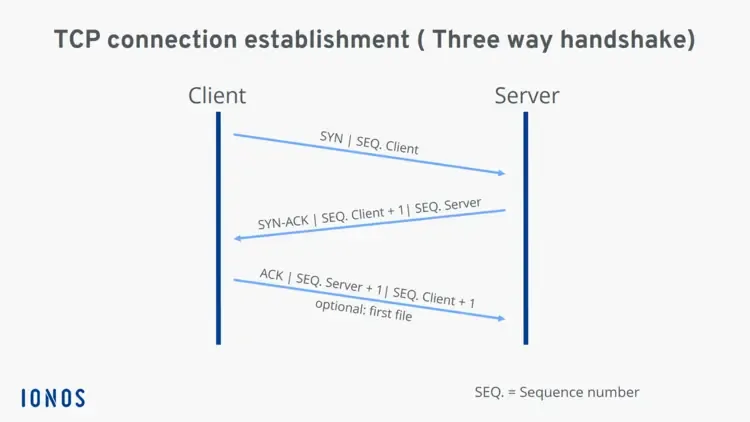
TCP demands an explicit synchronization routine before moving any application payload between client and server hosts. When a client initiates contact, it transmits a synchronization packet with the SYN flag set and a starting sequence number chosen to prevent confusion with prior connections. The listening server accepts the incoming request and replies with a SYN-ACK packet that includes its own sequence number along with an acknowledgment number incremented by one [8]. Finally, the client returns an ACK packet to confirm the server values, completing the three-way handshake. This structured exchange guarantees that both hosts are online and ready to exchange sequenced data streams before user data begins flowing across the link.
The four-step teardown process closes an active TCP link while protecting unread data in flight. Either endpoint can start termination by sending a packet with the FIN flag set to show it has finished sending data. The opposite side confirms receipt with an ACK packet. Because TCP supports full-duplex communication, the responding host can keep sending outstanding bytes until it issues its own FIN packet [12]. The originating host acknowledges this final FIN and stays in a time-wait state for up to 240 seconds to catch stray delayed packets.
If a host encounters a closed port or an invalid packet, it sends an RST reset segment. The RST flag drops the connection immediately without waiting for four handshake steps [13]. UDP skips all connection handshakes and shutdown steps. UDP transmits packets immediately without checking whether the destination host is ready.
Why Is UDP Faster Than TCP?
UDP is faster than TCP because it sends packets immediately without waiting to build a connection or confirm receipt of delivered data. While TCP spends at least one full network round trip performing its three-way handshake before delivering payload bytes, UDP dispatches its first datagram without delay. A UDP packet carries only 8 bytes of header data, compared to 20 to 60 bytes in a TCP header [7]. This minimal overhead speeds up processing in operating systems and cuts transmission delay over network routers.
The complete removal of retransmission timers and strict ordering checks prevents packet loss from causing sudden latency spikes in data streams. When a network switch drops a TCP segment, the receiving host holds back later packets in memory while waiting for the sender to retransmit the missing piece. This delay, known as head-of-line blocking, halts delivery to the receiving app until the lost segment is retrieved [5]. UDP avoids this problem by letting dropped packets go without retry. Streaming media programs simply drop lost datagrams and process newer frames immediately, which keeps delays low for real-time video calls and live voice feeds.
Network equipment also handles UDP with far less memory and CPU strain than stateful TCP sessions. Routers forward datagrams without tracking sequence numbers or window sizes [3]. Endpoints store no pending retransmission queues. For interactive online gaming, fresh game state updates matter far more than recovering old dropped data.
Header Formats and Packet Sizes
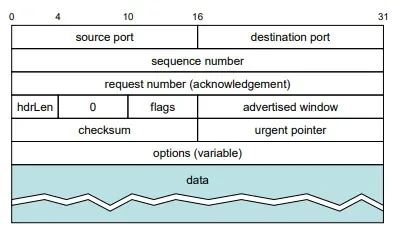
The structure of packet headers reveals how each protocol achieves its performance and reliability goals. A standard TCP header takes at least 20 bytes and can expand to 60 bytes when options are enabled under RFC 793 and RFC 9293 [15]. It begins with 16-bit source and destination port fields, followed by 32-bit sequence and acknowledgment numbers. A 4-bit data offset tells where payload data begins, followed by control flags such as SYN, ACK, FIN, and RST. The header also includes a 16-bit window size field for flow regulation, an urgent data pointer, and a 16-bit checksum that verifies header and data integrity.
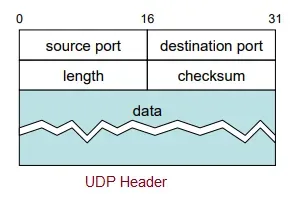
The UDP header layout groups four 16-bit fields: the sender port, destination port, entire packet length, and an error checksum [1]. This compact 8-byte header gives the protocol its speed advantage. While checksum checking is optional in IPv4, IPv6 implementations treat the checksum as mandatory [3]. The simple header needs very little CPU parsing.
Header sizes determine how much user data fits inside each physical network packet. On Fast Ethernet links with a standard Maximum Transmission Unit of 1500 bytes, subtracting 20 bytes of IP header and 20 bytes of TCP header leaves a Maximum Segment Size of 1,460 bytes [13]. That allows roughly 1.46 kilobytes of payload per packet. For tiny exchanges like Domain Name System queries that stay under 512 bytes, the 8-byte UDP header avoids unnecessary protocol bloat [3].

Traffic Control and Loss Recovery
To balance network transfer against host capacities and channel bottlenecks, TCP deploys flow control mechanisms that prevent a fast sender from flooding a slower receiver with more data than buffers can hold. Receivers advertise available space through 16-bit window fields [9]. By updating this sliding window value in acknowledgment packets, a receiving host can throttle incoming streams, even announcing a zero-byte window to halt transmission until local buffers drain and new space opens. A persist timer polls the receiver at intervals, preventing communication deadlocks if an opening window advertisement is lost.
Congestion control protects network switches and routers from being overloaded by heavy internet traffic. TCP adjusts sending rates through phases like slow start, congestion avoidance, fast retransmit, and fast recovery, alongside modern implementations like CUBIC [14]. During slow start, the sender doubles its congestion window with each successful transmission round until reaching a threshold [9]. When packet loss happens, TCP cuts its sending window to ease network strain. Routers can also use Explicit Congestion Notification by setting ECE and CWR flags, letting endpoints slow down before routers are forced to drop packets.
Researchers continue testing alternative congestion algorithms, such as Fair TCP studied in IET Communications in 2014 for round-trip fairness. Standard UDP provides no native flow or congestion control [4]. Applications sending large UDP streams must manage rate limits themselves to prevent network congestion.
Why Is UDP Connectionless?
UDP is connectionless because it sends independent datagrams directly to destination ports without negotiating session parameters or maintaining shared connection state between hosts. Defined in RFC 768 in August 1980, the protocol allows devices to send messages immediately without waiting for setup handshakes. A sending program packages data with source and destination port numbers and passes it to the IP layer [3]. Each datagram travels across routers as a standalone transmission unit.
Connectionless operation enables UDP to perform broadcast and multicast transmissions that TCP cannot support. Because UDP requires no two-way handshake or sequence tracking, a single host can broadcast one packet to every device on a local network segment or multicast to an assigned subscriber group [7]. TCP cannot broadcast because its stateful acknowledgments and sliding windows require an exclusive point-to-point connection between exactly two endpoints. Network administration tools, Dynamic Host Configuration Protocol setups, and the Routing Information Protocol rely on these connectionless broadcast features to discover network services quickly.
Stateless datagrams also save power on low-power devices. Research published in Expert Systems in 2022 showed that UDP communication uses about half the total packets of TCP in fog computing setups [19]. The removal of handshake overhead saves battery life on remote Internet of Things sensors.
Managing TCP vs UDP Security Risks
Because both protocols originated in trusted academic networks, neither protocol includes native encryption or built-in authentication mechanisms. The stateful design of TCP exposes servers to resource exhaustion through SYN flood attacks. An attacker floods a server with initial SYN packets containing spoofed IP addresses, forcing the host to allocate memory in its connection table for handshakes that never finish [12]. Attackers can also predict TCP sequence numbers to hijack active sessions or inject falsified RST packets to break valid links. Modern operating systems defend against these attacks using SYN cookies and random initial sequence numbers.
UDP faces severe security vulnerabilities because it does not verify sender identity or establish connection state. Attackers forge source IP addresses in UDP headers to launch reflection and amplification Distributed Denial of Service attacks against target websites. By sending small requests with spoofed victim IP addresses to open DNS or NTP servers, attackers cause those servers to reply with huge response packets directed at the victim [2]. These attacks can easily overwhelm network links.
Transport layer security demands applying cryptographic safeguards at higher protocol layers. Secure sockets rely on Transport Layer Security over TCP for HTTPS web browsing and banking apps [4]. UDP streams rely on Datagram Transport Layer Security or application encryption. Network firewalls use rate limiting and ingress filtering to block spoofed packets.
Choosing Protocols for Application Workloads
Choosing the correct transport layer protocol depends on whether a software project demands absolute byte-stream accuracy or requires minimal latency without the processing overhead of connection setup and segment retransmissions. TCP is the required foundation whenever missing or reordered bytes break user transactions [4]. Web browsers fetch HTML, CSS, and JavaScript files through HTTPS over TCP, while email transfers using SMTP, POP3, and IMAP rely on TCP to keep messages and attachments intact. Remote server management through SSH, relational databases like MySQL and PostgreSQL, and persistent two-way web architectures documented in WebSockets vs HTTP differences all depend on TCP delivery guarantees.
In contrast, UDP is the ideal protocol when speed matters more than complete accuracy and apps can tolerate minor packet loss. Video and audio streaming services like Zoom, Skype, and Microsoft Teams use UDP because dropping an audio packet causes minor static, whereas waiting for retransmission pauses the entire conversation [3]. Multiplayer video games send player positions over UDP to maintain fast response times. DNS lookups, DHCP configurations, and SNMP network monitoring also use UDP to execute fast queries with minimal overhead [6].
Neither protocol is universally superior because each solves distinct networking problems. Modern networking standards increasingly combine the strengths of both protocols. The Stream Control Transmission Protocol in RFC 9260, maintained by IETF SIGTRAN and TSVWG working groups, offers message framing with multihoming support for telecommunications networks, with its reference code appearing in FreeBSD 7 in 2008 [18]. Modern web services now deploy QUIC, a transport protocol designed by engineers to run on top of UDP, delivering encrypted multiplexed streams without head-of-line blocking [3]. Understanding these trade-offs helps developers choose the right transport tools for their systems.
- WEBSITE RF Wireless World. (2026, August 1). TCP vs UDP: Understanding the core differences. [Article Link]
- WEBSITE Learn Cyber. (2026, February 9). TCP vs UDP explained: A deep cybersecurity protocol comparison. [Article Link]
- WEBSITE Hales, A. (2026, March 11). TCP vs UDP explained: Key differences, use cases, and examples. [Article Link]
- WEBSITE GeeksforGeeks. (2019, July 22). TCP and UDP in transport layer. [Article Link]
- WEBSITE Bhuite, P. (2026, March 3). TCP vs UDP explained clearly with real examples. [Article Link]
- WEBSITE Monteiro, T. C. (2023, August 10). TCP and UDP protocols – Explained in plain English. [Article Link]
- WEBSITE Tutorialspoint. (2026, January 1). Difference between TCP and UDP. [Article Link]
- WEBSITE GeeksforGeeks. (2021, November 25). Transmission Control Protocol (TCP). [Article Link]
- WEBSITE Tutorialspoint. (2026, January 1). Transmission Control Protocol. [Article Link]
- WEBSITE Fortinet. (2026, January 1). What is TCP/IP in networking? [Article Link]
- WEBSITE Bekiot. (2026, April 23). What is Transmission Control Protocol (TCP)? Uses, how it works, and applications. [Article Link]
- WEBSITE Network Encyclopedia. (2019, September 6). Transmission Control Protocol (TCP). [Article Link]
- WEBSITE Heldmaier, C. (2020, March 2). TCP (Transmission Control Protocol) – The transmission protocol explained. [Article Link]
- WEBSITE Hall, D. (2026, March 29). What is Transmission Control Protocol Internet Protocol: Explained simply. [Article Link]
- REPORT Eddy, W. (2022, August 18). Transmission Control Protocol (TCP) (RFC 9293). [Article Link]
- WEBSITE Wikipedia. Transmission Control Protocol. [Article Link]
- WEBSITE Wikipedia. Internet protocol suite. [Article Link]
- WEBSITE Wikipedia. Stream Control Transmission Protocol. [Article Link]
- ACADEMIC JOURNAL Khaniabadi, S. M., Javadpour, A., Gheisari, M., Zhang, W., Liu, Y., & Sangaiah, A. K. (2022). An intelligent sustainable efficient transmission internet protocol to switch between User Datagram Protocol and Transmission Control Protocol in IoT computing. Expert Systems, 40(5). [Article Link]


