






A three-word post reading “Go for launch” accompanied by a date graphic appeared on X on Saturday, signaling that Tesla plans to reveal its next electric sports car. Tesla says it will unveil the second generation Roadster on October 1. Has the long-delayed project finally resolved its design hurdles? TechCrunch reporter Anthony Ha notes that the public presentation is formally scheduled for that autumn date, bringing the electric sports car back to the calendar after years of postponements. [1]
Second Generation Roadster Date Appears on X
Tesla published its brief message without a conventional press release or media briefing. The graphic displayed “10.01”. Anthony Ha reported for TechCrunch that the cryptic date corresponds to an October 1 reveal for the high-end vehicle, bringing fresh attention to the long-delayed automotive project. Tesla wrote simply, “Go for launch.” That phrase echoes aerospace terminology familiar to followers of Elon Musk’s ventures. The post relied on a stark teaser graphic to reintroduce the sports car. [1]
Online reporting reacted quickly to the calendar entry. TechCrunch reported that the Saturday announcement signals the second generation Roadster might finally be ready for public viewing, ending years of uncertainty after repeated postponements since 2017. The sudden reveal date placed renewed focus on Tesla’s promises for the high-end electric vehicle. [1]
Event logistics emerged soon after the initial post. AutoNext reporter Beau Ackx and Crypto Briefing confirmed that Tesla scheduled the presentation in Waco, Texas (an event venue roughly 90 minutes north of Austin), inviting reservation holders. The venue sits a short drive from SpaceX’s McGregor engine testing complex. Fred Lambert noted for Electrek that a countdown clock appeared on Tesla’s official page. A date is set. Questions linger regarding what stage hardware the public will see. [1, 3, 5, 6]
Tesla provided no broadcast stream details. The announcement relied entirely on the date graphic to set expectations for October 1. [1]
SpaceX Cold Gas Thrusters Promised for Flight
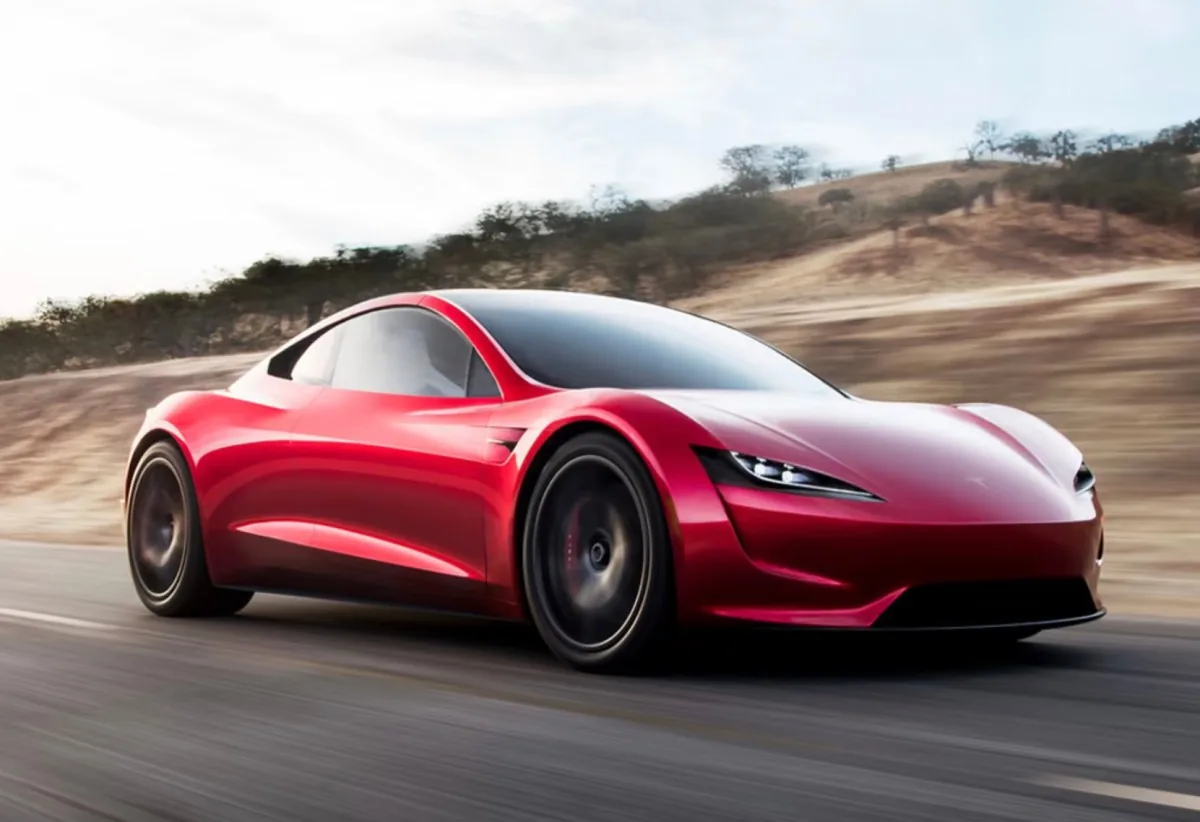
The promotional graphic seems to hint at optional cold gas thrusters developed by SpaceX, according to Anthony Ha’s reporting. Elon Musk leads both companies. Musk has repeatedly mentioned using aerospace hardware on the sports car. Cold gas thrusters (reaction control thrusters that release compressed gas to generate directional force) typically orient rockets in space, but Tesla proposes installing them directly on road vehicles. On an automobile, the proposed hardware is supposed to allow the vehicle to fly in some way. The promise remains untested. [1]
Technical realities complicate any plans for airborne maneuvers. Fred Lambert reported for Electrek that earlier extravagant concepts involving magnetized ramps were scaled back to a remote hover demonstration conducted without human passengers inside the vehicle cabin. The thrusters produce sound loud enough to harm hearing, forcing onlookers in Waco hundreds of yards back. Martin Holloway observed in The Brief that incorporating high-pressure gas storage into a battery-electric skateboard packaging layout introduces severe structural compromises and unprecedented thermal management hurdles. Neither Tesla nor SpaceX released engineering papers explaining consumer safety compliance for high-pressure canisters. Tesla has not clarified whether October 1 will feature functional thruster firing or a static design showcase. [1, 3, 4]
Real flight poses major regulatory hurdles. Automotive authorities strictly monitor exterior discharge nozzles and pressurized canisters on public roadways. Beau Ackx reported for AutoNext that a vehicle equipped with rocket hardware cannot secure European road approval, meaning road-legal configurations alone will matter to prospective Belgian or German buyers. Complex aerospace guidance and aerial mechanics previously drew scrutiny during NASA’s Ingenuity helicopter concluding its three-year exploration mission on Mars, illustrating how novel flight systems require extensive regulatory clearance. Incorporating rocket equipment into a passenger sports car creates novel compliance questions. Available reports leave unanswered how Tesla plans to license thruster mechanisms for highway travel. [1, 5]


November 2017 Debut Faced Repeated Setbacks
The second generation Roadster first appeared before audiences in November 2017. Tesla introduced the sports car during an evening presentation alongside the Tesla Semi. The timeline kept shifting. Since that initial appearance, Tesla postponed production targets across eight distinct scheduling cycles. Anthony Ha noted that the vehicle spent years in development limbo, leaving enthusiastic reservation holders to wonder when an actual street-legal model would finally roll off assembly lines. AutoNext reported that whereas Tesla’s original 2008 sports car utilized a Lotus chassis manufactured in Hethel, this upcoming model represents an entirely separate design effort engineered within Texas. [1, 3, 5, 6]
Recent reporting confirmed a fundamental pivot in the project’s engineering direction. Martin Holloway at The Brief highlighted that The Information discovered Tesla had completely discarded the 2017 prototype configuration in favor of an unrevealed, radical design slated for release. In August 2026, Reuters reported that Tesla prepared to unveil the redesigned bodywork before that summer window lapsed. Tesla selected a clean-sheet architecture. Scrapping seven years of earlier prototyping explains why public development updates abruptly ceased. [1, 4]
Discarding the 2017 concept means the car shown in Waco will look fundamentally distinct from the earlier silver prototype. The original car was scrapped. Starting from scratch resets durability verification and homologation (the official safety and road approvals required for street legality) before production vehicles can realistically enter consumer hands on public streets. How much of the initial mechanical layout survived the redesign? TechCrunch’s reporting indicates that the upcoming presentation will finally expose the revised engineering to scrutiny. [1, 4, 5]
Reservation Dispute Highlights Extended Wait
Customer patience has faced severe testing over the nine-year span. Tesla collected substantial reservation deposits when opening the order books in November 2017. Standard reservations required a $50,000 upfront commitment, while Founders Series allocations demanded $250,000 in cash. AutoNext reported that European buyers still face reservation fees of €43,000 on official portals. Those commitments bound significant capital for early enthusiasts. Holding customer funds across repeated delays fueled sharp public disputes. [1, 3, 5]
The extended wait triggered high-profile friction between Elon Musk and OpenAI chief executive Sam Altman. Altman publicly stated on social media that “7.5 years has felt like a long time to wait” after paying a fifty-thousand-dollar deposit when Tesla first unveiled the vehicle prototype. Musk disputed the grievance by asserting Altman had already secured a refund. Fred Lambert reported for Electrek that popular reviewer Marques Brownlee also canceled his reservation following years of stalled progress. The cancellations revealed that even well-capitalized early backers grew frustrated with shifting timelines. [1, 3]
Consumer tolerance for extended product timelines faced similar scrutiny during earlier discussions regarding Apple’s reported two-thousand-dollar foldable iPhone Duo pricing, demonstrating how high price tags compound delivery delays. Holding customer funds for Founders Series (the $250,000 reservation tier promised with priority delivery) across multiple postponements strains consumer goodwill. Tesla aims to use the Waco event to rebuild credibility among depositors who committed funds almost a decade ago. [1, 3]
Production Timeline Leaves Months of Waiting
A public reveal does not ensure rapid vehicle manufacturing. Production will wait. Anthony Ha reported for TechCrunch that Elon Musk conceded factory tooling would lag the event by twelve to eighteen months [1]. Martin Holloway noted in The Brief that Musk previously targeted a 2025 shipping window on February 28, 2024, before delaying that milestone [4]. At a shareholder gathering in November 2025, Musk indicated assembly would realistically begin in 2027 or 2028. Assembling an electric sports car with high-performance composites requires prolonged validation at Gigafactory Texas. [3, 5]
Tesla no longer commands an uncontested performance niche for its halo sports car. Beau Ackx noted for AutoNext that in July 2025 the Rimac Nevera R from Mate Rimac reached 100 km/h in 1.72 seconds, eclipsing Tesla’s 2017 performance targets. On investor forums, persistent delays prompt debates where participants question when will tesla finally crash or when will tesla stock finally crash [1, 5]. While Tesla manufactures high-volume vehicles like the Model Y and Cybertruck, the sports car must prove its commercial viability [6].
Prospective buyers who deposited substantial reservation funds nearly a decade ago will soon discover whether the redesigned sports car justifies their patience or merely inaugurates another lengthy waiting period. October 1 in Waco will bring the updated exterior styling and interior layout into full public view [5, 6]. The gathering will test whether the SpaceX thrusters represent production reality or theatrical demonstration hardware. Deliveries remain distant. The showcase in Waco begins the next phase of customer anticipation. [1, 4, 5]
- ONLINE NEWS Ha, A. (2026, September 12). Tesla says it will finally unveil the second generation Roadster on October 1. TechCrunch. [Article Link]
- ONLINE NEWS Tesla Confirms Next-Generation Roadster Reveal On October 1. (n.d.). InsideEVs. [Article Link]
- ONLINE NEWS Lambert, F. (2026, September 12). Tesla teases new Roadster reveal for October 1: ‘Go for launch’. Electrek. [Article Link]
- ONLINE NEWS Holloway, M. (2026, September 12). Tesla Sets October 1 Date for Second-Generation Roadster Reveal. The Brief. [Article Link]
- ONLINE NEWS Ackx, B. (2026, September 12). Tesla’s Roadster reveal is 1 October, its fifth date this year. AutoNext. [Article Link]
- ONLINE NEWS Tesla signals October 1 reveal for long-delayed Roadster. (2026, September 12). Crypto Briefing. [Article Link]


1 comment