




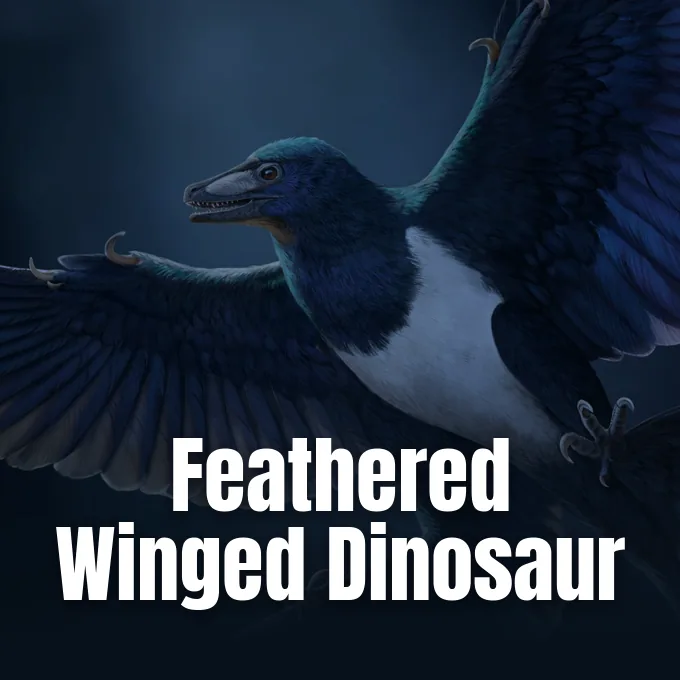
Did powered flight arise only once among prehistoric predators? The evolutionary transition from terrestrial theropods to airborne fliers represents one of vertebrate paleontology’s most enduring scientific questions. A newly described feathered winged dinosaur from northeastern China challenges the long-held assumption that aerial flapping emerged along a single unbroken lineage leading directly to modern birds. Discovered in the Early Cretaceous Jiufotang Formation in Liaoning, Norellraptor barsboldi preserves delicate feather impressions and specialized limb architecture that evolved separately from true avians. The fossil skeleton measures 57 centimeters long. Microscopic analysis confirms the animal was at least three years old and lived between 145 and 100 million years ago [1].
How Feathered Were Dinosaurs?
Fossil evidence demonstrates that diverse non-avian theropods possessed complex plumage ranging from simple monofilaments to asymmetrical flight feathers on their limbs. While discoveries such as a leg bone in a tyrannosaur’s belly revealing prey evidence illuminate direct carnivorous diets in massive ground predators, the Liaoning fossils address how smaller paravian theropods developed aerodynamic coats. Within Paraves (the evolutionary group that unites microraptorines and true birds), plumage served aerodynamic, insulating, and behavioral functions across prehistoric forests. Dense feather coats evolved widely. These anatomical discoveries have reshaped vertebrate paleontology by revealing that avian characteristics developed across non-avian theropods long before the appearance of modern birds [1].
Fossils show that both microraptors and early bird-winged animals in the Avialae clade developed elaborate feather arrays across their bodies. Fossil discoveries of Archaeopteryx, which lived in Europe during the Late Jurassic approximately 150 million years ago, demonstrate that feather evolution was already exceptionally advanced during earlier geological epochs [2]. Understanding these evolutionary stages connects to investigations into the chronological dating of Archaeopteryx and its fossils. Cretaceous lineages diverged dramatically. Lisa Lock and Senior Editor Robert Egan reported for Phys.org that the new Chinese specimen provides crucial evidence regarding how these early branching stages separated [3].
Plumage on predatory dinosaurs was not merely an aerodynamic surface for gliding or flapping. Scott Hartman, a vertebrate paleontologist at the University of Wisconsin-Madison who was not involved in the study, noted that wings also served social displays and reproduction. It is possible that the wings had other purposes, such as demonstrating fitness to mates or warming eggs on a nest. Wings served multiple functions. Complex feather structures fulfilled shifting behavioral demands as paravian theropods diversified across Mesozoic environments [2].
Feathered Winged Dinosaur Discovery in Liaoning
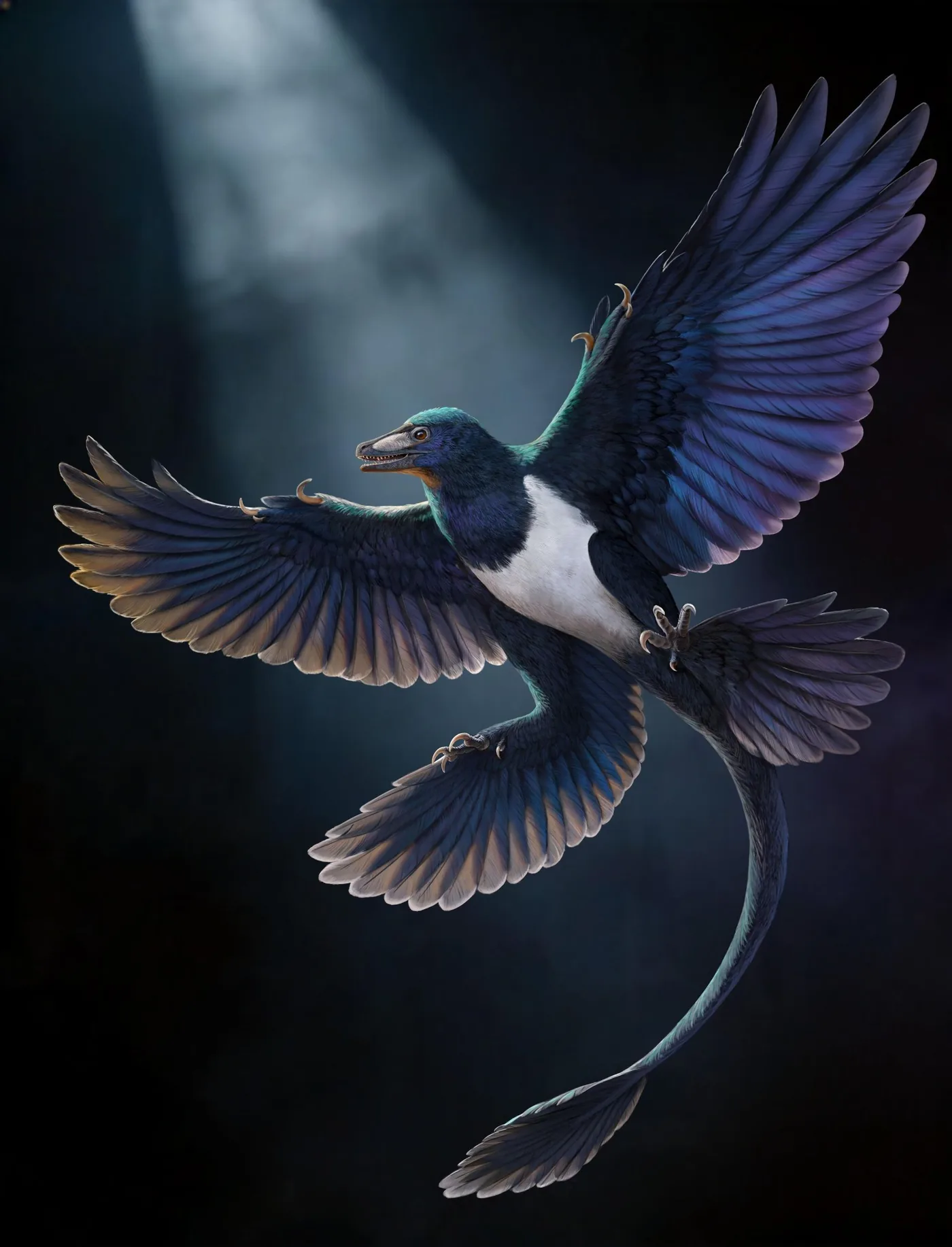
The newly described feathered winged dinosaur represents an exceptional addition to the prehistoric fossil record of northeastern China. Andrea Cau, Qiang Ji, Xuri Wang, and their colleagues named the new species Norellraptor barsboldi after examining an extraordinarily complete skeleton. Discovered in the Lower Cretaceous Jiufotang Formation in Liaoning, China, the specimen provides rare insight into the fine anatomical construction of microraptorine theropods across the northern hemisphere. Publication of the research appeared in the peer-reviewed journal Nature Communications [1].
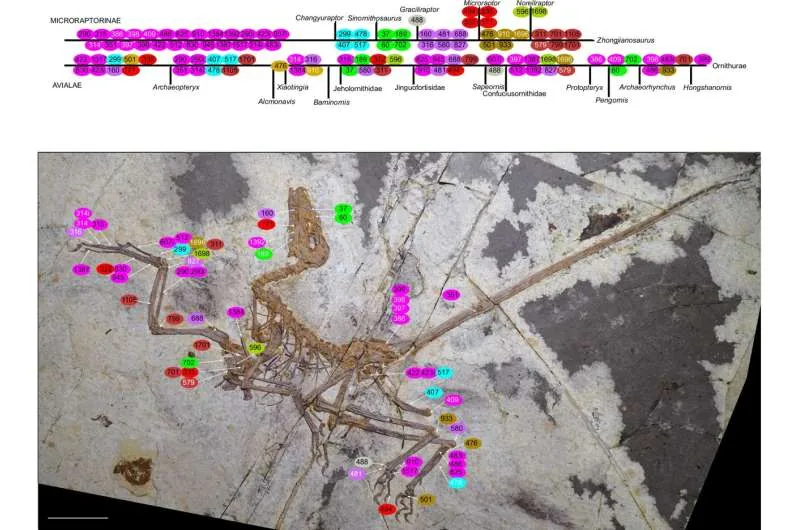
The fossil specimen, cataloged as 130108-MHGU-F4281, reveals remarkable preservation across both bone structure and soft plumage impressions. Articulated skeletal elements extend continuously from the predatory skull down to the distal tail vertebrae. The specimen measures 57 centimeters long. That equals 22 inches [3]. Histological examinations established that bone growth was slowing toward adult maturity, confirming the animal was at least three years old when it perished in the prehistoric lake ecosystem [1].
Geological deposits in the Lower Cretaceous Jiufotang Formation are celebrated across vertebrate paleontology for preserving delicate fossils that date between 145 and 100 million years ago. Andrea Cau, a paleontologist at the OPHIS Paleontological Museum and Herpetological Center in Italy, collaborated with Chinese researchers to analyze the specimen. Chris Simms reported for Live Science that northeastern China has yielded dozens of spectacular paravian theropods, establishing Liaoning as the global epicenter for studying early flight experiments [2].
Did Flight Evolve Multiple Times in Dinosaurs?
Comparative phylogenetic analysis indicates that flapping flight evolved independently in non-avialan dinosaurs and birds rather than descending from a single flying ancestor. In their published paper in Nature Communications, Xuri Wang, Y. Ji, Andrea Cau, M. Kundrát, Y. Liu, Y. Wang, and Qiang Ji evaluated how flight apparatus assembly proceeded across paravian theropods. The team investigated whether flight adaptations in Paraves originated once in a common ancestor or arose through convergent evolution. Their morphological results strongly favor independent assembly of the flight apparatus across separate clades [1].
The researchers analyzed evolutionary transformations across a comprehensive anatomical matrix comprising 194 distinct skeletal traits. Comparing these results across an evolutionary tree, the authors determined that around 30% of the 194 anatomical changes identified across microraptor evolution also evolved in the bird lineage. These shared features included modifications to the pectoral girdle and specialized wing feather arrangements. Both lineages acquired convergent flight characteristics. However, the anatomical pathways leading to these adaptations reveal striking functional differences across geological time [2].

Crucially, the comparative fossil analysis demonstrated that the evolutionary sequence in which these shared features appeared differed between microraptors and avialans across their respective developmental histories. This finding directly challenges the hypothesis that microraptorines and true birds inherited an identical flight apparatus or shared developmental trajectory from a common ancestor [3]. Rui Pei, a paleontologist at the Institute of Vertebrate Paleontology and Paleoanthropology at the Chinese Academy of Sciences who was not involved in the work, emphasized the broader significance: “This demonstrates that microraptors acquired traits convergent with the early evolutionary stages of true birds, albeit through a distinct evolutionary pathway, supporting the hypothesis that flapping flight evolved independently in non-avialan dinosaurs and birds” [2].


Four-Winged Feathered Dinosaur Skeletal Architecture
Skeletal analyses of the four-winged feathered dinosaur illuminate how non-avian theropods engineered functional aerial bodies. Aside from elongate feathers on forelimbs and hindlimbs, Norellraptor barsboldi possessed the fusion of bony projections to the ribs that created a rigid torso. This anatomical modification created an unyielding central core capable of withstanding aerodynamic torsion during wing movement. Modern flying birds rely on comparable thoracic rigidity to stabilize active flight muscles, yet microraptors achieved this mechanical stability through a distinct skeletal arrangement [2].
The limb proportions of Norellraptor barsboldi demonstrate specialized biomechanical traits suited for aerial locomotion. Forelimb bones were relatively robust compared with hind limbs, providing substantial skeletal anchoring surfaces for flight feathers. An ulna (the primary weight-bearing bone for a wing) was longer than the humerus in the forelimb skeleton. Wing bones were reinforced. Scott Hartman explained that a large well-ossified sternum or breastbone could allow for larger pectoral muscles, generating a solid downstroke to produce forward thrust during active flapping locomotion [2].
Secondary aerodynamic surfaces located on the hindlimbs provided distinct steering advantages during gliding maneuvers. Rather than flapping actively, the hind wings were held directly under the body for stabilizing flight, braking, and rapid control of tight turns. This arrangement gave microraptorines exceptional agility when maneuvering through dense Early Cretaceous forests. By deploying four feathered surfaces simultaneously, Norellraptor barsboldi executed sharp turns and abrupt aerial decelerations that two-winged fliers could not match across closed forest canopies [2].
How Did Norellraptor Barsboldi Hunt and Move?
Norellraptor barsboldi functioned as an agile small carnivore that captured prey through a combination of gliding, flapping bursts, and controlled descents. Scott Hartman described N. barsboldi as having the sharply curved predatory teeth and claws typical of a generalist predator. The animal probably fed on early mammals, lizards, amphibians, and juvenile dinosaurs. Sharp teeth lined its predatory jaws. These feathered winged dinosaurs deployed aerial agility to surprise smaller forest vertebrates [2].
Hartman clarified the predatory scale of this small hunter in his comments to Live Science: “It wouldn’t have been attacking any large dinosaurs. That would be like mosquitoes attacking battleships.” The four wings provided essential predatory control during pursuit: “These are clearly little predatory buggers. If you’re leaping onto things or dropping onto things, that kind of control would be pretty important. It’s always best to surprise animals by landing where you planned to rather than somewhere you didn’t plan to” [2].

Hartman strongly agreed with the research team, emphasizing that aerodynamic wing structures arose repeatedly across distinct paravian lineages. Flight evolved multiple times [2].
Significance for Avian Evolutionary Pathways
The discovery of Norellraptor barsboldi provides pivotal morphological evidence that the origin of flight in Paraves was far more modular and multifaceted than previously recognized by evolutionary biologists. Rui Pei pointed out to Live Science that given the substantial muscular and skeletal similarities microraptors shared with modern birds, non-avian theropods likely exhibited aerodynamic and behavioral capabilities comparable to early airborne species [2]. Furthermore, the study authors in Nature Communications concluded that separate evolutionary driving forces likely guided the development of flight equipment along each respective branch [1]. Aerodynamic solutions diversified rapidly. Rather than following a single predetermined evolutionary sequence, paravian theropods explored multiple independent aerodynamic solutions across Cretaceous ecosystems [3].
Understanding how these animals became airborne remains an active debate among vertebrate paleontologists. Scott Hartman doubted that microraptorines could climb trees like a squirrel to gain height because their forelimbs lacked that range of motion. Instead, these small predators might have taken off after running down a slope, or leapt from hills or cliffs to initiate flight. Both lineages developed distinct flight adaptations. A combination of flapping and gliding enabled them to exploit three-dimensional forest habitats effectively [2].
The research team consisting of Xuri Wang, Andrea Cau, Qiang Ji, and their colleagues emphasized that further fossil discoveries and bone-growth histological evidence will be necessary to test how widespread this evolutionary pattern was among other bird-like theropods [1]. Nature Publishing Group noted in its summary of the findings that understanding microraptor anatomy reframes the entire timeline of vertebrate flight [3]. Northeastern China will continue to yield fossil evidence clarifying how each feathered winged dinosaur adapted to the prehistoric skies [1].
- ACADEMIC JOURNAL Wang, X., Ji, Y., Cau, A., Kundrát, M., Liu, Y., Wang, Y., & Ji, Q. (2026). Independent assembly of the flight apparatus in a non-avian dinosaur clade. Nature Communications, 17(1). [Article Link]
- ONLINE NEWS Simms, C. (2026, September 29). Remarkably preserved feathered dinosaur discovered in China reveals new secrets of flying predator evolution. Live Science. [Article Link]
- ONLINE NEWS Lock, L., & Egan, R. (2026, September 29). New feathered, winged dinosaur from China challenges our theories on bird and dinosaur evolution. Phys.org. [Article Link]
APA 7: PerEXP. (2026, September 30). How a Feathered Winged Dinosaur Evolved Flight in China. PerEXP.


