





Arizona State University researchers have developed a catalytic membrane system for destroying forever chemicals in contaminated water instead of simply trapping them into toxic waste. Known formally as per- and polyfluoroalkyl substances, or PFAS, these durable man-made compounds appear in nonstick cookware, waterproof jackets, food packaging, and firefighting foams. Most standard cleanup methods pull the chemicals out of water but leave behind toxic sludges that municipal facilities must bury or burn. Science editor Mrigakshi Dixit reported for Interesting Engineering that the new setup uses microscopic palladium-coated hollow fibers to deliver hydrogen directly into the pollutants, breaking them into harmless components [3].
Why PFAS Compounds Resist Degradation
PFAS earned their nickname because they do not rot, rust, or break down under sunlight or natural soil conditions. Teflon coatings brought these compounds into kitchens decades ago, and chemical manufacturers soon spread them into paints, carpets, furniture, cosmetics, semiconductors, and waterproof outdoor apparel. Carbon atoms form the spine of each molecule, and fluorine atoms surround that spine on every side like a suit of armor. Because fluorine atoms shield the carbon spine from external heat and reactive chemicals, “it’s called the strongest bond in organic chemistry,” said Bruce Rittmann, director of the Biodesign Swette Center for Environmental Biotechnology at Arizona State University [2].
Because of that tight atomic bond, microbes in soil cannot digest the molecule, and common water purifiers cannot pierce its protective outer shell. While standard activated carbon filters, ion-exchange resins, and reverse osmosis units clean the drinking stream, they do not neutralize the underlying pollution and instead leave behind barrels of tainted sludge that operators must bury or incinerate [3]. Moving hazardous waste from one spot to another leaves the chemicals intact. Disposal sites face future leaks.
High PFAS levels accumulate in aquifers surrounding army airfields, municipal trash dumps, transport hubs, and industrial sewage works across several continents [3]. These persistent toxins enter irrigation canals, settle into farm soil, and accumulate in fish, livestock, and community drinking wells. Earlier reporting documented that most Americans remain unaware of forever chemicals despite their presence in everyday consumer goods. Once inside the human body, these toxic substances linger for decades. Medical studies reviewed by Sadie Harley and Robert Egan at Phys.org link PFAS exposure with kidney tumors, thyroid disease, high cholesterol, reduced fertility, immune dysfunction, and developmental delays in children [2].
Methods for Destroying Forever Chemicals Using Fibers
Addressing how to destroy forever chemicals requires finding a way to split the carbon-fluorine bond without needing extreme thermal combustion or hazardous reagents. Bruce Rittmann led an international team with lead author Jie Cheng, working with M. Long and A. Wang at Arizona State University in Tempe, W. C. Elias and T. P. Senftle at Rice University in Houston, Texas, C. Zhou at Tongji University in Shanghai, China, and researchers from National University of Singapore and Nanjing University [1].
“PFAS are hard to break down, and normal processes that we use don’t work,” Rittmann said. Because fluorine leaves no opening for standard biological enzymes or oxidizing agents, the research team turned to palladium metal nanoparticles and pressurized hydrogen gas to crack the stubborn chemical bonds [2].
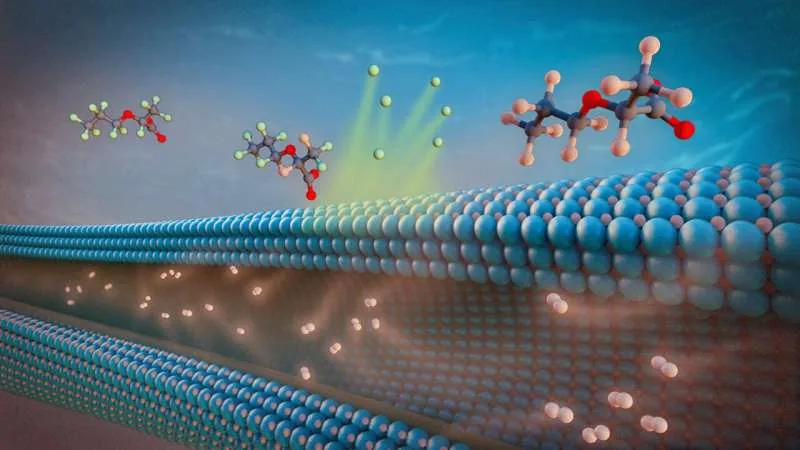
Can ordinary hydrogen break these stubborn chemical bonds without extreme heat? Hydrogen can split the carbon-fluorine bond, but paired hydrogen molecules floating in water react sluggishly. Palladium metal acts as a catalyst that splits paired hydrogen molecules into individual, highly reactive hydrogen atoms. When investigators focused on destroying forever chemicals, they realized that the catalytic metal surface could attract the target pollutant and the reactive hydrogen atoms at the exact same moment [1]. “The palladium attracts the PFAS molecule, and the palladium attracts the hydrogen and puts them together,” Rittmann said [2]. This molecular matchmaking lets the reactive hydrogen strip fluorine atoms away from the carbon skeleton, converting the synthetic compound into simple fluoride ions and harmless carbon products. The team tested the catalytic setup on six priority compounds, including PFOS and PFOA, which are formally restricted under the international Stockholm Convention on Persistent Organic Pollutants [1].
Inside-Out Hydrogen Delivery Mechanism
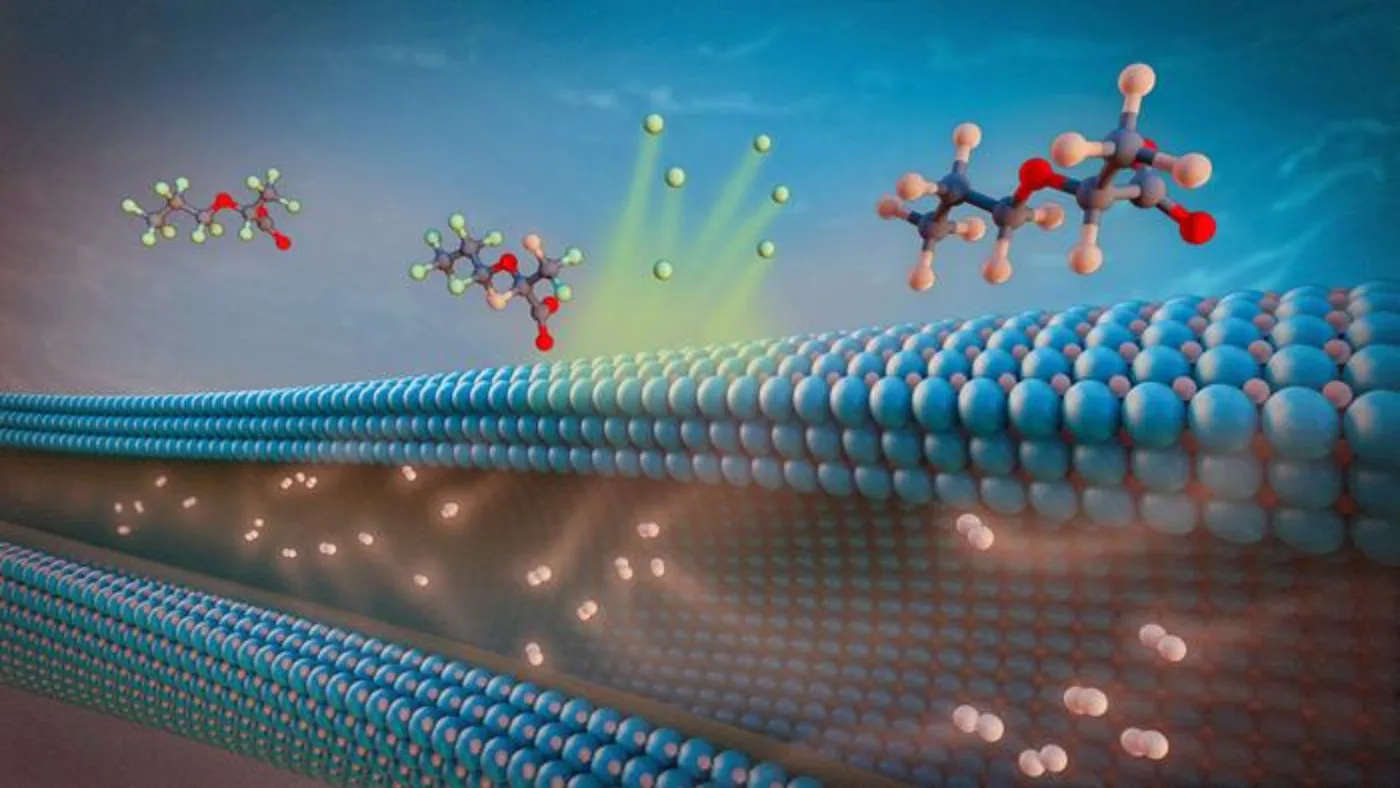
The engineering advance centers on how hydrogen enters the reaction zone. In earlier water treatments, engineers bubbled hydrogen gas into tanks from the outside, but most gas bubbled away before it could do any work. The researchers solved this problem by using hollow fiber membranes that resemble microscopic straws. Collaborators helped analyze how coating the outer wall of each tiny straw with palladium nanoparticles allows pressurized hydrogen gas to pass straight through the hollow center [1].
Gas travels outward through the membrane wall and meets the palladium catalyst from underneath. This inside-out delivery ensures that every bit of hydrogen passes through the metal layer, splitting into reactive single atoms just as PFAS molecules drift toward the outer surface from the surrounding water. It creates a dense reaction zone right at the liquid boundary. No gas escapes into the room. The reaction proceeds cleanly without adding extra chemicals to the water stream [1].
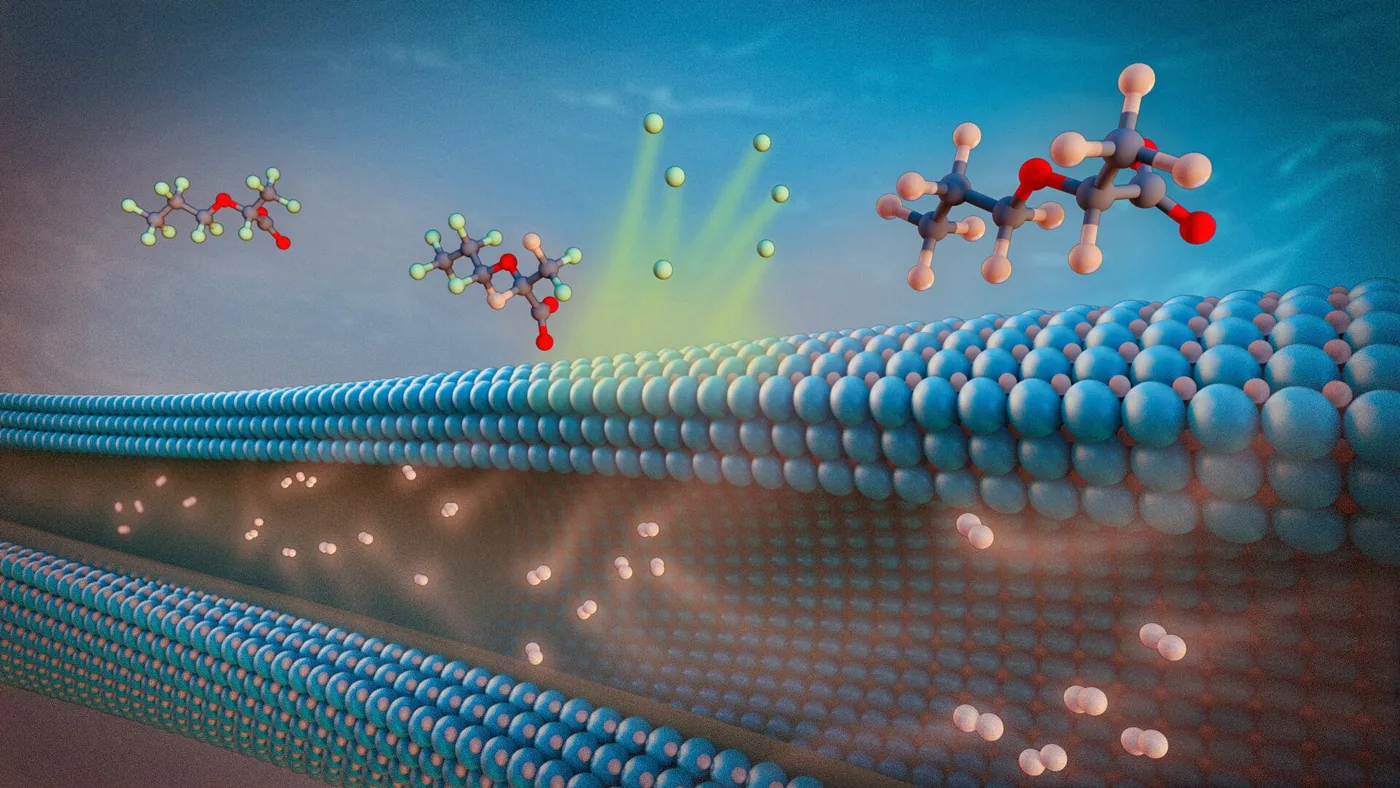
While that earlier environmental biotechnology developed at Arizona State University used hollow fibers to feed hydrogen gas to living microbes that digested groundwater nitrates, the current investigation replaced those bacteria with catalytic palladium nanoparticles to dismantle industrial fluorinated chemicals. Jason Drees provided scientific illustrations of the palladium membrane for Phys.org, illustrating how mechanical membrane designs can serve both biological and catalytic cleanup jobs [2].

Continuous 58-Day Water Treatment Results
Lab tests often show promise in small vials but falter under continuous flow. To test whether their membrane could survive practical conditions without losing catalytic strength, the research team ran a continuous treatment trial that lasted 58 days with a mixed cocktail of six regulated compounds [1].
During a continuous 58-day trial reported by Interesting Engineering, the system removed more than 90 percent of each of the six compounds throughout the run. Chemical measurements confirmed that the reactor stripped away about 83 percent of the total fluorine from the molecules, demonstrating that the catalyst dismantled the synthetic bonds instead of just collecting waste [1]. The pollutant was not sticking to the filter; its stubborn bonds were breaking down in real time. “We showed that this mechanism worked for all six,” Rittmann said. “It’s a universal mechanism” [2].
Testing persistent poisons in water mirrors analytical methods used to track other persistent toxins, such as mercury accumulation in mammalian brain cells that resist normal clearance. “They stay in the environment. They move up the food chain, and so they’re a big legacy problem,” Rittmann said. Research records published under DOI 10.1073/pnas.2613985123 in Proceedings of the National Academy of Sciences confirmed that the catalytic process kept working without clogging or losing speed [1].
Challenges in Destroying Forever Chemicals at Scale
Bringing this catalytic process from a university bench to a municipal utility will require solving economic hurdles. The biggest economic obstacle remains the high market cost of the catalyst itself, as industrial palladium trades on global commodities exchanges for roughly $50,000 per kilogram. “Palladium is expensive,” Rittmann said, noting that finding clever engineering methods to trim the required metal coating represents the laboratory’s primary research goal for future municipal deployment [2].
Engineers also recognize that running dilute groundwater through palladium membranes would be inefficient. Instead of using the reactor as a standalone filter for millions of gallons of tap water, utilities will likely pair it with existing tools. Standard activated carbon beds or reverse osmosis units can extract PFAS from millions of gallons of drinking water first, creating a compact waste stream that the catalytic reactor can destroy efficiently [3]. The process treats the concentrated brine directly on site. Facilities avoid the expense of transporting hazardous drums to distant disposal grounds.
That two-stage setup allows municipal facilities to destroy the concentrated waste on site instead of paying to haul toxic sludges to distant landfills. Similar chemical sensing strategies, such as how scent recognition decodes chemical signals to separate trace compounds, show that isolating complex target molecules before chemical treatment saves valuable operational energy. In municipal water treatment, concentrating the flow first makes destroying forever chemicals cost-effective for public utilities [3].
Hybrid Systems Combining Bacteria and Metal
Beyond pure metal catalysts, Rittmann’s group is developing hybrid systems that combine palladium nanoparticles with pollutant-eating microbes. In these hybrid membranes, the palladium catalyst uses hydrogen to clip tough fluorine bonds from PFAS, while nearby bacteria consume other organic pollutants that drift through the wastewater stream. “We’ve shown that this works too,” Rittmann said, pointing to early tests where the two mechanisms complemented each other in a single reactor [2].
Thousands of PFAS variants still circulate in industrial products, and only a tiny fraction have undergone complete toxicological testing. Municipal managers face tightening regulatory limits on PFOS and PFOA, and they need treatment tools that do not create new disposal headaches. By proving that catalytic membranes can chemically dismantle these stubborn molecules during continuous operation, the researchers have offered water managers a practical blueprint for ending a decades-long environmental legacy [1]. This engineering strategy provides a realistic path toward eliminating persistent toxins from community water supplies.
- ACADEMIC JOURNAL Long, M., Wang, A., Elias, W. C., Zhou, C., Senftle, T. P., Wong, M. S., Cheng, J., & Rittmann, B. E. (2026). Catalytic reactive-hydrogen membranes for rapid capture and hydrodefluorination of six PFAS of regulatory concern. Proceedings of the National Academy of Sciences, 123(43). [Article Link]
- ONLINE NEWS Harley, S., & Egan, R. (2026, October 19). New ‘hunter-killer’ chemistry captures and destroys forever chemicals. Phys.org. [Article Link]
- ONLINE NEWS Dixit, M. (2026, October 19). Palladium-coated membrane destroys toxic ‘forever chemicals’ in water. Interesting Engineering. [Article Link]
APA 7: TWs Editor. (2026, October 20). ASU researchers develop method for destroying forever chemicals. PerEXP Teamworks. https://perexpteamworks.com/en/destroying-forever-chemicals-membrane/


