




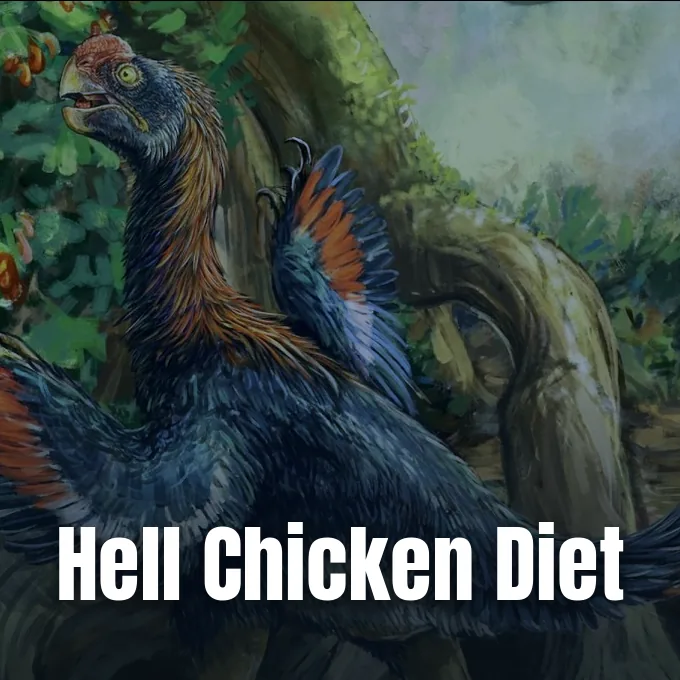
Paleontologists have long viewed oviraptorosaurian theropods as mysterious creatures whose dietary habits remained difficult to prove because their delicate skull bones rarely survived fossilization. A well-preserved skull found in Montana now shows that Infernogallus jamesi, a small turkey-sized dinosaur nicknamed the hell chicken, ate soft fruits instead of meat [2]. The 66-million-year-old fossil reveals jaw muscles and bony ridges that worked much like those of modern parrots. Researchers from Stony Brook University and the Royal Ontario Museum confirmed that these specialized adaptations allowed the animal to crush fleshy fruits during the Late Cretaceous [3].
Finding Infernogallus jamesi in Montana
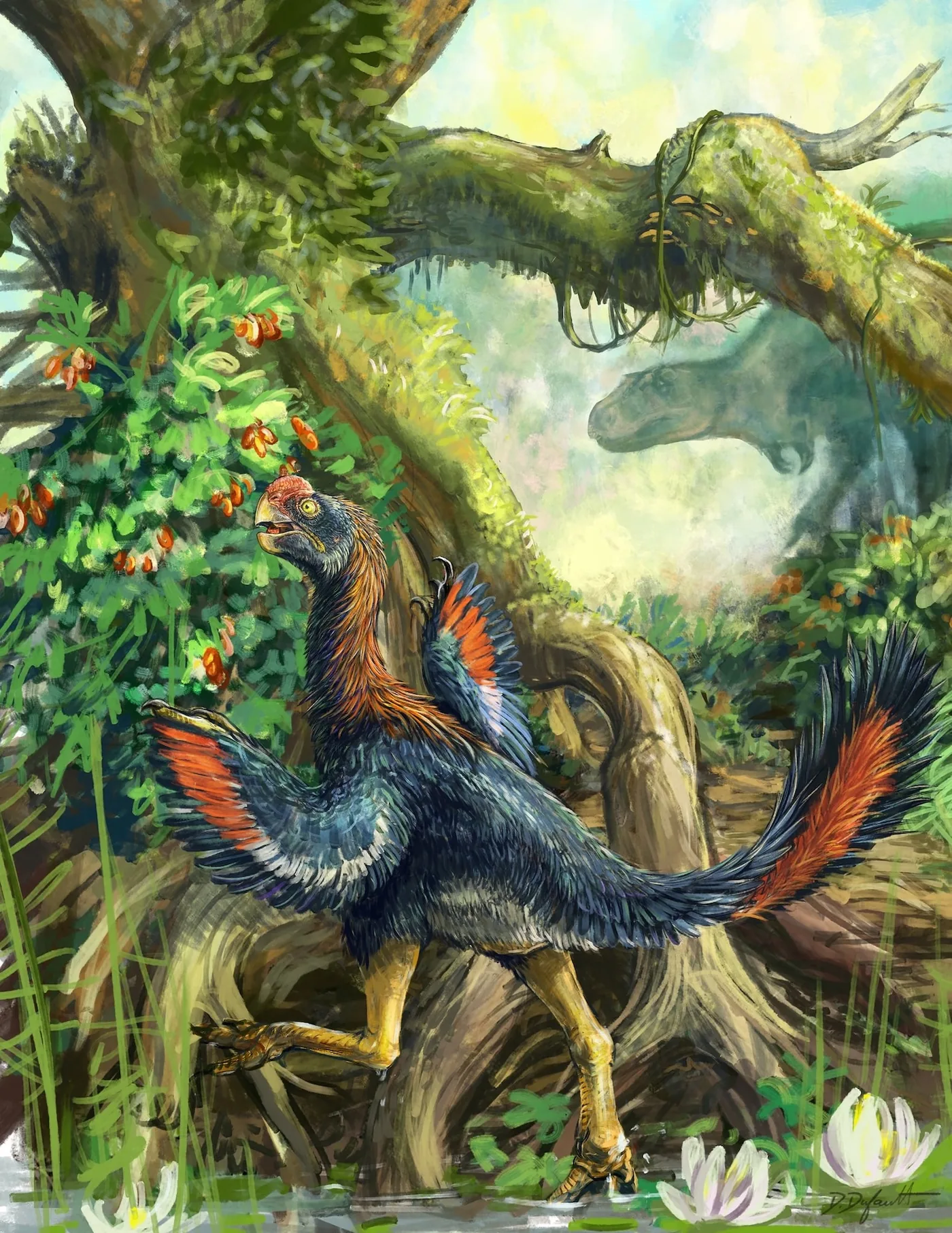
Field teams first discovered the fossil in 2011 within the Hell Creek Formation, a rock unit that stretches across Montana, North Dakota, South Dakota, and Wyoming [2]. This geological setting preserves the final million years of the Age of Dinosaurs, when large predators and armored plant-eaters walked floodplains bordering the Western Interior Seaway [5]. The animal lived roughly 72 to 66 million years ago during a time when humid forests covered much of western North America [2]. Infernogallus jamesi weighed about 12 kilograms, or roughly 26 pounds, and grew to approximately 1.5 meters in total length [4]. It belonged to Caenagnathidae, an oviraptorosaur group recognized for slender limbs and toothless beaks [2]. Its name means hell chicken [4].
Infernogallus shared its habitat with famous contemporaries like Triceratops and Tyrannosaurus rex [2]. Fossil evidence such as a leg bone in a tyrannosaur’s belly proves that giant carnivores hunted juvenile prey across floodplain environments, yet small oviraptorosaurs survived in the understory by gathering plants. Delicate bones rarely survived river currents [4].
The Skull
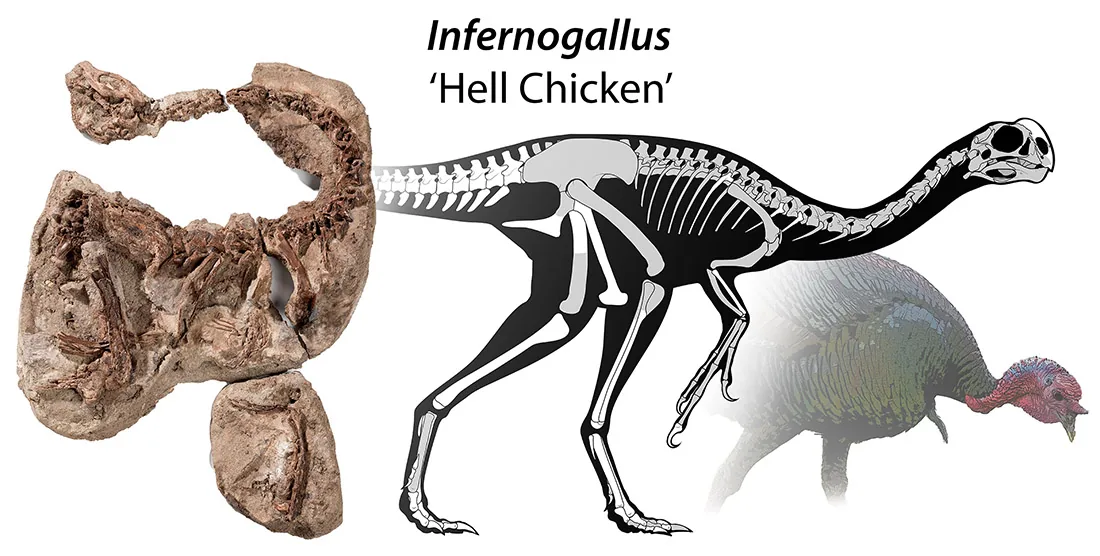
The fossil, cataloged as ROM VP 65050, represents the first nearly complete articulated skull found for any caenagnathid [4]. Although river mud crushed parts of the head and lower jaw, the delicate bill remained intact. “Its skull fits in the palm of your hand,” said study co-author Thomas Dudgeon [2]. “You can clearly see the beak.”
Dudgeon works as a Rebanks Postdoctoral Research Fellow at the Royal Ontario Museum, where the specimen is now on public display. Gregory Funston, an assistant professor in the Department of Anatomical Sciences in the Renaissance School of Medicine at Stony Brook University, led the project. “For more than 100 years, we didn’t know what the skulls of these animals looked like,” Funston said. “Now, we know they were even weirder than we could have predicted.” [3] Before this discovery, researchers only possessed limb bones and fragmentary lower jaws from North American caenagnathids [4]. Incomplete fossils had left skull reconstruction in doubt for over a century. The articulated fossil provided the first clear look at the roof of the mouth and jaw joints [1].
Parrot-Like Chewing Mechanics
To understand how the bones moved, paleontologists used computed tomography (CT) scans to digitally separate and repair crushed elements in three dimensions. They mapped jaw muscle attachment sites and compared bone angles to modern birds and reptiles [4]. Most carnivorous theropods relied on an up-and-down slicing motion powered by vertical adductor muscles [3]. In Infernogallus, the adductor muscles were reorganized to pull the lower jaw backward and forward along an anteroposterior plane [1]. The palatal bones forming the roof of the mouth arched downward into the oral cavity, which forced the jaw muscles to face horizontally instead of straight up and down. This arrangement enabled a sliding motion similar to human chewing [3].
Opposing ridges and grooves on the upper and lower jaws met during each sliding stroke [1]. The jaws acted like a mortar and pestle [2]. This chewing mechanism crushed soft foods directly inside the mouth before the animal swallowed [3]. Modern parrots use an identical back-and-forth action to process plant pulp [4].
Forward-facing adductor muscles remain exceptionally rare among vertebrates. In modern birds, only frugivorous specialists like the Vulturine Parrot (Psittrichas) show similar palatal mechanics. “It’s pretty rare for animals to become specialized for a diet of fruit, so when it happens, it comes with some remarkable adaptations,” Dudgeon said. “The anatomy of Infernogallus is bizarre among dinosaurs, and we quickly realized that we were dealing with something special.” [3] The skull proved that caenagnathid evolution mirrored adaptations seen in modern fruit-eating birds [1].

What Infernogallus jamesi Actually Ate
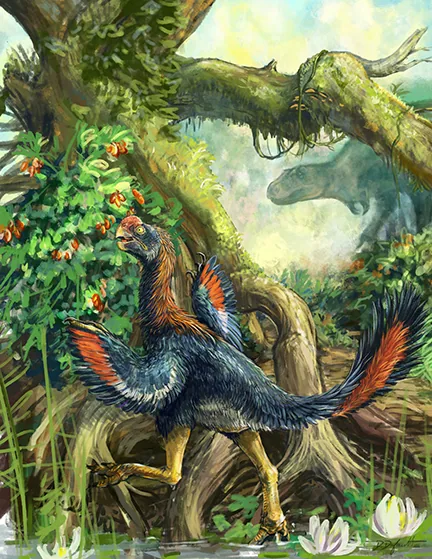
How did a lineage that branched from predatory theropods evolve a taste for tree crops? Funston explained that Infernogallus was adapted to harvest fleshy fruits known as drupes, which carry soft edible pulp around a hard central stone. “We think Infernogallus was likely adapted to process fruits called drupes—these are fruits with a hard central seed or pit, surrounded by softer flesh,” Funston said [2]. The dinosaur used its horny beak to shear nutritious flesh away from the core without cracking the central pit [3]. Cretaceous drupes represented ancestral precursors to modern stone fruits like plums, cherries, and peaches [2]. Most herbivorous dinosaurs tackled fibrous ferns or tough conifer needles, but Infernogallus exploited high-energy sugars [3]. Soft fruit tissue required crushing rather than heavy cutting [1].
“We knew dinosaurs evolved to fill so many different roles in ecosystems in the Cretaceous, but we never expected to discover fruit-eating dinosaurs,” Funston said [3]. Frugivory surprised researchers because most theropod lineages had hunted prey. The skull confirms that dietary experimentation reached far beyond simple meat-eating [1].
Coevolution with Flowering Plants
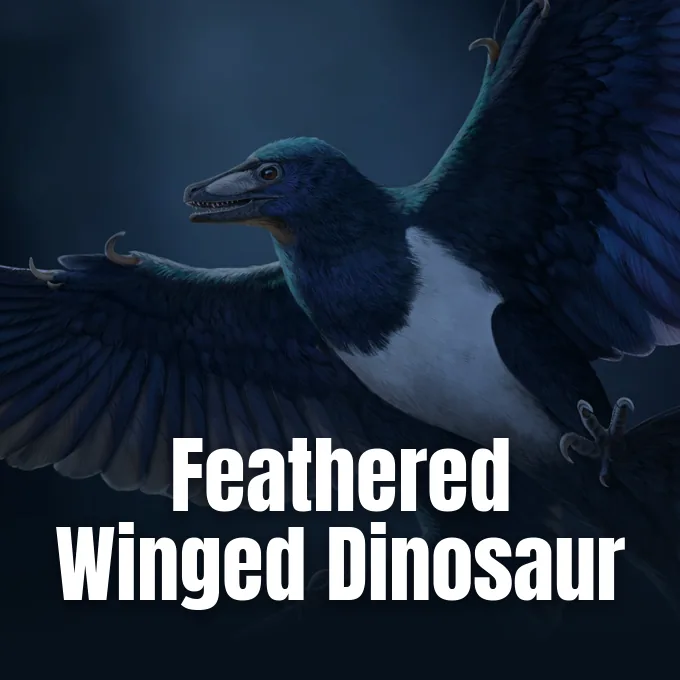
The appearance of fruit-eating dinosaurs aligned with a major transformation in terrestrial plant communities during the Cretaceous period, which extended from 145 to 66 million years ago [3]. Angiosperms, or flowering plants, rapidly diversified and displaced older gymnosperms across land ecosystems [5]. While fossil evidence showed how a feathered winged dinosaur evolved flight in China through aerodynamic feathers, caenagnathids adapted theropod traits toward processing vegetation on the ground. As flowering plants spread, they began producing larger, fleshier fruits loaded with accessible nutrients [2]. Infernogallus evolved the cranial architecture required to exploit this emerging food source. Plant evolution and dinosaur anatomy developed hand in hand [1]. Fruit provided dense energy for small bipeds [4].
Paleontologists previously struggled to find direct anatomical ties between dinosaur feeding habits and the rise of angiosperms [1]. The Montana skull provides clear physical evidence of that dietary connection. “We hypothesize that Infernogallus jamesi could have been specialized for processing soft, fleshy fruit,” the researchers wrote in Nature Communications [4].
David Evans, chief curator of Natural History and Temerty Chair in Vertebrate Palaeontology at the Royal Ontario Museum, emphasized the broader significance of the find. “Complete remains of small dinosaurs like Infernogallus are very rare in the fossil record,” Evans said. “The strange skull of Infernogallus is an exciting find because it reveals surprising insights into dinosaur evolution and feeding specialization. This discovery shows that we still have a lot to learn about the world of T. rex, and about dinosaurs more generally.” [3]

Missing Gizzard Stones and Seed Dispersal
A key anatomical observation supported the team’s dietary model. Many plant-eating dinosaurs swallowed pebbles to grind fibrous leaves inside their gizzards [2]. The fossil skeleton of Infernogallus contained zero gastroliths [4]. Because its parrot-like jaws crushed fruit pulp thoroughly before swallowing, the dinosaur did not need internal stones to break down fibrous cellular walls [2].
This feeding behavior raises the possibility that caenagnathids acted as seed dispersers across ancient river valleys [3]. By consuming fleshy drupes and defecating intact seeds away from parent trees, small oviraptorosaurs may have helped flowering plants colonize new ground. However, the researchers cautioned that direct evidence for seed dispersal remains unproven in the fossil record. The authors conceded in their report, “Their role in the Late Cretaceous proliferation of fruit—which shaped early Cenozoic flora—remains unclear.” [2] Even with that uncertainty, Infernogallus jamesi demonstrates that theropod diets were far more diverse than previously recognized before the asteroid impact ended the Mesozoic Era [5]. The fossil enriches our view of Hell Creek ecology [3]. Specialized plant-eating theropods flourished alongside giant carnivores [2].
- ACADEMIC JOURNAL Funston, G. F., Dudgeon, T. W., Simon, D. J., Dufault, D. M., Boyd, C., Fowler, D., Currie, P. J., & Evans, D. C. (2026). Fruit-eating adaptations in a Late Cretaceous oviraptorosaur (Theropoda). Nature Communications. [Article Link]
- ONLINE NEWS Paul, A. (2026, October 28). ‘Hell chicken’ dinosaur likely dined on fruit, not meat. Popular Science. [Article Link]
- PRESS RELEASE Gasparino, M. (2026, October 28). Stony Brook dinosaur discovery reveals a specialized fruit eater. SBU News. [Article Link]
- ONLINE NEWS Arnold, P. (2026, October 14). Toothless ‘hell chicken’ dinosaur may have had a taste for fruit. NewsBreak. [Article Link]
- WEBSITE Total Dino. (2026, October 11). Infernogallus: The fruit-eating hell chicken. Total Dino. [Article Link]
APA 7: PerEXP Teamworks. (2026, October 29). Infernogallus Jamesi Fossil Unveils Cretaceous Fruit Diet. PerEXP Teamworks. https://perexpteamworks.com/en/infernogallus-jamesi-fossil-fruit-diet/


