






Can a group of robotic explorers manage a planetary mission when human controllers sit millions of miles away? To evaluate whether independent machines can operate without direct intervention, researchers deployed a field-tested NASA AI fleet through the Adaptive Sensing Technology for Responsive Autonomy (ASTRA) project. Operating across simulated planetary surfaces, the robotic team coordinated aerial scouting and ground movement to weigh physical hazards against potential discoveries. Testing at the Virginia Tech Transportation Institute demonstrated that cooperating units can adjust mission priorities autonomously while preserving their original exploration goals [1].
Field-Testing the ASTRA Autonomous Fleet
Field trials conducted this summer in Blacksburg, Virginia, placed three robotic systems into an integrated exploration team. NASA engineers partnered with the Virginia Tech Transportation Institute to examine how autonomous machines behave when granted in situ operational independence. Rather than waiting for step-by-step instructions from mission control, the NASA AI fleet operated under high-level guidelines established by human specialists. An aerial drone selected an initial area of interest, initiating a sequence of automated evaluations that assigned specific investigative tasks across the participating robotic assets [1].
Human managers cannot maintain real-time conversations with spacecraft exploring distant planetary bodies. Signal latency across the outer solar system spans hours, turning simple tactical corrections into prolonged operational delays. To bridge this communication barrier, the Adaptive Sensing Technology for Responsive Autonomy project aims to serve as a reliable substitute for terrestrial science teams. Bethany Theiling, ASTRA principal investigator and field lead at NASA’s Goddard Space Flight Center in Greenbelt, Maryland, directed the field campaign with commercial and academic partners. Collaborating institutions included specialists from Noblis, Aurora Engineering, and researchers from the University of Tulsa, who jointly evaluated how the autonomous NASA AI fleet handles complex trade-offs without human intervention [1].
Earth analogs provide essential testing environments for deep space operations. Terrestrial impact craters, volcanic fields, ice sheets, and rugged rock formations help engineers simulate the environmental stresses encountered across moons and planets [1].
How a NASA AI Fleet Balances Science and Risk
Planetary exploration forces machines to balance competing priorities under strict resource limitations. When operating on distant worlds, the NASA AI fleet evaluates both objective measurements and subjective mission preferences before committing hardware to an unknown target. Algorithms calculate the physical distance to an outcrop, the speed of each mobile unit, and the energy required for the traverse. Concurrently, the system weighs the potential scientific return against the danger of damaging a rover or drone on hazardous terrain [1].
During the Virginia trials, investigators sought to resolve a fundamental operational dilemma: will an autonomous NASA AI fleet abandon its primary science goal when unexpected opportunities emerge? In field exercises, the lead aerial drone detected an unmapped point of interest while completing its assigned survey. Crucially, the fleet maintained its objective. The programming paused to process the discovery, calculated resource availability, and dispatched another robotic team member to inspect the secondary feature. This multi-agent coordination demonstrated that autonomous software can pursue serendipitous science without sacrificing core mission directives established by human planners on Earth [1].

Direct human control remains impossible. Autonomous decision-making must bridge that physical divide [1].
From Mars Rovers to Autonomous Navigation
Surface autonomy has a proven record on Mars. NASA’s Perseverance rover conducts 88% of its surface driving autonomously across Jezero Crater. Navigational cameras capture high-resolution imagery of surrounding hazards, which onboard flight computers process in real time to chart traversable paths around boulder fields and sand dunes. The vehicle navigates unmapped extraterrestrial landscapes without waiting for ground controllers to verify every meter of forward progress [2].
Robotic autonomy extends well beyond driving mechanics. The agency integrates targeted software architectures, including AEGIS (Autonomous Exploration for Gathering Increased Science), to identify geological targets and acquire sensor measurements without human intervention. Machine learning navigation tools like MLNav work with Terrain Relative Navigation to ensure pinpoint landing accuracy on planetary surfaces. PerEXP Teamworks also analyzed planetary and ecological monitoring in its study on crop health monitoring guiding NASA exploration. Automated classification tools like SPOC (Soil Property and Object Classification) categorize surface regolith to optimize scientific sampling routines [7].
Can individual rovers expand into cooperative swarms? Earlier planetary missions relied on isolated robotic explorers executing linear task queues. The development of a coordinated NASA AI fleet signals a fundamental shift toward distributed intelligence, where multiple specialized surface and aerial assets collaborate dynamically to accelerate field geology [1, 2].


Next-Generation Computing Power With HPSC
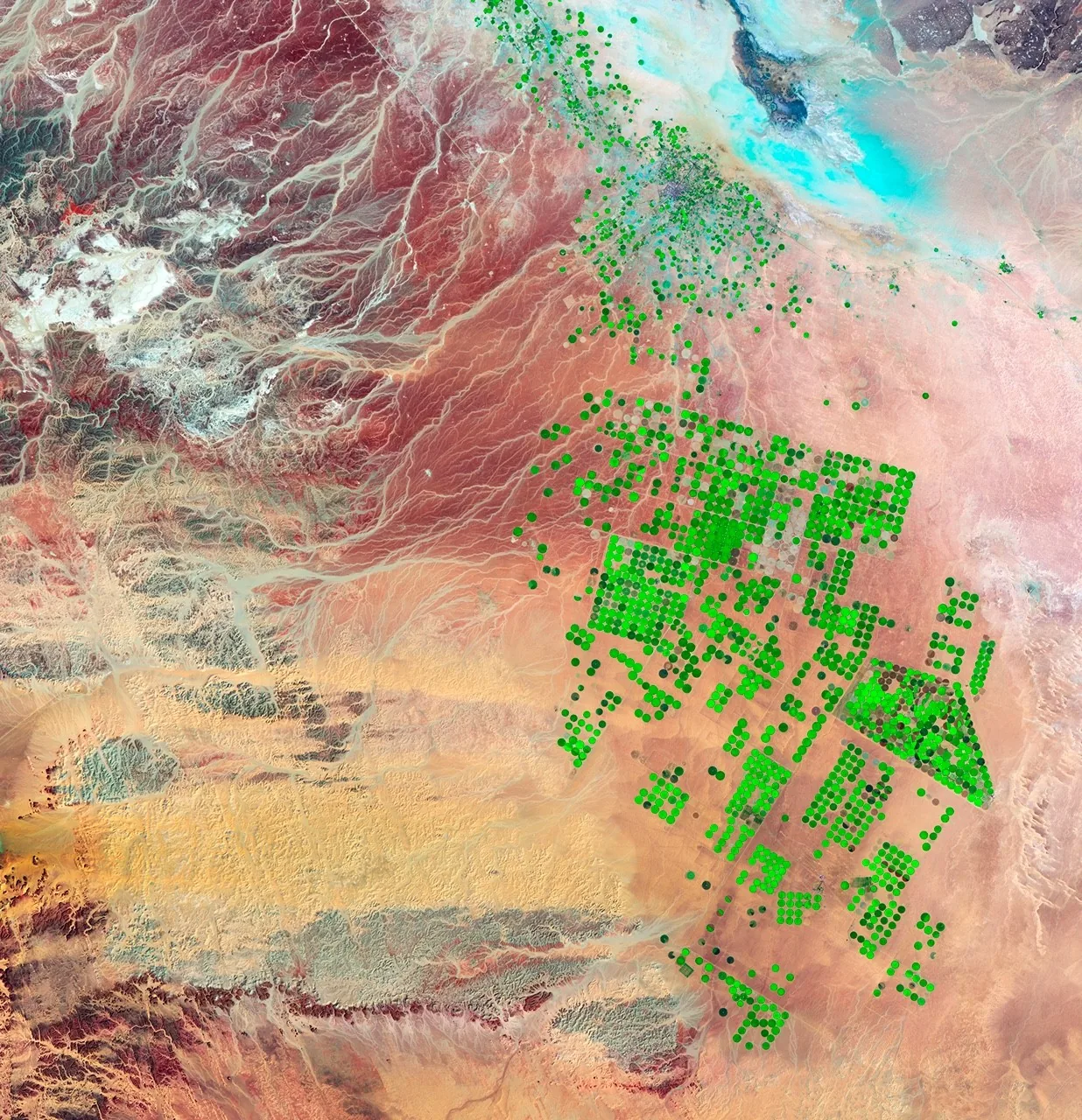
Advanced autonomous decision-making demands processing capabilities far exceeding the computers currently operating in deep space. Conventional missions rely on legacy spaceflight processors prized for their resilience against extreme radiation and thermal shock. However, these older chips lack the computational throughput required to run modern artificial intelligence models or complex vector algorithms. To overcome this computational bottleneck, NASA’s Game Changing Development program established a commercial partnership to develop the High Performance Spaceflight Computing (HPSC) system required for a future NASA AI fleet. Eugene Schwanbeck, program element manager at NASA’s Langley Research Center in Hampton, Virginia, described the multicore architecture as a fault-tolerant, flexible system designed to transform spacecraft autonomy [4].
The HPSC architecture employs a radiation-hardened system-on-a-chip (SoC) designed by Microchip Technology Inc., based in Chandler, Arizona. By consolidating central processing units, computational offloads, high-speed memory interfaces, and scalable vector computing into a single compact unit, the chip provides up to 100 times the computing capacity of previous flight computers. Technicians at NASA’s Jet Propulsion Laboratory in Southern California initiated environmental qualification testing in February, marking the milestone with an email titled “Hello Universe” [4, 5].
Early functional evaluations at JPL yielded performance measurements roughly 500 times greater than existing spaceflight processors. Engineers evaluated chip resilience through punishing thermal cycling, shock testing, and high-fidelity simulated planetary landings. Jim Butler, HPSC project manager at JPL, emphasized that processing massive streams of landing-sensor data in real time provides the foundation for future autonomous planetary exploration [4, 5].
Open Foundation Models and Planetary Data
Beyond robotic edge computing, machine learning tools fundamentally transform how space agencies process planetary observations. Within NASA’s Science Mission Directorate, the Office of the Chief Science Data Officer (OCSDO) actively researches how large foundation models extract scientific discoveries from expanding data archives to support situational awareness for a NASA AI fleet. Instead of training isolated neural networks for single tasks, researchers construct adaptable models trained on petabytes of orbital observations and release them openly on the Hugging Face platform [3].
A major milestone emerged from a collaboration with IBM to build the open-source NASA-IBM Lunar Foundation Model. Pre-trained on comprehensive geophysical data and high-resolution imagery from NASA’s Lunar Reconnaissance Orbiter (LRO), GRAIL, and Lunar Prospector, along with Japan’s JAXA SELENE spacecraft, the model helps geologists identify impact structures, volcanic deposits, and permanently shadowed polar ice. Companion projects include the Surya Heliophysics Foundation Model, which analyzes Solar Dynamics Observatory data to forecast space weather, and the Prithvi geospatial architecture for Earth systems. To equip the broader scientific community, NASA expands educational initiatives, which PerEXP Teamworks reviewed in its analysis of the NASA AI ML STIG lecture series on agents [3, 6].
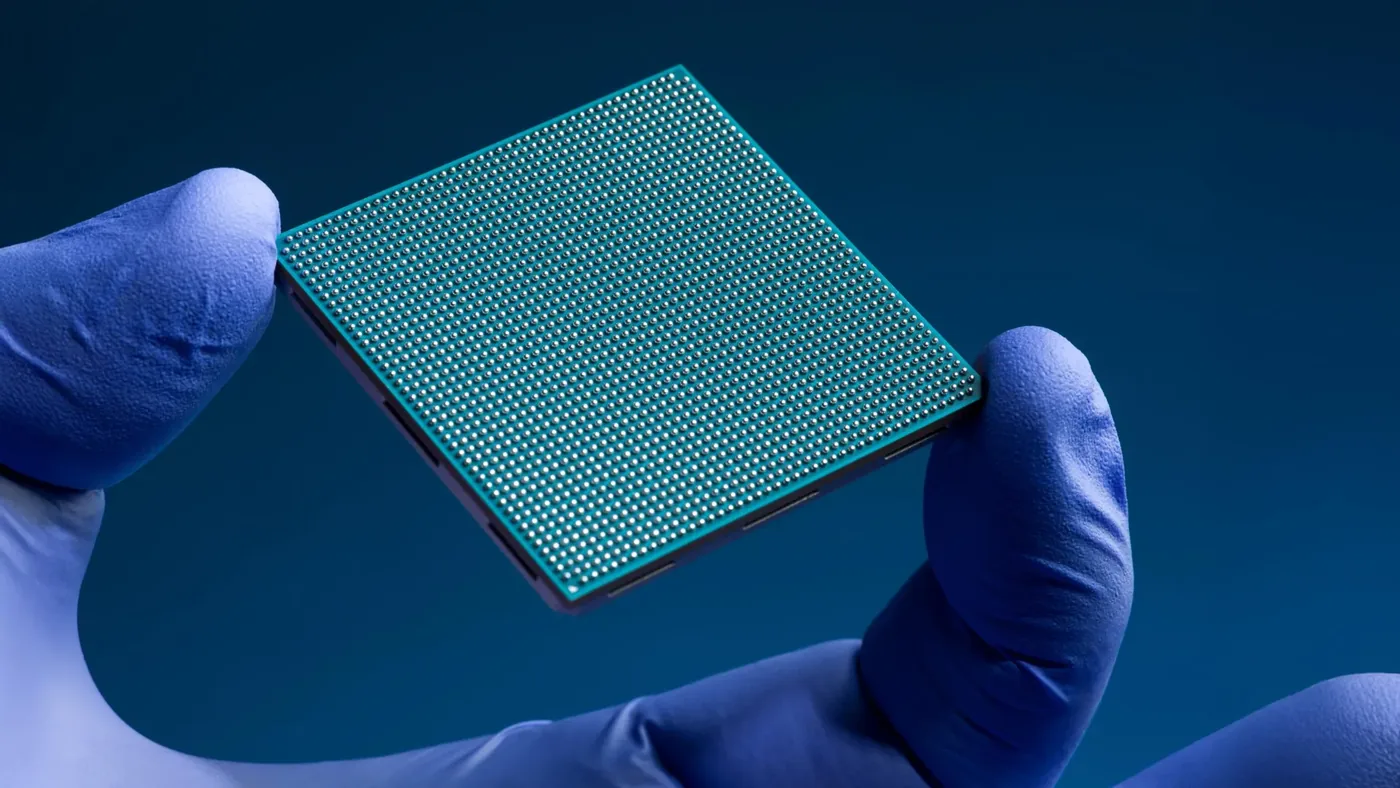
Foundation models also assist planetary scientists in synthesizing complex observations. NASA’s INDUS suite introduces domain-specific large language models customized for astrophysics, planetary science, Earth science, and heliophysics. By automating data tagging and knowledge discovery across mission archives, these computational tools allow scientists to interrogate cross-disciplinary datasets more rapidly than manual review allows [3].
Responsible Autonomy and Mission Governance
Deploying autonomous software across multi-million-dollar space missions requires strict ethical and governance frameworks. NASA aligns its machine learning portfolio with Responsible AI (RAI) principles mandated under White House Executive Order 13960. These federal standards ensure that autonomous exploration systems remain transparent, reliable, and accountable throughout design and operational deployment. Automated scheduling engines like the ASPEN Mission Planner and AWARE (Autonomous Waiting Room Evaluation) optimize resource allocation while maintaining rigorous safety parameters [7].
Autonomous algorithms tested for planetary missions generate direct benefits across terrestrial infrastructure. Satellite analysis applying machine learning tools supports disaster relief teams by mapping building damage after catastrophic storms. For instance, automated image classification detected blue tarps on residential rooftops across hurricane impact zones to quantify neighborhood destruction. Similarly, the SensorWeb network autonomously monitors terrestrial volcanic activity and wildfires to alert emergency services [2, 7].
Aviation represents another critical domain for autonomous routing. NASA’s Digital Information Platform analyzes commercial flight paths to generate fuel-efficient, safe rerouting recommendations in real time. These airspace coordination models parallel concepts evaluated in PerEXP Teamworks’ discussion of urban air mobility flight coordination. As autonomous systems advance across skies and distant planetary surfaces, the principles validated by the NASA AI fleet will determine how independently robotic explorers can act when human oversight is separated by millions of kilometers [1, 2].
- WEBSITE Barry, C. (2026, September 15). NASA field-tests AI fleet capability for science, exploration. NASA Science. [Article Link]
- WEBSITE Friesen, T. (2024, May 13). Artificial intelligence. NASA. [Article Link]
- WEBSITE Leese, L. (2024, October 31). Artificial intelligence for science. NASA Science. [Article Link]
- ONLINE NEWS NASA’s Jet Propulsion Laboratory. (2026, May 15). NASA’s new AI space chip could let spacecraft think for themselves. ScienceDaily. [Article Link]
- ONLINE NEWS Universe Today. (2026, May 26). NASA is testing its own cutting-edge AI chip for future space missions. ScienceAlert. [Article Link]
- WEBSITE NASA Office of the Chief Information Officer. (2026, September 10). Artificial intelligence (AI). NASA. [Article Link]
- REPORT Halloran, K. (2025, January 7). NASA’s AI use cases: Advancing space exploration with responsibility. NASA. [Article Link]
APA 7: TWs Editor. (2026, September 16). Can a NASA AI fleet make autonomous deep space decisions? PerEXP Teamworks. https://perexpteamworks.com/en/nasa-ai-fleet-autonomous-exploration/


