



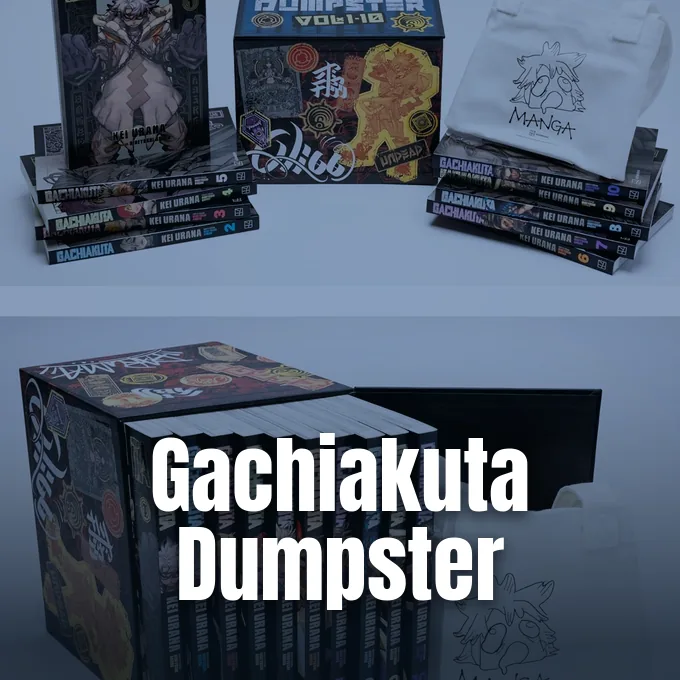
Kodansha released the Gachiakuta Dumpster box set on November 19, 2026, gathering the first ten volumes of the dark fantasy manga into a single collector package. Mangaka Kei Urana created the series with graffiti artist Hideyoshi Ando. It provides a straightforward starting point for readers discovering the manga [1].
What the Gachiakuta Dumpster Box Set Contains
Kodansha packaged the ten volumes in a heavy outer case shaped like a street dumpster to match the story’s gritty setting. Urana created the fictional backdrops with Ando, who supplied wall tags that cover the inner pages and spill onto the outer slipcase. The dumpster housing creates an unmistakable silhouette on display [1].
Inside the container, readers find ten individual paperbacks featuring shiny foil embossing on their textured covers, protecting the cover artwork and keeping print quality consistent with earlier standalone releases published across previous serialization runs. The package also includes a small fabric tote bag designed to hold every volume comfortably. The tote bag can hold all ten books at once, which helps because the full stack weighs about seven pounds and totals 1,904 pages of story. Kevin McCormack wrote for Anime News Network that carrying the collection feels like hauling a small personal library. The bag lets fans transport the full run between reading spots without scuffing the shiny foil covers [1].
McCormack said the physical production standard feels solid enough to justify shelf space for collectors who missed the initial single volumes. The bindings hold together under repeated reading. The clean paper stock keeps the black-and-white ink lines sharp on every page [1].
Rudo in the Pit
The story begins in the slums of the Sphere, a floating airborne society where young Rudo grows up as a second-class citizen surrounded by social neglect. Local authorities falsely accuse him of murder and cast him out into the desolate wasteland below, known simply as the Pit. Down in that garbage-filled world, Rudo vows to climb back up to the Sphere and punish his accusers [1].
Series creator Kei Urana introduces Rudo as an angry boy. He explodes into violence whenever enemies corner him. He relies on a pair of gloves left behind by his absent father, discovering that his emotional attachment allows him to pull supernatural power out of discarded and forgotten objects across the slums. He soon joins the Cleaners, an organized group of fighters who defend local settlements against monstrous Trash Beasts and dangerous human Raiders roaming the toxic ruins. Urana uses dynamic perspective shifts and stretched character anatomy during skirmishes. These visual choices give Rudo’s clashes with beasts a kinetic rhythm across each chapter [1].
Studio Bones adapted these first ten volumes into a 24-episode television anime that introduced the cast to international audiences during the 2025 broadcast season. Viewers found the series after Toonami added Gachiakuta to its broadcast schedule during its Saturday programming block. Urana’s visual style pairs kinetic action with crumbling urban backdrops reminiscent of Yukito Kishiro’s Scrapyard in Battle Angel Alita. Collaborator Hideyoshi Ando reinforces that mood with street tags, while character aesthetics draw comparisons to Hajime Ueda’s work on FLCL and Monogatari [1].


Tsukomogami Lore and Vital Instruments
At the heart of the combat system lies the Japanese concept of tsukomogami, the idea that everyday tools and possessions develop living spirits when cared for over long stretches of time. In the Pit, individuals called Givers awaken this spiritual energy, known as anima, to turn ordinary relics into Vital Instruments. Most Givers channel their power through a single treasured item, but Rudo’s deep empathy for abandoned things lets him awaken multiple tools. His hatred of wasteful habits helps him connect with broken items that others threw away. This bond provides flexible combat tactics against hostile forces in the ruined terrain. The ability makes him an unpredictable fighter against enemies who rely on fixed combat routines [1].
The other Cleaners wield unique gear. Enjin carries a bladed umbrella, and his partner Zanka fights with the Lovely Assistaff. A teammate named Riyo wields giant scissor blades with her feet. Meanwhile, an efficient receptionist named Semiu coordinates their field assignments from headquarters [1].
McCormack pointed to the emotional weight in secondary storylines. He singled out Amo, a troubled girl whose history touches on manipulation and severe childhood mistreatment. Urana doesn’t hide the psychological trauma affecting these survivors, showing how wounded people lean on outside connections to fill painful voids inside their souls. Her character art gives tense confrontations genuine emotional depth on the page [1].
Gachiakuta Dumpster Box Set Price and Value
The set costs $149.99. Buying ten separate paperback volumes at standard comic shop retail prices costs roughly the same total amount. That means the dumpster case and the custom tote bag serve as free collectible extras for readers building their physical manga shelves [1].
Volumes 7 through 10 showcase an extended combat arc where the primary cast separates into one-on-one skirmishes against rival antagonists in several crumbling urban districts. The plot splits into distinct viewpoints. The story jumps between locations to keep character motivations clear and avoid the repetitive fatigue common in drawn-out tournament battles. Fans following the ongoing release schedule can recall when the Gachiakuta manga research break gave Urana extra time to plan out these layered battle encounters. McCormack said the pacing across these final four volumes remains brisk, wrapping up the initial saga and leaving enough unanswered questions about the floating Sphere to keep readers eager for future installments [1].

Alethea Nibley and Athena Nibley translated the script. Jamil Stewart handled English lettering across all ten volumes. Their localization preserves Urana’s slangy dialogue and energetic sound design. The resulting English script delivers a lively reading experience from the very first chapter [1].
Toyoda’s Draw This Then Die
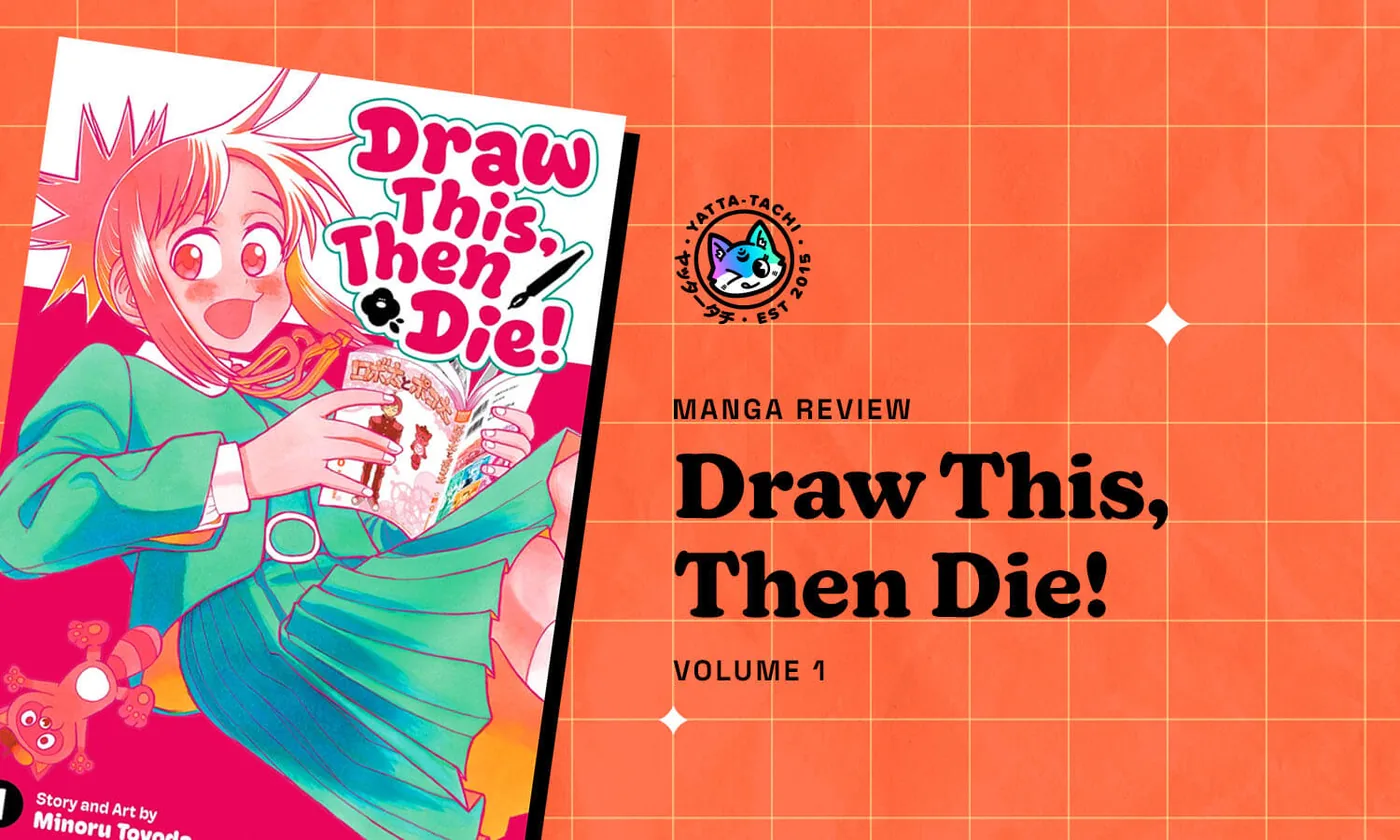
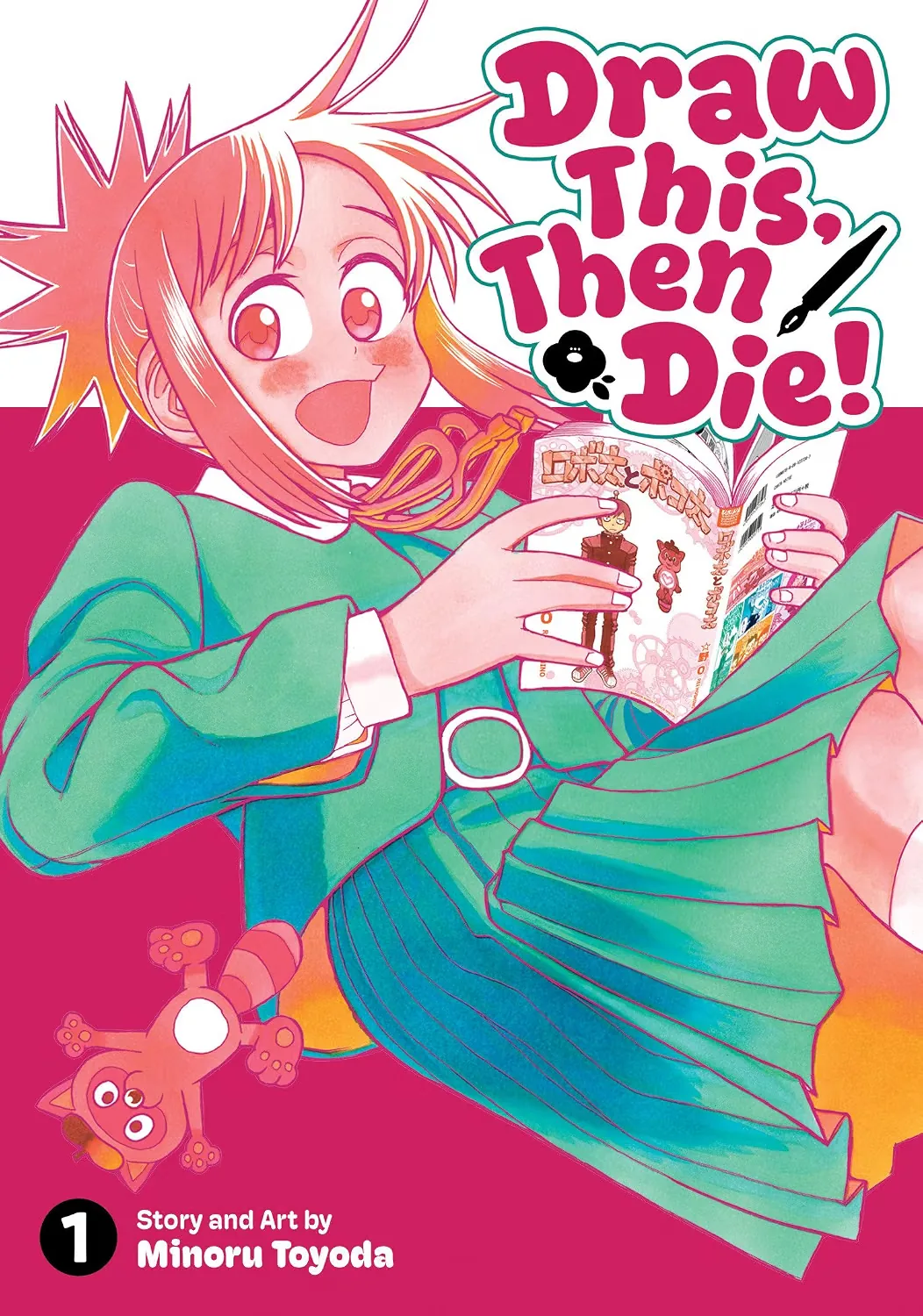
Kodansha catered to shonen battle fans, but Seven Seas Entertainment published the opening volume of Draw This Then Die! by manga creator Minoru Toyoda. Adam Wescott reviewed the release for Yatta-Tachi, praising its thoughtful meditation on why people create comics without commercial motives. The story follows high schooler Ai Yasumi, who travels from Izu Oshima to attend Comiket [2].
At the event, Ai discovers that her teacher Rei Teshima secretly drew her favorite series, Robota & Pokota, before quitting the commercial manga industry years earlier. Ai begs for art lessons. Teshima agrees on the firm condition that drawing must remain a pure hobby instead of a professional pursuit. Ai soon collaborates with her quiet classmate Kokoro, discovering that drawing rough cartoon figures lets them communicate emotions that words alone can’t express. Wescott noted that Toyoda shows genuine appreciation for unpolished art. Sincere storytelling can move an audience even when an illustrator lacks refined technical skill with pen and ink [2].
The volume closes with “Lost World.” The chapter depicts Teshima’s past struggles while creating her award-winning entry, Tokimeki Love Romance, which earned an honorable mention at the Newcomer Comic Grand Prix. Seven Seas released the volume with translation by Evan Ward and lettering by Isabell Struble. Wescott observed that this creative struggle reflects Toyoda’s own experiences working on Love Roma. The book highlights the varied storytelling styles reaching English manga readers this season [2].
- ONLINE NEWS McCormack, K. (2026, November 19). Gachiakuta Dumpster Season 1 (Vol 1-10) Manga Box Set Review. Anime News Network. [Article Link]
- ONLINE NEWS Wescott, A. (2026, November 19). Draw This Then Die! Vol. 1 Manga Review. Yatta-Tachi. [Article Link]


