





Microsoft disclosed on Wednesday that it generated $10 billion from its partnership with OpenAI during the three months ended September 30, 2026. Microsoft posted the data in an official regulatory filing on Wednesday. The disclosure confirmed that Microsoft OpenAI revenue generated roughly 11% of Microsoft’s $92.3 billion in total quarterly revenue as cloud computing usage and commercial ties expanded across enterprise sectors [2]. Todd Bishop broke the numbers for GeekWire [1]. Rebecca Bellan separately reported the filing for TechCrunch, marking Microsoft’s first quarterly accounting of the partnership [2].
How Microsoft Tracks OpenAI Revenue
Microsoft documented the revenue in regulatory paperwork. “For the three months ended September 30, 2026, we recorded revenue from commercial arrangements with OpenAI, inclusive of revenue-sharing payments, of $10.0 billion,” Microsoft stated in its official quarterly filing with regulators. Microsoft did not divide the $10.0 billion between Azure cloud spending and direct revenue-sharing payments [1]. TechCrunch reached out for further details [2].
Throughout the full 2026 fiscal year that concluded in June, Microsoft recorded $24.1 billion from OpenAI agreements, creating an average run rate of approximately $6 billion across each three-month reporting period [1]. Microsoft’s financial calendar begins in July. Because September marked the opening quarter of fiscal 2027, Microsoft would generate $40 billion annually from OpenAI-related business if current quarterly buying volumes continue at this pace. OpenAI owed Microsoft $7.2 billion in outstanding receivables at the end of September. Unpaid balances climbed from $6.0 billion in June, but TechCrunch noted that this money represents obligations for previous computing transactions rather than newly recognized revenue on the ledger. Internal records leaked in November 2025 revealed that Microsoft collected $865.8 million in profit-sharing distributions from OpenAI throughout the first nine months of 2025, according to reporting by TechCrunch [2].
Federal accounting standards compel Microsoft to disclose this income separately because OpenAI qualifies as an official related party under standard United States corporate accounting guidelines [1]. Microsoft’s equity stake in OpenAI slipped slightly. Microsoft owned roughly 24% of OpenAI at the end of September, dropping from about 25% in June and approximately 27% following OpenAI’s corporate recapitalization in October 2025. Microsoft declined to specify what caused the gradual dilution in ownership [2]. Microsoft has disbursed $12.0 billion out of the $13.0 billion total investment capital it previously committed to OpenAI [1].
Comparisons with Gaming and Search
OpenAI now eclipses legacy Microsoft business units. Microsoft’s gaming division generated $5.4 billion in quarterly revenue across Xbox hardware and game content, while search and news advertising generated $6.6 billion during the exact same three months. OpenAI transactions surpassed Xbox intake by nearly five billion dollars. The financial gap illustrates how quickly generative AI cloud services outpaced Microsoft’s consumer gaming and web advertising units, which required decades of operational development to reach scale. Quarterly OpenAI business averaged $6 billion last year [1].
Generating nearly 11% of Microsoft’s $92.3 billion quarterly intake establishes OpenAI as one of Microsoft’s most consequential commercial revenue sources, as Rebecca Bellan highlighted in analysis for TechCrunch. Few enterprise relationships scale this quickly. Most enterprise cloud customers require decades to build purchasing volumes capable of generating billions in quarterly cash [2].
Wholesale infrastructure charges differ from end-user retail software pricing. While Microsoft collects cloud revenue from compute clusters, OpenAI cut API pricing for model families like GPT-6.1 Terra to attract independent software developers directly to its developer portal. Lower developer fees accelerate software adoption. Because developer applications still execute queries on Azure servers, growing customer demand across ChatGPT and developer APIs continues feeding Microsoft OpenAI revenue through backend compute hours and revenue-sharing quotas [2]. Microsoft’s filing left computing usage and revenue sharing combined together. Neither Microsoft nor OpenAI explained what percentage of the $10 billion came from ChatGPT user traffic compared to third-party enterprise model calls on Azure [1].


Contracts Behind Microsoft OpenAI Revenue
Multi-year legal agreements govern the financial relationship. OpenAI reportedly sends 20% of its top-line revenue to Microsoft under an earlier investment contract, although neither Microsoft nor OpenAI has publicly confirmed that specific percentage figure, TechCrunch reported. Revenue sharing will continue through 2030. Under an April 2026 restructuring agreement, OpenAI must share revenue with Microsoft through 2030, subject to an agreed financial cap negotiated between Microsoft and OpenAI executives [2]. The agreement revised terms established in October 2025. Microsoft previously surrendered its right of first refusal to supply all OpenAI computing needs, prompting OpenAI to commit to buying an additional $250 billion in Azure cloud services [1].
The April 2026 agreement gave OpenAI wider latitude to partner with other cloud providers, enabling the artificial intelligence lab to deploy models on rival Google Cloud systems. OpenAI no longer relies solely on Azure. Moving workloads to Google Cloud ended OpenAI’s exclusive operational dependence on Microsoft data centers [1].
Microsoft and OpenAI also compete directly. Microsoft sells enterprise Copilot and Azure OpenAI services straight to corporate customers who might otherwise buy enterprise software subscriptions directly from OpenAI’s commercial sales organization, TechCrunch noted [2]. Microsoft updated regulatory risk disclosures to reflect this complicated supplier and rival dynamic. Microsoft cautioned investors that it maintains “limited visibility into or control over” how outside partner models are designed, trained, secured, and evaluated before deployment across commercial Azure infrastructure. Some of these model developers remain major Azure buyers [1].
Nadella on Enterprise Growth
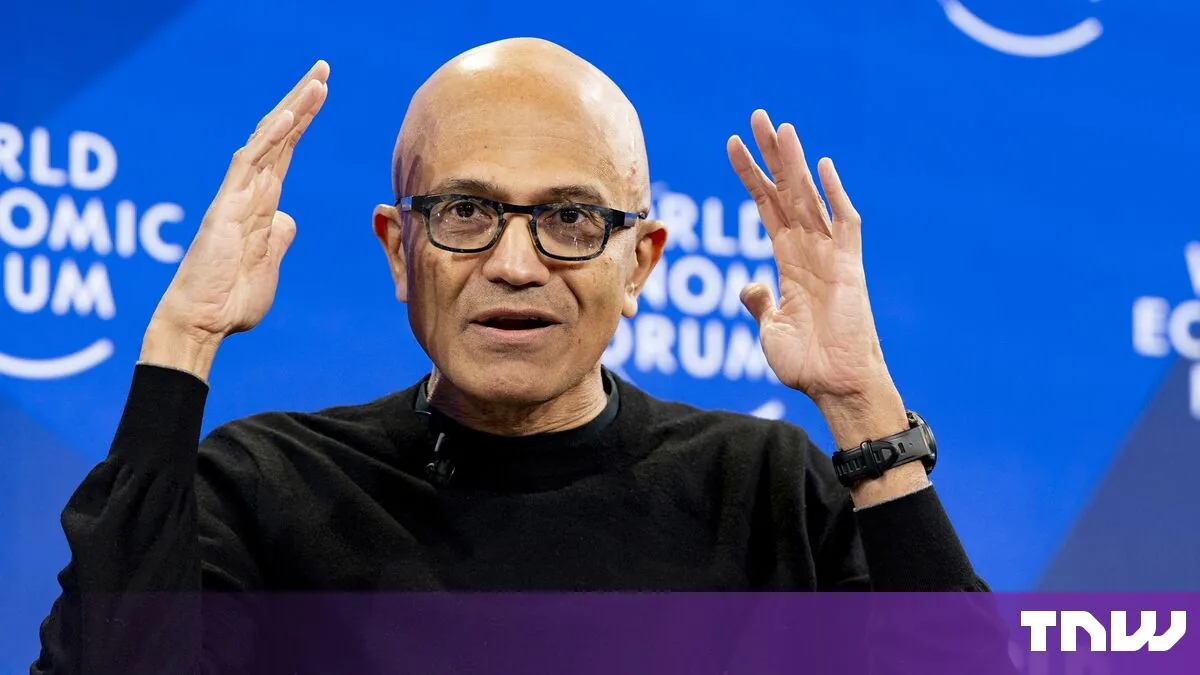
During Microsoft’s quarterly earnings call on Wednesday, Bernstein financial analyst Mark Moerdler asked Microsoft leadership where Azure’s generative AI growth was originating across the broader customer base. Satya Nadella did not name OpenAI. Nadella said Microsoft avoids building cloud infrastructure that relies on a small handful of dominant buyers [1].
Nadella told investors that relying on “four customers who buy a lot of capacity from you” for a few quarters of growth is “not a business as far as I’m concerned”. Sustainable cloud scale requires thousands of accounts. Nadella explained that durable cloud margins come from serving thousands of enterprise and mid-sized corporate customers across diverse industry verticals rather than depending on single research labs. His remarks signaled that Microsoft wants financial markets evaluating broader cloud adoption [1].
Nadella elaborated in a public post on X. Nadella wrote that Microsoft operates a fungible server fleet that dynamically routes computing capacity to high-value opportunities across compute resources, data workloads, Microsoft Foundry tools, and Copilot software applications. Azure growth spanned enterprise and small businesses. Nadella stated that Azure growth was broad-based across enterprise clients and small organizations, spanning core cloud services and AI computing infrastructure. Nadella wrote that he felt confident in opportunities ahead. Nadella’s public statements sought to reassure shareholders that Microsoft’s cloud momentum extends far beyond OpenAI, even as OpenAI delivers $10 billion in quarterly commercial volume into Microsoft’s coffers [1].
Capital Spending and Headcount
Hardware spending projections shifted alongside the quarterly revenue announcement. Chief financial officer Amy Hood reduced Microsoft’s 2026 capital expenditures forecast to $170 billion from an earlier estimate of $175 billion, Ashley Stewart reported for Business Insider. Contract timing caused the downward spending revision. Hood explained that several GPU-as-a-Service contracts with third-party computing providers had slipped into the second half of the fiscal year [1].
Quarterly capital spending including finance leases totaled $45.2 billion, Jordan Novet reported for CNBC. Microsoft budgeted $50 billion for the quarter. The quarterly sum fell short of Microsoft’s $50 billion internal projection, according to reporting from Reuters, while cash spending on property and equipment reached $39.4 billion. Jonathan Neilson attributed the gap to delays. Neilson, who directs investor relations at Microsoft, told Reuters that construction delays rather than cancellations caused capital spending to lag behind internal company forecasts. Capital outlays will top $50 billion over the next three months, according to reporting by Brody Ford and Matt Day for Bloomberg [1].
Data center growth coincided with workforce reductions. Internal company presentation slides revealed that total headcount dropped by 2% during the quarter, Ashley Stewart reported for Business Insider. Microsoft offered voluntary buyout packages to roughly 60,000 employees during the same week [1]. The buyout initiative illustrates how Microsoft reallocates operational capital toward artificial intelligence hardware clusters and OpenAI infrastructure while reducing administrative payroll costs across corporate teams. Microsoft has invested over $13 billion in OpenAI. Balancing massive multi-billion-dollar OpenAI commitments against corporate expenditure caps now defines Microsoft’s broader capital allocation strategy across cloud and software operations [2].
- ONLINE NEWS Dina, C. (2026, October 29). Microsoft OpenAI revenue hits $10bn a quarter, its filing shows. The Next Web. [Article Link]
- ONLINE NEWS Bellan, R. (2026, October 28). Microsoft recorded $10 billion in revenue from OpenAI. TechCrunch. [Article Link]


