





Health officials in northern New York reported the death of an unvaccinated child from measles on Monday, recording the state’s first measles death in 30 years [1]. The loss occurred in rural Lewis County, where staff confirmed that every detected case involved people without the measles, mumps, and rubella (MMR) vaccine [4]. Governor Kathy Hochul called the death a tragedy, warning that a measles outbreak spreads fast when community vaccine coverage drops [2].
First Fatal Case in Decades
The child died in Lewis County, a rural district about 93 miles (150 kilometers) north of Syracuse and east of Watertown [2]. Neither the New York State Department of Health nor Lewis County Public Health released the child’s name, age, or residence, citing privacy requests from the family [4]. State records show that New York had not seen a fatal measles case in three decades [1].
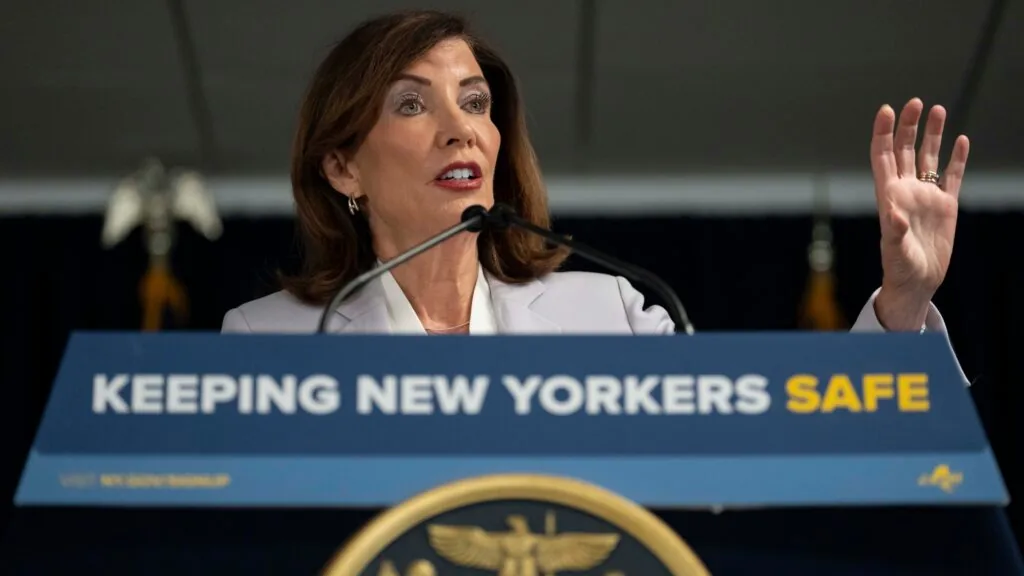
Governor Kathy Hochul, a Democrat, shared condolences after state medical examiners confirmed the test results in Lowville [2]. “As a mother and grandmother, I cannot imagine what this family is going through,” Hochul said in her written statement [5]. The virus can cause severe pneumonia or brain swelling. In a report by Mary Randolph for Scientific American, the American Academy of Pediatrics warned that an infected pregnant woman carries a 25 to 30 percent chance of transmitting congenital measles to her newborn child [1]. Lewis County Public Health confirmed 15 infections by October 14. All 15 local patients were unvaccinated [4].
Emergency Measures in Upstate Counties
State health leaders recognized the danger weeks before this fatality was confirmed [3]. In early October, Governor Hochul declared a state disaster emergency to unlock extra medical resources and field equipment as infections spread into several rural upstate communities. The executive order gave local clinics more flexibility by allowing paramedics and midwives to give MMR shots, while nurses were cleared to order diagnostic tests on their own [2].
New York recorded 178 confirmed cases by October 24, including 170 infections outside New York City and eight within the five boroughs [4]. Lewis County reported 16 cases in 2026 [1]. To support clinics in the rural North Country east of Watertown, the New York State Department of Health dispatched extra epidemiological staff, testing supplies, and vaccine doses directly to Lowville [3]. State teams partnered with Lewis County Public Health nurses to run community clinics and trace school contacts [5]. “We extend our heartfelt condolences to the child’s family and loved ones,” state and county officials said in a joint release, urging parents to verify immunization records [4].
Why the Measles Outbreak Surged Nationwide
The child’s death in northern New York forms part of a much larger resurgence affecting communities in dozens of states. As of October 29, the Centers for Disease Control and Prevention had confirmed 4,852 measles cases across the United States this year. That tally is more than double the count recorded during all of 2025, which had itself been the highest annual total since 1991. Federal health records showed that 96 percent of all patients identified this year were either completely unvaccinated or had an unknown vaccination history, leaving them with no defense against the airborne virus [1].
Pennsylvania has become the epicenter of the surge, reporting 1,433 confirmed infections and five deaths while state epidemiologists investigate a suspected sixth fatality tied to the virus [5]. Reporting by Nathaniel Weixel for The Hill showed that national case totals have reached their highest point in 35 years [3]. About 11 percent of patients require hospitalization [1]. Federal records show that one in five unvaccinated patients needs inpatient care [5].
Medical records show that complications from measles can be dangerous, especially for babies and toddlers [1]. Pneumonia is the most common cause of measles death in young children, occurring in about one in every 20 infected kids. Another risk is encephalitis, a brain swelling that develops in roughly one out of every 1,000 cases [5]. Federal specialists tracking the measles outbreak note that cold weather could drive more hospital admissions in under-vaccinated communities [3]. The virus spreads through airborne droplets that linger in indoor air for up to two hours after a sick person leaves a room, infecting vulnerable people nearby [1].

Declining Rates of Childhood Vaccination
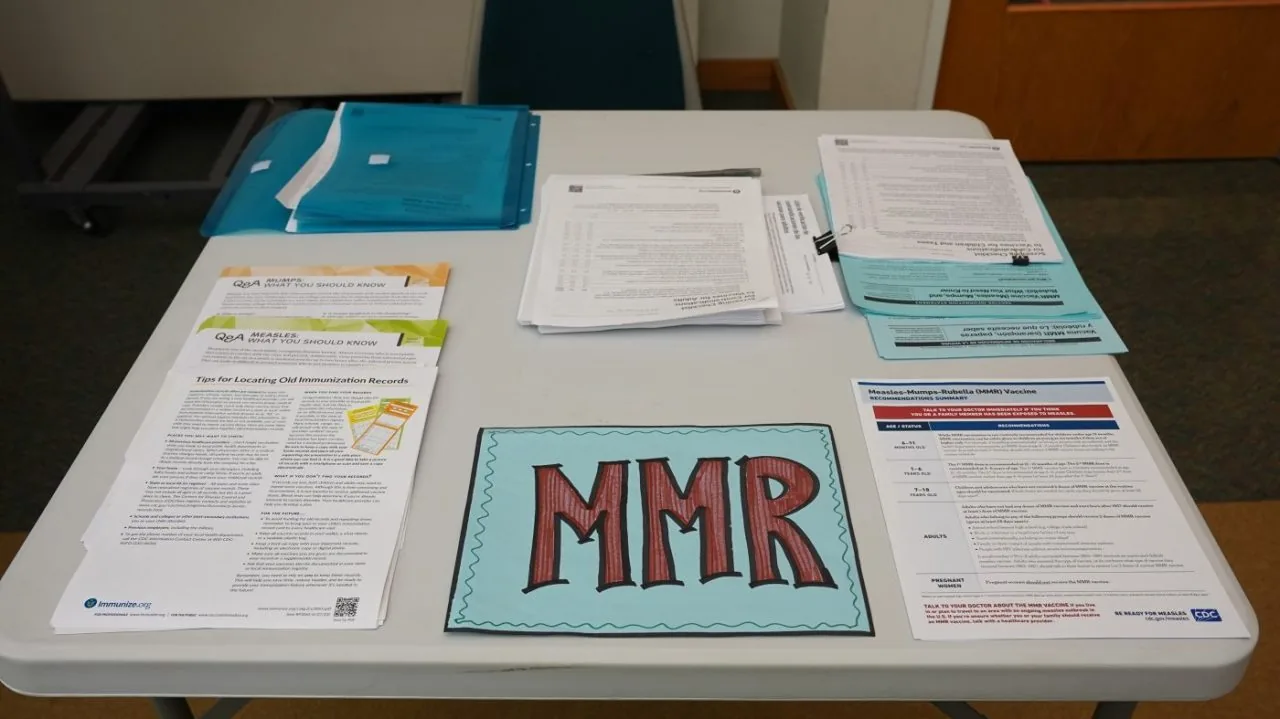
Public health leaders trace the sharp rise in cases to a steady decline in routine childhood immunizations. To maintain community protection and stop measles from circulating, a population must keep at least a 95 percent vaccination rate. Over the past decade, however, the proportion of American kindergarteners who received the recommended two doses of the MMR shot fell from 94 percent to 92.4 percent [1]. Separate CDC surveys published by Andrew Donovan for WSYR showed that kindergarten coverage dropped from 95 percent in 2019 down to 92 percent in 2025 [4]. When coverage drops below that safety line, clusters of vulnerability form quickly and allow the pathogen to find unprotected children [2].
The MMR vaccine provides strong protection when given on schedule. Health agencies confirm that two doses given during childhood offer 97 percent lifelong immunity against measles infection [1]. In 2024, about 93 percent of 3-year-olds in the United States had received at least one MMR dose. After cases rose in 2025, increased public concern helped push that figure up to 97 percent for 3-year-olds, showing that parents respond when clinics make doses easy to get [5].
Lewis County Public Health records illustrate how local pockets of low coverage create ideal paths for the virus. Every one of the county’s 15 confirmed measles patients was completely unvaccinated [4]. While state officials have not said whether the child who died had received any MMR doses, they confirmed that the local cluster involved unvaccinated families [1]. Health workers say that controlling local transmission depends on restoring high immunization rates [4].
Federal Actions and Policy Disputes
At New York’s request, the CDC sent federal epidemiologists and disease surveillance staff to assist state health workers on the ground. The agency’s short-term Epi-Aid mission in New York is scheduled to run through November 13, helping local workers trace contacts and test laboratory samples [3]. “At New York’s request, CDC has deployed epidemiologists and other experts to work alongside state health officials on the ground, providing surveillance, data analysis, strategic planning, and other outbreak response support,” the U.S. Department of Health and Human Services said in an official statement to Nana Karikari of GBC Ghana Online [5].
National vaccine messaging has become a source of sharp disagreement between state leaders and federal officials [5]. Governor Hochul pointed directly to federal decisions on Monday, calling the child’s death “a devastating reminder of what’s at stake when Washington deliberately erodes decades of progress in protecting Americans from preventable illnesses” [2]. Health and Human Services Secretary Robert F. Kennedy Jr. has faced criticism from medical groups for questioning the effectiveness of the MMR shot [3].
President Donald Trump also criticized the combined vaccine without scientific evidence, suggesting that it should be separated into individual shots. Facing public pushback, federal spokespersons said on Monday that Secretary Kennedy and CDC Director Dr. Erica Schwartz continue to tell the public that the MMR vaccine is the best tool to stop measles [3]. How did federal agencies handle the growing differences in mortality numbers? The CDC has confirmed only three measles deaths nationwide this year, while Pennsylvania alone has reported five deaths. The CDC switched to National Center for Health Statistics mortality data instead of accepting direct counts from state health departments, drawing criticism from experts who argue that slow federal reports obscure the true scale of national infections [5].
Will the Measles Outbreak End Elimination Status?
The rising case numbers now threaten the elimination status that the United States has held for more than two decades [1]. The country stopped continuous local transmission in 2000, earning praise for wiping out homegrown measles through years of high vaccine coverage [2]. That status could be revoked next week when the Pan American Health Organization, an arm of the World Health Organization (WHO), convenes its elimination commission to review American data. Public health analysts widely expect the international commission to end the nation’s official elimination designation [3].
Technically, the United States still retains that measles-free designation, which requires fewer than 12 months of unbroken local transmission. Health officials warn that letting the virus re-establish continuous transmission puts vulnerable populations at constant risk, including infants too young for vaccination and people with weakened immune systems [1]. “Measles is a highly contagious disease that can cause serious complications and death,” the New York State Department of Health and Lewis County Public Health warned in their joint advisory [4]. Rebuilding community immunization barriers above the 95 percent threshold remains the only way to halt transmission and protect vulnerable children [1].
- ONLINE NEWS Randolph, M. (2026, November 3). New York’s first measles death in 30 years is an omen of worse to come. Scientific American. [Article Link]
- ONLINE NEWS Associated Press. (2026, November 3). Child dies of measles in New York’s first such death in 30 years. STAT. [Article Link]
- ONLINE NEWS Weixel, N. (2026, November 3). New York reports first measles-associated death in more than 30 years. The Hill. [Article Link]
- ONLINE NEWS Donovan, A. (2026, November 2). Lewis County child is New York’s first measles death in more than 30 years. WSYR. [Article Link]
- ONLINE NEWS Karikari, N. (2026, November 3). New York records first measles-linked child death in 30 years amid outbreak. GBC Ghana Online. [Article Link]
APA 7: PerEXP Teamworks. (2026, November 4). New York Measles Outbreak Causes State’s First Death in 30 Years. PerEXP Teamworks. https://perexpteamworks.com/en/measles-outbreak-new-york-death/


