




Heavy rainfall can abruptly accelerate mountain ice streams, driving seasonal surges and altering how meltwater lubricates bedrock deep beneath frozen valleys. At Turner Glacier in southeastern Alaska, known locally as Sít’ Kusá, Boise State University researchers tracked ice velocity with high-frequency GPS units during both active surges and quiescent intervals. They found that downpours can more than double glacier speeds during active surges and trigger even larger relative jumps when background flow is quiet [1]. The measurements show that water inputs reshape valley glacier motion far more quickly than standard ice sheet models assumed [2].
Glacier Speeds at Sít’ Kusá
Glaciologist Parker Wilkerson of Boise State University led the field monitoring at Sít’ Kusá, a steep and heavily crevassed surge-type glacier situated near Yakutat in southeastern Alaska [1]. His team installed ten GPS receivers along the ice surface. The instruments recorded positional coordinates every 15 seconds, creating uninterrupted displacement logs that documented swift accelerations whenever heavy mountain downpours swept through the coastal range [2]. Wilkerson and his colleagues paired these high-rate surface coordinates with regional precipitation estimates, verifying local storm totals against ground observations collected at the Yakutat Airport weather station [1]. By evaluating short-term velocity ratios against multi-week baseline averages, the Boise State team tracked how incoming storms influenced glacier speeds across multiple seasons [2].
The investigation appeared in an EGUsphere preprint authored by Wilkerson alongside Boise State colleagues E. Enderlin, Y. Terleth, J. Liu, and J. Anderson, with related coverage later discussed by science writer Hannah Bird in The Cryosphere and Phys.org [1]. Because the paper is currently hosted on EGUsphere, its findings have not yet completed formal peer review [3]. Surge-type glaciers represent an unusual subset of valley ice. While most glaciers crawl steadily downhill under gravity, surge-type ice masses cycle between prolonged intervals of quiet flow and sudden surges that accelerate movement by an order of magnitude [2]. Sít’ Kusá entered a vigorous surge between 2020 and 2021 before dropping into quiet flow from 2022 to 2024. This operational transition allowed the Boise State glaciologists to examine how identical precipitation events affect valley ice across two fundamentally different dynamic states [1].

Surge Versus Quiescent Flow
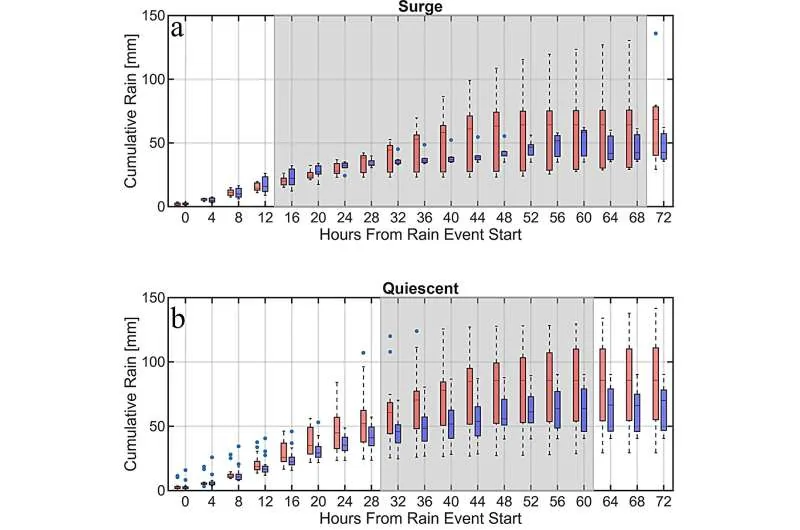
During the 2020–2021 surge at Sít’ Kusá, nine out of 16 major rainfall events produced measurable velocity spikes, meaning 56 percent of large storms triggered sudden acceleration [1]. The glacier reached peak velocities of 7.5 meters per day, or 24.6 feet per day, representing a 116 percent increase above background surge flow [2]. These acceleration events lasted an average of 66.5 hours [1]. Speed increases typically started roughly 12 hours after precipitation began, provided storm totals reached at least 20 millimeters, or 0.79 inches [2]. Flow rates returned to normal baseline levels within three days after rain ceased [1].
The response pattern changed markedly once Sít’ Kusá settled into quiescence. During the subsequent 2022–2024 quiet phase, storm-driven speed spikes occurred much less often, with only 17 of 37 rainfall events triggering measurable acceleration, or 46 percent [1]. Absolute speed gains were modest, averaging approximately 1.5 meters per day, which equals 4.9 feet per day [2]. These quiet-phase events concluded rapidly, lasting roughly 33 hours [1]. Yet the relative velocity surge was extraordinary. Because the glacier was previously creeping at a sluggish baseline rate, incoming storms produced an average speed increase of 251 percent [2]. Quiescent accelerations required substantial precipitation to get underway, demanding at least 60 millimeters, or 2.4 inches, of accumulated rain before ice began to move faster, with peak velocities lagging initial rainfall by 32 hours [1].
Water Pressure in Basal Sliding
The physical mechanism linking rainfall to glacier acceleration centers on subglacial water pressure. Valley glaciers move downhill through two main processes: internal ice deformation, where ice crystals slowly warp under stress, and basal sliding, where the entire frozen mass slips across bedrock [2]. When surface rain drains to the bed through open crevasses and moulins, it enters subglacial drainage channels. An efficient subglacial drainage network features wide, open tunnels that rapidly evacuate runoff toward the proglacial fjord, keeping basal water pressure low so the ice rests firmly on rock [1]. When drainage is inefficient, water cannot escape. Trapped water builds severe hydrostatic pressure inside distributed cavities and subglacial sediment, counteracting the downward weight of overlying ice [2].
High basal pressure relieves friction between ice and bedrock, creating a lubricated interface that allows gravity to pull the glacier downhill [2]. Glaciologists describe this slippery process as basal sliding [1]. In subarctic mountain catchments, patchier permafrost accelerates Alaskan hillslope erosion while surface runoff carves unstable gullies. Deep beneath Sít’ Kusá, high confining pressure can also alter the local melting temperature of basal ice, generating thin water films that ease sliding [2]. GPS measurements compiled by Kate Bollen and the Boise State team showed that acceleration was consistently highest in the downhill sections of Turner Glacier, where steep valley topography and accumulated runoff combine to maximize sliding [1].


Subglacial Responses to Storm Runoff
The contrasting lag times between surge and quiet regimes illuminate how subglacial plumbing evolves over time. During the 2020–2021 surge, the drainage network under Sít’ Kusá was poorly integrated and disorganized, allowing rainwater to pool quickly and trigger acceleration just 12 hours after storms made landfall [2]. Because the subglacial conduits were already choked, a modest accumulation of 20 millimeters of rain generated sufficient pressure to lift the ice [1]. During quiescent flow, however, established channels evacuated early runoff without significant backup. Only large storms providing at least 60 millimeters of precipitation could overwhelm the drainage network, explaining why quiescent velocity peaks lagged storm onset by an average of 32 hours [2].
The field data also documented a surprising phenomenon during the active surge period. When exceptionally heavy, sustained storms hit the glacier, ice motion occasionally decelerated rather than speeding up [1]. Massive volumes of turbulent water forced subglacial channels to expand rapidly by melting tunnel walls, creating temporary arterial conduits that drained trapped water faster than new runoff could replenish it [2]. Once water evacuated, subglacial pressure plummeted, restoring bedrock traction and temporarily halting the surge [1]. The glacier then resumed its fast surge pace in less than two weeks as overburden pressure crushed the enlarged tunnels shut, restoring the inefficient drainage network [2].
These opposing responses demonstrate that rainfall alters glacier speeds through dynamic hydraulic feedback rather than simple push-button acceleration [1]. Scientists previously questioned whether valley glaciers switch mechanically between two static drainage states or adjust their geometries continuously [2]. The empirical measurements from Sít’ Kusá indicate that subglacial drainage systems are flexible networks that adjust dynamically to water input, ice overburden, and valley slope [1]. Even during quiescent flow, remnants of inefficient drainage persist beneath the ice [2].
How Drainage Inefficiency Shapes Glacier Speeds
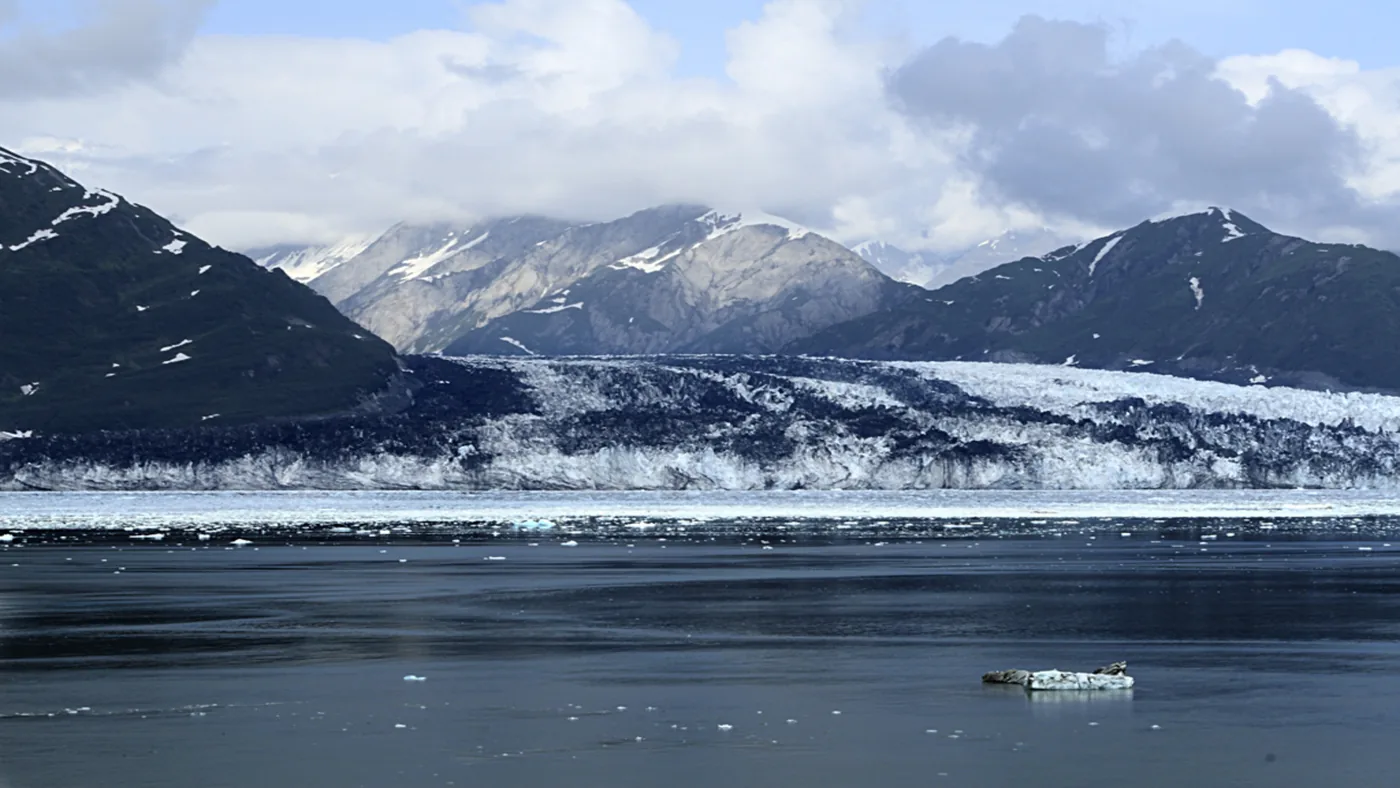
Glaciological theory long held that temperate glaciers maintain two mutually exclusive drainage architectures: an efficient tunnel network during quiescent flow and an inefficient cavity system during surges [1]. The Boise State observations at Sít’ Kusá challenge that binary model. Because rainfall induced acceleration across both flow regimes, Wilkerson and his co-authors concluded that inefficient drainage elements persist throughout the entire surge cycle [2]. Even when efficient tunnels develop along the central valley, pockets of distributed cavities remain active across wide sections of the bed [1].
These persistent cavities behave like hydraulic capacitors beneath the glacier [2]. During dry periods, baseline meltwater flows quietly through primary conduits without affecting the surrounding ice bed [1]. When heavy autumn downpours arrive, excess runoff rapidly overwhelms primary conduits and floods into isolated cavities, saturating the fine subglacial sediment known as till and elevating water pressure across the entire valley floor [2]. This widespread pressure spike lifts the ice by millimeters, breaking friction and triggering rapid basal slip [1]. Slow-moving glaciers thus remain highly vulnerable to sudden downpours [2].
Recognizing that subglacial drainage efficiency fluctuates over hourly timescales provides essential guidance for numerical ice sheet models [2]. Most computer simulations treat basal lubrication as a seasonal parameter governed solely by summer air temperatures and surface melting [1]. Yet autumn rainstorms deliver massive volumes of liquid water when air temperatures are already dropping toward freezing [2]. As climate warming shifts high-latitude precipitation from snow toward rain later into autumn, valley glaciers will experience more frequent water pulses that disrupt baseline motion [1]. Incorporating short-term hydraulic evolution into glaciological models will ultimately help scientists predict when Alaskan ice streams will surge into coastal waters [2].

Downstream Hazards from Accelerated Ice
Abrupt surges in mountain glaciers create severe physical hazards for surrounding valleys and downstream ecosystems [2]. When a glacier surges, its brittle surface shatters into deep crevasses that destabilize mountain terrain [1]. Surging ice often blocks tributary valleys. This creates temporary ice dams that impound deep proglacial lakes, and when those fragile ice dams inevitably breach under hydrostatic load, they unleash catastrophic outburst floods that scour river corridors, wipe out bridges, and threaten coastal communities [2]. Rapid ice advances act like bulldozers, stripping soil and dumping millions of tons of sediment into coastal fjords [1].
As tidewater glaciers accelerate toward the sea, rapid calving discharges massive icebergs into ocean channels, directly affecting coastal navigation and marine habitats [2]. Increased calving and melting accelerate the transfer of land-based ice into the sea, contributing to rising global ocean levels [1]. Long-term climate models show that even if winter snowfall accumulation climbs across polar regions, extra snowfall cannot prevent locked Antarctica ice loss once warm ocean currents undercut marine ice shelves. In Alaska, warming atmospheric conditions are already increasing the frequency of heavy rainstorms across mountain ranges where glaciers terminating near Yakutat Bay face rapid environmental change [2]. Understanding how storm runoff alters glacier speeds remains essential as scientists track flood hazards and ice loss across the subarctic [1].
- ONLINE NEWS Bird, H. (2026, November 7). Heavy rain can more than double glacier speeds in Alaska. Phys.org. [Article Link]
- ONLINE NEWS Mocerino, M. (2026, November 8). 251% faster: Heavy rains could accelerate Alaskan glacier, study. Interesting Engineering. [Article Link]
- PREPRINT Wilkerson, P., Enderlin, E., Terleth, Y., Liu, J., & Anderson, J. (2026). Rain-induced speed up events of a temperate surging glacier, AK, inferred from GPS measurements. EGUsphere. [Article Link]
APA 7: PerEXP Teamworks. (2026, November 9). Rainfall Can More than Double Glacier Speeds in Alaska. PerEXP Teamworks. https://perexpteamworks.com/en/glacier-speeds-heavy-rain-alaska/


