





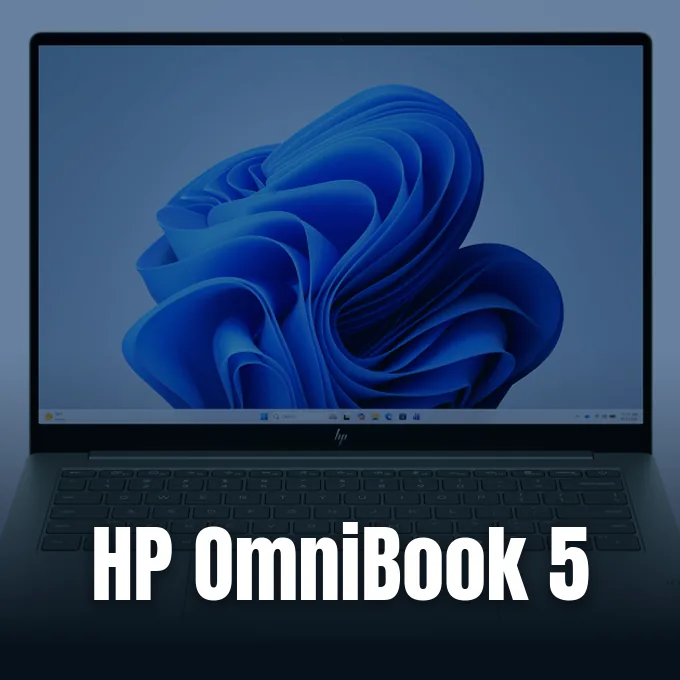
HP officially entered the affordable laptop race by introducing the HP OmniBook 5, a 14-inch notebook engineered to challenge Apple’s budget-focused MacBook Neo [1]. Packing new Intel silicon and four colorful finish options, the clamshell machine brings organic light-emitting diode technology directly to sub-$1,000 retail shoppers. The device features an ultra-thin 11.77-millimeter profile and arrives on store shelves starting at $699.99 for initial consumer availability in October 2026 [4].
HP OmniBook 5 Enters Budget Laptop Arena
The broader personal computer market was caught off-guard when Apple unveiled the MacBook Neo earlier this year at an aggressive $700 price point. Will Sattelberg of 9to5Google reported that Windows-based manufacturers required several months to formulate direct competitive answers to Cupertino’s aggressive pricing strategy. HP is mounting its response with a colorful clamshell reminiscent of Apple’s iPad Air lineup [2].
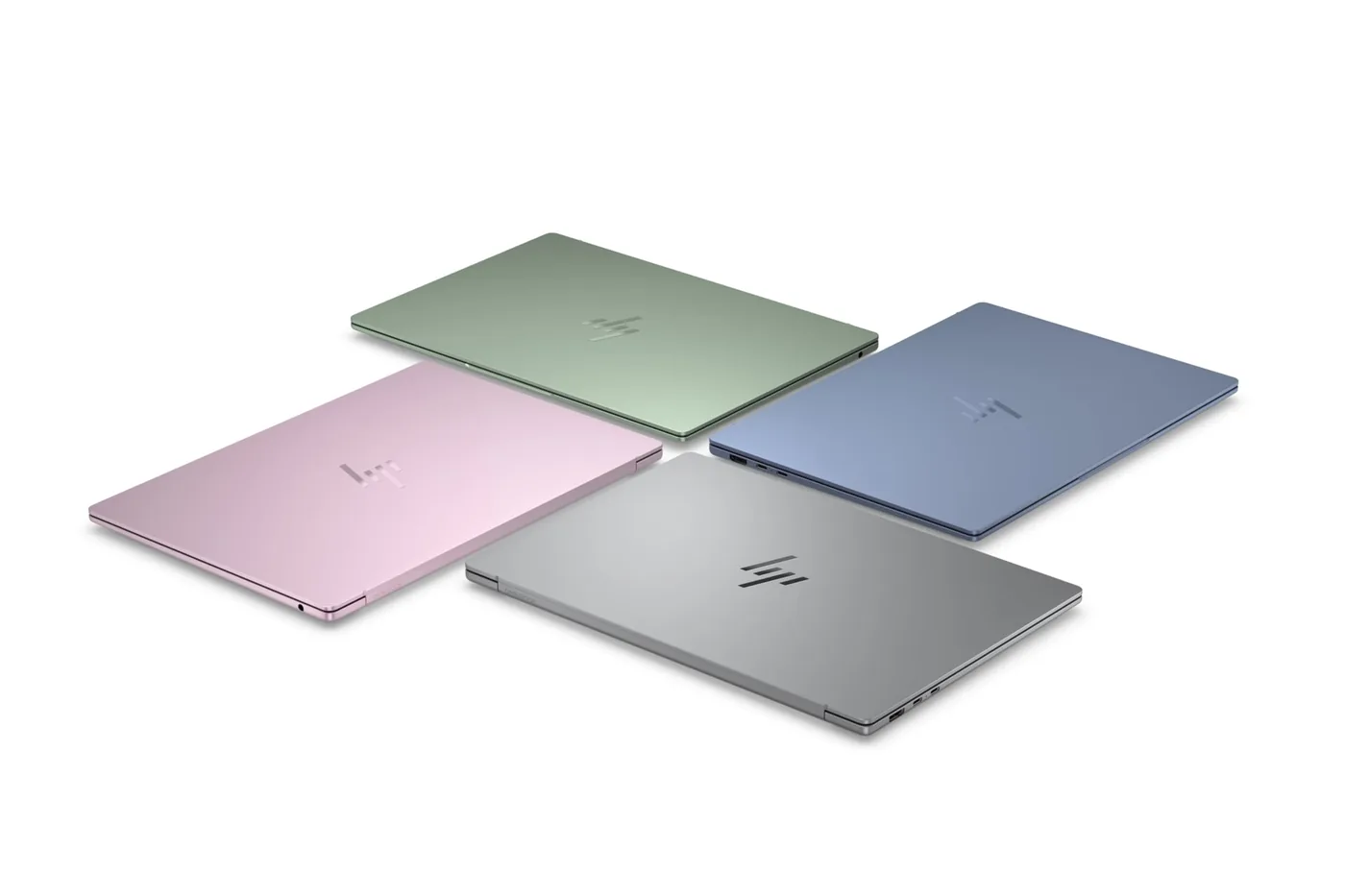
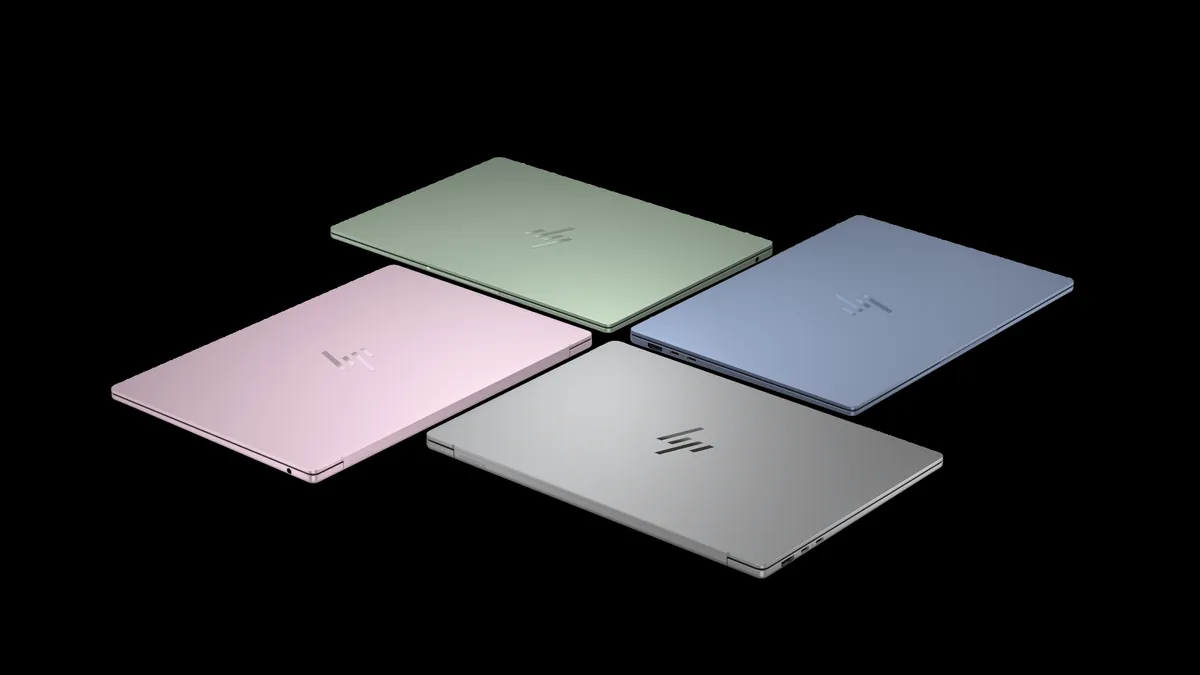
Senior editor Andrew E. Freedman at Tom’s Hardware revealed that the HP OmniBook 5 arrives in four distinct colors: Peony Pink, Starlit Blue, Smoke Silver, and Soft Honeydew. This aesthetic palette closely mirrors the soft exterior styling seen across Dell’s upcoming 14S and Apple’s entry hardware. Intel supplied the Intel Wildcat Lake silicon. The base model incorporates an Intel Core 5 320 processor, while higher-tier configurations offer performance climbing to an Intel Core 7 350 chip during October 2026 [4].
While Apple continues commanding premium market attention, as shown when Amazon knocked $900 off the 16-inch MacBook Pro, mainstream PC buyers actively seek accessible sub-$1,000 price points. Kyle Barr observed for Gizmodo that HP aims to capture holiday shoppers, even though the company narrowly missed the lucrative back-to-school purchasing window this autumn [1]. Consumer demand for portable machines remains robust across university campuses and entry-level creative workspaces. Retail distribution for the new notebook is scheduled to expand through Best Buy locations later this month across the United States [2].
OLED Display Highlights the Hardware Package
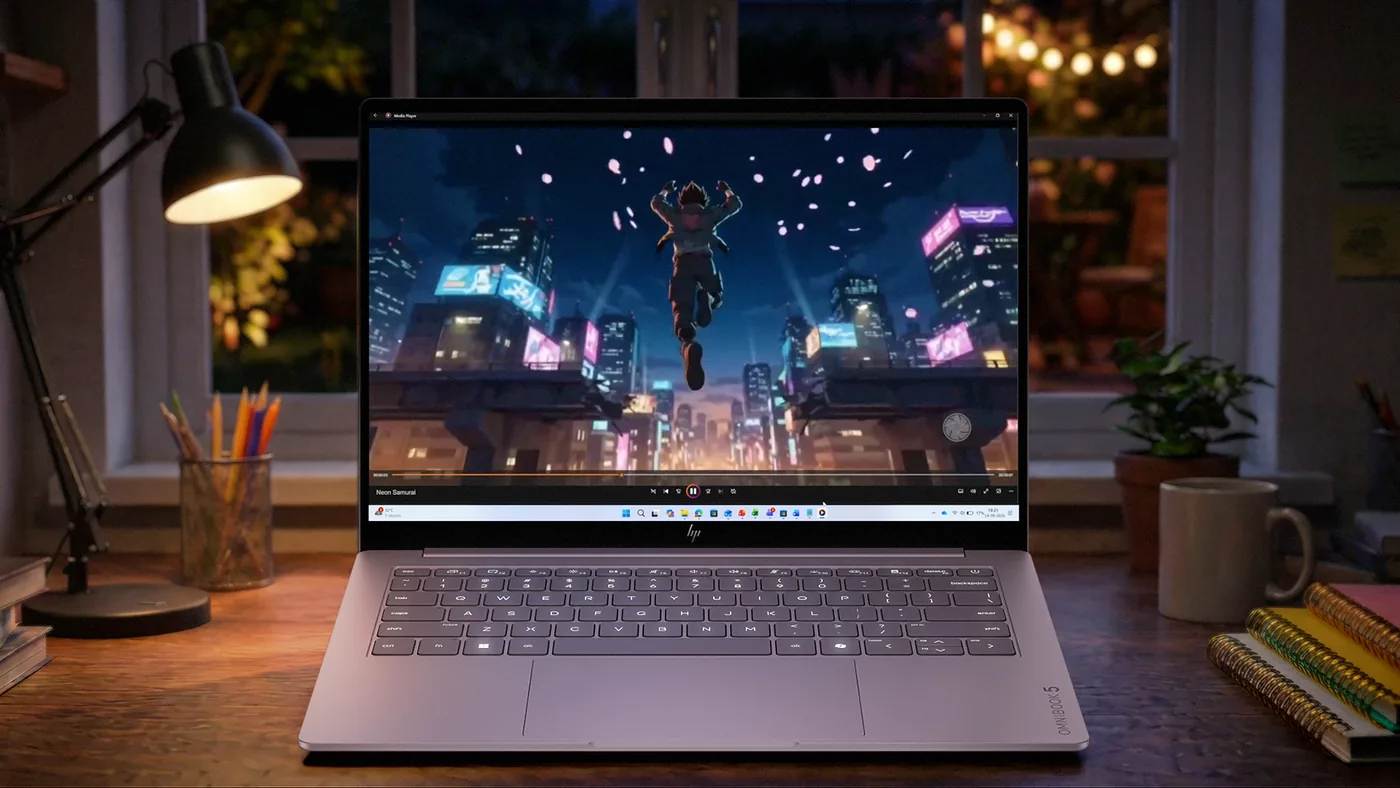
The defining characteristic of the new notebook is HP’s decision to equip every HP OmniBook 5 model with an OLED display, establishing a sharp contrast with competitors relying on traditional LCD panels [1]. Organic light-emitting diode technology delivers superior contrast ratios and deep black levels. Initial retail units feature a 14-inch screen at 1920 by 1200 resolution, available in both touch and non-touch variants [4].
That launch display comes with a noticeable trade-off, as HP rated the 1920 by 1200 OLED touchscreen for a typical brightness of only 300 nits. Freedman characterized this 300-nit luminance rating as “fairly dim” for OLED panels. In reader discussions on Tom’s Hardware, habermas pointed out that Apple’s MacBook Neo delivers 500 nits of brightness on its 2408 by 1506 IPS display. HP has prepared a premium 2.5K panel offering 2560 by 1600 resolution and up to 620 nits, but that upgraded screen will not ship until March 2027 [4].
Above the screen, HP embedded a 1080p full-high-definition webcam equipped with infrared sensors to enable biometric facial recognition through Windows Hello security protocols. Dual integrated microphones accompany the camera module to capture voice clearly during remote conference calls. Audio output is delivered through Poly Studio-tuned speakers, while physical connectivity features two full-function USB Type-C ports and a legacy 3.5-millimeter headphone jack along the chassis edges [2]. HP omitted older USB-A connection ports.


OmniBook 5 Balances Weight and Battery Claims
Weighing in at 2.56 pounds, the OmniBook 5 achieves a lightweight footprint that compares favorably against competing 14-inch Windows machines scheduled for release ahead of the holiday quarter. Freedman noted that HP’s chassis weighs less than the forthcoming Dell 14S at 2.65 pounds and edges out the Acer Swift Air 14 at 2.62 pounds [4]. Apple’s 13-inch MacBook Neo weighs 2.7 pounds, giving HP a slight weight advantage despite offering a larger display area [1].
HP set the chassis at 11.77 millimeters [2]. The internal frame houses a 60-watt-hour battery paired with a 65W GaN USB Type-C power adapter [4].
HP claims the system can achieve up to 42 hours of battery life on a single charge under optimal operating conditions. Sattelberg emphasized that HP measured this 42-hour claim exclusively through continuous local video playback tests, which do not reflect realistic multitasking, web browsing, or cloud productivity workloads that consume battery reserves faster [2]. The packaged 65W gallium nitride (GaN) charger supports rapid power delivery through either USB-C connection, allowing mobile professionals and students to replenish battery reserves quickly without carrying cumbersome proprietary charging bricks. Under typical Windows 11 workloads, battery longevity will inevitably fall short of manufacturer playback claims, but the efficient Wildcat Lake architecture should still provide dependable all-day endurance for mobile users [1].
The laptop’s slim 11.77-millimeter height allows it to slide effortlessly into compact backpacks and messenger bags, fulfilling portability requirements for mobile workers and commuting students alike [2]. Barr pointed out that such slim aluminum dimensions require efficient passive thermal dissipation to keep internal components running smoothly. The clamshell design maintains solid structural rigidity throughout the palm rest and keyboard deck without flexing during sustained typing sessions [1].
Memory Constraints Loom Over Base Model Configurations
The opening $699.99 configuration ships with 8GB of soldered LPDDR5-6400 memory and a 256GB PCIe Gen 4 solid-state drive on the official HP OmniBook 5 store page [4]. Barr warned that 8GB of RAM creates an immediate bottleneck for modern Windows 11 workflows, unlike Apple’s macOS architecture which manages lower memory configurations efficiently on the A18 Pro [1]. The memory modules remain non-upgradeable.
An HP spokesperson confirmed to Gizmodo that a 16GB RAM configuration is planned, but the company declined to provide pricing or availability timelines for that tier [1]. Tom’s Hardware confirmed that a middle-tier 12GB RAM model and a 1TB PCIe Gen 4 storage option will arrive in November 2026 [4]. Sattelberg noted that omitting memory pricing details during the initial announcement reflects the severe RAM crunch currently pressuring the broader personal computer manufacturing industry [2].
Escalating semiconductor costs have forced multiple PC manufacturers to raise equipment prices or curtail entry-level hardware allocations across their portable retail catalogs during recent product refreshes. Dell increased XPS 13 pricing last month, pushing its 16GB model to $1,000, while Apple similarly adjusted MacBook price tags earlier this year [1]. Component price pressures affect all brands. In reader comments on Tom’s Hardware, usertests noted that prospective buyers may need to wait until DRAM costs moderate before configurations see substantial discounts [4]. Hardware margins remain unusually tight as suppliers negotiate memory wafer contracts.
Rival PC Makers Target MacBook Neo Territory
The introduction of the HP OmniBook 5 highlights an escalating industry race as major personal computer vendors attempt to counter Apple’s growing dominance in the budget laptop market [1]. Dell is deploying both the XPS 13 and the upcoming Dell 14S to compete directly in the sub-$1,000 portable computing bracket [4]. Acer is preparing its pastel-colored Swift Air 14 with Intel silicon, while Lenovo plans its colorful IdeaPad Vibe laptops powered by AMD or Qualcomm chips [1].
This diverse market landscape illustrates how Windows manufacturers are exploring distinct silicon strategies across Intel Wildcat Lake, AMD Ryzen AI 400 series, and Qualcomm Snapdragon X architectures [1]. Consumers seeking portable alternatives can also monitor existing retail sales, such as Lenovo Yoga Slim 7X retail markdowns, which occasionally bring premium slim laptops down to competitive price thresholds. Such promotional markdowns offer viable alternatives for users hesitant to accept memory compromises on entry-level models. Competition in this segment intensifies.
By pairing an OLED display with Intel Wildcat Lake processing power at $699.99, HP has built the HP OmniBook 5 as an intriguing alternative to Apple’s MacBook Neo for budget-conscious Windows shoppers this shopping season. However, early adopters must determine whether the 300-nit panel brightness and restrictive 8GB base memory allocation fit their daily productivity demands before making a purchase [1]. As Andrew E. Freedman observed, actual retail performance and supply stability will determine whether HP’s bold budget gambit succeeds against Apple [4]. The coming holiday quarter will provide the first real test of consumer appetite for budget OLED portables.
- ONLINE NEWS Barr, K. (2026, October 1). HP’s MacBook Neo Competitor Might Cost You More Than You Think. Gizmodo. [Article Link]
- ONLINE NEWS Sattelberg, W. (2026, October 1). HP’s MacBook Neo Competitor Is $699 with an OLED Display and Plenty of Catches. 9to5Google. [Article Link]
- ONLINE NEWS Sattelberg, W. (2026, October 1). HP’s MacBook Neo Competitor Is $699 with an OLED Display and Plenty of Catches [Discussion Edition]. 9to5Google. [Article Link]
- ONLINE NEWS Freedman, A. E. (2026, October 1). HP Boards the MacBook Neo Competitor Train — OmniBook 5 Comes in Four Colors with Wildcat Lake and Starts at $699.99. Tom’s Hardware. [Article Link]


