





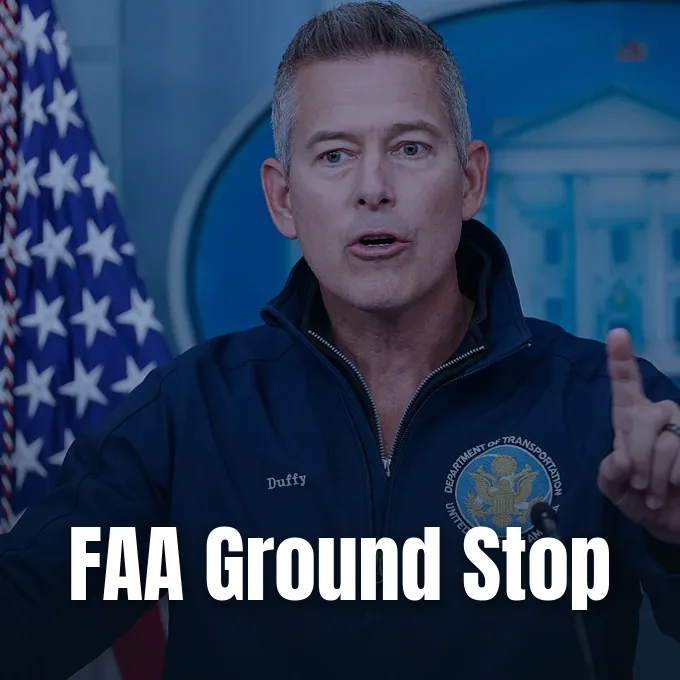
Transportation Secretary Sean Duffy announced in Washington that routine cable work caused the router glitch behind grounding flights nationwide across the United States on Friday, Nov. 13, disrupting holiday and business travel [2]. The sudden outage shut down domestic air travel for four hours. Planes sat stranded at boarding gates as critical radio and data links between Federal Aviation Administration controllers and commercial airplane cockpits abruptly failed across multiple regional sectors. Duffy insisted that federal reviews found no signs of a foreign cyberattack or sabotage, saying the breakdown stemmed from faulty gear or installation mistakes by agency contractors [1].
Remote Cable Work at FAA Facilities
Duffy spoke to reporters during a Saturday press briefing in Washington to review what FAA teams learned after Friday’s sudden shutdown grounded thousands of commercial planes nationwide. Defense firm L3Harris was replacing telecommunication lines under a long-term FAA contract supporting the National Airspace System. Technicians worked at a remote FAA facility. They were retiring aging copper wire lines that telephone companies planned to shut down as part of an industry transition toward digital communication links across federal networks. Duffy said L3Harris crews were moving connections from legacy analog wiring to modern fiber, describing the task as standard upkeep that should never have grounded planes [1].
L3Harris defended its work and pledged full cooperation with the federal review of the Nov. 13 shutdown. The defense vendor said it has finished over 70% of its airspace communications switch from copper to fiber alongside the FAA and private telecommunications partners. In a written statement, an L3Harris spokesperson said the company has been modernizing airspace networks in close coordination with the FAA to ensure system safety. Safety stays its top goal. The firm added that it takes the nationwide disruption seriously as inquiry teams examine L3Harris’ work and hardware choices at the remote air traffic site [1].
Duffy said investigators still do not know whether crew mistakes or bad hardware caused the failure. “What we’re working to determine was whether we had incompetence — meaning, was it user error or installator error from L3Harris? Or did they install a faulty router?” Duffy asked [2]. Duffy said that neither the FAA nor its contractor partner met the moment [1]. He added that Congress must provide more money for FAA aviation equipment so technical teams can replace fragile older networks without risking nationwide travel meltdowns [2].
Router Failures in Air Traffic Systems
The trouble began when a replacement router flooded FAA networks with rapid connection requests. The newly installed hardware pinged nearby routers repeatedly and jammed channels used to talk with airplanes, preventing ground controllers from issuing timely flight instructions to pilots [1]. FAA acting CTO Rebecca Guy said monitoring teams spotted the abnormal surge as internal systems lost stability [2]. The outage lasted four hours [1].
Guy said technical teams traced the crash to two network spots that were pinging routers at a rapid pace. “When we started to see the occurrence where our network was having instability, we started to look at what was the cause. And as such, we saw two places that were actually pinging our network at a very high rate — a thousand connections over every four to five seconds,” Guy said. Crews cut both connections right away to stabilize the system, which let engineers launch a root cause review as FAA ground controllers regained contact with planes [2]. Duffy said the project involved moving lines from TDM to IP networks. While TDM is inherently digital, it frequently ran over legacy copper wires that the FAA has been working to phase out across remote installations [1].
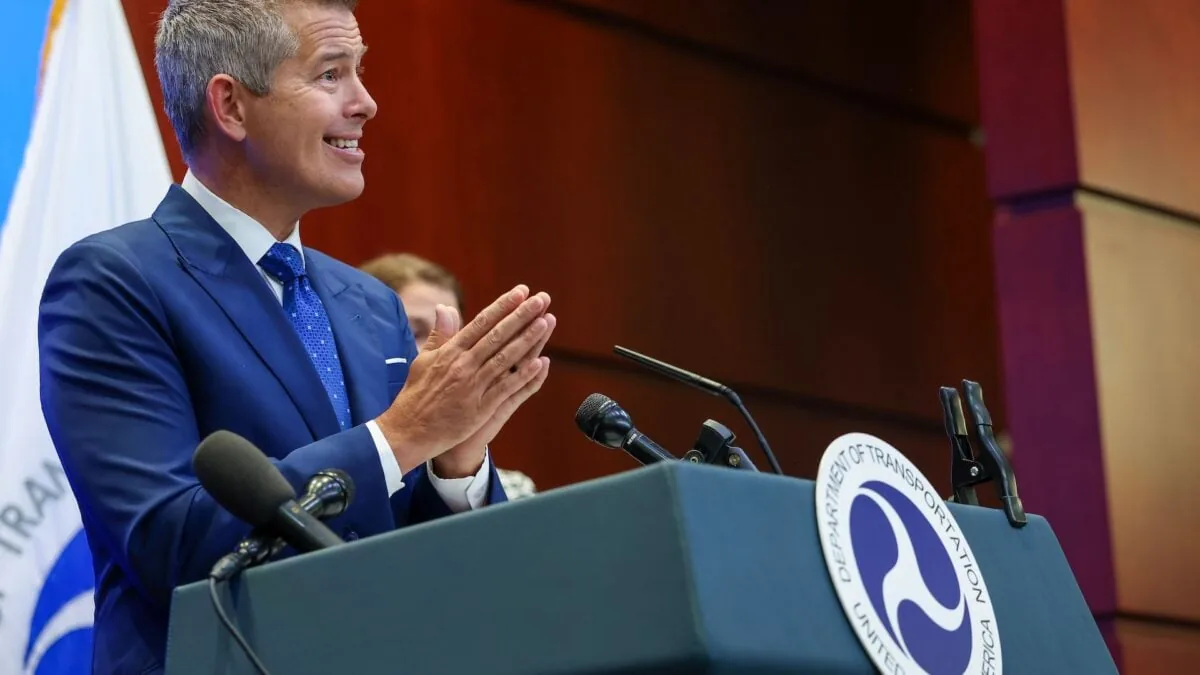
Duffy said the flood of connection requests overwhelmed air traffic control before technicians realized what was happening. “That router that was being replaced as we switched from copper to fiber, it started flooding other routers in our air traffic control system,” Duffy said. “And what that did was gave us issues with our communication with airplanes,” he added [1].


Impact of Grounding Flights Nationwide on Travel
The federal order for a nationwide ground stop grounded flights across the country and sparked chaos at crowded airport terminals. Data firm Cirium reported that commercial carriers canceled more than 8,200 flights on Friday evening alone as planes sat stalled. The Federal Aviation Administration had called a full nationwide ground stop halting all commercial departures only twice before during the entire twenty-first century [2].
Flight headaches stretched well past Friday evening as major airlines tried to move displaced crews and planes back into position across dozens of busy airport terminals. Carriers canceled at least another 3,000 flights on Saturday while attempting to clear massive passenger backlogs and accommodate travelers stranded by the prolonged FAA system outage [2]. Travelers missed wedding parties, business talks, and family gatherings. Gizmodo reported that Friday’s ground stop was the longest flight shutdown in the United States since 9/11, leaving thousands of passengers scrambling for alternate travel options. Duffy said he understood the anger felt by travelers and apologized for the heavy delays [1].
The weekend disruption exposed frail spots in federal aviation systems that rely on aging telecommunication cables [1]. Duffy said Congress needs to pass more funding so the FAA can upgrade critical networking hardware without risking another widespread shutdown of national airspace. Keeping legacy lines alive creates persistent operational hazards [2]. Friday’s failure showed how one bad router at a remote site can stall air travel across the nation when backup communication pathways fail to respond [1].
Questions Over AI and Friday Timing
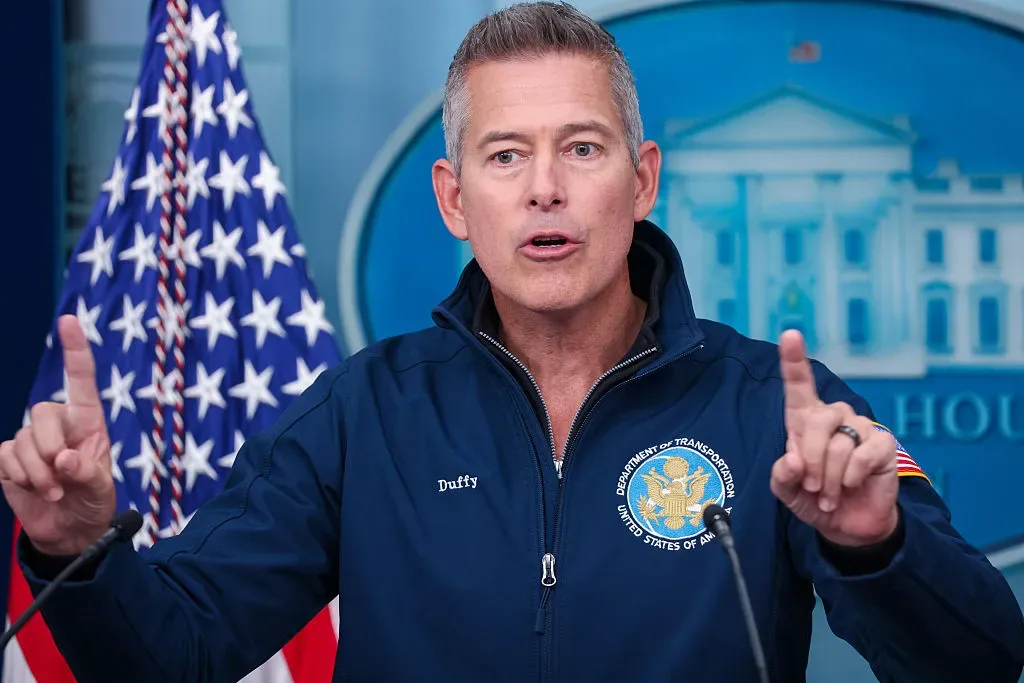
The FAA ordered grounding flights nationwide just one day after announcing plans to roll out an AI-based tool intended to assist air traffic staff with operations [2]. That coincidental timing sparked quick rumors online that automated software crashed federal flight control lines, but agency leaders moved fast to reject those unfounded claims [1]. The air traffic controllers union said federal leaders did not consult labor representatives about the AI tool. The union was not consulted. FAA Administrator Bryan Bedford said the agency saw “zero evidence of anything nefarious and zero evidence of anything AI-related”. Bedford said inspectors are dealing with a physical hardware defect [2].
Reporters asked Duffy why technical crews scheduled telecommunication cable upgrades for 3:00 p.m. on a busy Friday afternoon rather than waiting for lighter weekend traffic. Switchovers at major airport hubs usually happen late at night, such as midnight on weekends when passenger flight volumes drop down to their lowest daily levels. Duffy said daytime work had historically been routine for remote FAA sites. “There will be reevaluation of when we do this work,” he conceded. When asked if AI caused the shutdown, Homeland Security Secretary Markwayne Mullin answered, “We call it SI around here, remember? SI” [2].
Federal Plans for Communication Upgrades
Federal leaders said the shutdown was purely an equipment and installation breakdown. Duffy addressed aviation security fears directly, telling reporters that federal investigators do not believe a foreign power attacked FAA networks during the Friday outage. “Did some foreign nation attack this network? And the answer to that is we don’t believe so,” Duffy said [1]. Bedford backed that assessment, telling the public that finding the hardware defect and resolving vendor installation issues remains the FAA’s primary operational focus. “We want to be clear that we have an equipment issue, and we’re working through what this defective piece of equipment was,” Bedford said. Teams are running lab tests on the failed router hardware to determine whether factory flaws or setup mistakes by technicians caused the network breakdown [2].
The Federal Aviation Administration and contractor L3Harris must now finish copper cable conversions across the National Airspace System without sparking further disruptions for air travelers [1]. Duffy said modernizing aviation gear stays vital for safety, but promised that future switchover projects will follow tighter safeguards and revised maintenance schedules. Agency leaders said they will share full findings once engineers finish testing the failed equipment [2].
- ONLINE NEWS Pearl, M. (2026, November 14). Copper wiring apparently to blame for historic flight grounding. Gizmodo. [Article Link]
- ONLINE NEWS Ha, A. (2026, November 14). Transportation secretary blames ‘routine’ equipment upgrade for grounding flights nationwide. TechCrunch. [Article Link]


