






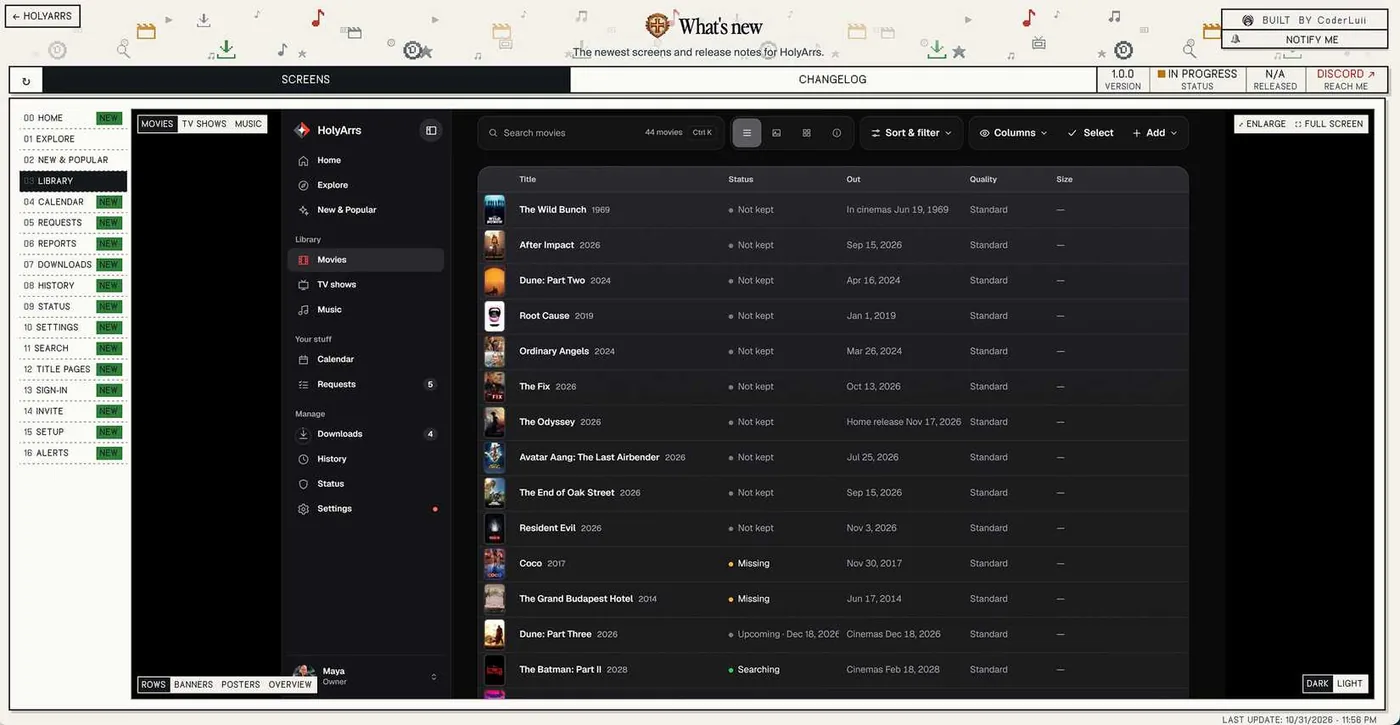
Reddit developer CoderLuii built the Holyarrs app using Anthropic Claude to combine several home server media tools into a single lightweight service [1]. While existing self-hosted media managers like Sonarr and Radarr often need separate background processes, this new build runs as a self-contained web program taking up only 15MB on disk [4]. Holyarrs pairs automated media collection with an interface styled after Spotify and Netflix [1].
Testing Two Builds with Claude
CoderLuii turned to Anthropic Claude to combine the jobs of Sonarr, Radarr, and Lidarr into one local dashboard [1]. Home server enthusiasts typically run individual utilities to track television broadcasts, download films, and sort music files, but running those packages side by side on one machine multiplies setup headaches [4]. CoderLuii wanted a single program that could organize media files without consuming heavy server resources. He said Holyarrs “does all of it and feels like Netflix” and keeps a visual layout close to Spotify [1].
The development process relied on vibe-coding, where CoderLuii guided Claude with performance boundaries from the first prompt [1]. CoderLuii asked Claude to construct the media platform using two different software architectures to see which code structure handled large library files better [4]. One version was “3x lighter” and much faster, convincing CoderLuii to drop the heavier codebase to build the remainder of Holyarrs on the faster foundation without sacrificing features [1]. Testing both outputs before adding more interface elements helped CoderLuii avoid the bloat that often creeps into automated coding experiments, letting Holyarrs boot in seconds [4].
Holyarrs does not transcode video files on the fly or stream video to remote smart televisions, leaving playback tasks to players like Plex or native desktop apps [1]. Instead, Holyarrs manages metadata, monitors storage folders, and handles download queues through one clean browser window [4]. CoderLuii shared Holyarrs on the r/ClaudeAI subreddit, where Reddit community members welcomed the single-dashboard approach [1].
Holyarrs App Memory Footprint
Strict performance limits shaped Holyarrs from its earliest prompts between CoderLuii and Claude. CoderLuii instructed Claude to cap memory usage, enforce rapid startup speeds, and keep the final binary footprint as small as possible [1]. Claude produced an executable that uses just 70MB of RAM even when cataloging 12,800 titles across movies and television shows, letting Holyarrs run smoothly on modest hardware like low-power mini PCs or basic NAS storage units [4].
Standard media management tools often struggle with resource efficiency because each program packages its own runtime dependencies. When users host Sonarr, Radarr, Lidarr, bazarr, Prowlarr, and Seerr on a single machine, each service typically consumes between 110MB and 140MB of memory before indexing a single file [1]. A complete management stack can swallow close to a gigabyte of RAM just to keep background monitors waiting for new content. Holyarrs avoids that cumulative memory penalty by consolidating those tracking tasks into a single 15MB web service, keeping RAM consumption low so home lab builders can run other server tools on the same hardware [4].
Fast boot times remained another top priority for CoderLuii during development with Claude [1]. Instead of waiting through multi-step service launches or heavy database initializations common in multi-app setups, Holyarrs presents its full library view seconds after starting, meaning that system restarts or container updates never delay background media catalog scans [4].


Replacing Multi-App Media Stacks
Home lab enthusiasts have long relied on separate tools that each handle one part of media collection. Sonarr tracks television broadcast schedules, Radarr searches for movie releases, and Lidarr organizes music albums [1]. Prowlarr indexes tracker feeds, and Seerr provides clean request interfaces for other household members, but maintaining half a dozen separate services creates a tangled web of port configurations, user permissions, and recurring software updates on home servers [4].
Holyarrs cuts through that clutter by providing a single point of interaction. Instead of switching browser tabs between Sonarr and Radarr, users view their entire media catalog through one screen [1]. The user interface takes clear inspiration from Spotify, using dark panels and clean card layouts that look familiar to anyone who streams music online on a daily basis, giving self-hosted media the polish of commercial streaming apps [4].
Users maintain full control over where media files live [4]. The Holyarrs app does not force complicated database schemas onto storage drives [1]. Holyarrs reads existing movie and television folders, identifies the contents, and maps them to clean metadata cards, preserving existing folder structures without re-indexing media collections from scratch [4].

Why the Holyarrs App Chose Web Architecture
A key engineering choice behind the Holyarrs app was avoiding a custom operating system layer. Many self-hosted tools run within heavy container ecosystems or need virtual appliances to manage networking [1]. CoderLuii opted instead for a single web application that runs directly in any browser without extra background services, eliminating many of the frustrating port and container configuration hurdles that often trip up home server owners during installation [4].
CoderLuii published a public roadmap showing plans for upcoming features and wider community distribution [1]. Although Holyarrs is not open-source yet, CoderLuii said that public repository access will arrive in a future update [4]. Early positive feedback on Reddit suggests strong demand for tools that strip away complexity from self-hosting, allowing enthusiasts who want a lean media setup to follow Holyarrs as development continues [1]. CoderLuii plans to expand library format support in upcoming updates, keeping system memory consumption well below the baseline footprint required by older multi-service media stacks like Sonarr and Radarr [4].
Vibe-coding with Claude allowed CoderLuii to iterate on layout ideas in hours instead of weeks. When building interface components, CoderLuii asked Claude for alternative layout styles and tested how quickly each design rendered large lists of movie files, helping him identify and fix performance bottlenecks before releasing the first public build [1].
AI Workflows for Home Media Libraries
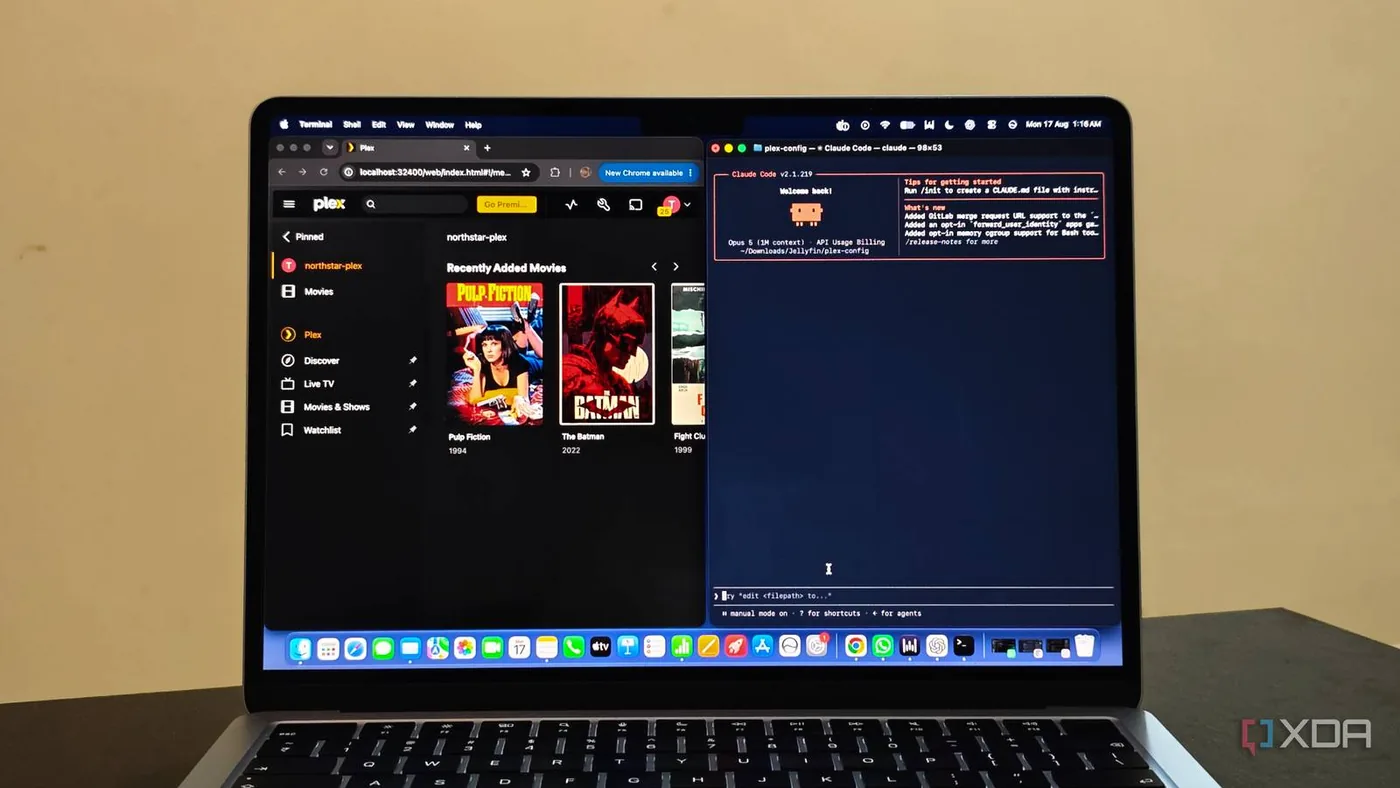
Holyarrs reflects a growing trend of self-hosters applying generative AI models to media storage challenges [1]. On XDA, writer Anurag Singh tested a similar AI-driven workflow by pointing Claude Code at a bloated Plex server. Singh previously used Unmanic to reclaim multiple terabytes of disk space, but a reader’s comment prompted him to ask, “Instead of using a tool built specifically for media optimization, why not give the entire job to an AI agent?” That automated audit reclaimed over 8TB of storage without deleting valuable media [2].
Singh gave Claude Code filesystem access over SSH to inspect Plex media drives directly. Using command-line tools like ffprobe and file hashes, Claude Code identified duplicate releases, old torrent files, and leftover sample clips. Claude Code generated a dry-run quarantine script that safely isolated unneeded files before deleting them, and queued ffmpeg commands to transcode bulky H.264 files into efficient H.265 streams. Similar terminal workflows show how Claude Code cuts local search time by 96% with a README map when developers inspect extensive repository trees across local machines, proving that conversational AI agents can safely parse complex folder hierarchies without manual intervention [2].
Local command coordination is not exclusive to Claude Code. Anurag Singh said that terminal agents like Grok, OpenAI Codex, Gemini CLI, and OpenCode can execute comparable audit tasks as long as users define cleanup parameters clearly on their home systems [2]. In a separate experiment documented at The Leadership Lighthouse, developer Josh Anderson spent three months building a production application using only Claude Code, showing how AI tools are changing how enthusiasts manage home servers [3].
- ONLINE NEWS O’Rourke, P. (2026, November 8). Someone used Claude to make their own all-in-one Plex-like app, and it’s only 15mb. XDA. [Article Link]
- ONLINE NEWS Singh, A. (2026, August 20). I let Claude Code optimize my Plex library and reclaimed 8TB of storage. XDA. [Article Link]
- WEBSITE Anderson, J. (2025, November 2). How I Built a Production App with Claude Code. The Leadership Lighthouse. [Article Link]
- WEBSITE daily.dev. (2026, November 8). Someone used Claude to make their own all-in-one Plex-like app, and it’s only 15mb. [Article Link]


