





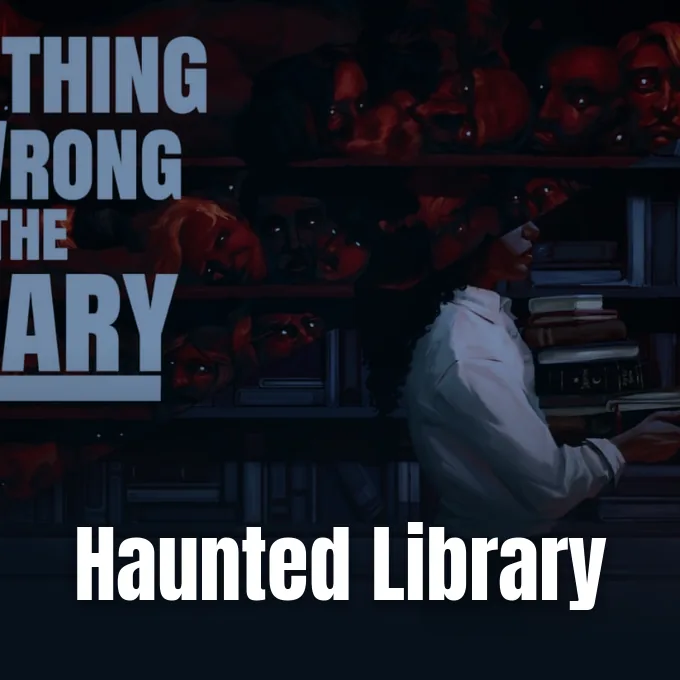
Developer Strange Scaffold announced Something is Wrong with the Library, introducing a haunted book sorting simulation game set to arrive on PC in fall 2026 [4]. The narrative centers on a single overnight shift inside a mountain municipal building haunted by the victims of a murderous founder [1]. Players must catalog real literature while facing escalating supernatural events under the direction of an experienced administrator [2].
Strange Scaffold Unveils Haunted Book Sorting Mechanics
Studio head Xalavier Nelson Jr. established Strange Scaffold as a development label recognized for unorthodox concepts across titles such as El Paso, Elsewhere and I Am Your Beast [4]. Pioneering a fresh approach to haunted book sorting, the team’s newest project pairs mundane clerical labor with psychological dread, requiring workers to restock displaced volumes across a multi-story building [1]. Strange Scaffold rejects combat encounters. Instead of battling conventional monsters, workers spend their entire nocturnal shift inspecting worn spines, verifying numerical call numbers, and carrying heavy stacks of literature through shadowed corridors [2].
Nelson previously worked as a professional librarian and drew inspiration directly from the unsettling quiet that settles over reading rooms once public operating hours conclude [1]. Speaking in an official announcement release, Nelson reflected on the peculiar vulnerability inherent to large public archives after dark. “If you’ve ever been in a library at night, you’ll know that it feels unexpectedly warm and full of possibility–until you hear a single sound you don’t recognize, and realize you’re surrounded by towering shadows,” Nelson noted [4].
The studio avoids generative AI. Instead, every shelf interaction relies on handcrafted narrative writing and human voice performances directed by Strange Scaffold [2].

The Dark Secrets of the Dieter Public Library
The horrific mystery unfolds inside Sweet Elm, an isolated mountain community transformed by an influx of private capital and civic restructuring. Tech billionaire Alex Dieter (a tech entrepreneur who reshaped the municipality) funded the community’s centerpiece facility, formally christened the Alex Dieter Public Library and Center for Reflection, under the guise of municipal generosity. Sweet Elm hides grim secrets [1]. Dieter spent years systematically murdering unhoused citizens and concealing their remains inside the facility’s hollow walls during initial construction [2].
That violent legacy has permanently tainted the architecture, turning what should have been a peaceful civic haven into a deeply haunted labyrinth where lingering trauma manifests through the physical environment [2]. Working throughout the solitary overnight hours, the protagonist must navigate these corridors alongside former library administrator Phillip Shed, whose spoken guidance directs the organization process. Players discover archival clues detailing Dieter’s predatory crimes, the municipal officials who enabled his behavior, and the precise conditions required to bring spiritual peace to the restless victims entombed behind the drywall [1]. Shed’s vocal dialogue guides players through their duties while gradually exposing how deeply Dieter’s civic project compromised the entire surrounding township [2].
Dieter concealed victims within walls [2]. Confronting the horrors of haunted book sorting does not involve wielding weapons or banishing demons through ritual combat [1]. Survival instead requires enduring the psychological weight of the space while fulfilling administrative responsibilities before sunrise breaks over the mountains of Sweet Elm [4].

Organizing Real Titles in a Haunted Book Sorter
At its structural foundation, the gameplay loop transforms the mechanical discipline of a haunted book sorter into an exercise in high-stakes organizational puzzle solving [4]. Dewey classifications guide every shelf [2]. Workers must systematically gather fallen texts strewn across reading tables and return every missing volume to its designated position across the tiered wooden stacks [1]. The catalog utilizes authentic Dewey Decimal System classifications (the standard library classification system), requiring players to sort items methodically by category number, author surname, and publication title [2].
The digital archive houses thousands of real-world book titles, providing an authentic bibliographic texture that contrasts sharply with the supernatural unrest rattling the shelves. At the center of this haunted book sorting experience, Strange Scaffold implemented a proprietary Modular Chaos System designed to ensure that shelving assignments shift substantially across consecutive playthroughs [4]. Every run delivers a distinct randomized inventory of books that demand sorting, preventing players from simply memorizing shelf sequences or repeating standardized delivery routes across the building [2].

This organizational focus sets the project apart from contemporary indie horror games that rely primarily on running away from roaming monsters in dark corridors. In an industry comparison highlighted by Siliconera, Strange Scaffold’s approach differs markedly from titles like Librarian: Tidy of the Arcane Library, emphasizing genuine physical cataloging without automated shortcuts [2]. Success demands sustained attention to bibliographic metadata even as ambient disturbances threaten to break concentration [4].
The library environment demands genuine precision [1]. Shelving mistakes interrupt the cleaning routine and prolong the hazardous night shift inside Sweet Elm’s cursed memorial [4]. By treating genuine classification standards as core gameplay mechanics, the title delivers an authentic simulation of institutional preservation under extreme pressure [1].
Supernatural Manifestations and the Drowning Room
As the midnight haunted book sorting progression advances, the building manifests increasingly overt supernatural phenomena linked to Dieter’s hidden atrocities [1]. Strange Scaffold confirmed that the narrative features an entire unlockable catalog of eerie environmental manifestations that react to player movements and cataloging milestones [4]. Although the initial announcement teaser trailer avoided loud jumpscares, the visual atmosphere maintains a suffocating dread characterized by distorted geometry and sudden audio anomalies [2].
Among the most enigmatic elements teased in the official studio documentation is an unannounced feature formally dubbed The Drowning Room, which developer Strange Scaffold explicitly lists alongside core simulation systems without providing immediate explanatory context [4]. Speculation regarding how this submerged chamber intersects with the library’s physical layout remains unconfirmed by the studio, which has intentionally chosen to withhold specific plot beats to preserve launch surprises for prospective players [1]. What remains clear from the initial reveal is that the supernatural presence inside the Dieter facility connects directly to civic accountability, forcing the night worker to confront the gruesome human cost behind Sweet Elm’s technological renaissance while methodically restoring order to book stacks scattered by unseen forces [4]. Former administrator Phillip Shed provides intermittent vocal commentary as these disturbances escalate across the facility [2].
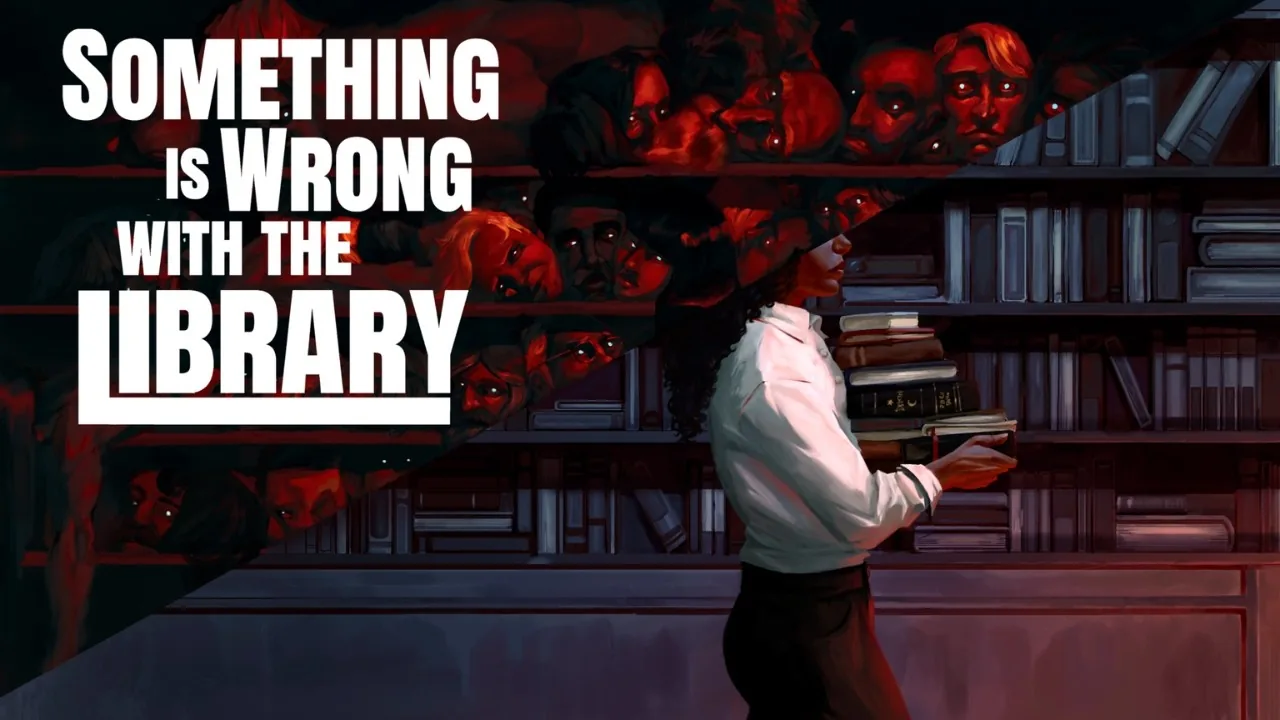
Despite the harrowing premise, Nelson emphasized that the creative motivation behind the project remains rooted in profound affection for civic institutions. Nelson champions local public libraries [4]. The creator hopes that witnessing these harrowing fictional events will inspire players to develop a deeper emotional connection with their real-world neighborhood libraries [1]. “As a former librarian, I truly hope that, despite the objectively messed up things they’re going to witness, everyone who plays the game falls in love with their local library a little more,” Nelson stated [4].
Fall 2026 Steam Launch for Strange Scaffold Library Project
Publisher Frosty Pop is partnering with Strange Scaffold to release the title digitally across PC platforms via Steam in fall 2026 [3]. The production represents a notable thematic addition to the developer’s eclectic portfolio, which includes past releases such as Clickolding, Space Warlord Baby Trading Simulator, and Truck-kun Is Supporting Me From Another World?! [4]. Steam lists the project for PC [1]. Prospective players can already examine the storefront listing and view the debut teaser trailer, while further development updates will be distributed through Strange Scaffold’s official Bluesky channel [4].
Targeting a release window aligned with the Halloween period (scheduled around late October), the production offers a distinctly cerebral alternative to conventional seasonal jumpscare titles [2]. Autumn releases across the industry often explore supernatural themes, similar to how The Haunting seasonal event introduced supernatural train maps to Warzone during its autumn campaign. By grounding its horror in meticulous Dewey Decimal sorting and the tangible weight of real literature, Strange Scaffold challenges players to restore dignity to a desecrated space one cataloged volume at a time [4].
Whether Sweet Elm’s grim architectural history can truly be laid to rest depends entirely on how meticulously players execute their overnight haunted book sorting duties [1]. With full voice acting, hundreds of randomized books, and an uncompromising atmosphere of quiet dread, Strange Scaffold’s upcoming project promises an unforgettable night shift behind the circulation desk [4].
- ONLINE NEWS Lopez, A. (2026, September 28). Something is wrong with the library turns book sorting into supernatural horror. Noisy Pixel. [Article Link]
- ONLINE NEWS Lada, J. (2026, September 28). New organizing horror game is Something is Wrong With the Library. Siliconera. [Article Link]
- ONLINE NEWS Gematsu. (2026, September 28). Haunted book sorting simulator Something is Wrong with the Library announced for PC. Gematsu. [Article Link]
- ONLINE NEWS Smith, S. (2026, September 28). Strange Scaffold announces haunted book sorter Something is Wrong with the Library. GamesBeat. [Article Link]


