




Apple announced that it will host a product launch on Tuesday, October 13, centering its second autumn event on new smart home hardware. Tracking Apple top stories this week points to a wide lineup arriving through press releases and hands-on press sessions in New York City. The morning presentation brings the company back to household devices after years of incremental speaker releases, pairing updated accessories with a brand-new operating system for connected spaces [2].
Apple Top Stories Highlight Welcome Home Event
Apple confirmed the timing for its upcoming hardware debut, scheduling media access at an Apple Experience event in New York City at 9:00 a.m. Eastern Time on October 13. Hands-on sessions begin that morning. Rather than hosting a staged keynote at Apple Park, the company opted for a coordinated press release rollout that delivers statements to newsrooms while letting select reporters test the new hardware in Manhattan [2].
The teaser surfaced on X. Apple executive Greg Joswiak shared a clip of two people stitching the classic company logo in needlepoint under the title Welcome Home, signaling that the announcements would focus on household living spaces rather than mobile phones. While the iPhone Duo arrived in September, this gathering spotlights connected rooms where Apple hasn’t released a brand-new form factor in years [4].
Industry interest has centered on whether Apple can turn Siri AI into a reliable backbone for daily routines, matching what Amazon and Google built with Alexa+ and Gemini. Early reports indicate Apple delayed its new home hub until the assistant could handle complex spoken requests without stumbling over multi-step instructions. Because earlier iterations of HomeKit struggled to gain mainstream ground against cheaper alternatives, the company hopes a smarter voice assistant combined with coordinated hardware will help household devices work together smoothly [5].
HomePad Display Brings Siri AI to homeOS
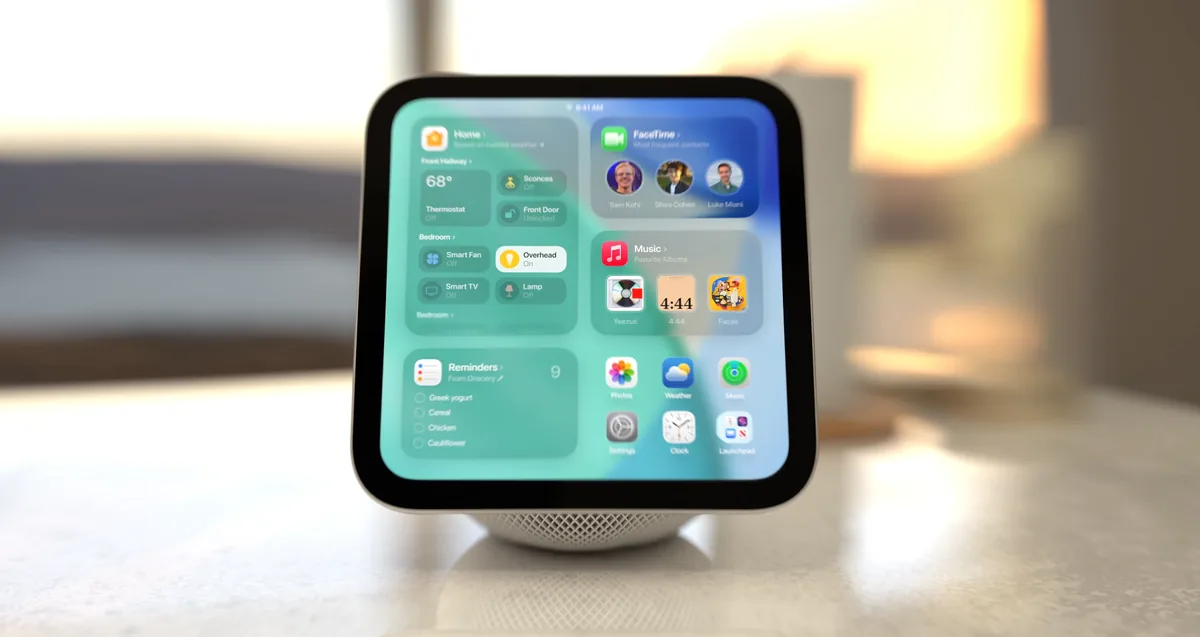
Apple’s primary new product is a smart display. Widely described in supply chain reports as the HomePad, the machine pairs audio hardware with a 6-inch square screen that mounts on a rounded speaker base or clips onto walls with a specialized bracket, functioning as a household hub where family members check calendars, manage lighting, and launch FaceTime calls [3].
Software on the HomePad runs on a new platform dubbed homeOS, built on tvOS foundations while borrowing glanceable widgets from Apple Watch and full-screen cards from iPhone StandBy mode. The interface also supports iPadOS-style apps, opening the door for developers to create video streaming tools, recipe cards, and security monitors tailored for a tabletop screen. Unlike traditional tablets that sit on desks or bedside tables, the hub stays plugged in at a central station so anyone in the room can glance at upcoming calendar events or adjust thermostats without unlocking an iPhone [5].
To make shared living spaces simpler to manage, the smart display includes presence sensors capable of detecting who is looking at the screen so it can switch calendars and notifications automatically. It doesn’t rely on full Face ID hardware to identify users, keeping Apple top stories focused on how the software bridges tablets and connected rooms. That subtle sensor setup lets the device swap out personal widgets without requiring users to sign in manually, offering a level of household convenience that other Apple screens don’t provide [3].


Updated Processors Power Apple TV 4K and HomePod
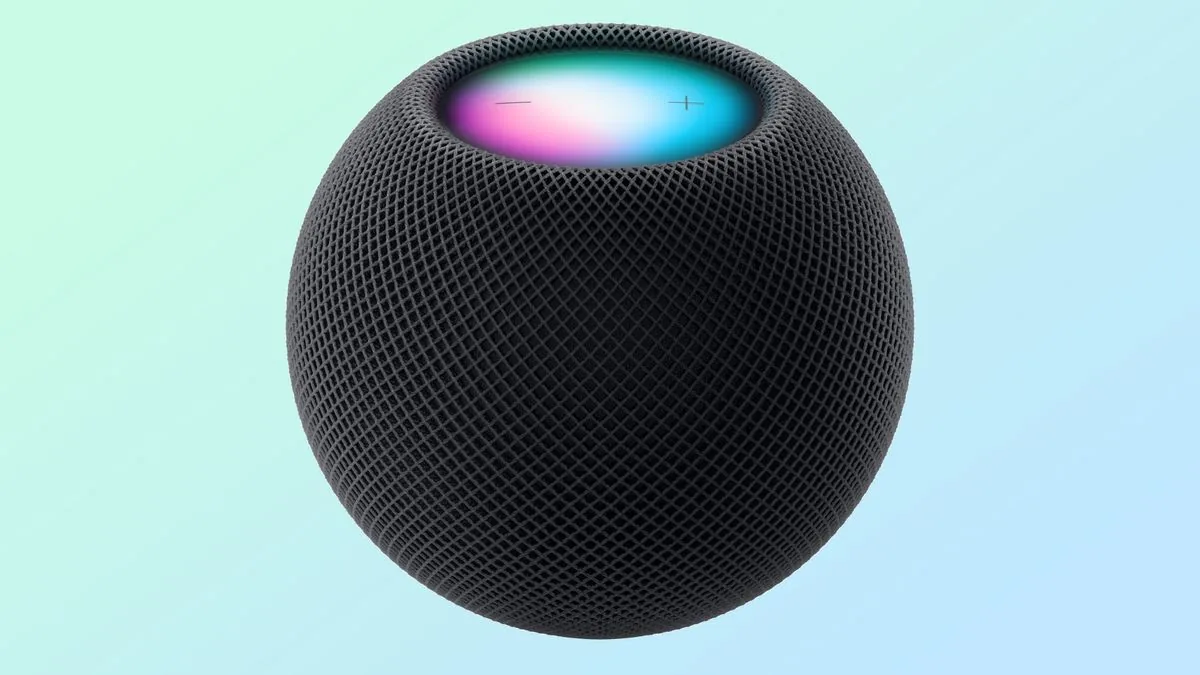
Older chips can’t keep up. The current Apple TV 4K still relies on an A15 Bionic chip from the iPhone 13 lineup, while the HomePod mini runs on an S5 chip that first appeared on Apple Watch Series 5. Because processing Siri AI on local hardware demands greater silicon horsepower, Bloomberg reports that Apple will upgrade both devices with faster processors capable of routing home commands smoothly [3].
The streaming box jumps several chip generations. Apple is expected to power the upcoming Apple TV 4K with an A19 processor from the iPhone 17 lineup or an A20 chip, pairing the silicon with an N2 wireless chip for improved Bluetooth and Wi-Fi performance while keeping the familiar black chassis and introducing a refreshed remote control. Speculation also pointed to a built-in camera for gesture controls, though supply reports suggest Apple might wait on camera hardware while focusing on raw processing power and HDMI latency improvements [5].
The HomePod mini sequel brings its own set of improvements, swapping in a recent Apple Watch processor so the compact speaker can process spoken commands without offloading audio to nearby iPhones. MacRumors reported that the miniature speaker will ship in a refreshed palette including green, pink, blue, black, and white finishes. Apple is also preparing multi-channel surround sound configurations, letting users pair four HomePods with an Apple TV so home theaters can deliver immersive room audio without requiring third-party soundbars [3].

LG and Schneider Expand Apple Home Accessories
Apple isn’t building every accessory alone. Instead of manufacturing each smart lock and sensor in-house, the company partnered with LG Electronics to co-develop smart home hardware that carries LG branding while offering tight integration with Apple software, including doorbells, locks, and climate sensors designed to link smoothly into homeOS hubs, which reshaped Apple top stories around collaborative manufacturing [3].
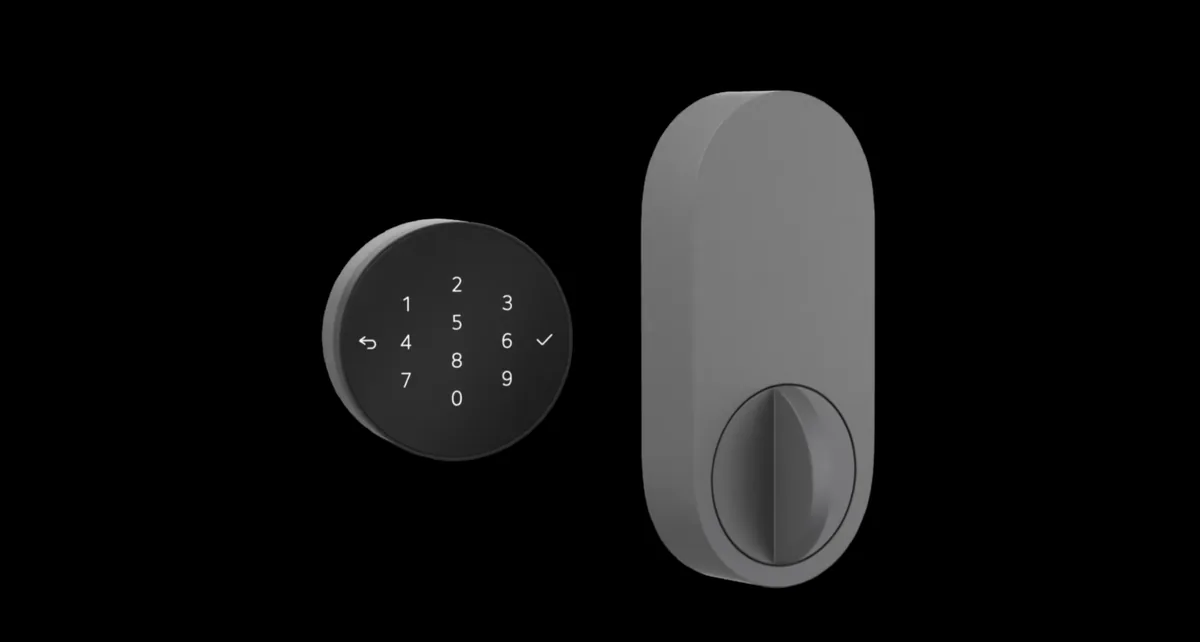
The deadbolt carries an LG logo rather than Apple branding. Leaked filings show that the LG Smart Deadbolt Lock incorporates a rotating circular keypad, a swivel pin to prevent wall dings, and brackets measuring 2.375 inches (60.3mm) and 2.75 inches (69.9mm), alongside auto-unlocking, tap-to-unlock, master codes, and two mechanical backup keys. Built-in audio alerts notify residents if a door remains unlatched, while emergency power terminals provide battery fail-safes during lockouts [5].
Leaked interface elements also point to accessories from Schneider Electric, notably the Schneider Home Smart Thermostat and dedicated climate monitors that support proximity settings in iOS code. The rounded thermostat design features a far-sight display showing indoor humidity and temperature offset adjustments, echoing the familiar profile of Google Nest Learning Thermostat hardware. Meanwhile, an LG temperature sensor features a circular white housing with a magnetic backing and an adhesive metal plate, giving homeowners a simple way to mount battery-powered sensors on metal or drywall [3].
How Apple Top Stories Connect to Wider Releases
Laptops follow later in the month. While the October 13 announcements target living rooms, earlier reporting tracked how Apple readies touchscreen MacBook Pro hardware for October 27, where Bloomberg’s Mark Gurman expects a significantly lighter chassis with an OLED display and touch gestures already appearing in macOS 27.2 beta code [2].
The smart home push also arrives alongside mobile developments, following news that Apple opens early setup for iPhone Duo pre-orders ahead of store launches. Meanwhile, Apple addressed a cellular connectivity bug on iPhone 18 Pro Max units sold on AT&T, where devices lost network access and required hardware replacements. AT&T urged customers to install iOS 27.0.1, an update released September 28 to protect unaffected handsets while engineers examined why models with Qualcomm modems encountered trouble that Apple’s C2 modem avoided [2].
Software security also saw revisions before the weekend. Apple introduced stricter controls for Full Disk Access on macOS to limit risks from background AI agents like Meta’s Muse and OpenAI’s Dots, while MacRumors managing editor Juli Clover documented that keeping an iPhone 17 Pro Max capped at an 80 percent charge limit preserved 97 percent battery capacity across 277 cycles over 12 months. Those varied developments illustrate how Apple balances platform security and hardware longevity, ensuring that Apple top stories span both portable computers and connected living spaces [2].
- ONLINE NEWS AppleInsider Staff. (2026, October 8). What to expect from Apple’s October 13 ‘Welcome home’ releases. AppleInsider. [Article Link]
- ONLINE NEWS MacRumors Staff. (2026, October 10). Top stories: Apple’s ‘Welcome Home’ launch on October 13 and more. MacRumors. [Article Link]
- ONLINE NEWS Campbell, I. C. (2026, October 9). What to expect at Apple’s ‘Welcome home’ event next week. Engadget. [Article Link]
- ONLINE NEWS Prospero, M. (2026, October 8). Apple announces ‘Welcome Home’ event for Oct. 13 — HomePad and all the new products to expect. Tom’s Guide. [Article Link]
- ONLINE NEWS Younker, S. (2026, October 9). 10 Apple products we expect at the ‘Welcome Home’ event on Oct. 13 — HomePad, Apple TV 4K and much more. Tom’s Guide. [Article Link]


