




Internal operating system code from Apple has unexpectedly exposed an entire portfolio of unannounced hardware scheduled for release this autumn. Uncovered by MacRumors contributor Aaron Perris, these new Apple hardware leaks reveal official product assets and technical configurations spanning tablets, streaming hardware, and compact smart speakers [4]. Rather than revealing a single isolated accessory, the codebase details four distinct devices designed to expand Apple Intelligence capabilities across living rooms and desktops. The discovery establishes that updated silicon, fresh chassis colors, and expanded memory architectures are already prepared for public release [1].
Apple Hardware Leaks Surface in Operating System Code
Software repositories maintained by Apple frequently conceal references to upcoming hardware iterations months before public marketing campaigns begin. Digging through recent platform firmware, contributor Aaron Perris identified unreleased product assets that confirm four separate Apple hardware leaks [4]. The leaked files outline a revised iPad mini 8, a twelfth-generation iPad, a second-generation HomePod mini, and an overhauled Apple TV 4K set-top box [1]. These discoveries land shortly after the September unveiling of the iPhone 18 Pro and the foldable iPhone Duo, indicating that Cupertino intends to execute an aggressive autumn release schedule before the close of 2026 [2].
While historical leaks often stem from overseas supply chains or manufacturing floor schematics, these assets originated directly from within Apple’s operating system environment. Reporting across outlets like 9to5Mac and MacRumors confirms that Perris pulled authentic graphical representations of the products, providing the clearest preview yet of devices approaching factory distribution [3]. Scott Younker, West Coast Reporter at Tom’s Guide, observed that discovering official graphic assets in active software builds strongly indicates that commercial availability is imminent rather than months away [1]. This technical discovery clarifies the scope of Apple’s late-year launch window, confirming that entry-level and compact lines will receive substantial silicon advancements across internal hardware roadmaps [4].
October historically serves as Apple’s designated launch window. Perris confirmed that these assets belong to active production branches [4].
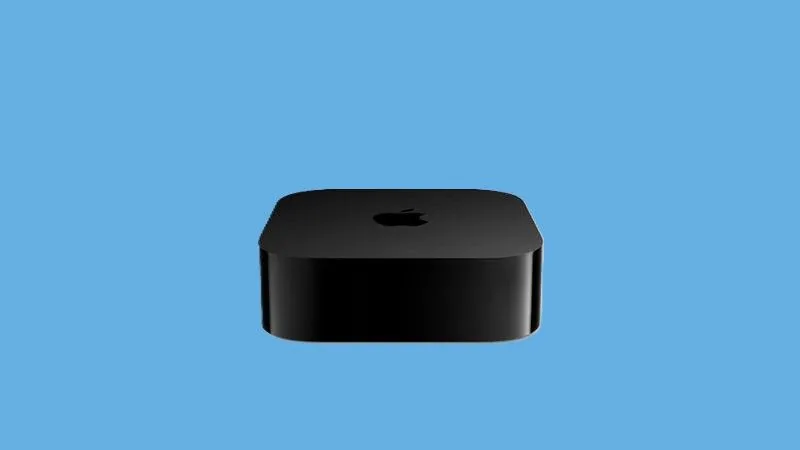
Apple TV 4K Gains Silicon and Memory Upgrades
The streaming set-top box represents one of Apple’s longest-standing unrefreshed products, having remained untouched since late 2022. Asset labels extracted from the system code during these Apple hardware leaks explicitly identify the upcoming device as the Apple TV 4K (4th generation), ending four years of hardware stagnation [1]. Outwardly, the compact black chassis mirrors the third-generation enclosure almost identically. The casing preserves its minimalist form factor [3].
Beneath the familiar shell, the fourth-generation player receives extensive architecture enhancements designed to handle modern workloads. Analysis of device model identifiers by MacRumors contributor Aaron Perris suggests that Apple plans to deploy an A19 or A19 Pro processor, replacing the aging A15 Bionic chip found in the previous model. That processor transition boosts system memory dramatically, lifting RAM from 4GB up to 8GB or 12GB (up from 4GB in the current 2022 model with the A15 Bionic chip) [4]. Expanded memory remains an indispensable baseline for executing Apple Intelligence models and interactive Siri AI features on domestic television displays [1].
Wireless connectivity also undergoes a fundamental overhaul through Apple’s proprietary silicon initiatives. The hardware incorporates Apple’s custom-designed N1 chip, an integrated component responsible for handling Wi-Fi 7 and Bluetooth protocols without relying on third-party silicon [1]. Mark Gurman at Bloomberg previously pointed to this in-house wireless controller as a cornerstone of Apple’s home ecosystem roadmap [2]. The physical Remote receives updates [1]. These additions position the living room unit as a capable hub for streaming and Apple Arcade gaming [4].

Apple Code Leaks Detail iPad Mini 8 Redesign
Compact tablet enthusiasts have waited two years for an update to Apple’s smallest slate, which last saw revisions when the seventh-generation model arrived with the A17 Pro. The newly discovered Apple code leaks confirm that the upcoming iPad mini 8 skips intermediate mobile chips to adopt the flagship A20 Pro processor [4]. Apple recently deployed this same silicon across the iPhone 18 Pro, Pro Max, and foldable iPhone Duo [2]. Integrating the A20 Pro transforms the 8.3-inch tablet into an exceptionally capable portable computing platform [1].
Physical chassis alterations accompany the processor jump to address longstanding user feedback regarding camera placement. Front-panel graphics recovered from Apple’s code reveal that the front-facing FaceTime camera has migrated to the horizontal landscape bezel, aligning the mini tablet with modern iPad Pro conventions. A distinct groove along the top edge of the bezel indicates a redesigned speaker assembly (similar to recent iPhone revisions). Mark Gurman reported that Apple explored a vibration-based speaker setup to enhance liquid ingress protection across the aluminum casing [2]. Such mechanical adjustments modernise video calling [4].
Intriguingly, the firmware references uncovered by MacRumors do not explicitly document the rumored OLED panel that industry supply-chain observers anticipated for October [1]. The absence of display configuration tags in early code branches does not preclude a tandem OLED launch, as Gurman noted that an OLED screen remains under active development [4]. Whether OLED arrives immediately or during a subsequent production phase, the processing architecture ensures complete compatibility with Apple Intelligence workflows [1].

Entry-Level iPad 12 Prepares for Siri AI
Technical specifications surfaced in recent Apple hardware leaks indicate that the upcoming iPad 12 will leap multiple silicon generations by adopting the A19 processor paired with 8GB of unified RAM. The current eleventh-generation baseline iPad operates with hardware limits that preclude local execution of Apple Intelligence and on-device Siri AI routines. Apple’s entry-level tablet drives massive volume in educational and consumer sectors. This hardware upgrade eliminates that division entirely [1].
Crucially, the leaked technical specifications reveal that Apple plans to deploy its proprietary modem and wireless components inside the entry-level tablet. The iPad 12 includes Apple’s custom-built C1X cellular modem paired with the in-house N1 wireless connectivity chip. These additions underscore Apple’s aggressive long-term strategy to replace external supplier components with proprietary silicon designs [1]. Following announcements during the Apple Event livestream earlier this month, bringing uniform AI architecture to the most affordable iPad establishes an ecosystem-wide standard for generative features [2].
Retaining accessible price tiers while offering 8GB of RAM and Apple Intelligence could substantially shift budget tablet competition heading into holiday shopping cycles. Both student workflows and enterprise deployments will gain responsive on-device processing without requiring pricier iPad Air or iPad Pro hardware [1]. Apple intends to establish a shared foundation across its entire tablet family [4].

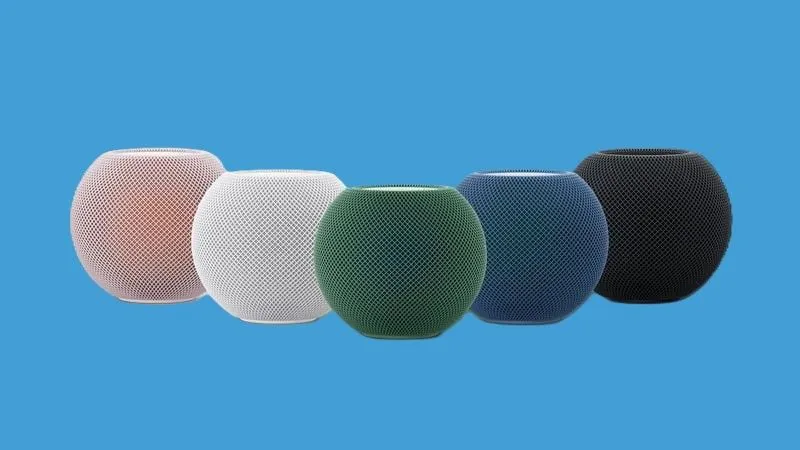
HomePod Mini 2 Colors Refresh Apple Smart Home
Smart home audio hardware rounds out the leaked quartet with the first substantial aesthetic and internal revision for Apple’s spherical speaker since November 2020. Image files discovered by Perris demonstrate that the HomePod mini 2 will launch in five distinct finishes: white, black, green, blue, and a pinkish hue [1]. Unlike the vivid yellow, orange, and electric blue of the previous HomePod mini generation, these new pastel shades offer subdued tones tailored for modern interior decor (joining white and black) [2]. Three finishes are entirely new [3].
Beyond new colorways, the compact smart speaker gains architectural improvements intended to expand home automation capabilities. The HomePod mini 2 incorporates upgraded acoustic drivers for clearer sound reproduction with an updated processor engineered to interface with Siri AI [1]. While previous smart home gadgets served primarily as playback endpoints, Bloomberg’s Mark Gurman reported that Apple views updated audio hardware as critical nodes for its conversational intelligence models [4]. Siri interactions will process contextual requests more reliably across domestic spaces [1].
These audio and tablet updates align with broader ecosystem expansions expected before year’s end, including a dedicated home display hub, updated 14-inch MacBook Pro models, and M6 iMac refreshes. Apple also updated paid iCloud+ subscriptions across more than 100 countries, bundling Apple TV and Apple Arcade into the 50GB tier at no additional cost for family groups [4]. Following these extensive Apple hardware leaks, consumers can anticipate a coordinated October rollout that unifies mobile silicon, smart home audio, and personal artificial intelligence across a cohesive product catalog [1].
- ONLINE NEWS Younker, S. (2026, September 25). New OLED iPad mini, HomePod mini 2 and other products just leaked in Apple’s own code — here’s what’s coming. Tom’s Guide. [Article Link]
- ONLINE NEWS Liszewski, A. (2026, September 25). Leaks reveal a new Apple HomePod mini, iPad mini, and Apple TV 4K. The Verge. [Article Link]
- ONLINE NEWS Christoffel, R. (2026, September 25). Leaked images reveal new Apple TV 4K, HomePod mini. 9to5Mac. [Article Link]
- ONLINE NEWS Rossignol, J. (2026, September 25). iPad Mini With A20 Pro, New HomePod Mini Colors, and New Apple TV 4K All Just Leaked. MacRumors. [Article Link]


