





Ultra-wideband is a short-range radio technology that sends brief pulses over broad radio spectrum to measure distance down to centimeters [18]. Rather than broadcasting steady carrier waves over a narrow band, this system spreads very low energy signals over gigahertz of bandwidth [14]. An ultra-wideband device calculates distance by tracking the flight time of radio waves travelling at the speed of light [9]. Apple, Samsung, and Google now use ultra-wideband pulses to find lost gear, unlock cars, and share files with fine spatial awareness [4].
- How Carrierless Pulses Work
- How Time of Flight Measures Distance
- High-Rate and Low-Rate Pulse Standards
- Why UWB Resists Wireless Relay Attacks
- Ultra-Wideband Tracking in Mobile Phones
- Automotive Digital Keys and Industrial Sensors
- Regional Ultra-Wideband Regulatory Limits
- Everyday Battery Consumption in Mobile Devices
How Carrierless Pulses Work
Standard radios broadcast on a narrow frequency band to avoid overlapping with neighboring channels [14]. Transmitters shape a steady sine wave carrier using shifts in power or phase [18]. Ultra-wideband works without a continuous carrier wave. Why does that matter? It spreads radio energy so thin that standard antennas treat the pulses as harmless noise [14].
On February 14, 2002, the Federal Communications Commission (FCC) issued a Report and Order ruling that an ultra-wideband transmission must occupy a fractional bandwidth of at least 20 percent or at least 500 megahertz [18]. The FCC opened spectrum from 3.1 to 10.6 GHz for unlicensed use, capping power at -41.3 dBm per megahertz under Part 15 rules. Emitting just 50 to 200 microwatts, CMOS circuits broadcast freely without power amplifiers [14].
CMOS logic gates generate sharp voltage steps shaped into Gaussian pulses called monocycles. Each pulse lasts about 200 picoseconds. Author Louis Frenzel wrote in Electronic Design that Fourier physics dictates this spread, where a 200-picosecond pulse yields a center frequency near 5 GHz and a 3-dB bandwidth reaching 5.8 GHz. SkyCross chief executive Alan Haase and chief technology officer Frank Caimi developed meanderline antennas maintaining a 2:1 standing wave ratio across the entire band. Hardware pioneers like Time Domain Corp built early correlation receivers to recover these pulses from noise [14].

How Time of Flight Measures Distance
Tile beacons and standard Bluetooth accessories estimate distance by reading received signal strength indicators [4]. Walls bounce radio waves [18]. Human bodies and metal partitions absorb signals, causing Bluetooth tracking errors of several meters [4]. In contrast, ultra-wideband calculates physical separation by timing the true time of flight of radio pulses travelling through space at the speed of light, or roughly thirty centimeters per nanosecond [9]. Because these fleeting nanosecond signals penetrate drywall and solid doors with negligible pulse dispersion, handheld devices can easily pinpoint objects across indoor rooms where satellite GPS cannot reach [4].
To measure distance without atomic clocks, radios use two-way ranging [18]. A handset queries a tag, the tag answers after an agreed dwell time, and the initiating radio subtracts that processing delay to calculate true transit time [9]. Halving that flight duration produces range measurements accurate within five to ten centimeters. Decawave DW1000 chips demonstrated this precision [6].
Short pulses arrive before multipath reflections bounce back to the antenna [14]. By checking carrier phase shifts across dual antennas, radios calculate the angle of arrival (AoA) within three degrees [15]. Mickael Viot of Decawave said that with calibrated antennas, ultra-wideband positioning accuracy reaches five millimeters in controlled lab environments [9]. Systems integrate range and bearing into a single coordinate point [15].
High-Rate and Low-Rate Pulse Standards
The IEEE 802.15.4z standard split radio design into High Rate Pulse (HRP) and Low Rate Pulse (LRP) modes. Apple chose HRP, which streams low-amplitude pulses that demand digital filtering by fast phone processors. LRP uses fewer pulses with higher peak amplitude. Receiver silicon stays simple and cheap [16].
Boris Danev, chief executive of Swiss fabless firm 3db Access, said low-rate pulses cut silicon area and power draw. Danev said, “Our die in a 65nm process occupies just 3.8 square millimeters”. Amit Bavisi at Renesas Electronics partnered with 3db Access to embed this LRP silicon into automotive chips [16].
Cross-brand compatibility remains an active hurdle across the industry [2]. In an unreviewed preprint study that has not yet undergone peer review, Dieter Coppens at Ghent University tested compatibility across IEEE 802.15.4, the FiRa Consortium, and Apple hardware. Coppens found that physical radio chips link smoothly when channels match, though medium access control layers often stay proprietary [1]. To unify software, NXP, Samsung, and chipmakers founded the FiRa Consortium in August 2019. FiRa now certifies hardware across one hundred members, including Xiaomi and Oppo [12].
Why UWB Resists Wireless Relay Attacks
Keyless car locks have long suffered from a sneaky theft method called relay attacks [4]. In a common relay theft, a thief stands near a house wall with a radio booster to pick up the faint signal from a car key resting in the hallway. The booster beams that code to a second thief standing right next to the car door, fooling the car computer into thinking the owner has stepped outside. Because standard key fobs rely solely on signal strength, the loud amplified signal tricks car sensors into unlocking the doors immediately. Ultra-wideband stops this trick because radio waves cannot travel faster than the speed of light [9].
When an automobile interrogates an ultra-wideband key fob using nanosecond timestamps, any wireless relay box placed between the devices introduces measurable electronic delay. A processing pause of just ten nanoseconds adds three meters of synthetic distance to the calculated flight path. The vehicle controller detects that the true transit time places the key far beyond physical proximity, keeping the door locks securely engaged. Signal amplification cannot compress transit time [9].
Global carmakers founded the Car Connectivity Consortium (CCC) to deploy secure digital keys, uniting manufacturers like BMW, Volkswagen, and DaimlerChrysler behind unified cryptographic specifications [9]. NXP Semiconductors built the SR100T chipset. Rafael Sotomayor, senior vice president of mobile at NXP, said the module merges ultra-wideband fine ranging with Near Field Communications and a hardware Secure Element to protect vehicle access while adding spatial awareness to consumer mobile wallets [15]. Key fob suppliers Hella and Marquardt licensed 3db Access IP for Volkswagen Golf Mk 8 and ID.3 cars [16].


Ultra-Wideband Tracking in Mobile Phones
In September 2019, Apple introduced ultra-wideband to consumers by embedding its custom U1 chip across the iPhone 11 family, utilizing carrier channels centered at 6.24 GHz and 8.2368 GHz as verified by TechInsights teardowns. Directional AirDrop launched first. Apple called it “GPS at the scale of your living room” [4]. Apple Watch Series 6 included the U1 chip, but MacRumors and iFixit confirmed that the budget Apple Watch SE omitted it [5]. Apple also embedded the silicon into smart speakers, as documented in earlier HomePod mini hardware releases.
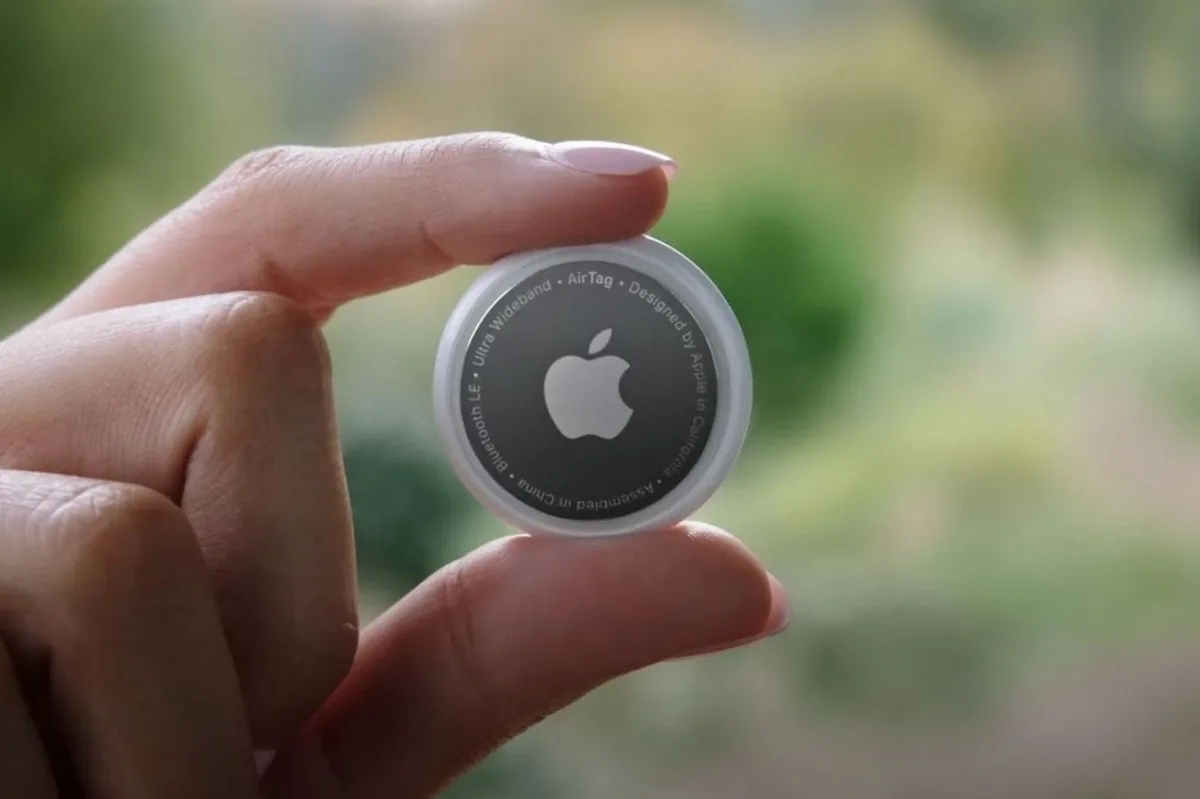
In April 2021, Apple unveiled the AirTag tracking beacon for $29 individually or $99 for a four-pack, featuring an integrated U1 radio and user-replaceable CR2032 standard battery inside an IP67 water-resistant housing. The accessory enables Precision Finding by fusing ultra-wideband pulse measurements with ARKit camera graphics, accelerometers, and gyroscopes to guide users straight to misplaced items with haptic feedback. Apple offered luxury Bag Charm accessories with Hermès, while Samsung countered with the Galaxy Note 20 Ultra, Galaxy S21+, and Galaxy SmartTag+ [11]. Xiaomi added matching radios to the MIX 4, and analyst Ming-Chi Kuo said that ultra-wideband hardware would soon anchor consumer device ecosystems [5].
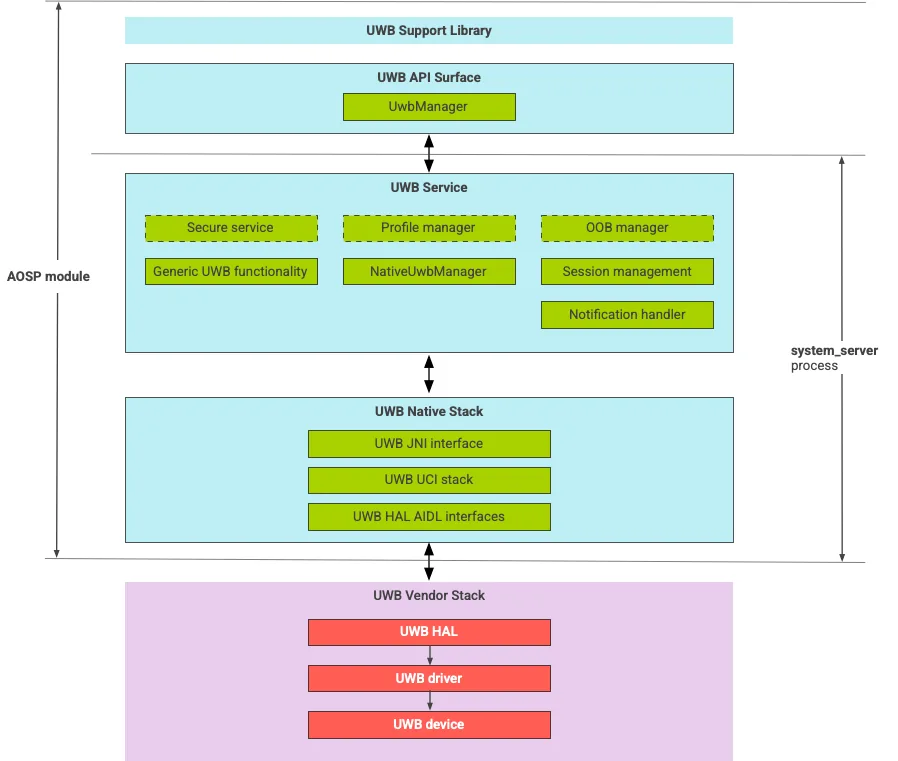
Google added full ultra-wideband code to Android 13 via the com.google.android.uwb mainline module in the Android Open Source Project. The code includes a Rust interface and Jetpack tools for outside app makers [13]. These auxiliary short-range transceivers operate in harmony with complex mobile silicon, working near dense mobile application processors without radio clash.
Automotive Digital Keys and Industrial Sensors
Long before smartphones used pulses to find keys, defense agencies investigated carrierless emissions for high-resolution imaging [14]. During the 1990s, the U.S. Army Research Laboratory (ARL) built experimental railSAR, boomSAR, SIRE, and SAFIRE platforms using synthetic aperture radar to peer through foliage and soil. These radar pulses detected buried landmines and hidden hazards by analyzing time-domain wave reflections [18]. Municipal firefighters later used handheld radar units to detect survivors trapped under concrete rubble [14].
Medical teams use pulse radar to monitor patient vital signs without sticky electrodes. Because nanosecond radio pulses pass through clothing and reflect off moving anatomical boundaries, sensitive transceivers can measure chest displacement to track patient heartbeat and respiration patterns without physical contact. Autonomous mobile robots use angle-of-arrival pulses to follow factory workers [18]. Papers in Wireless Communications & Signal Processing modeled multi-user factory telemetry [3].
Engineers also tested ultra-wideband as a wireless video cable. In February 2008, octoScope president Fanny Mlinarsky verified that the Radiospire AirHook chipset achieved 1.6 Gbps airlink throughput over fifteen feet, streaming uncompressed 1080p video while resisting 2.4 GHz Wi-Fi interference. Radiospire utilized 1.7 GHz of bandwidth between 3.1 and 4.8 GHz to stream uncompressed 1080p high-definition video through furniture obstructions without visible image degradation. While the WiMedia Alliance stalled on 480 Mbps wireless USB gear, Radiospire proved that wideband pulses could stream dense media without video compression [8].
Regional Ultra-Wideband Regulatory Limits
Because ultra-wideband signals span several gigahertz of spectrum, governments set power caps to stop interference with existing radio bands [14]. In the United States, the FCC set a power roof of -41.3 dBm/MHz under Part 15.209 rules to protect licensed radio users [18]. Frequencies under 3.1 GHz are off-limits to unlicensed gear to shield GPS satellites at 1.2 GHz and 1.6 GHz, along with PCS cellular networks at 1.9 GHz [14]. European regulators and the United Kingdom later approved matching spectrum rules [18]. Low emissions keep pulses below ambient background noise [14].
Global spectrum approval took years to negotiate. The ITU-R issued rules in November 2005, and British regulator Ofcom followed on August 9, 2007 [18]. Apple Support states that ultra-wideband is shut off in Armenia, Azerbaijan, Belarus, Kazakhstan, Kyrgyzstan, Russia, Tajikistan, Turkmenistan, Ukraine, and Uzbekistan [17].

In Japan, local telecommunication rules restrict specific pulse frequencies, preventing customers from using expanded Precision Finding range, the Find People tool, and directional guidance on the Apple Watch. Meanwhile, regulatory authorities in Indonesia and Nepal only permit second-generation hardware revisions such as iPhone 17 models, iPhone Air, and updated AirTags. Phone manufacturers manage these geographic boundaries across international carriers, a logistical discipline visible throughout iPhone hardware replacement programs. Firmware disables transceivers automatically upon entering restricted regions [17].
Everyday Battery Consumption in Mobile Devices
Does ultra-wideband need to be on during daily phone use? Smartphone owners do not need to turn the setting off because the transceiver rests in a low-power sleep state until a location request starts [9]. In contrast to cellular modems, pulse chips wake only on active demand [15]. When a handset rests inside a pocket or purse, its ultra-wideband chip consumes practically zero battery power [9].
When an active ranging session starts, power drain stays tiny because individual pulses last under a nanosecond. Emitting at microwatt levels, the active duty cycle is less than one percent [14]. Mickael Viot of Decawave said that in tag beacon mode, an ultra-wideband chip uses one-third the power of Bluetooth Low Energy [9]. For high-speed wireless data links, Montreal-based fabless developer Spark Microsystems demonstrated that short-pulse radios consume forty times less battery power than Bluetooth while sustaining a one-megabit data transfer rate [7].
Fares Mubarak, chief executive of Spark Microsystems, said energy efficiency makes pulse radios ideal for gaming mice and virtual reality controllers. Mubarak said, “People are not going to switch for something that’s only 20 percent better”. Spark co-founder Frederic Nabki noted that chips like the SR1010 and SR1020 work reliably from 3.1 GHz to 9.5 GHz even with busy home Wi-Fi traffic [7]. Because the radio wakes for only a few microseconds to swap timestamps before returning to deep sleep, leaving ultra-wideband on has no measurable impact on daily phone battery life [9]. Fine location tracking delivers peace of mind without draining the phone [4].
- PREPRINT Coppens, D., Shahid, A., Lemey, S., Marshall, B. V. H. C., & Poorter, E. D. (2022). An Overview of Ultra-WideBand (UWB) Standards and Organizations (IEEE 802.15.4, FiRa, Apple): Interoperability Aspects and Future Research Directions. arXiv. [Article Link]
- ACADEMIC JOURNAL Coppens, D., Shahid, A., Lemey, S., Herbruggen, B. V., Marshall, C., & Poorter, E. D. (2022). An Overview of UWB Standards and Organizations (IEEE 802.15.4, FiRa, Apple): Interoperability Aspects and Future Research Directions. IEEE Access, 10. [Article Link]
- WEBSITE Wcsp Members. (2003, January 1). Wireless Communications & Signal Processing. University of South Florida. [Article Link]
- ONLINE NEWS Barrett, B. (2019, September 12). The Biggest iPhone News Is a Tiny New Chip Inside It. WIRED. [Article Link]
- ONLINE NEWS Rossignol, J. (2020, September 15). Apple Watch Series 6 Features U1 Chip for Ultra Wideband. MacRumors. [Article Link]
- ONLINE NEWS Zafar, R. (2019, November 3). iPhone 11’s U1 Chip Uses 6Hz & 8GHz Frequencies In UWB Spectrum. Wccftech. [Article Link]
- ONLINE NEWS Shankland, S. (2020, March 19). Startup promises wireless gaming devices without Bluetooth lag. CNET. [Article Link]
- ONLINE NEWS Mlinarsky, F. (2008, February 19). Wireless HD video: Raising the UWB throughput bar (again). EE Times. [Article Link]
- ONLINE NEWS Snell, J. (2019, September 13). The U1 chip in the iPhone 11 is the beginning of an Ultra Wideband revolution. Six Colors. [Article Link]
- ONLINE NEWS Betters Picaro, E. (2019, September 11). Apple U1 chip explained: What is it and what can it do? Pocket-lint. [Article Link]
- ONLINE NEWS Ivan. (2021, April 20). Apple AirTag arrives for $29, uses Ultra Wideband and does Emoji. GSMArena.com. [Article Link]
- WEBSITE FiRa Consortium. (2026). FiRa Consortium: Advancing Ultra-Wideband (UWB) Technology. firaconsortium.org. [Article Link]
- WEBSITE Android Open Source Project. (2026, October 9). Ultra Wideband | Android OS core topics. Android Open Source Project. [Article Link]
- ONLINE NEWS Frenzel, L. E. (2002, November 11). Ultrawideband Wireless: Not-So-New Technology Comes Into Its Own. Electronic Design. [Article Link]
- ONLINE NEWS Clark, M. (2019, September 19). NXP unveils NFC, UWB and secure element chipset. NFCW.com. [Article Link]
- ONLINE NEWS Dahad, N. (2020, February 20). IoT devices to gain UWB connectivity. Embedded. [Article Link]
- WEBSITE Apple Support. (2026, March 27). Learn about Ultra Wideband availability. Apple Support. [Article Link]
- WEBSITE Wikipedia contributors. (n.d.). Ultra-wideband. Wikipedia. [Article Link]


