




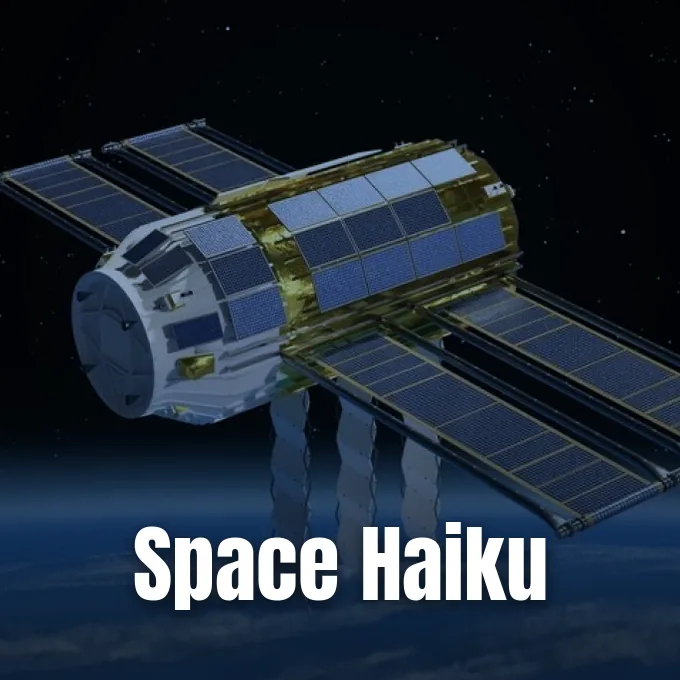
Google confirmed on October 30, 2026, that an onboard chip on its test craft produced an AI answer from low Earth orbit. The vehicle, launched under the Project Suncatcher research program, took a ground prompt during an orbital pass and ran the open Gemma 4 model to write verse about space. Ground controllers picked up the three lines as the Google AI satellite flew past Svalbard, Norway [1].
What the Google AI Satellite Transmitted
Ground control sent a prompt asking the chip to write about space from its own point of view. The prompt asked for verse. The model returned three lines: “Blue marble below, Data streams in silent grace, Starlight feeds my core.” Google chief Sundar Pichai posted on X that ground teams sent the command up, booted the TPU, ran the text prompt, and downloaded the full poem back to Earth [4].
Travis Beals, who leads the Paradigms of Intelligence team at Google, said the test proved that the payload worked during a normal pass. Engineers tracked the Google AI satellite as it moved through polar orbit above the Arctic station. The pass took place near Svalbard, Norway, a group of islands close to the North Pole where ground dishes often link with polar craft. After downlinking the poem, the team tried out space limericks and sent diagnostic commands to check on payload hardware [2].
Early summaries on social media said the flight ran Gemini, but Google stated that the chip ran Gemma 4, an open model made by Google DeepMind. The choice matters because Google built Gemma for broad use outside its own walls, so the test checks if standard chips survive space rather than measuring model smarts against ChatGPT or Claude. PerEXP Teamworks reported on earlier milestones during the Google Project Suncatcher orbital AI response when the craft first phoned home. Aseem Kishore at Online Tech Tips pointed out that Google shared no benchmark scores for Gemma 4 in orbit, treating the run as a pure hardware check [3].

Hardware Limits in Orbit
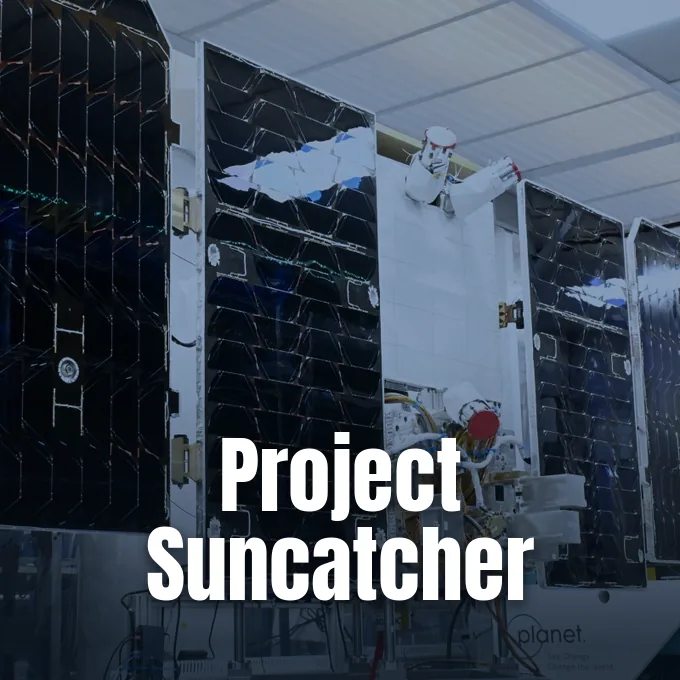
The test craft went up on October 1, 2026, on a SpaceX Falcon 9 rocket flying the Transporter-18 rideshare mission. Planet Labs worked as the mission partner to assemble the craft. It carries Tensor Processing Units, which Google uses across its server centers on Earth [6].
Solar cells supply about 1 kW. In orbit, the lack of air stops heat from moving away through breeze or convection, so chips heat up quickly if they run too long. Engineers kept computing runs down to 15 or 20 minutes at a stretch while answering short prompts. Muskan Singh at The Economic Times reported that heat builds up inside the chassis whenever chips run past those limits [5].
News accounts share different details about the setup, with some reporting four TPUs on the craft while Diego Almada Lopez at Crypto Briefing reported that tests ran on a single TPU. The goal right now isn’t training giant frontier models from scratch, but seeing whether existing chips can answer basic inference prompts without dying. Inference takes much less juice than training, which makes it the only realistic test while solar power and heat venting stay tight [6].

Radiation Checks and Laboratory Tests
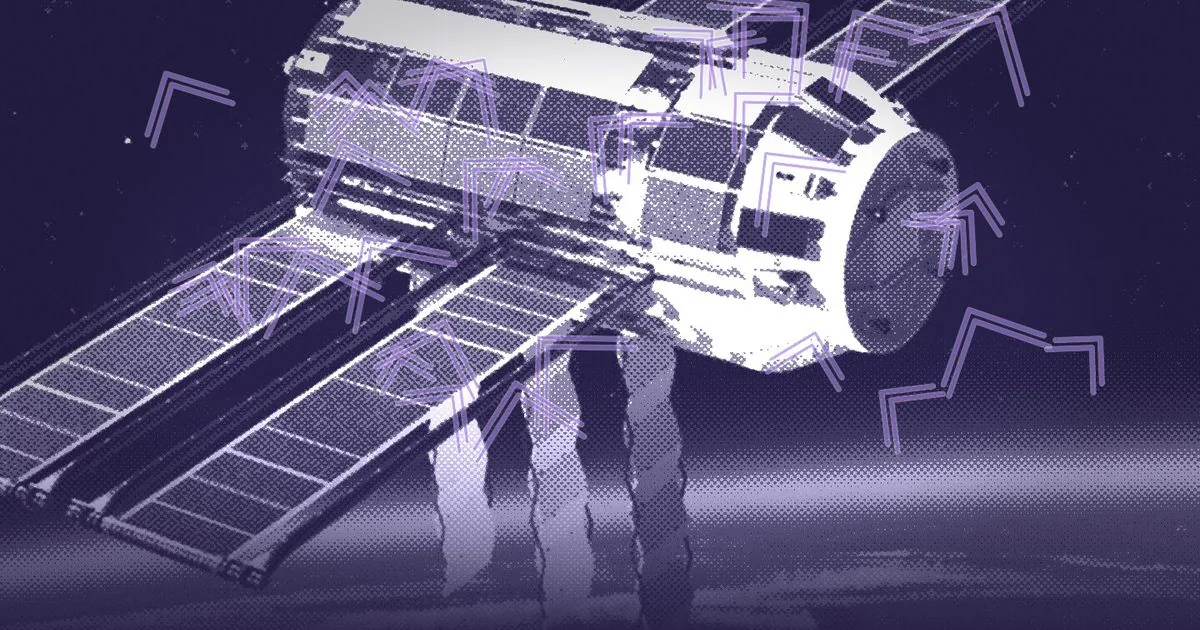
Before sending chips to space, Google tested its Trillium Cloud TPU and AMD host server with a 67 MeV proton beam in a ground lab. Space brings hard physical tests. High-speed particles strike silicon parts and flip bits in memory cells, changing numbers and corrupting model math without warning ground crews. Lab runs showed that high-bandwidth memory took the most harm from proton hits, showing errors after taking a total dose of 2 krad(Si). That level was almost three times higher than Google’s safety baseline of 750 rad(Si), which gave engineers confidence that the hardware could take real cosmic rays during its first weeks in flight and keep running reliably [2].
Engineers saw silent data corruption happen about once every 17 rad while running transformer models. At an expected flight dose of 150 rad(Si) each year, that error rate means about one failure in 3 million runs if the chip does one query every second. Elena Varga at LavX News wrote that Google researchers found this failure rate good enough for inference, but training long jobs would face far bigger troubles [2].
Next tests will check how chips handle big temperature shifts. Low Earth orbit swings from hot direct sun to cold shadow every ninety minutes. Expanding parts can crack solder joints over time [4].
Google AI Satellite Launch Economics
Generating the haiku on Earth through Google Cloud costs next to nothing, but lifting hardware to orbit takes real cash. The poem used 20 tokens. Google Cloud charges 15 cents per million input tokens and 60 cents per million output tokens for Gemma 4 26B, so the poem cost about $0.000012 to make on the ground. But the craft weighs near 500 kg, and rocket seats cost around $7,000 per kg on shared flights [2].
Ground power runs much cheaper. Google estimates that orbital compute could compete with ground facilities if launch prices fall to $200 per kilogram. Spread across the craft’s working life, energy expenses would run between $810 and $7,500 per kW each year. That overlaps with what US operators spend on the ground, where electric bills sit between $570 and $3,000 per kW annually [2].
The main draw is sunlight, since satellites in low orbit can gather up to eight times more solar energy than panels on Earth. Google predicts that SpaceX might get launch prices down to that $200 level by 2035. Until rocket costs plunge that far, running a Google AI satellite is a research bet, not a cheap replacement for data centers on Earth [5].

Constellation Milestones for 2027
Google introduced Project Suncatcher in late 2025 to study solar compute in space. The next major test comes in 2027, when the team plans to send up two interconnected satellites. Vaishali Kapila at Hindustan Times noted that this flight will check how twin craft share data and talk to each other while flying [4].
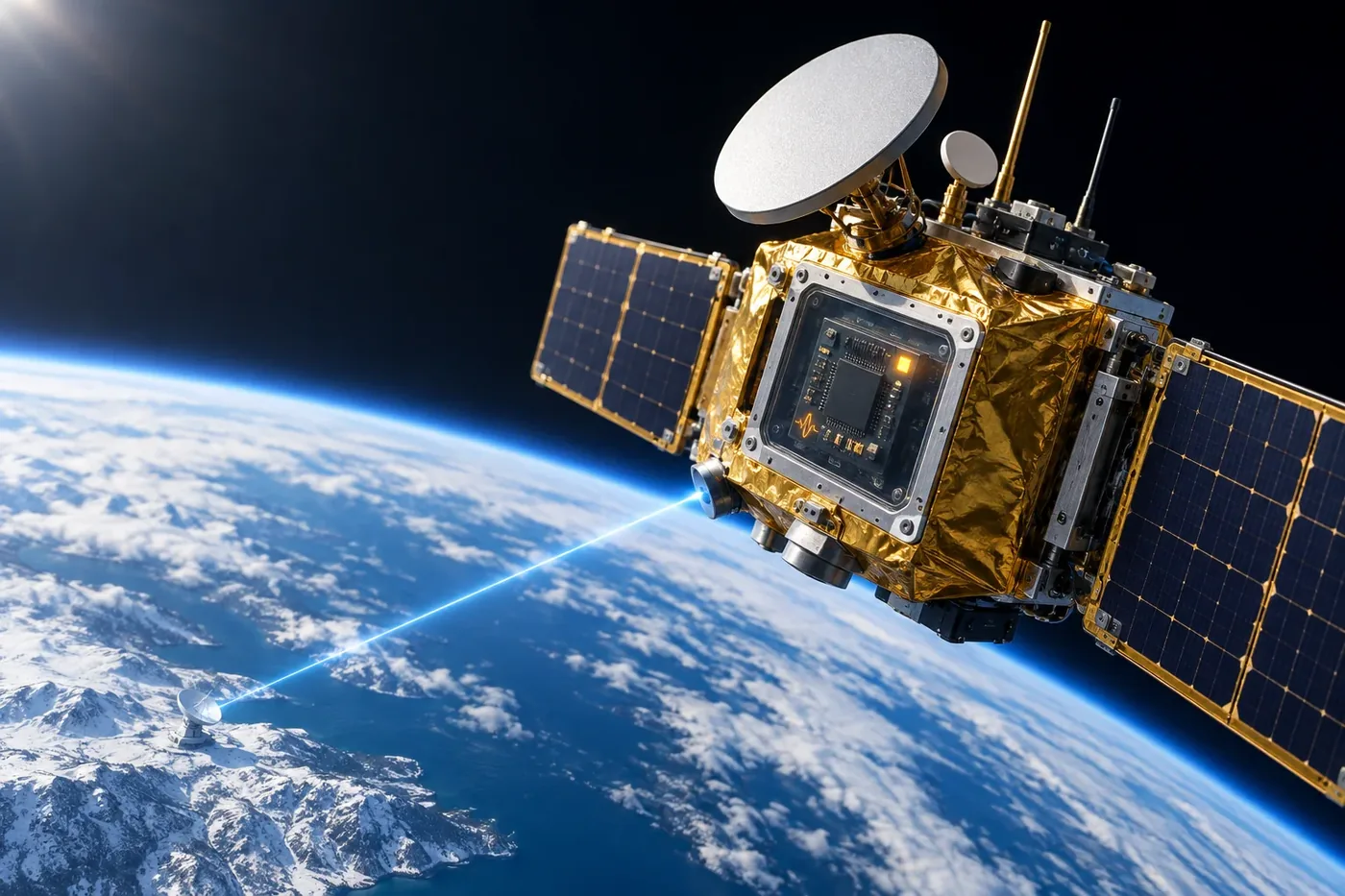
Instead of launching heavy individual servers, Google wants constellations of smaller craft linked by laser beams. Emma Roth at The Verge reported that linking craft together will pave the way toward bigger orbital networks. That setup lets satellites gather steady solar power and share compute jobs between neighbors without sending raw numbers down to ground dishes [1].
Consumer apps stay the same. For phone owners using Android or Gemini web tools, the orbital poem changes nothing in daily software. Google hasn’t rolled out space compute plans or developer tools tied to orbital hardware. The poem proves that a TPU can turn on and run a model in space, but turning that test into an orbital server grid will take years of hard engineering [3].
- ONLINE NEWS Roth, E. (2026, October 30). Google’s satellite AI server transmits its first response to Earth. The Verge. [Article Link]
- ONLINE NEWS Varga, E. (2026, October 31). Google’s orbital AI sends expensive haiku from space. LavX News. [Article Link]
- ONLINE NEWS Kishore, A. (2026, October 31). Google Project Suncatcher satellite sends first AI response from a TPU in orbit. Online Tech Tips. [Article Link]
- ONLINE NEWS Kapila, V. (2026, October 31). Google’s Project Suncatcher satellite sends first AI response from space, writes a haiku. Hindustan Times. [Article Link]
- ONLINE NEWS Singh, M. (2026, October 31). Google’s Space AI just wrote a Haiku from orbit; here’s how it did it. The Economic Times. [Article Link]
- ONLINE NEWS Almada Lopez, D. (2026, October 30). Google’s Suncatcher satellite sends first AI-generated haiku from orbit. Crypto Briefing. [Article Link]


