



The Asahi Linux team released its Linux 7.3 progress report on November 7, 2026, marking a shift toward mainline kernel adoption and broader hardware support for Apple Silicon computers [1]. The new release brings Asahi Linux M3 support to general availability, drops the setup requirement for manual testing flags, and submits major multimedia drivers upstream for review [2]. It also introduces early hypervisor work for M4 and M5 chips, tests direct Windows gaming without virtual machine overhead, and moves the codebase to the GNU General Public License [1].
Asahi Linux M3 Drops Expert Mode
Hardware support for M3 series Mac computers has stepped out of experimental testing into general availability [1]. The team first offered M3 support behind an EXPERT flag in its setup tool [2]. Because early adopters reported almost no critical bugs, developers removed the testing flag to make Asahi Linux M3 installs open to everyone [1]. Installations now run without it. The setup tool configures M3 laptops and desktops with standard defaults, matching the stable experience seen on M1 and M2 hardware [3].
The update activates the display coprocessor (DCP) on M3 hardware to handle screen management [1]. Enabling DCP improves power use, lengthens battery life, and allows laptops to sleep reliably when users close the lid [2]. The driver also maps the desktop display around the camera notch on MacBook screens, converting blank panel space into usable workspace [1]. Beyond kernel patches, the distro ecosystem moved in step with upstream work: Fedora Linux 45 shipped on November 3, 2026, and Fedora Asahi Remix released on the very same day [2]. The prompt release gave users immediate access to fresh software packages [1]. Earlier work on display controllers by Oliver Bestmann had already brought stable 120 Hz refresh rates to MacBook Pro screens using static timestamps on Linux 6.18 kernels [4]. That smoothness now carries over to users running Asahi Linux M3 on laptops [1].

This synchronized release marks the first time that Fedora Asahi Remix landed at the same time as the mainline Fedora schedule [2]. While hardware enablement projects like AMD Gorgon Halo chips receive Linux NPU support on x86 architectures, the Asahi team focuses on custom silicon blocks that Apple never intended for open systems. The upstreaming push also lightens maintenance, letting coders sunset separate repository forks as code merges into core packages [3].
New Upstream Drivers for Core Silicon
Two large hardware drivers joined the Linux kernel mailing list during this development cycle [2]. The macaudio driver provides sound support for Apple Silicon hardware, which required deep modifications across core ALSA sound subsystems to accommodate custom speaker and headset amplifiers designed by Apple [1]. These audio parts differ from common PC hardware, demanding roughly 3,100 lines of driver code and Devicetree additions [2]. The team submitted the full audio set for upstream review, aiming to bring native sound directly into future kernel releases [1].
The second major submission is the AVD video decode driver, which reached the kernel mailing list after spending barely three months in the local repository [1]. Comprising about 13,000 lines of code and Devicetree definitions, AVD marks the fastest turnaround time for any major Apple SoC component handled by the team [2]. Contributor Yureka also posted early Devicetree files for M4 Pro, M4 Max, and M5 processors [1]. Text consoles now boot cleanly. These early configurations establish basic register mappings, laying the groundwork for deeper hardware support as work continues across upcoming chip generations [2]. According to LWN.net reports, the project trimmed its patch set from 1,232 patches in Linux 6.13 down to 858 in Linux 6.18, cutting downstream code from 95,000 lines to 83,000 lines [5].
The team has also shifted to developing drivers directly in upstream trees whenever possible [1]. Patchsets for Texas Instruments USB Power Delivery controllers and SPMI buses were written upstream first, alongside early Thunderbolt support [2]. Apple built its own Thunderbolt hardware using a Cortex-M3 microcontroller running RTKit firmware on each Thunderbolt-enabled USB-C port, breaking Intel controller assumptions [1]. Contributor Sven resolved complex power manager register writes in PMGR to enable USB3, XDomain connections, and Thunderbolt networking between linked machines [2].

Hypervisor Work for M4 and M5
Reverse engineering newer Apple chips requires booting macOS inside custom hypervisor environments [1]. On M4 hardware, developer Sven previously used m1n1 to virtualize macOS releases that enforce the Secure Page Table Monitor (SPTM) [2]. Apple added another layer of security in M5 chips called Exclaves, which run small isolated applications under the Secure Kernel to control sensitive tasks like drawing the camera indicator. This security design strongly resembles Arm TrustZone architecture [1]. Communication between the Secure Kernel, Exclaves, and XNU relies on SPTM through an in-kernel messaging protocol called Tightbeam [2]. If XNU cannot find its running Exclaves, the operating system panics [1].
Because future macOS versions will prevent disabling Exclaves through boot arguments, Sven tested running the isolated Secure Kernel alongside macOS inside a separate guest machine [2]. The test VM setup worked. Developers can now spawn three virtual machines at exception level EL1 under m1n1 [1]. This multi-guest architecture allows contributors to inspect internal hardware behavior across M4 and M5 machines without triggering kernel panics [2].
Capturing register traffic within isolated virtual machines lets contributors map undocumented hardware blocks safely [1]. The team has progressively tackled each chip generation, moving from early M1 bring-up toward current architectures [3]. These hypervisor experiments supply the exact register values needed to write clean drivers for mainline Linux [2].
Asahi Linux M3 Graphics Progress
While general system features on M3 match the stability of M1 and M2 computers, graphics acceleration on Asahi Linux M3 hardware has faced new hurdles [1]. Apple altered its GPU hardware architecture between the M2 and M3 generations, departing from earlier command formats [2]. Reverse engineering the new GPU began under a separate team of coders, who presented their early findings at the XDC conference [1]. Contributors Alyssa Millburn, Anna Maniscalco, and TellowKrinkle announced that their reverse-engineered code in m1n1 can now initialize the M3 graphics processor and draw a basic rendered triangle [2].
Fitting these architectural changes into the open-source Mesa graphics stack will demand steady engineering effort [1]. In earlier cycles, the team upstreamed its graphics userspace API to mainline Linux, which permitted conformant OpenGL 4.6, OpenCL 3.0, and Vulkan 1.3 drivers on M1 and M2 chips. That milestone let Asahi Linux sunset downstream forks for Mesa and Flatpak runtimes. Founder Hector Martin handed project leadership to a collective of seven core developers in early 2025 to keep that momentum going [3]. In LWN.net reports, the downstream GPU driver grew to 21,000 lines of code, dwarfing other subsystem drivers [5]. Bringing the M3 GPU to full acceleration will require rewriting shader compilers and command streamers to accommodate Apple’s revised instruction set [1].

Graphics progress also coincided with improvements to audio processing pipelines [2]. The Triforce microphone beamformer, written in Rust to filter input from MacBook microphone arrays, underwent an algorithmic overhaul [1]. When developers replaced fast Fourier transforms with infinite impulse response filters, compiler autovectorization failed to optimize the new code paths for real-time sound processing [2]. Contributors Linkmauve and Frédéric Bour added manual SIMD instructions for arm64 and amd64 architectures, cutting CPU overhead in half while doubling processing throughput [1].
Windows Games Without Virtual Machines
Running retail Windows games on Apple Silicon has customarily relied on a software stack combining FEX for x86 binary translation and Wine for handling Windows application programming interface calls [1]. Because many PC titles expect a 4 KiB memory page size, developers used muvm to spin up thin virtual machines on top of the 16 KiB Linux kernel [2]. However, muvm imposes roughly a 20% performance penalty on games, slows down disk access, struggles with certain input devices, and prevents software from running directly under native Wayland compositors [1].
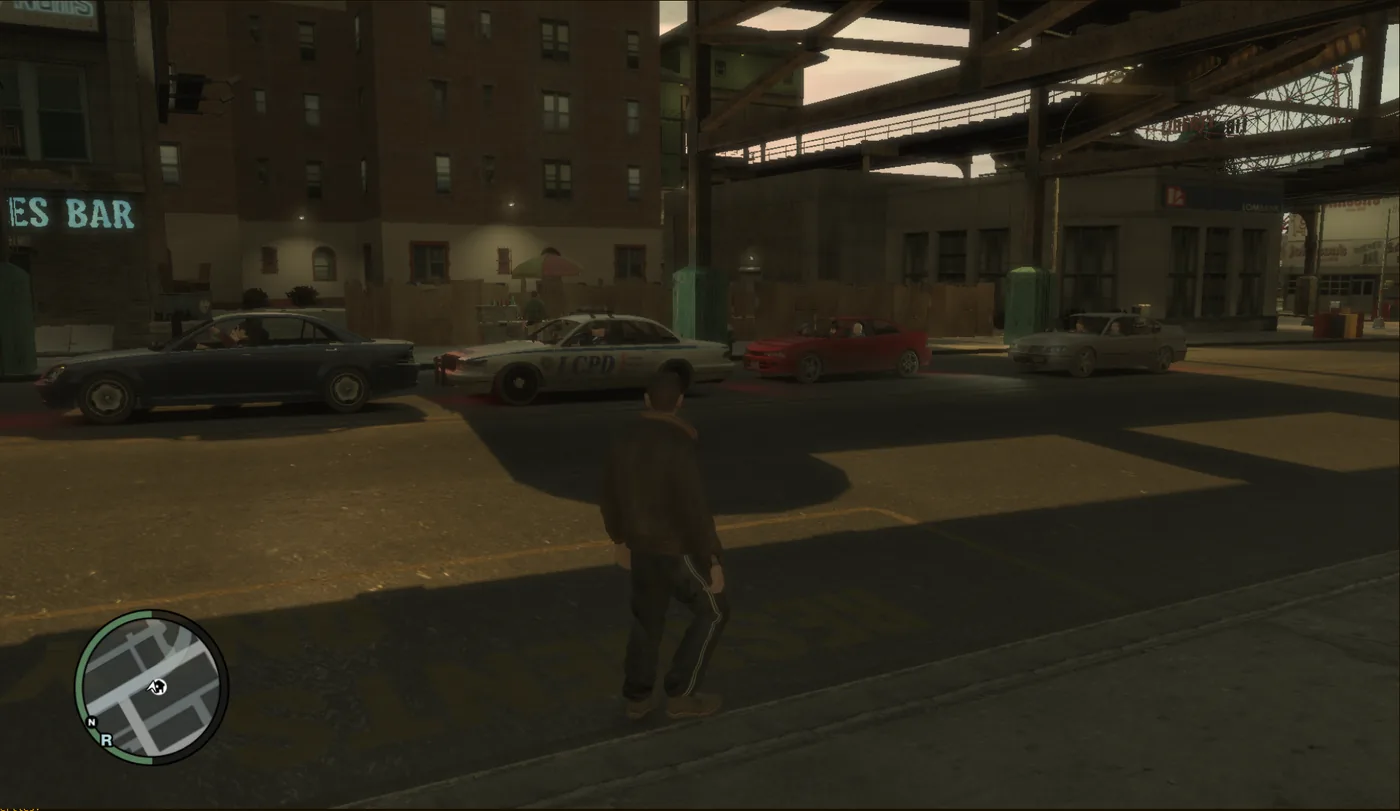
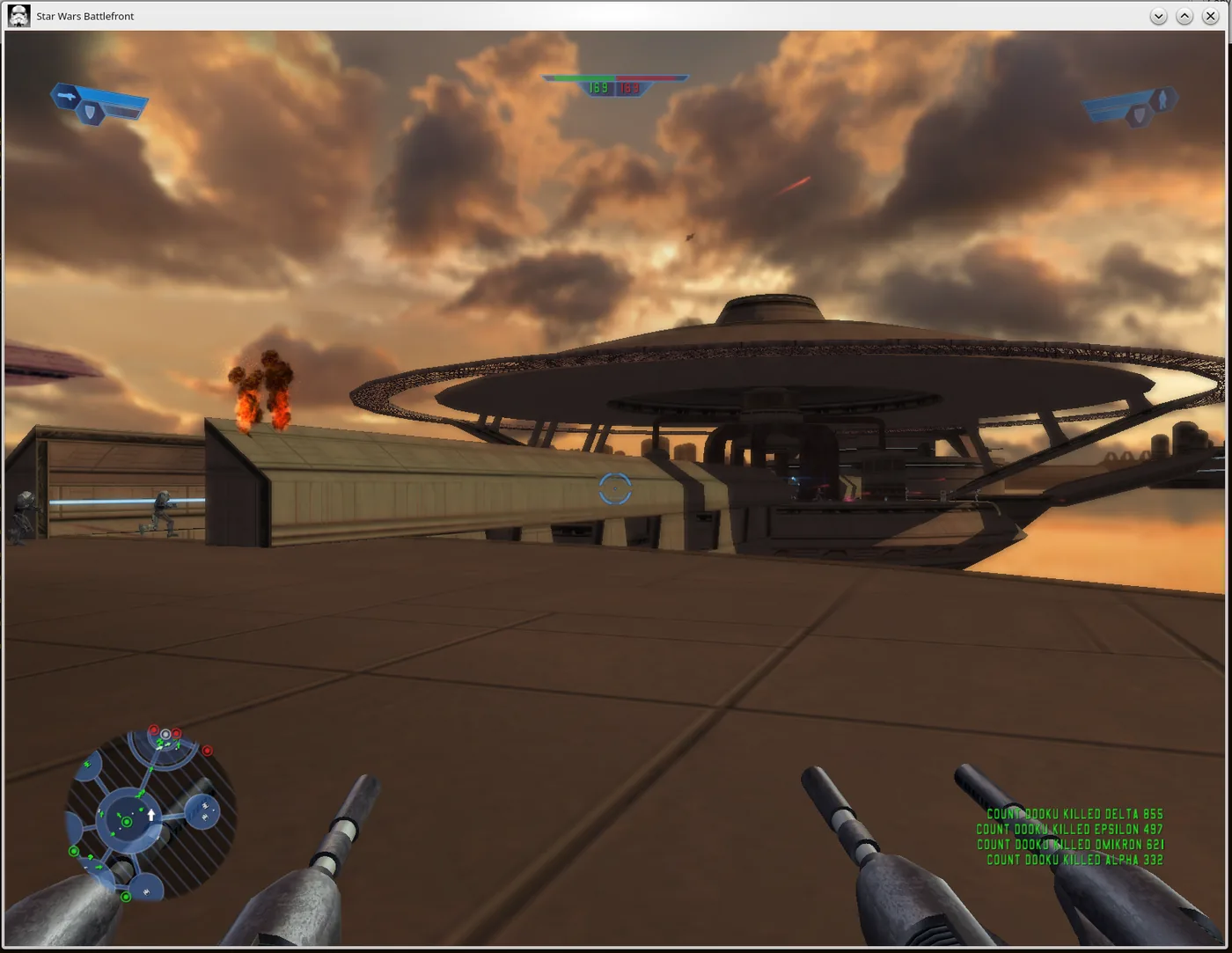
To eliminate virtual machine overhead, the team tested Per Process Page Size (P3S), an experimental patchset developed by Google engineers Kalesh Singh and Frederick Mayle for the Android kernel [2]. The P3S patchset configures memory translation control registers to switch page sizes per process during context switches [1]. Coders ported P3S to Asahi Linux, testing commercial titles outside muvm on Asahi Linux M3 setups [2]. Early tests showed that Wolfenstein: The New Order reached over 144 frames per second on an M2 Max Mac Studio, while Star Wars Battlefront ran via WineD3D, and Fallout: New Vegas and Grand Theft Auto IV booted through DXVK. The team asked Google about future plans for P3S [1].
Beyond gaming, the team announced a fundamental transition in software licensing policy [2]. Asahi Linux originally released code under the open MIT license to encourage adoption across BSD systems, but developers found third parties stripping authorship credits or using language models to obscure code origins [1]. The team is now re-licensing all repositories under the GNU General Public License version 2 or later [2]. The move mirrors Wine’s transition to the LGPL in 2002, ensuring that future contributions to Apple Silicon enablement remain open to everyone in the community [1].
- WEBSITE Calligeros, J. (2026, November 7). Progress Report: Linux 7.3. Asahi Linux. [Article Link]
- ONLINE NEWS Kowalska, M. (2026, November 7). Asahi Linux brings M3 Macs to general availability and moves all code to GPL. LavX News. [Article Link]
- ONLINE NEWS Davenport, C. (2025, May 15). Linux Is Getting Better on Apple Silicon Macs. How-To Geek. [Article Link]
- ONLINE NEWS Bidochko, A. (2026, February 18). Asahi Linux February 2026 Progress Report: USB‑C DisplayPort, M3 Mac Support, and 120 Hz Display Enhancements. UBOS. [Article Link]
- ONLINE NEWS LWN.net. (2026, February 18). An Asahi Linux progress report. LWN.net. [Article Link]
- WEBSITE Asahi Linux. (2026, November 7). Asahi Linux Blog. Asahi Linux. [Article Link]


