





Global heating threatens to trigger rapid and lasting shifts among multiple planetary subsystems once specific temperature boundaries are crossed. While earlier assessments of critical earth tipping points focused on impending environmental crises across biosphere boundaries, a new investigation led by Heming Wang examines how scientific attention actually distributes among vulnerable systems. Writing in the Proceedings of the National Academy of Sciences, Wang and colleagues analyzed 20,736 scientific publications on 14 climate tipping points published between 2000 and 2025 to determine where research effort accumulates [1].
- What Is a Climate Tipping Point?
- What Are Some Examples of Climate Tipping Points?
- Why Scientific Attention Bypasses Low Warming Thresholds
- Which Climate Tipping Elements Face Serious Research Gaps?
- How Fundamental Risk Dynamics Remain Unexamined
- Setting Research Priorities Before Systems Cross Thresholds
What Is a Climate Tipping Point?
A climate tipping point occurs when a gradual rise in global temperature pushes a component of the Earth system past a threshold, triggering an abrupt and often irreversible shift in its state. These vulnerable components are known as tipping elements, a concept introduced to Earth system science by researchers including T. M. Lenton to describe subsystems that could shift into alternative equilibria [2]. When an ecosystem or circulation pattern reaches its tipping point, self-reinforcing feedback loops can accelerate change independently of further greenhouse gas emissions, locking the system into a fundamentally altered state.
Understanding these thresholds needs comparing current shifts against long-term geological records of atmospheric carbon dioxide, where paleoclimate transitions revealed nonlinear responses over extended epochs. What makes a tipping element distinct from gradual environmental change is its capacity for self-perpetuation and persistence even if warming pressures later decline [1]. When forced past a boundary, the system fails to return along the same path. The shift endures. Such hysteresis means that cooling the planet back down might not restore the original environmental state.
What Are Some Examples of Climate Tipping Points?
Key examples of climate tipping points include the Greenland and Antarctic ice sheets, the Amazon rainforest, warm-water coral reefs, and major ocean circulation systems [1]. In their survey of 26 years of published literature, Wang and colleagues tracked 14 potential tipping elements whose stability dictates planetary weather patterns, sea level rise, and global heat transfer [4]. Some of these systems, like the massive ice sheet covering Greenland, hold vast ice volumes that would alter coastlines worldwide if lost [5]. The team evaluated 14 elements.
Other candidate tipping elements include sudden permafrost loss in subpolar boreal woodlands, Barents Sea winter ice, and East Antarctic subglacial basins. In northern waters, the North Atlantic subpolar gyre acts as a key circulation system south of Greenland, moving surface water and regulating regional heat exchange [1]. Each element possesses its own unique mechanics and geographic boundaries. Scientists debate their behaviors. These systems differ widely in how easily they can be monitored or represented in computer models [4].
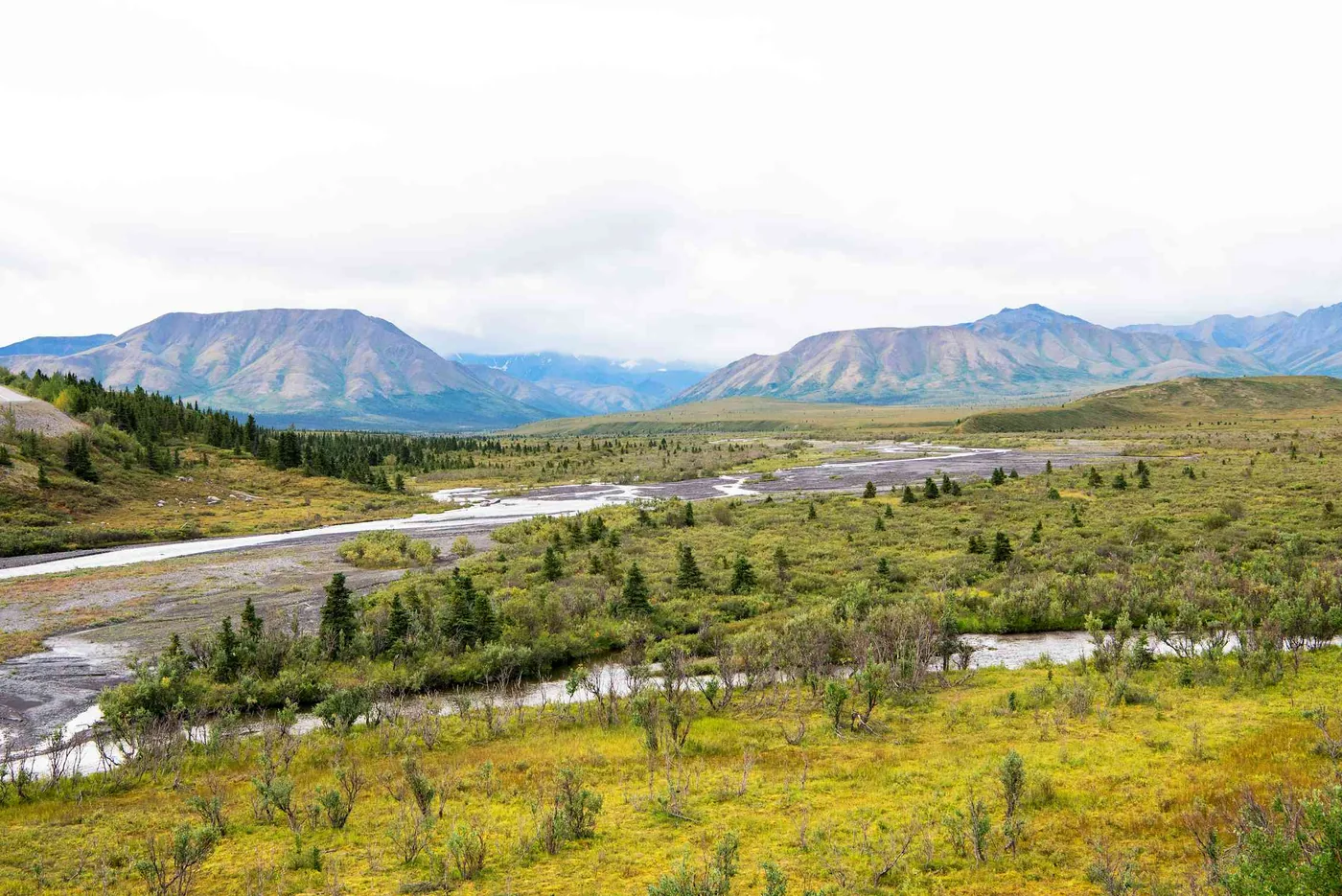
Low-latitude coral reefs face thermal stress that can trigger mass die-offs, while boreal permafrost contains vast reserves of frozen carbon that could release greenhouse gases upon thawing [5]. Because each tipping element operates on different timescales, changes in one region could cascade into others, creating interconnected vulnerabilities across the globe [1].
Why Scientific Attention Bypasses Low Warming Thresholds
One might expect that climate systems closest to tipping would receive the greatest amount of scientific inquiry, but publication numbers show no such pattern. In their investigation, Heming Wang, Asaf Tzachor, and their co-authors compared publication numbers directly against published estimates of the temperature level at which each system might tip. Subarctic permafrost thaw has a projected tipping threshold near 1.5°C above temperatures recorded before the industrial era, while the subpolar circulation gyre in the North Atlantic centers near 1.8°C [1].
The Greenland ice sheet also shares an estimated threshold of around 1.5°C, yet it received thousands more studies than boreal permafrost or ocean gyres [5]. The data revealed that systems expected to collapse at smaller temperature increases received no clear preference in research attention [1]. As co-author Asaf Tzachor pointed out, “A warming threshold is not a timer counting down to a known date,” meaning estimates carry large uncertainty [5]. Publication counts measure scientific attention rather than scientific certainty or the actual danger posed by an individual element.

Threshold estimates come with large uncertainties because natural systems interact in complex ways that computer simulations cannot always capture with precision [1]. Furthermore, scientific attention does not reflect the quality of individual studies. A high publication volume on one system does not prove that its tipping mechanics are fully understood, nor does a low publication volume indicate that a system is safe from collapse [5].


Which Climate Tipping Elements Face Serious Research Gaps?
The Greenland ice sheet dominates the literature analyzed by Wang and colleagues, appearing in 4,141 publications—accounting for fully 20% of the entire 20,736-paper dataset [1]. In sharp contrast, abrupt thawing of subarctic boreal forest permafrost was examined in only 139 papers over the same quarter-century, representing a mere 0.7% of studies [4]. The North Atlantic subpolar gyre accounted for 649 papers, or 3.1% of the published work [1]. Other candidate elements, such as Barents Sea winter ice and East Antarctic subglacial basins, received similarly sparse coverage.
Some disparities stem from research overlaps, as the North Atlantic subpolar gyre connects closely with the Atlantic meridional overturning circulation, or AMOC [1]. Much relevant research on the gyre may sit inside broader AMOC literature without examining the gyre as an independent tipping element [5]. Complementary synthesis presented in a preprint by Asaf Tzachor—which has not yet undergone formal peer review—notes that historical funding decisions and established modeling infrastructure heavily tilt research toward familiar subjects [3].

Barents Sea winter ice and East Antarctic subglacial basins remain particularly understudied despite their potential to influence global ocean currents and polar weather stability [1]. Without dedicated field observations and localized computer models, assessing the true vulnerability of these remote systems remains exceptionally difficult [4].
How Fundamental Risk Dynamics Remain Unexamined
The research team also looked beyond which systems scientists study to investigate what aspects of those systems receive scrutiny. A genuine tipping event is defined by specific behaviors: abrupt change, self-perpetuation, persistence, and irreversibility where a system settles into a different state [1]. When evaluating the 20,736 publications, the authors discovered that only 8.1% of studies directly assessed these dynamic transition traits [5]. Most research focused instead on gradual trends rather than runaway feedback loops.
These gaps become especially noticeable when looking at specific regional environments that face near-term tipping risks. Across 26 years of research between 2000 and 2025, the authors identified just 22 peer-reviewed studies examining tipping dynamics in abrupt boreal permafrost thaw [1]. Low-latitude coral reefs also had just 22 studies on these dynamics, while the North Atlantic subpolar gyre had only 53 papers [5]. These numbers show that key mechanisms behind abrupt climate shifts remain sparsely documented.
When research fails to examine whether a change is self-reinforcing or irreversible, policymakers are left with incomplete risk assessments that treat potential tipping points as if they were simple, gradual environmental changes [1]. Understanding whether a system can recover once warming pressures decline is valuable for planning effective climate mitigation and adaptation strategies [5].
Setting Research Priorities Before Systems Cross Thresholds
Unequal study numbers are not surprising because some parts of the Earth system have been monitored longer, are easier to measure by satellite, or fit within larger academic fields [1]. These findings do not mean that research programs examining Greenland or overturning circulation should halt their current monitoring efforts [5]. However, research priorities are decided collectively through funding programs, institutional allocations, and investments in new computer models [1].
For systems with low estimated warming thresholds that have received little research, additional studies could clarify what is known and identify which uncertainties matter most [1]. As global temperatures continue to rise, decision-makers face a straightforward question posed by Tzachor: “Which potentially consequential climate risks remain difficult to assess because comparatively little scientific attention has reached them?” [5]. Finding these knowledge gaps before natural systems cross irreversible thresholds remains an urgent scientific task.
Scientific institutions and international funding bodies must actively coordinate to build observational capacity in understudied regions like boreal permafrost forests and polar subglacial basins [1]. Identifying and addressing these blind spots helps humanity avoid being blindsided by abrupt systemic shifts in the Earth’s climate [4].
- ACADEMIC JOURNAL Wang, H., Chen, B., Ma, F., Wunderling, N., Lenton, T. M., & Tzachor, A. (2026). Uneven attention to climate tipping points. Proceedings of the National Academy of Sciences, 123(40). [Article Link]
- ACADEMIC JOURNAL Lenton, T. M., Held, H., Kriegler, E., Hall, J. W., Lucht, W., Rahmstorf, S., & Schellnhuber, H. J. (2008). Tipping elements in the Earth’s climate system. Proceedings of the National Academy of Sciences, 105(6), 1786-1793. [Article Link]
- PREPRINT Tzachor, A. (2026). Some climate tipping points are being studied far more than others – new research. [Article Link]
- ONLINE NEWS Harley, S., Egan, R., & Tzachor, A. (2026, October 9). Some climate tipping points are being studied far more than others. Phys.org. [Article Link]
- ONLINE NEWS Tzachor, A. (2026, October 9). Some climate tipping points are being studied far more than others – new research. The Conversation. [Article Link]
APA 7: TWs Editor. (2026, October 10). Scientists Uncover Uneven Research on Climate Tipping Points. PerEXP Teamworks. https://perexpteamworks.com/en/climate-tipping-points-research-focus/


