



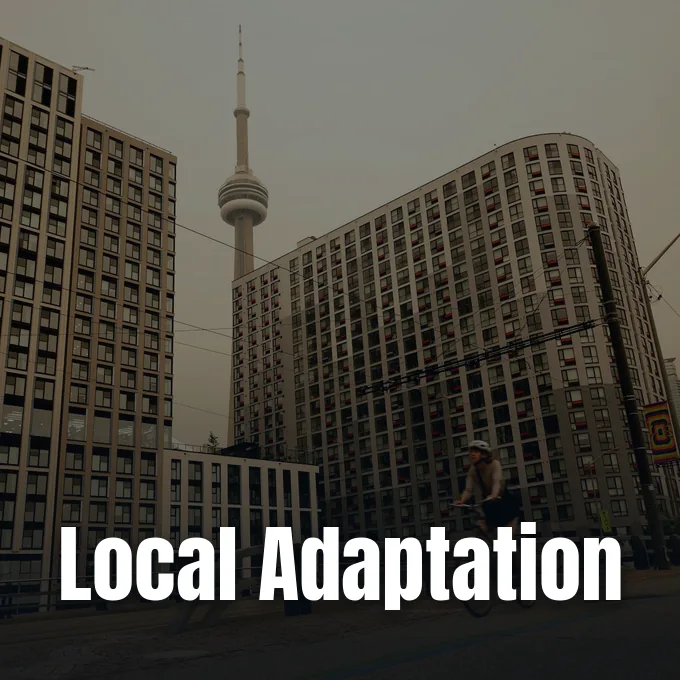
Towns and cities now carry the main burden of extreme weather as heavy downpours, river surges, and summer heatwaves disrupt basic public services. While national leaders draft broad treaties in distant conference rooms, municipal planners must fix broken water pipes, clear washed-out roads, and shield vulnerable neighborhoods from rising floodwaters. Can local leaders protect public assets when municipal tax revenues fall short? Effective local climate adaptation depends on shared governance that gives frontline towns real decision-making authority instead of leaving them to manage disasters alone [1].
Municipal Support for Local Climate Adaptation
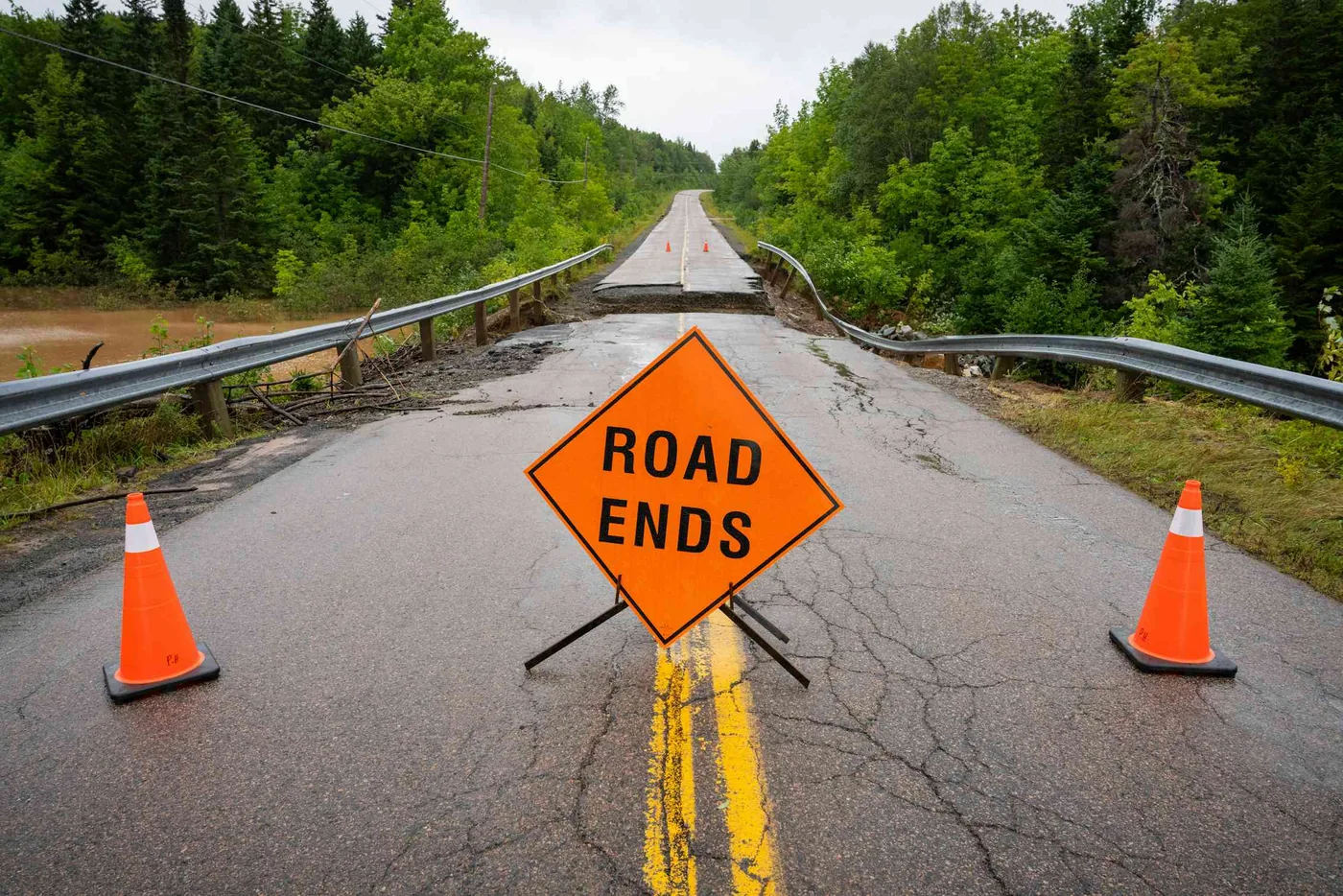
Local town councils maintain about 60 percent of the public infrastructure most exposed to severe flooding, erosion, wildfires, and repeated freeze-thaw cycles. These community assets include arterial bridges, secondary roads, drinking water reservoirs, and storm drainage networks built decades ago under milder climate conditions. When seasonal river surges or wildfires strike municipal territories, isolated town halls lack the engineering capacity to repair damaged roads [1].
Under federal initiatives launched in 2022, Canadian authorities allocated over $2.1 billion toward the National Adaptation Strategy, backing 141 municipal resilience projects through the Green Municipal Fund in 128 communities. Yet the federal government’s 2026 progress report shows that municipal authorities need about $5.3 billion per year to protect roads, bridges, and water systems. A sharp divide separates major urban centers from small rural towns. Big cities hire full-time climate analysts, data specialists, and civil engineers to run detailed vulnerability assessments for upcoming seasons. In contrast, small rural towns often depend on a handful of municipal staff who must handle roads, water pipes, and emergency planning with little technical support. Without multi-year transfers from senior governments, local councils cannot upgrade fragile drainage systems before heavy autumn storms arrive [1].
Research published by Prince Kumar at the Environmental Studies Institute shows that unequal resource distribution creates deep adaptation gaps between wealthy cities and exposed populations. While rich cities build seawalls and early warning alarms, underfunded settlements struggle to maintain basic public services under chronic environmental stress without outside fiscal intervention. The Paris Agreement calls for enhancing adaptive capacity under Article 7.1, but international reviews show that funding often stalls before reaching frontline neighborhoods [3].
Governance Gaps in Canadian Jurisdictions
Local municipal leaders hold direct power over land-use planning, building permits, and town zoning, but higher orders of government shape their legal and financial room to act. Provincial governments control environmental laws and infrastructure guidelines, while the federal government determines national funding programs. To bridge this coordination split, Canada set up bilateral adaptation tables in 2025 with the Northwest Territories, Yukon, Prince Edward Island, and Manitoba. A subsequent agreement brought Québec into joint planning to align municipal investments with provincial priorities. Federal coordinators hope these bilateral tables will turn ad hoc disaster relief into steady intergovernmental cooperation [1].
Indigenous governments hold recognized legal rights, deep community trust, and generations of ecological knowledge that extend far beyond conventional municipal planning. First Nations, Inuit, and Métis communities lead climate responses in Canada North, where long-distance transport routes and fragile food supply networks face rapid seasonal thaw and permafrost collapse. Canada’s National Adaptation Strategy states that public programs must respect Indigenous jurisdictions instead of treating Indigenous councils as passive local stakeholders. As Canadian delegates prepare to attend the COP31 climate conference in November, leaders face growing pressure to formalize Indigenous co-management models that protect northern supply corridors and coastal hunting grounds from climate shocks. Collaborative planning ensures that local knowledge guides emergency protocols before ice roads melt [1].
Global Models for Multilevel Climate Governance
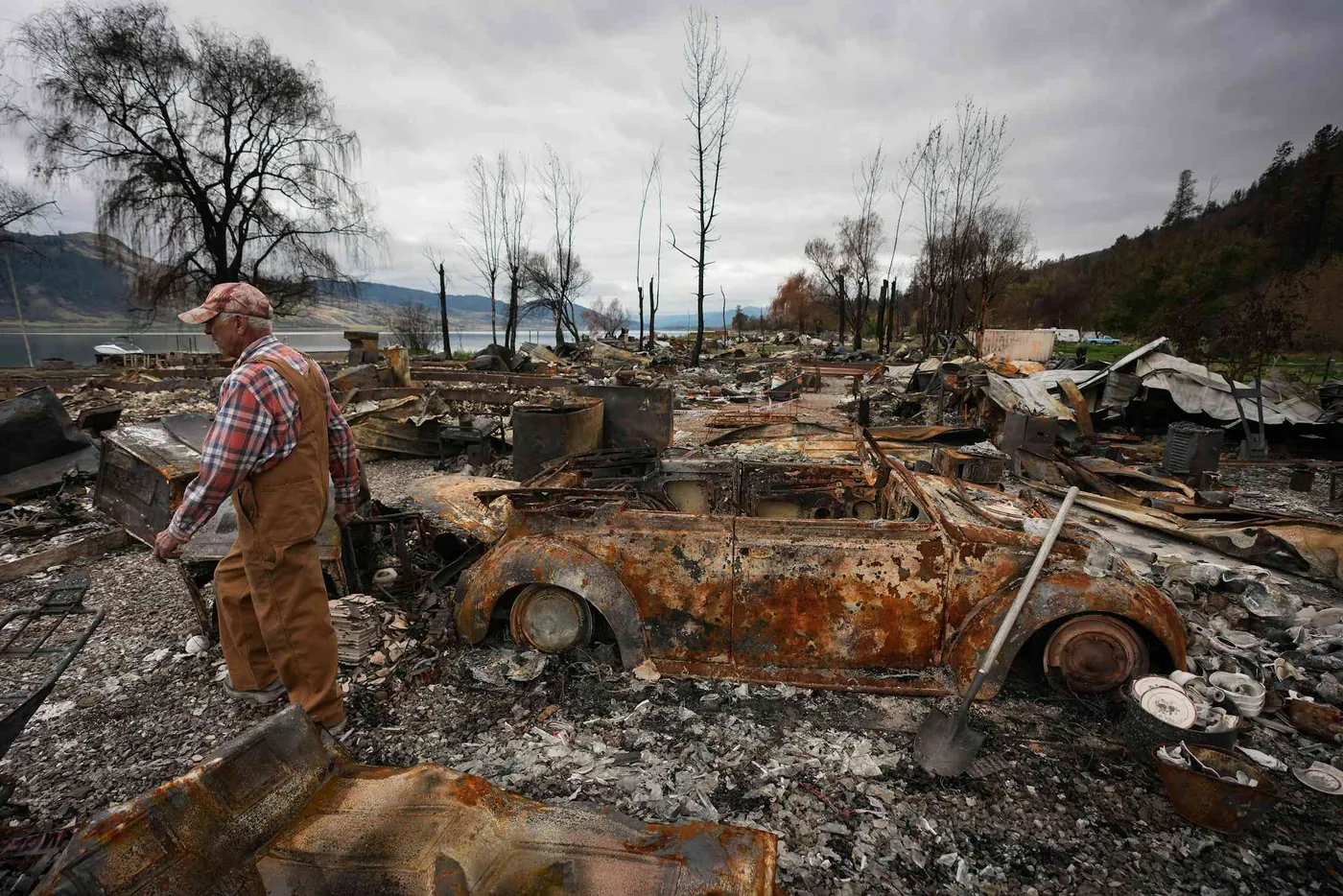
The United Nations Development Programme outlines a layered policy architecture through its Adaptation Policy Framework, which treats local action as the true test of national climate strategies. Central directives fail when national ministries dictate uniform engineering rules to towns facing entirely different geographical threats. Polycentric governance offers a responsive alternative by distributing decision power among local, regional, and national bodies. Local councils need administrative room to innovate [3].
International legislation increasingly embeds this layered philosophy. The European Climate Law legally requires European Union member states to enhance adaptive capacity while linking national targets with municipal action. Guidance from the United Nations Framework Convention on Climate Change emphasizes that public policies must include groups that have historically held little political power. Academic research by Rachida Bouhid in Revue Organisations & territoires shows that territorial models in Québec, such as industrial symbiosis in Bécancour and MRC de La Rivière-du-Nord or circular urban planning in Victoriaville, succeed only when local leaders actively co-design regional rules [2].


Grassroots Innovation Grants for Communities
Grassroots innovators regularly develop practical ways to protect neighborhoods, yet their initiatives collapse without early financial backing and professional mentorship. The United Nations Development Programme launched the Adaptation Innovation Marketplace in 2021 to connect community teams with seed capital, technical advice, and international partner networks. The marketplace awards grants of up to $250,000 to women-led groups, non-governmental bodies, and social enterprises working on front-line solutions. Since its founding, the program has distributed more than $7.5 million in grants while delivering $6 million worth of practical expert training to 44 community bodies in 33 nations [3].
These catalytic investments show tangible returns on the ground. Under the marketplace program, participating communities documented over 50 climate measures based on traditional knowledge and restored regenerative agriculture on more than 1,660 hectares of land. Several community teams achieved long-term financial self-sufficiency, with select local partners raising more than $1 million through independent crowdfunding campaigns after completing initial project phases. Connecting small town leaders with flexible seed funds allows local climate adaptation projects to expand into lasting public assets instead of fading away when short-term grants expire [3].

Community Resilience in Bangladesh and the Netherlands
Bangladesh ranks ninth globally in disaster exposure, confronting fierce cyclones, storm surges, and river erosion every monsoon season. Instead of relying solely on heavy engineering works, national expenditures have channeled over $10 billion toward community disaster defenses, turning local leadership into a dependable barrier against rising water. A central pillar is the Local Government Initiative on Climate Change, known as LoGIC, which unites the national government with the European Union, Sweden, Denmark, UNDP, and UNCDF [3].
By September 2025, LoGIC had supported more than 1,000 climate-adaptive infrastructure schemes in nine coastal districts, directly benefiting 1.58 million residents. These community schemes include cyclone warning towers that function during mobile network outages, lightning sheds that shelter agricultural workers, and 136 kilometers of reinforced emergency evacuation roads. In the coastal district of Khulna, the Gender-responsive Coastal Adaptation project trains women in sustainable brackish aquaculture, greenhouse farming, and small business management. Local women now manage community early warning networks and control household savings pools, ensuring that disaster recovery remains rooted in neighborhood priorities [3].
A similar balance between national guidance and local execution defines climate strategy in the Netherlands. Because large portions of Dutch territory lie below sea level, the country combines sea dikes with spatial zoning, river wetland restoration, and continuous civic engagement under flexible local administration. Canadian municipalities are testing comparable localized models. In Montréal’s Southwest borough, planners use a specialized resilience tool to evaluate housing proposals, while Calgary conducts risk assessments on public transit, roads, and municipal water pipes. On the Atlantic coast, the town of Mahone Bay, N.S., uses a living shoreline of salt marshes and rock sills to dampen storm surges. Localized experiments provide the template for national stability [1].

Indigenous Rights in Local Climate Adaptation
Generational ecological knowledge offers time-tested methods for surviving environmental volatility. Communities that have inhabited climate-sensitive zones for centuries maintain customary practices like rotational crop cultivation, seasonal water harvesting, and controlled landscape burning that safeguard fragile ecosystems. Research reviewed by Prince Kumar at the Environmental Studies Institute shows that integrating customary knowledge into regional policy reduces disaster risks far more effectively than isolated technical fixes. Modern engineering programs achieve the strongest outcomes when they blend traditional conservation with contemporary materials, such as reinforcing historical stone water channels with geofabric liners or cross-referencing Indigenous weather signs with digital hydrological models [3].
Scaling these lessons across regions requires shared learning platforms instead of isolated municipal experiments. Digital networks like weADAPT and the European Union Mission on Adaptation to Climate Change connect regional practitioners, enabling small towns to adopt proven solutions without repeating costly planning errors. The EU Mission plans to support at least 150 communities through structured climate risk evaluations and adaptation projects by 2030. Writing in The Conversation, Rachida Bouhid notes that when national governments back decentralized knowledge networks with dependable public funds, local climate adaptation ceases to be an unfunded local mandate and becomes a resilient foundation for national security. Towns with strong local leadership, shared scientific data, and stable intergovernmental funding can withstand the toughest storms that future seasons bring. Protecting local communities ultimately secures the entire country [1].
- ONLINE NEWS Bouhid, R. (2026, October 20). Adaptation policies must be built around the local communities facing climate change. The Conversation. [Article Link]
- ACADEMIC JOURNAL Bouhid, R. (2025). Dynamique de la transition vers une économie circulaire territorialisée : gouvernance et modèles organisationnels. Revue Organisations & territoires, 34(3), 16-50. [Article Link]
- WEBSITE Kumar, P. (2025, December 12). Strengthening adaptive capacity: Strategies for resilient communities. Environmental Studies Institute. [Article Link]
APA 7: PerEXP Teamworks. (2026, October 21). Municipal Plans Shape Local Climate Adaptation on the Front Lines. PerEXP Teamworks. https://perexpteamworks.com/en/local-climate-adaptation-policies/


