






Sony Interactive Entertainment updated its official Business Data & Sales page on November 10, 2026, confirming that global PlayStation 5 shipments passed 100 million consoles delivered to retailers worldwide since the machine launched in 2020 [1]. That mark arrived two days before the machine reached its sixth anniversary on November 12 [3]. Sell-in figures track units delivered to retail partners rather than direct purchases made by shoppers [4]. Kat Morton of PlayDayOne noted that Sony added at least 2.1 million units during the last 40 days alone, following a quarterly report that put shipments at 97.9 million on September 30 [2].
Tracking PlayStation 5 Shipments
The milestone puts the platform in rare company. Former Game Informer editor Imran Khan wrote on Game Developer that crossing nine figures places the system in line with Sony’s most durable hardware lines [1]. Reaching 100 million units makes the machine Sony’s fourth home platform to clear that hurdle, joining the original PlayStation, the PlayStation 2, and the PlayStation 4 [3]. Across the wider video game industry, only two other home systems have ever crossed the same threshold: Nintendo’s Wii and Nintendo Switch [1].
Hardware milestones remain far rarer than software records. Earlier reporting tracked how the Borderlands series crossed 100 million sales in software, but moving nine figures in home console hardware demands sustained global manufacturing across multiple years. Only six home consoles in history have accomplished that feat. The update secures the hardware’s place among the best-selling gaming platforms ever built [1].
The new total clarifies where the machine stands within Sony’s family of devices. It has already moved comfortably past the PlayStation 3, which concluded its life at 87.4 million units, as well as the handheld PlayStation Portable at 76.4 million [2]. Catching the first PlayStation will take only a small push, since that debut console finished its run at roughly 102.4 million units worldwide [4]. The record holder is still the PlayStation 2, which shipped over 160 million units during its lifespan [2].
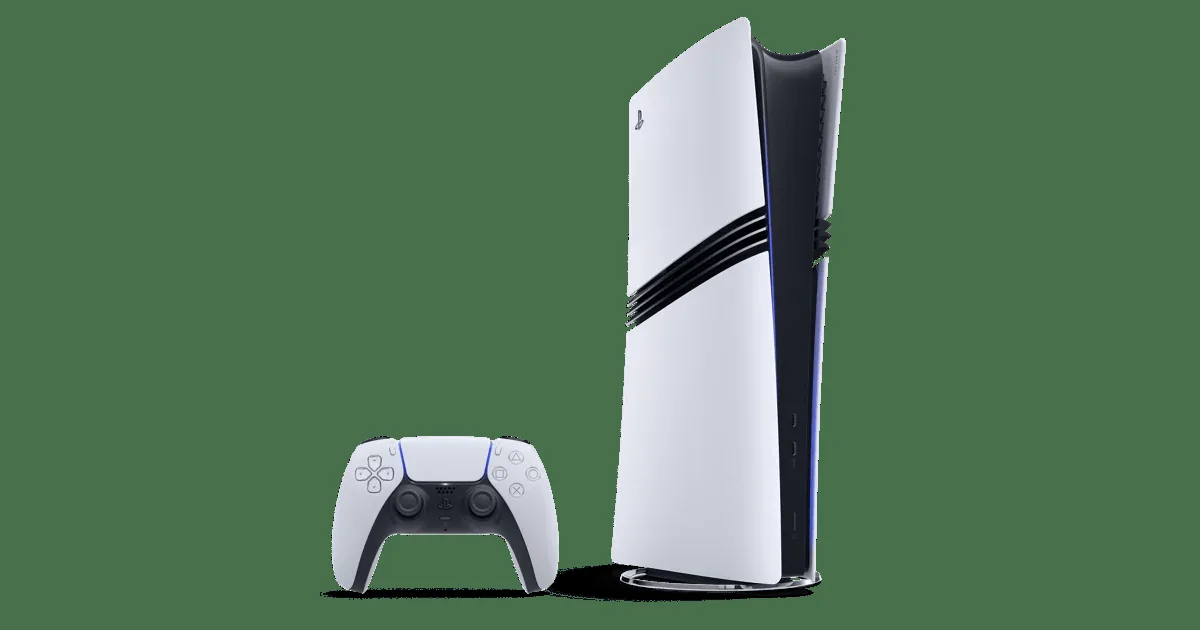
Pacing Against Earlier Hardware
The machine took slightly longer to reach 100 million units than Sony’s earlier record-setters [2]. Scott McCrae of GamesRadar+ pointed out that the PlayStation 4 crossed 100 million units in five years, eight months, and 15 days back in 2019, while the PlayStation 2 reached that barrier in five years, eight months, and 26 days [3]. The current hardware required just under six full years from its launch date [4]. It still comfortably outpaced the original PlayStation, which spent nine years, five months, and 15 days climbing to that benchmark [3]. Early manufacturing hurdles during the COVID pandemic slowed distribution, preventing Sony from keeping store shelves stocked during the platform’s first two years [5].
Production faced hurdles early. Pandemic component shortages left shoppers chasing restock alerts well into 2022, holding back early hardware adoption when buyer interest was at its peak [5]. Sony struggled to balance supply channels until assembly lines stabilized in late 2022 [3].
Supply lines rebounded in 2023. Shipment rates surged quickly enough to bring the pace closer to the PlayStation 4’s earlier path. Sony set its all-time annual shipment record that year by moving 20.8 million units worldwide [5]. That bounce proved that consumer demand hadn’t waned during the years of store shortages [3].



Recent Quarterly Slump
Recent shipment data shows that annual momentum has slowed down from that peak pace [2]. The console’s all-time quarterly record arrived in the third quarter of 2024, when Sony shipped 9.5 million units during the holiday rush [5]. Subsequent quarters failed to match that high-water mark. Sherif Saed of Eurogamer reported that Sony moved 2.6 million units during the second quarter of FY2026, falling well below the 4 million consoles shipped during the identical quarter a year earlier [4].
That second-quarter performance marked the lowest Q2 tally since launch [4]. Daniel Trock of DualShockers reported that combined shipments across Q1 and Q2 totaled about 3.2 million units [5]. The slump began with a first quarter of 1.6 million units, which barely edged past the all-time low of 1.5 million recorded in Q4 of FY2025. If sales don’t rebound during the second half of FY2026, this stretch could become the console’s slowest annual shipment run since release [4].
Broader market shifts contributed to the dip. Earlier reporting documented Xbox and PlayStation sales dropping to decades-old lows across US retail counters before this latest quarterly lift. Sony hasn’t shied away from discussing the slower volume in its financial reports, even as lifetime PlayStation 5 shipments climbed to nine figures [4].

Hardware Prices and Game Delays
Price increases explain part of the slowdown. Instead of discounting aging hardware as previous console generations did, Sony raised retail prices on both the base system and the newer PS5 Pro [4]. In the UK, the digital edition currently sells for £519.99, up from £359.99 when hardware first reached stores. In the United States, that same entry model climbed from an original price of $399.99 to $599.99 [3].
Software schedules created headwinds as well. While Team Asobi’s Astro Bot earned praise, long gaps between first-party single-player tentpoles left players waiting. Sony shifted resources into live-service projects, leading Naughty Dog to cancel its multiplayer The Last of Us title after years of development work [3].
Delays also affected the release pipeline. Guerilla Games is reportedly prioritizing Horizon Hunters Gathering, while Insomniac’s Marvel’s Wolverine remains in development. Many early titles were also playable on the PlayStation 4 or later ported to PC, reducing the urge for players to buy new hardware. Scott McCrae wrote that Xbox isn’t putting up fierce competition either, leaving Sony under little outside pressure to lower prices [3].

How PlayStation 5 Shipments Could Rebound
The business remains profitable despite slower unit growth. Eurogamer noted that higher hardware prices and steady software spending kept balance sheets healthy, because Sony generates more revenue from an engaged existing user base [4]. The platform now stands within touching distance of the original PlayStation’s 102.4 million lifetime total, a figure it seems poised to overtake in coming months [2]. Passing the PlayStation 4’s final mark of 117 million will require steady demand through the remainder of the hardware cycle [4].
Software could turn the tide. Rockstar Games is preparing Grand Theft Auto 6 for launch, creating the clearest near-term catalyst for upcoming PlayStation 5 shipments [5]. Anticipation for that release likely contributed to the 2.1 million consoles shipped over the last 40 days, as buyers prepared hardware setups in advance [2]. Daniel Trock of DualShockers said the looming launch in just over a week could give Sony a welcome late-year boost [5].
Holiday quarters historically double the volume of earlier quarters. If that late-year surge materializes, it could pull the hardware out of its slump before Sony turns attention to next-generation hardware like the PS6 [5]. Whether the console can maintain that pace into future quarters will depend on how many players upgrade for new releases [4].
- ONLINE NEWS Khan, I. (2026, November 11). PlayStation 5 ships 100 million consoles. Game Developer. [Article Link]
- ONLINE NEWS Morton, K. (2026, November 11). PS5 Surpasses 100 Million Consoles Shipped Worldwide. PlayDayOne. [Article Link]
- ONLINE NEWS McCrae, S. (2026, November 11). Sony confirms the PS5 is closing in on the PS4, with 100 million consoles shipped – and that’s despite the shortages and price hikes. GamesRadar+. [Article Link]
- ONLINE NEWS Saed, S. (2026, November 11). As of this week, PlayStation 5 has surpassed 100 million consoles sold. Eurogamer.net. [Article Link]
- ONLINE NEWS Trock, D. (2026, November 11). PlayStation 5 Crosses Major Sales Milestone Ahead of GTA 6 Launch. DualShockers. [Article Link]


