



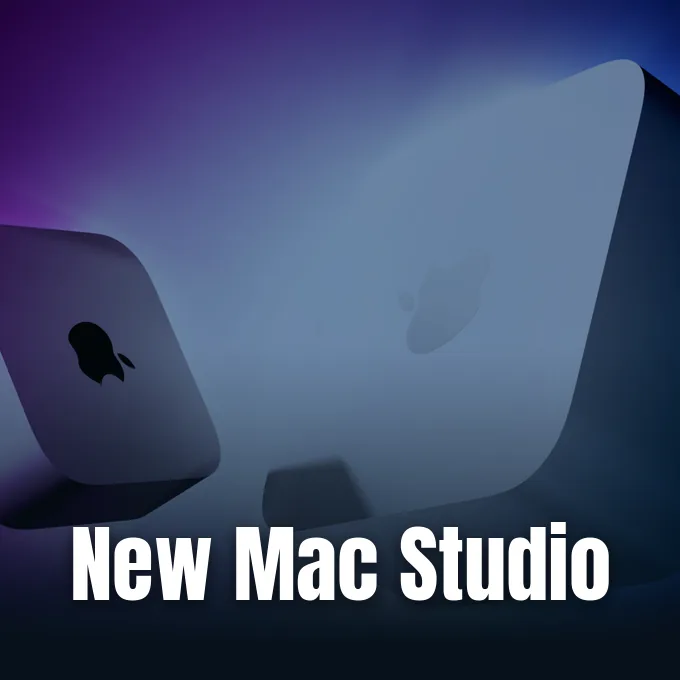
Apple opens global retail availability for its new Mac Studio release this Tuesday, September 22, pairing the high-end workstation with redesigned silicon inside the compact Mac mini desktop. Both machines arrive as direct specification bumps that preserve their existing aluminum chassis dimensions while modernizing performance. Pre-orders opened on August 25. Hardware deliveries now begin across global retail channels. [2]
New Mac Studio Release Arrives on Schedule
Apple originally announced both machines last month without hosting a keynote event, establishing an accelerated release calendar that placed desktop computers ahead of traditional autumn smartphone announcements. The timing surprised enterprise watchers. According to reporting from The Information, this accelerated rollout was driven by unexpectedly strong enterprise appetite for artificial intelligence hardware as organizations build local computing clusters for autonomous workflows. [2] This workstation demand mirrors corporate infrastructure expansion where an Apple AI server cluster combines proprietary Apple silicon with accelerated computing modules to execute sophisticated local inference tasks securely without routing confidential commercial data across external networks.
Why did Apple deviate from its traditional October or November launch window for these pro-tier desktop computers? Commercial clients demanded immediate hardware deployments rather than waiting for late-autumn production schedules, prompting executive leadership to finalize distribution contracts before fourth-quarter budget deadlines arrived. Retail locations received inventory allocations during the third week of September. [2]
The new Mac Studio release targets demanding creative studios that require sustained thermal headroom under prolonged rendering loads or complex computational simulations. The chassis design remains unchanged. Both desktop computers retain identical exterior dimensions to their immediate predecessors, ensuring that existing mounting brackets, server rack shelves, and studio furniture configurations remain completely functional. Initial deliveries scheduled for September 22 represent the fastest transition from announcement to launch in recent history. [2]

Silicon Configurations and Leaked M6 Benchmarks
Apple differentiates the desktop lineup by segmenting processing tiers across its custom silicon portfolio, offering distinct microarchitectures tailored to specific power profiles and budgetary targets. The compact Mac mini offers M6 and M5 Pro chip configurations. Meanwhile, the larger Mac Studio workstation scales up to dedicated enterprise performance using M5 Max or high-end M5 Ultra silicon configurations. Desktop performance metrics surfaced early. [2]
The first unverified benchmark result for Apple’s upcoming M6 processor appeared within the Geekbench 7 database, providing an initial glimpse into architectural improvements across next-generation semiconductor nodes. Manufactured on an advanced 2nm (two-nanometer) semiconductor fabrication process, the M6 processor established an impressive single-core CPU score of 4,071 while registering an extraordinary multi-core CPU score of 22,783 under standardized test conditions. These recorded numbers reflect substantial generational gains over preceding M5 silicon averages, demonstrating significant efficiency advantages achieved by packing denser transistor layouts into compact desktop enclosures. The updated Mac mini serves as Apple’s launch hardware for this 2nm architecture, making it the pioneer device for the company’s next silicon family. [2]
The benchmark remains unverified. Independent laboratory testing will validate whether these synthetic figures translate into sustained real-world gains once production units reach customer desks and software developers run extensive compilation suites. For creative professionals handling multi-stream 8K video exports or complex generative machine learning pipelines, the M5 Max and M5 Ultra variants in the Mac Studio provide crucial graphics bandwidth. Those workstation chips deliver massive memory bandwidth for local models. [2]


Storage Architecture and PCIe Correction
Official documentation sometimes undergoes unexpected revisions when marketing claims conflict with engineering specifications. Apple corrected the text quickly. [2]
When Apple published its initial press release detailing the new Mac Studio with M5 Max and M5 Ultra chips, the announcement highlighted a next-generation SSD architecture built on PCIe Gen 6. However, French technology blog MacGeneration noticed that Apple quietly removed all references to PCIe 6.0 from the official announcement shortly after the press release went live online. The amended announcement still mentions next-generation solid-state drive architecture while removing the PCIe 6.0 technical label entirely. The retraction sparked technical discussions. [2]
Hardware analysts monitoring interface standards note that PCIe 6.0 integration in consumer desktop workstations remains rare due to severe thermal constraints and controller availability across global supply chains. Whether the initial wording represented an ambitious engineering roadmap that slipped from final production or a simple clerical oversight by marketing staff, the revision clarifies realistic throughput expectations. Users purchasing the new Mac Studio release can still expect rapid internal storage speeds. [2] External expansion options also supply flexible pathways for creative digital libraries. [1]
Display Pairings for Desktop Workstations
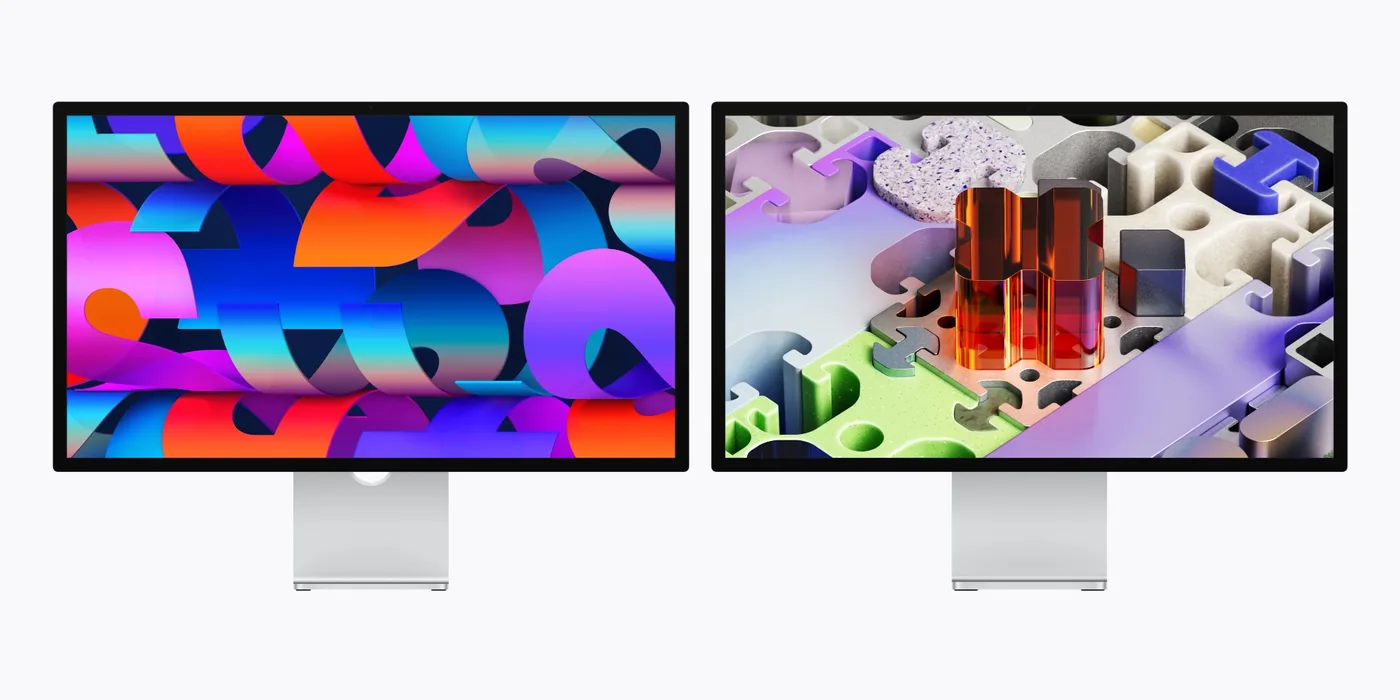
Purchasing a standalone desktop Mac requires users to supply their own visual displays, input peripherals, and audio accessories to assemble an effective daily working environment. Should creators invest in first-party Apple hardware or look toward versatile third-party monitors to complement their new Mac Studio release? For dedicated Apple ecosystems, the Apple Studio Display remains a premier companion monitor, currently available at a rare $240 discount straight from Apple during promotional launch windows. The discount remains available. [1]
Justin Kahn of 9to5Mac notes that while the Apple Studio Display delivers premium color calibration, the Samsung Smart Monitor M9 OLED represents a compelling alternative for modern desk spaces. Measuring 32 inches with a sleek silver aesthetic that matches aluminum Apple hardware, the Samsung display costs hundreds less than a Studio Display while integrating standalone streaming capabilities and superior contrast across creative tasks. Creative professionals working with HDR content find the expansive 32-inch OLED panel particularly versatile across mixed-use home offices. Display choices ultimately dictate visual precision for color-accurate video editing workflows. [1]
High-resolution external screens benefit significantly from unified visual controls, though third-party options frequently supply additional video inputs that accommodate secondary PC gaming rigs or streaming hardware. Deploying a dual-screen configuration with the new Mac Studio release allows video colorists to keep editing timelines separated from full-screen playback monitors during intensive post-production sessions. Integrated webcams inside premium monitors streamline video conferencing and eliminate cluttered accessory mounts. Clean desktop arrangements rely on balanced peripheral selection. [1]

Peripheral Ecosystem and Desktop Cable Management
Because both desktop computers ship without bundled input devices, users must evaluate input peripherals to build a comfortable daily workstation environment. While Apple’s Magic Mouse provides native gesture support, many creative professionals prefer dedicated ergonomic alternatives to prevent wrist fatigue during lengthy production shifts. Chance Miller of 9to5Mac highlights the Logitech MX Master 4 wireless mouse as a premier ergonomic peripheral, offering integrated haptic feedback, improved wireless connectivity, and more durable, comfortable construction materials than predecessor models. The Logitech MX Vertical mouse serves as another viable ergonomic option. [1]
Keyboard selections also shape typing comfort, where mechanical switches offer tactile responsiveness that traditional membrane keyboards struggle to replicate during intensive coding or editing sessions. Reviewer Karthik recommends the Satechi SM1 75% mechanical keyboard (featuring a compact layout that retains dedicated arrow keys), finished in light gray to complement desktop Mac aesthetics. Workers in quiet corporate environments can alternatively select the Keychron B1 Pro, which utilizes silent scissor switches within an ultra-slim wireless chassis. For video communication, Rein recommends the Insta360 Link 2 Pro 4K PTZ webcam, utilizing artificial intelligence tracking and beamforming dual microphones to follow presenters automatically across meeting spaces. [1]
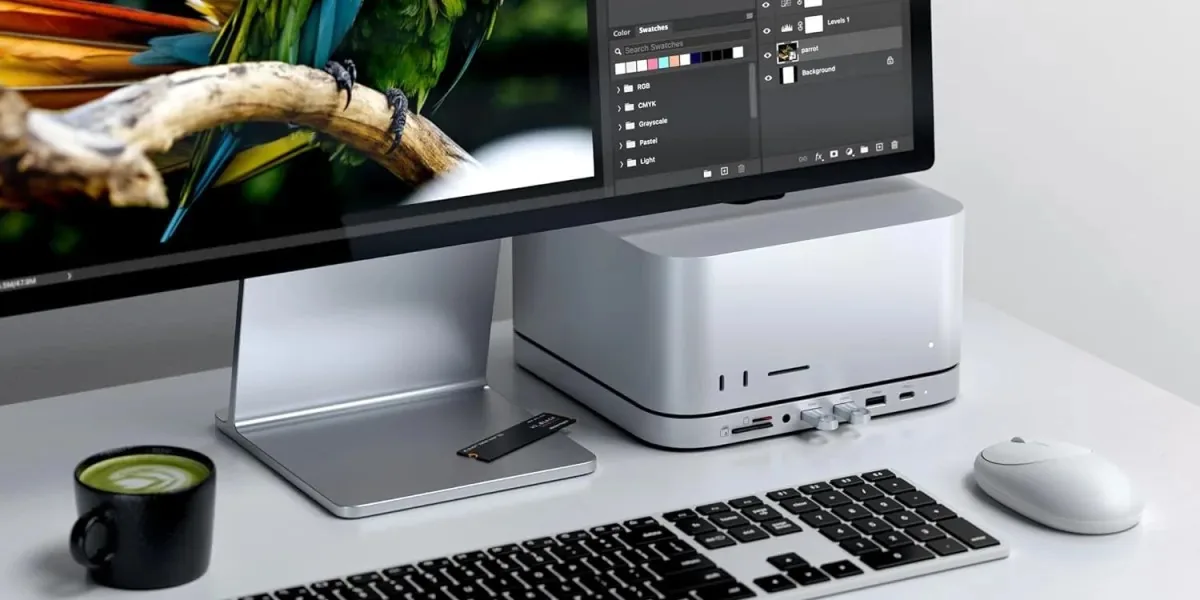
Cable clutter appears immediately. Michael from 9to5Mac showcases the Satechi Hub & Stand with NVMe SSD enclosure, supplying accessible front USB ports and SD readers beneath the Mac mini. To eliminate protruding cords, Simon highlights the Silkland Right-Angle 240W Thunderbolt 5 cable (supporting 120Gbps bandwidth, starting at $26), routing high-speed connections cleanly beneath desk edges without bending awkwardly across workspace surfaces. These hardware pairings ensure that Apple’s latest desktop systems deliver peak productivity across demanding professional workstations. [1]
- ONLINE NEWS Kahn, J. (2026, September 21). Our favorite accessories to elevate your new M6 Mac mini and Mac Studio rig. 9to5Mac. [Article Link]
- ONLINE NEWS Rossignol, J. (2026, September 21). New Mac Mini and Mac Studio Launch Tomorrow. MacRumors. [Article Link]


