





Can a dead star assemble a new planetary system from its own wreckage? Archival observations from the Hubble Space Telescope suggest that the white dwarf HS 0209+0832 hosts a candidate second-generation planet built from the material shed during stellar death [2]. Doctoral candidate Jamie Williams at the University of Warwick identified unexpected chemical signatures of niobium in archival spectra collected in 1999 [1]. The discovery suggests planetary systems can begin a second chapter long after their host stars run out of nuclear fuel [4].
How a Second-Generation Planet Formed from Stellar Ashes
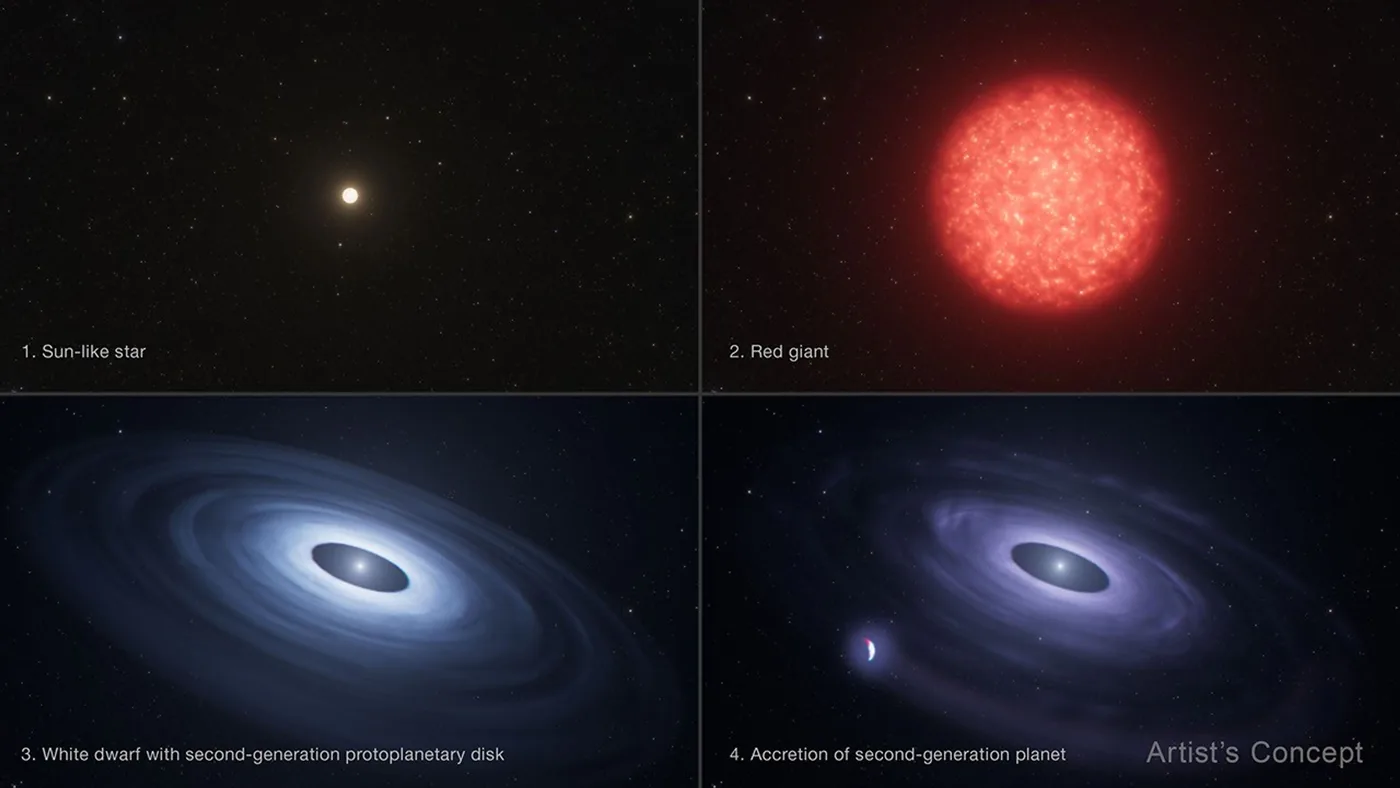
Astronomers classify Earth and our planetary neighbors as first-generation worlds that condensed out of primordial gas and dust left behind when the Sun formed. A second-generation planet follows a fundamentally different path by assembling directly from material that a dying star expels into surrounding space [3]. The star shed its outer layers.
When a low-mass star exhausts its core fuel, it swells into a bloated red giant before puffing away its outer envelope and leaving a compact white dwarf behind in space. In typical star-forming nurseries across the Milky Way, infant worlds coalesce around newborn stars within dense circumstellar disks, an early developmental phase documented in observations of the youngest known planet found around Elias 2-24 during primordial star formation [1]. Doctoral candidate Jamie Williams at the University of Warwick identified evidence that this cast-off material can assemble into a new gas giant [2]. In a study published in Nature Astronomy, researchers examined how dead stars interact with surrounding debris clouds [1].
Theoretical astrophysicist Nicholas Stone at the University of Wisconsin–Madison connected the unusual chemistry to late-stage stellar nucleosynthesis. “Niobium and other elements heavier than iron are astronomically special because, unlike many common elements, they are not formed in the cores of stars by thermonuclear fusion,” Stone said. When the dying star shed this chemically enriched material, part of the cloud coalesced into a gas giant [2].
Unlocking the 1999 Hubble Cold Case with Niobium
When the Hubble Space Telescope first targeted HS 0209+0832 in 1999, the spectroscopic observations presented astronomers with an unresolved mystery that lingered in data archives for decades [2]. The stellar spectrum displayed roughly 100 chemical features that researchers could not match with any known atomic transitions cataloged in existing databases [1]. Because white dwarfs possess intense surface gravity, heavy elements sink rapidly beneath the outer photosphere within days. Observed metals must have arrived recently from an external source [3]. Science writer Andrea Gianopoulos and the NASA Hubble Mission Team reported that archival detective work finally unlocked those dormant records [2].
Williams returned to those archival records more than two decades later armed with an updated atomic database and discovered that many unidentified absorption lines matched niobium. Niobium has practical applications on Earth in medical scanners and jewelry, but its prominent spectral lines on a white dwarf surprised researchers. “What Hubble is showing us in this white dwarf system is something we haven’t seen before: a high abundance of the element niobium,” Williams said [2].
Astronomer Boris Gaensicke at the University of Warwick recalled his reaction upon reviewing the archival data. “When Jamie asked me about niobium in relation to this study I was truly gobsmacked, as that element had not been reported in any other white dwarf analyzed to date,” Gaensicke said [2]. Archival ultraviolet spectra obtained by NASA’s retired Far Ultraviolet Spectroscopic Explorer (FUSE) confirmed identical niobium signatures [1].
Can a Second-Generation Planet Survive White Dwarf Heat?
A newborn white dwarf emerges from stellar evolution at blistering temperatures before it gradually radiates residual thermal energy into space [2]. Because HS 0209+0832 is a relatively young stellar remnant, intense radiation bathes the candidate second-generation planet, heating its gaseous envelope and causing outer layers to boil away into the surrounding vacuum of space [3]. Escaping gases form a comet-like tail of vaporized material that circles the white dwarf in a thin disk before falling onto the stellar surface [2]. Hubble Space Telescope detectors recorded niobium because the star is consuming this evaporating envelope [1].
Despite this ongoing mass loss, Williams concluded that the gas giant is likely to endure rather than disappear as a temporary cosmic blip. “If the second-generation planet is there, I think it is likely to survive,” Williams said [2]. The host star will maintain a stable temperature for millions of years [1].
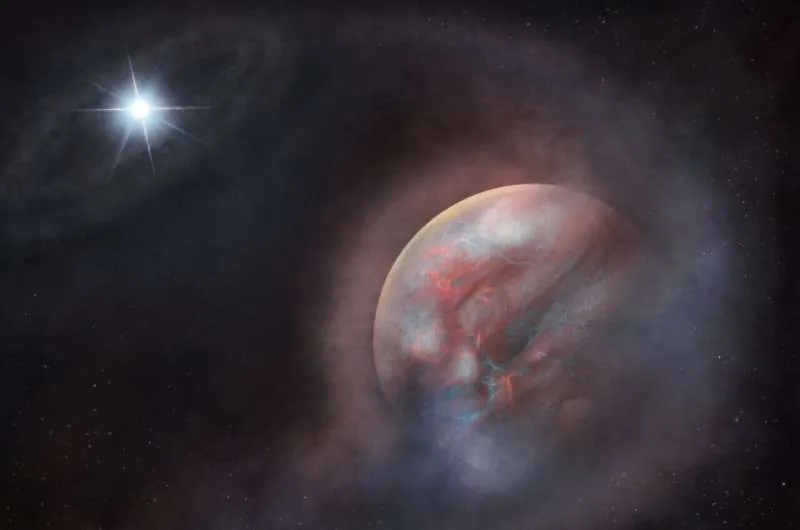
This dynamic interaction demonstrates how planetary bodies evolve around degenerate stars [3]. Astronomers observe comparable mass transfer across other stellar environments, including Hubble observations tracking planetary weather and collisions that alter circumstellar debris over time [1]. If the candidate world around HS 0209+0832 survives its current phase of mass loss, it will remain in orbit for millions of years [2]. The planet will survive.

TESS Data Detects a Rapid 4.4-Day Orbit
Independent observational support for the candidate world arrived from NASA’s Transiting Exoplanet Survey Satellite (TESS), which monitored HS 0209+0832 for four months [2]. Photometric instruments recorded a repeating brightness variation that recurred every 4.4 days. The periodic modulation matches the signal expected from a Jupiter-sized gas giant that is tidally locked in a tight orbit around the white dwarf. A tidally locked planet keeps one face permanently turned toward the star while its opposite side faces perpetual darkness. Lead scientific editors Gaby Clark and Robert Egan reported that this periodic variation provides strong evidence for a surviving planet [3].
That 4.4-day orbital period indicates that the candidate planet circles the white dwarf roughly 3.7 million miles from the stellar surface, spanning 6 million kilometers, which situates the world ten times closer than Mercury orbits the Sun. In our Solar System, Mercury is the closest planet to the Sun [2]. That close distance subjects the planet to intense stellar radiation [3]. That orbit repeated steadily.
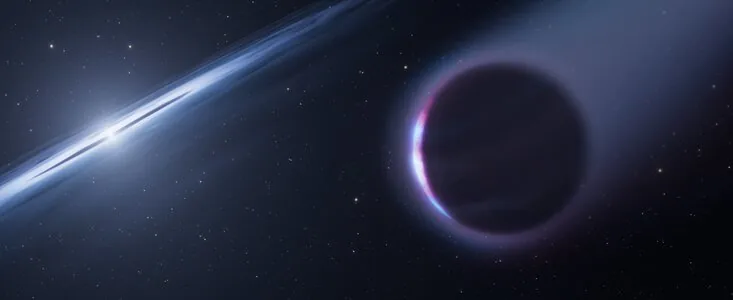
The combination of TESS brightness variations and Hubble spectroscopy provides compelling evidence for an intact gas giant [1]. While polluted white dwarfs typically accrete rocky asteroid fragments rich in silicon and iron, the volatile atmosphere and photometric period point to a giant planet [3]. Williams and co-authors modeled the transiting candidate as a gas world possessing physical dimensions comparable to Jupiter [2]. Its outer atmosphere feeds the accretion stream that deposits niobium onto the stellar surface [1].
Why the Phoenix Planet Required a Companion Star
The presence of niobium provides direct insight into the nuclear reactions that occurred during the host star’s final evolutionary stages. Study authors noted that niobium abundances in HS 0209+0832 exceed Solar System levels by more than 1,000 times. Astrophysicists attribute this extreme enrichment to the s-process (slow neutron capture), a nuclear reaction chain that synthesizes elements heavier than iron inside bloated red giant stars. Ordinary first-generation planets do not carry this specific chemical pattern [3].
Assembling a new planet from stellar ejecta poses major physical hurdles that explain why such worlds are exceptionally rare in astronomical surveys. A single isolated star sheds its outer envelope in a roughly symmetrical pattern, allowing expelled gas and dust to disperse into interstellar space rather than gathering into a dense protoplanetary disk. Williams suggested that HS 0209+0832 likely required a companion star that gravitationally pulled the ejected material back into orbit. “To form a disk of material necessary to birth a planet, HS 0209+0832 likely required a companion star that pulled the ejected material back into orbit, rather than letting it escape,” Williams said [3].
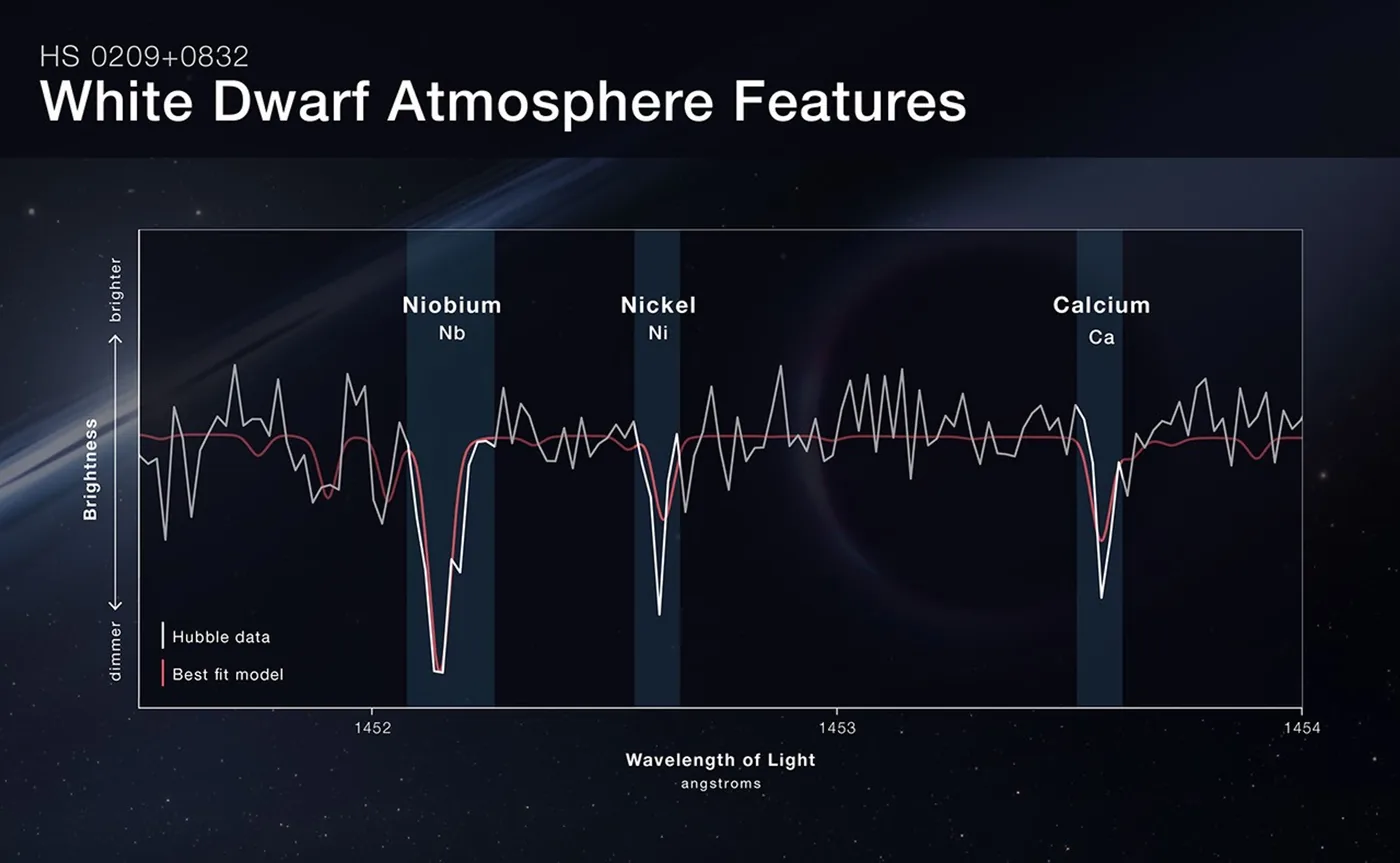
Astronomers describe this reborn world as a phoenix planet because it arose directly from the ashes of its parent star. “What’s remarkable about the planet around HS 0209+0832 is that this isn’t a planet from somewhere else, or a survivor from the system’s birth; it looks like it was built from the very material its own star cast off as it died,” Gaensicke said. That mechanism reveals how dead stars can forge secondary worlds [3].
Future Searches for Reborn Worlds Around Dead Stars
The discovery of a candidate planet around HS 0209+0832 establishes an observational method for finding other reborn worlds across the galaxy. While astronomers previously suspected that second-generation planets could form around pulsars, discovering one around a white dwarf demonstrates that the phenomenon occurs around much more common stellar remnants. Future telescope surveys can search for similar chemical signatures of niobium, zinc, and copper in the spectra of other cooling stars [3]. Detecting these specific heavy elements offers a reliable indicator of second-generation planet formation [1].
The discovery prompts researchers to reconsider how planetary systems evolve as their host stars reach the end of their lives. When a star runs out of fuel and casts off its outer layers, part of that material can coalesce into new worlds rather than dispersing entirely [3]. Similar questions about orbital evolution and distant planetary architecture drive ongoing searches for Planet Nine on the distant margins of the Solar System [1]. Scientific communications officer Bethany Downer and Christine Pulliam at the Space Telescope Science Institute noted that international research teams will track these systems across the Milky Way [4].
Williams plans to use the Hubble Space Telescope over the next several years to examine additional white dwarf systems and build substantial statistical data on these celestial bodies [2]. Hubble operates through international cooperation between NASA and the European Space Agency [4]. Mission operations receive support from Goddard Space Flight Center in Greenbelt and Lockheed Martin Space [2]. Visual specialist Leah Hustak helped visualize how this reborn world orbits its host star [5].
- ACADEMIC JOURNAL Williams, J. T., Gänsicke, B. T., Stone, N. C., Koester, D., Davies, B. D. R., Tong, C., Wilson, D. J., Sahu, S., Swan, A., Beatty, T. G., Ramírez, S. H., Cunningham, T., & Long, K. S. (2026). Discovery of a second-generation planet candidate accreting onto a white dwarf. Nature Astronomy. [Article Link]
- PRESS RELEASE Gianopoulos, A., & NASA Hubble Mission Team. (2026, October 5). Suspected second-generation planet solves NASA Hubble cold case. NASA Science. [Article Link]
- ONLINE NEWS University of Warwick. (2026, October 5). The phoenix planet: Astronomers find a world reborn from its star’s ashes. Phys.org. [Article Link]
- PRESS RELEASE European Space Agency. (2026, October 5). Suspected second-generation planet solves Hubble cold case (Science Release heic2613). ESA/Hubble. [Article Link]
- ONLINE NEWS Mirage News. (2026, October 5). Suspected second-generation planet solves Hubble mystery. Mirage News. [Article Link]
- ONLINE NEWS Newsroom America. (2026, October 5). Hubble cold case solved: Suspected second-generation planet found orbiting dead star. Newsroom America. [Article Link]
APA 7: TWs Editor. (2026, October 6). Hubble Data Uncovers a Second-Generation Planet Candidate. PerEXP Teamworks. https://perexpteamworks.com/en/second-generation-planet-hubble-cold-case/


