




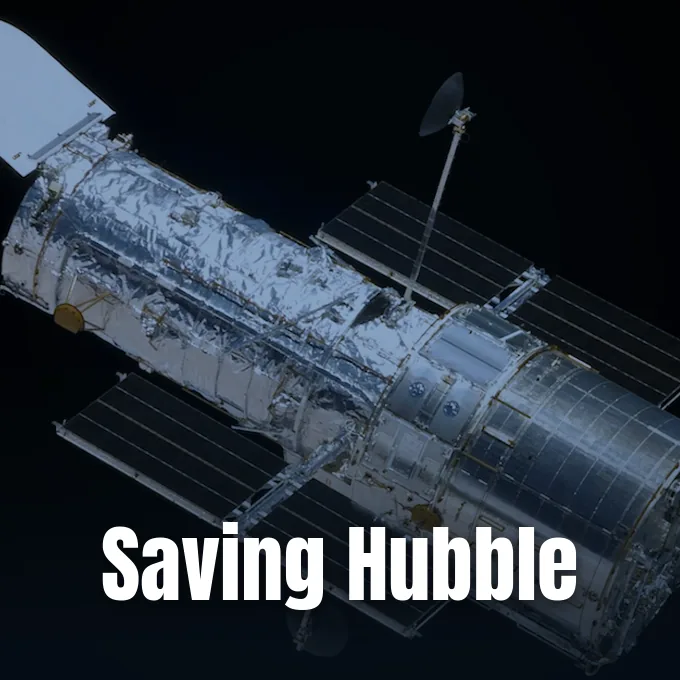
NASA issued a Request for Information on Oct. 29 to determine whether private aerospace firms can support a Hubble servicing mission to save the Hubble Space Telescope [1]. Without an onboard propulsion system to counter atmospheric drag, Hubble is slowly losing altitude while orbiting Earth [7]. NASA Administrator Jared Isaacman said that finding cost-effective ways to extend the lifespan of an asset already on orbit serves both American taxpayers and scientific researchers [1]. The initiative at NASA Goddard Space Flight Center in Greenbelt, Maryland, seeks private proposals before orbital decay makes safe intervention impossible [5].
Orbital Decay and Altitude Loss
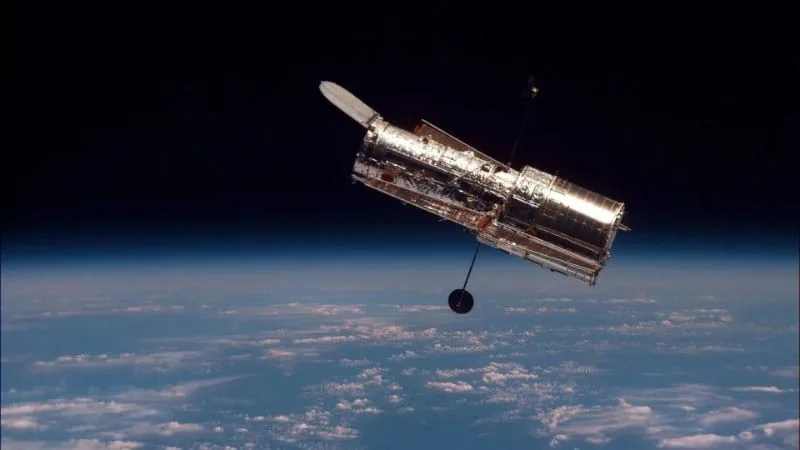
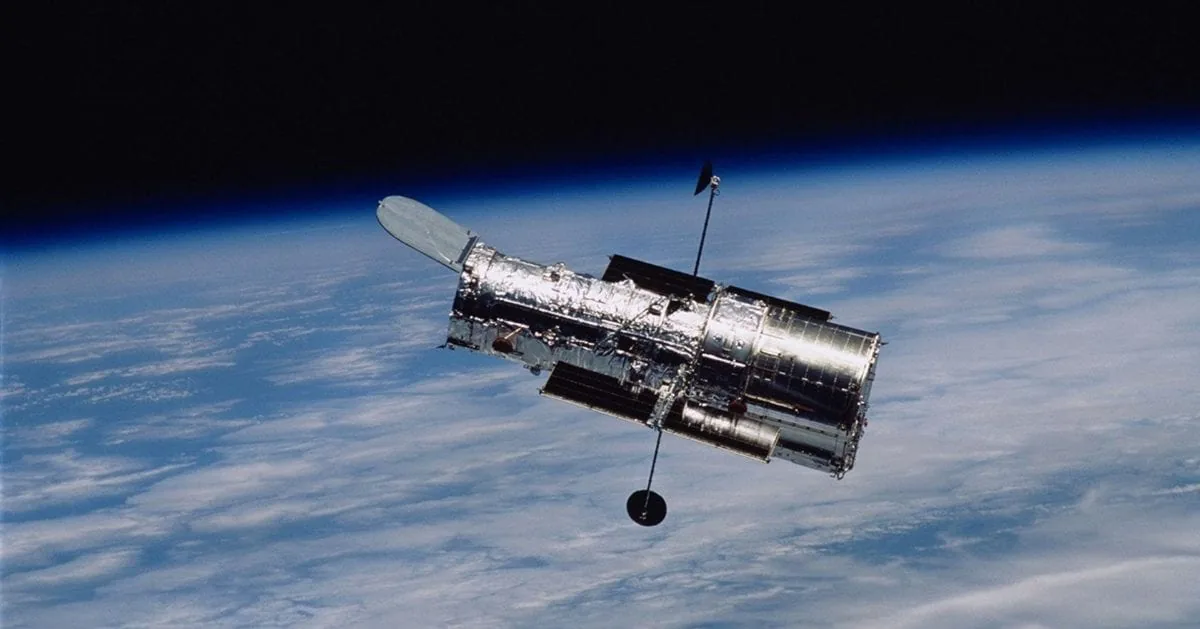
Hubble has orbited Earth since NASA launched the observatory in April 1990, but atmospheric friction constantly reduces its orbital energy. Hubble travels at an altitude of approximately 300 miles (483 km). According to reentry tracking data, that altitude is currently falling by about 9 miles (14.6 km) each year [4]. Because Earth’s upper atmosphere exerts drag on Hubble, the observatory cannot maintain its position without help from visiting spacecraft [1].
Because Hubble lacks thrusters to raise its own orbit, atmospheric friction will pull the multi-ton NASA observatory down into the thicker layers of Earth’s atmosphere [1]. A lifetime analysis completed in July 2026 calculated that there is already a 10 percent probability of atmospheric re-entry by September 2032, and that risk rises to 50 percent by December 2033 [4]. NASA models predict that re-entry will take place during the 2033 to 2034 timeframe if no propulsion tug intervenes [1]. Because of these mounting hazards, Goddard engineers determined that any viable rendezvous mission must launch by 2032 to avoid reaching an altitude where aerodynamic forces make docking maneuvers unmanageable. At that point, turbulent atmospheric resistance would destabilize Hubble before docking mechanisms could lock into place [5].
Three Private Flight Pathways
The Request for Information released by NASA Goddard Space Flight Center outlines three distinct paths for private industry participation [5]. Companies can submit proposals to capture Hubble and boost its orbit above at least 372 miles (600 km), launch a repair flight to improve hardware capabilities, or conduct a controlled atmospheric re-entry at the end of its life [4]. Associate Administrator Nicky Fox of the NASA Science Mission Directorate at NASA Headquarters in Washington said: “Commercial industry has rapidly evolved in recent years to offer new capabilities for in-space satellite capture and servicing” [1].
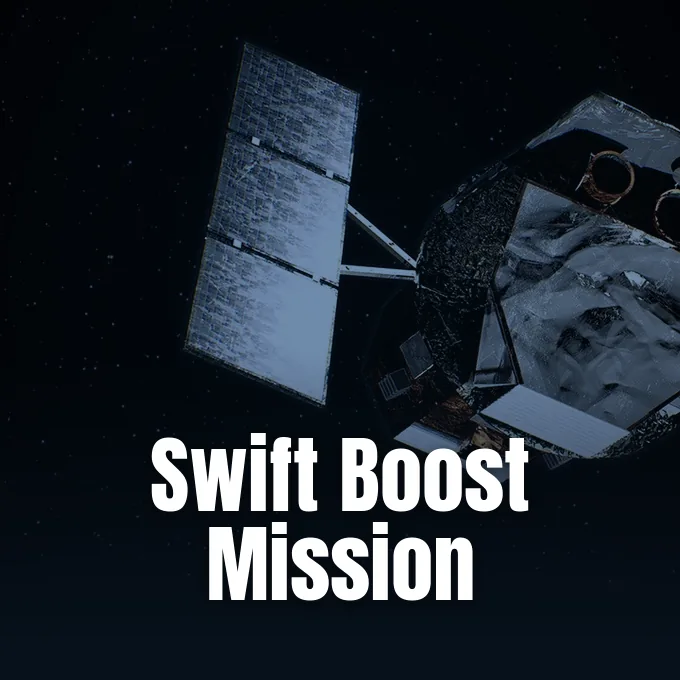
Under the framework proposed in the NASA documents, Goddard Space Flight Center will share technical data about Hubble and coordinate docking procedures from Greenbelt, Maryland [1]. The selected contractor must supply the rocket, the servicing spacecraft, and any flight crew necessary to execute the rendezvous [4]. This approach builds on private sector advancements seen during commercial crew flights to the space station. NASA leaders also noted that lessons learned while evaluating space servicing lessons from the Swift boost mission showed how private infrastructure might help science platforms. In describing the mission scope, NASA Administrator Jared Isaacman said: “If there are innovative and cost-effective ways to extend the life of an asset already on orbit, we owe it to the American taxpayer and the scientific community to explore them”. Extending Hubble’s life would yield more discoveries and more opportunities to expand human understanding of the universe [1].
Technical Criteria for Bidders
Companies interested in submitting proposals must answer specific technical criteria established by Goddard mission managers. NASA asks respondents to detail their technology readiness, provide a risk assessment, and explain how their hardware will avoid damaging the Hubble structure [4]. Goddard also wants to know the lowest orbital altitude at which each docking craft can safely perform a boost to the 600-kilometer target [5]. NASA spokesperson Alise Fisher at NASA Headquarters indicated that officials also asked how quickly each firm could launch once contracts are finalized [1].
Safety remains the primary constraint across all proposed concepts. NASA previously studied a private reboost proposal championed by Jared Isaacman and SpaceX before his appointment as NASA Administrator, but officials declined to proceed at that time after citing safety risks to Hubble [4]. Two years ago NASA stated it would not pursue a private reboost of Hubble, but new developments prompted officials to reopen the evaluation [5]. The current solicitation broadens the inquiry to the entire private sector through an open request [7]. Submissions must demonstrate how a visiting spacecraft can capture Hubble without jarring its optics or contaminating sensitive mirrors [4]. All interested parties have until 3 p.m. EST on Monday, Nov. 30, to submit their concepts to NASA [1].

Why a Hubble Servicing Mission Is Needed
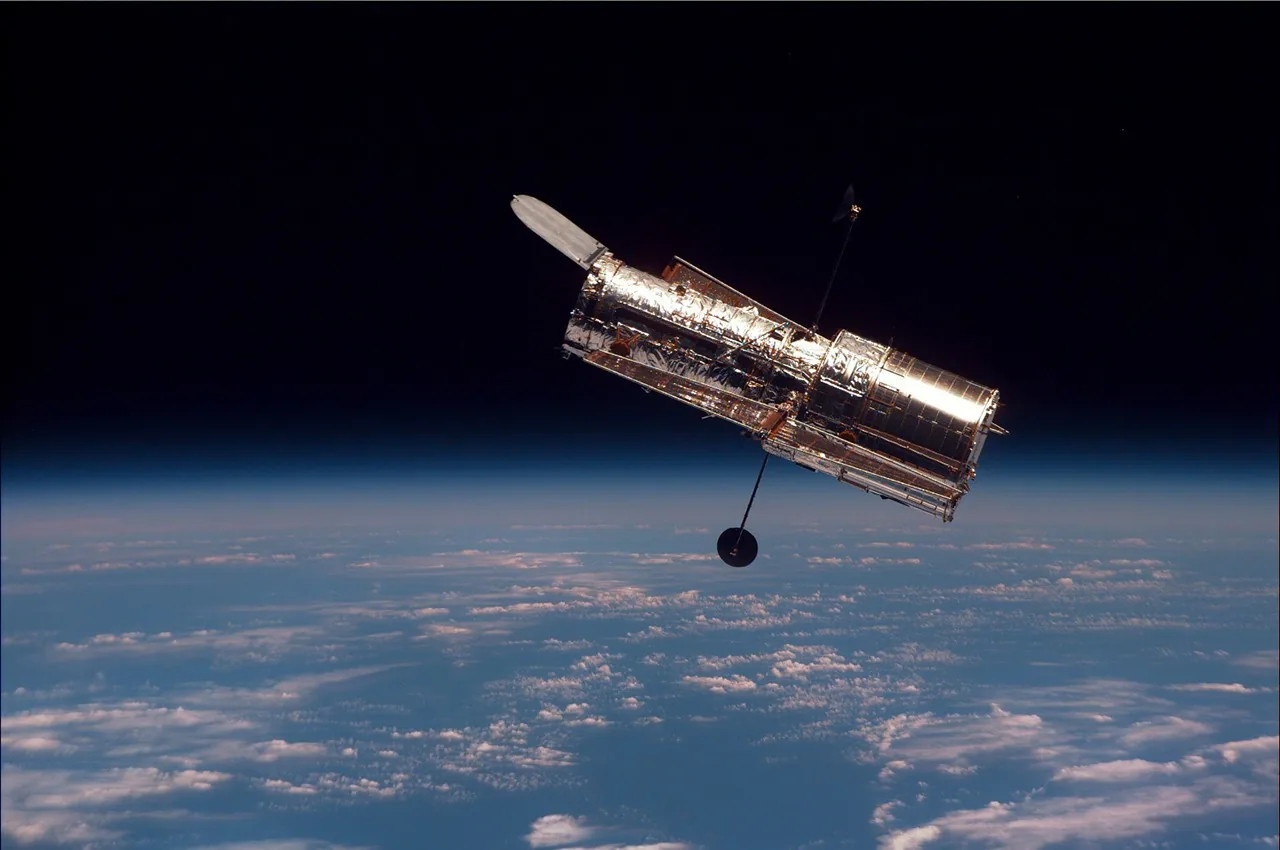
Astronomers still place high value on Hubble because of its unique ultraviolet and optical imaging systems, which ground-based observatories cannot replicate through Earth’s atmosphere. Hubble remains heavily oversubscribed, receiving more than seven times as many observing proposals as its schedule can accommodate. Even after 36 years in space, researchers produce more than 1,000 research papers each year using data collected by Hubble instruments. The NASA planning document said: “Extending the scientific life of HST will extend the availability of its unique capabilities until the potential replacement, Habitable Worlds Observatory (HWO), is operational” [4]. Major observational projects remain on the telescope’s active calendar as astronomers study cosmic history [1].
Astrophysicists face a prolonged gap between current orbital assets and future observatories. NASA does not expect to have the Habitable Worlds Observatory ready for operations until around 2040. While the proposed UVEX space telescope is set to launch in January 2031, astronomers still rely on Hubble for diverse observations, including Hubble solar system observations tracking planetary weather. In addition, NASA recently ceased operations of the Neil Gehrels Swift Observatory, which further limits available space platforms. Without a Hubble servicing mission, astronomers face an extended gap in ultraviolet space observations during the 2030s. That gap would leave researchers without high-resolution ultraviolet instruments until the next generation of space observatories reaches flight readiness [4].

Previous Flights and Single-Gyroscope Operations
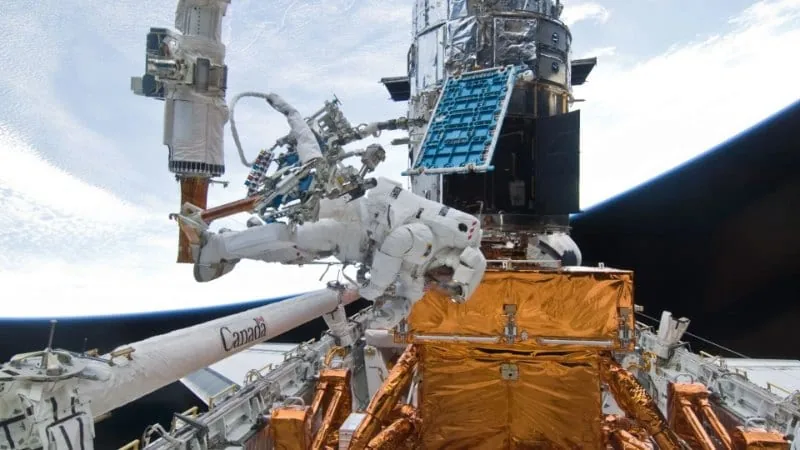
Astronauts previously upgraded Hubble during five separate space shuttle visits between 1990 and 2011. Those missions included the second servicing mission in February 1997 and concluded in May 2009 during STS-125, when spacewalker Michael Good helped install optical instruments and replacement hardware. The third servicing effort was split across two distinct shuttle missions to finish necessary repairs. Human servicing ended when NASA retired the Space Shuttle fleet in 2011 [4].
Hardware aging has steadily reduced the telescope’s redundancy since that final astronaut visit. In June 2024, Goddard mission managers transitioned Hubble from operating on three gyroscopes down to a single gyroscope to preserve the spacecraft’s remaining hardware. These gyroscopes function as motorized internal flywheels, stabilizing the platform so cameras can stay fixed on faint astronomical targets [4]. Science operations continue through an international partnership between NASA and the European Space Agency, with Lockheed Martin Space in Denver supporting operations at Goddard while the Space Telescope Science Institute in Baltimore conducts daily observations. Claire Andreoli at Goddard Space Flight Center noted that these institutions coordinate telescope pointing and data distribution to universities around the world [1].
Planning an HST Servicing Mission for 2032
Agency officials emphasize that the current solicitation is an exploratory study rather than a funded contract [5]. NASA intends to evaluate industry responses before deciding whether to release a formal Request for Proposals [4]. Reporting by SpaceNews described how NASA is gauging commercial readiness for in-space servicing [2]. Responses are due by 3 p.m. EST on Monday, Nov. 30, giving aerospace firms one month to submit concepts to Goddard [1]. If commercial companies present safe docking concepts, NASA leadership could formalize a flight procurement program [7].
NASA Administrator Jared Isaacman reaffirmed his interest in evaluating every practical option to preserve the observatory, posting on social media that Hubble remains an asset worthy of serious rescue efforts. Isaacman said: “There is an orbital altitude that is a point of no return, but still worth exploring the options”. He said that while lower-cost solutions had been proposed previously, exploring private options now represents a necessary duty to taxpayers [5]. Nicky Fox also stated: “Given the time we have until Hubble’s anticipated re-entry, we are eager to explore the breadth of possibilities to boost Hubble to a higher orbit while we develop the flagship mission to follow”. If private firms demonstrate viable rendezvous methods by the November 30 deadline, NASA may soon decide whether humanity’s most famous space observatory receives an orbital lifeline [1].
- PRESS RELEASE Fisher, A. (2026, October 30). NASA Explores Potential Commercial Servicing for Hubble Telescope. NASA Science. [Article Link]
- ONLINE NEWS Foust, J. (2026, October 30). NASA seeks ideas for Hubble servicing mission. SpaceNews. [Article Link]
- WEBSITE Belleville, M., & NASA Hubble Mission Team. (2023, May 10). Hubble Space Telescope. NASA Science. [Article Link]
- ONLINE NEWS Vardhan, H. (2026, October 30). NASA considers potential servicing of Hubble Telescope to extend its lifespan, asks industry for help. Starlust. [Article Link]
- ONLINE NEWS Boyer, C. (2026, October 30). NASA Seeks Solutions to Save Hubble Space Telescope. TalkOfTitusville.com. [Article Link]
- ONLINE NEWS Mirage News. (2026, October 30). NASA Weighs Commercial Servicing for Hubble Telescope. Mirage News. [Article Link]
- ONLINE NEWS WireUnwired Editorial Team. (2026, October 30). NASA Explores Commercial Servicing to Extend Hubble Life. WireUnwired Research. [Article Link]
APA 7: PerEXP Teamworks. (2026, October 31). NASA Requests Commercial Ideas for Hubble Servicing Mission. PerEXP Teamworks. https://perexpteamworks.com/en/hubble-servicing-mission-commercial-plans/


