





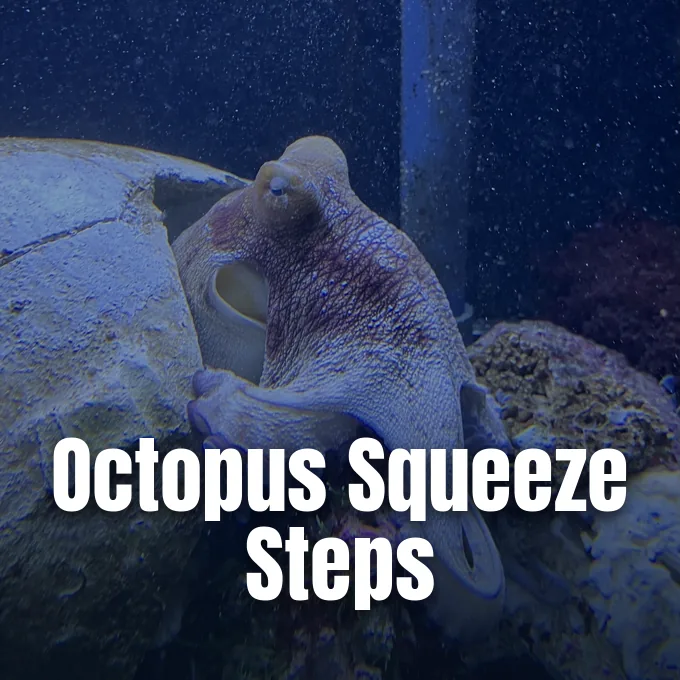
A report in the Journal of Experimental Biology reveals how common octopuses crawl through tiny holes by reorganizing their arms in staged movements. Marine enthusiasts have long watched cephalopods Houdini their way out of closed aquariums and off fishing boats, but controlled tests on these escapes remained rare. Understanding how an octopus squeeze works in tight spaces reveals that Octopus vulgaris chooses between two distinct movement routines based on aperture size. Instead of jamming their soft flesh forward all at once, these animals probe each opening and adjust their eight limbs to clear the gap safely [1].
The Cartilage Boundary
Octopuses lack a rigid skeleton, but their flexible bodies still encounter hard anatomical boundaries when navigating narrow geometries, as a stiff cartilage sheath encases the central nervous system between their eyes. The brain case sets the limit. Michael Kuba from the University of Naples Federico II collaborated with Tamar Gutnick and Daniel Abed-Navandi from the Haus des Meeres-Aqua Terra Zoo in Vienna to measure this cranial constraint across live cephalopods (15 to 35 mm). Distance between the eyes ranged from 0.6 to 1.4 inches in Phys.org records, while Popular Science reported eye measurements between 0.6 and 1.3 inches wide [2].
Wenci Xin, a robotics researcher at the National University of Singapore, built clear acrylic aquarium boxes to test escape strategies. Each container featured an exit hole set to a specific diameter. Some apertures were slightly wider than the eye-to-eye measurement of the animal, while other holes were 5 mm smaller. Testing both hole sizes allowed Xin and Kuba to see whether animals altered their crawl when space became tight. The team introduced three young specimens of Octopus vulgaris and four individuals of Octopus maya to evaluate responses [3].
High-speed video cameras tracked every limb movement. Octopuses did not stall. They approached the acrylic partition and touched the rim with their suckers, gathering sensory information about opening width and wall thickness before pushing their arms through the clear barrier [4].
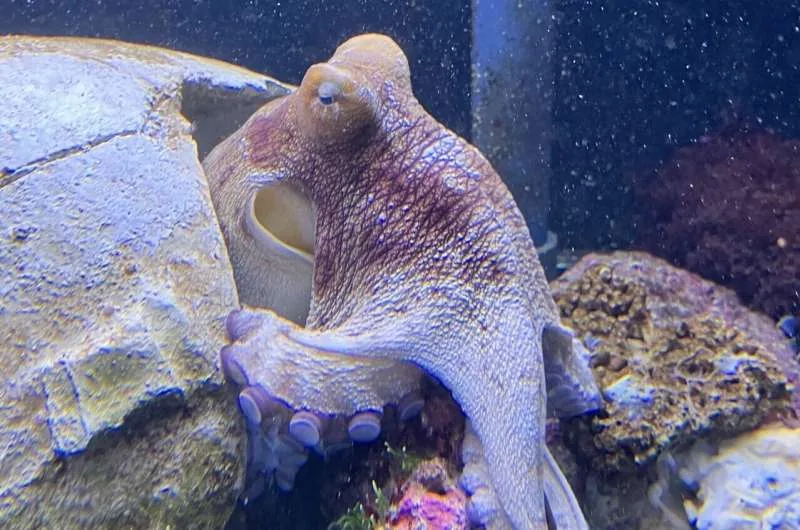
Wide Hole Octopus Squeeze Steps
When an opening exceeded eye-to-eye distance, each common octopus cleared the divider using a consistent three-step sequence. First came exploratory probing. The octopus slid one or two arms through the aperture to explore the open water on the other side. In most trials, the animal led with one of its two front left limbs. Once that lead arm slipped into the far chamber, the octopus threaded up to five more limbs through the opening to establish firm contact points on the outside partition [1].
Anchoring powered the second phase. The octopus reached back with two arms that had already crossed the partition, pressing its suckers flat against the outer wall of the Perspex enclosure. By gripping the smooth plastic surface firmly, the animal converted its extended arms into functional levers. It stiffened those limbs and pushed outward against the partition, dragging its head, mantle, and remaining arms forward in one fluid movement [2].
The transition took about 20 seconds from first touch to complete exit. Could soft limbs push without bones? Muscular hydrostats produce ample force to drag the bulbous mantle through without stalling, allowing the creature to complete an octopus squeeze through wider openings using steady arm leverage [1]. Xin said that watching Octopus vulgaris slide through the clear Perspex wall looked almost like water flowing through a gap.
A Fourth Step for Narrow Holes
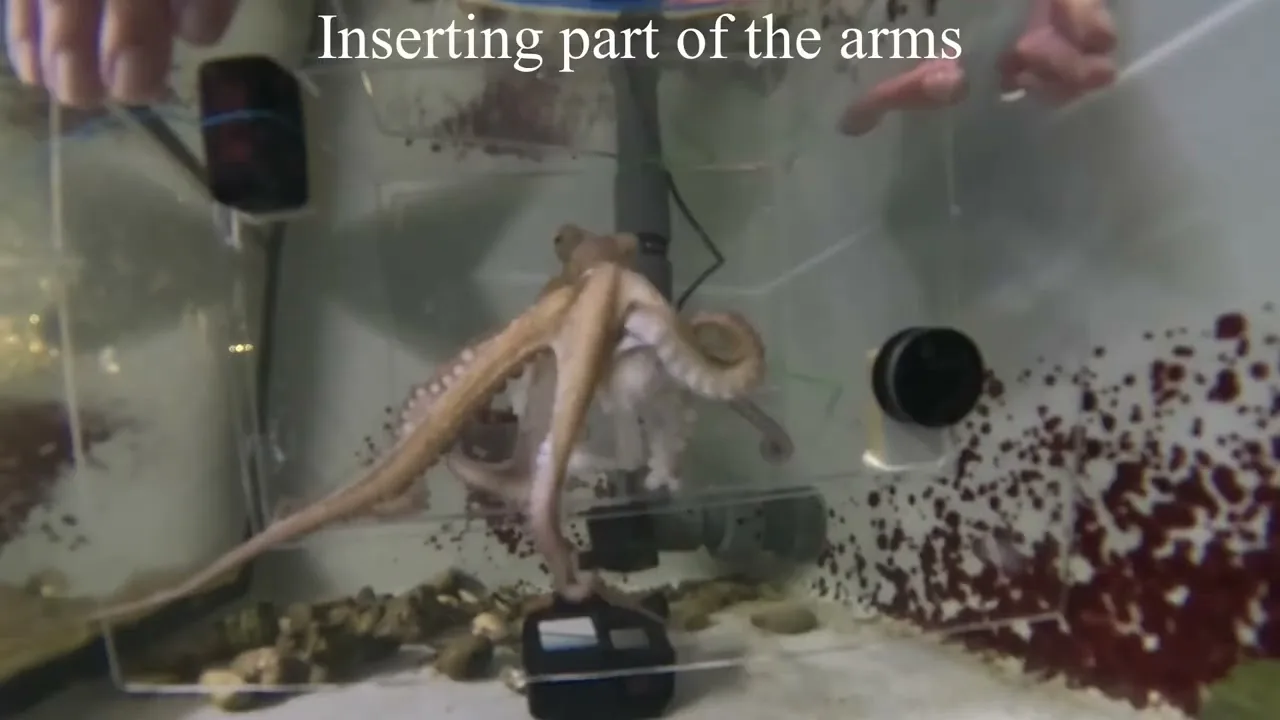
When Xin and Kuba narrowed the opening by 0.2 inches below cranial width, the three-step sequence proved insufficient because multiple limbs could not crowd into the aperture together. Common octopuses adapted by adding a fourth step to their routine. Instead of pulling their mantle through alongside trailing limbs, they shoved all eight arms through the hole first. By clearing every limb into the receiving chamber, the octopus freed necessary clearance within the opening for its bulkier body parts, preventing arms from jamming against the acrylic rim [3].
Once all eight arms cleared the hole, the octopus tackled its bulbous mantle as an isolated stage. It compressed the soft muscular sac (the mantle cavity), thinning the tissue to slide past the rigid boundary before dragging it into the new chamber. A tighter octopus squeeze forced the animals to divide their body passage into distinct phases rather than relying on one sweeping pull. They used their suckers on the outside wall to haul their rear section through the gap, completing the transit safely [1].
“There is no information about how octopuses squeeze through an opening far smaller than the body diameter,” said Xin when evaluating the data. Biologists had assumed that octopuses would use a single locomotive approach regardless of opening size. Instead, these experiments revealed that cephalopods evaluate spatial constraints and alter their motor programs to fit the environment. The finding shows how flexible motor control helps soft-bodied marine predators survive in complex underwater habitats [2].


Common Versus Mayan Reactions
While common octopuses tackled narrow gaps with extra steps, the four Mayan octopuses tested in identical acrylic boxes displayed a cautious temperament. Known as Octopus maya, these animals refused to attempt the narrower openings. When confronted with a hole 5 mm smaller than their eye spacing, they retreated to a corner of the enclosure and remained still. They made no effort to poke their arms through the plastic hole, showing no interest in testing the tight squeeze [3].
The researchers then offered Octopus maya subjects a choice between a large hole and a small hole inside the same partition. The animals approached the smaller opening first, exploring its edge with their suckers before abandoning it. They then crawled over to the larger aperture and slipped into the adjacent tank. This deliberate choice proved that Mayan octopuses could distinguish between hole dimensions and chose not to risk getting stuck in tight spaces [4].
Michael Kuba said that these behavioral differences stem from evolutionary ecology and habitat demands. Mayan octopuses live in shallow, sandy and rocky areas off Central America, where they seek shelter under loose stones rather than squeezing into deep rock crevices. Because their natural hunting grounds offer open sand, they face little survival pressure to compress their bodies through tiny apertures. Common octopuses, by contrast, hunt across complex reef systems where tight gaps shelter both food and predators [2].
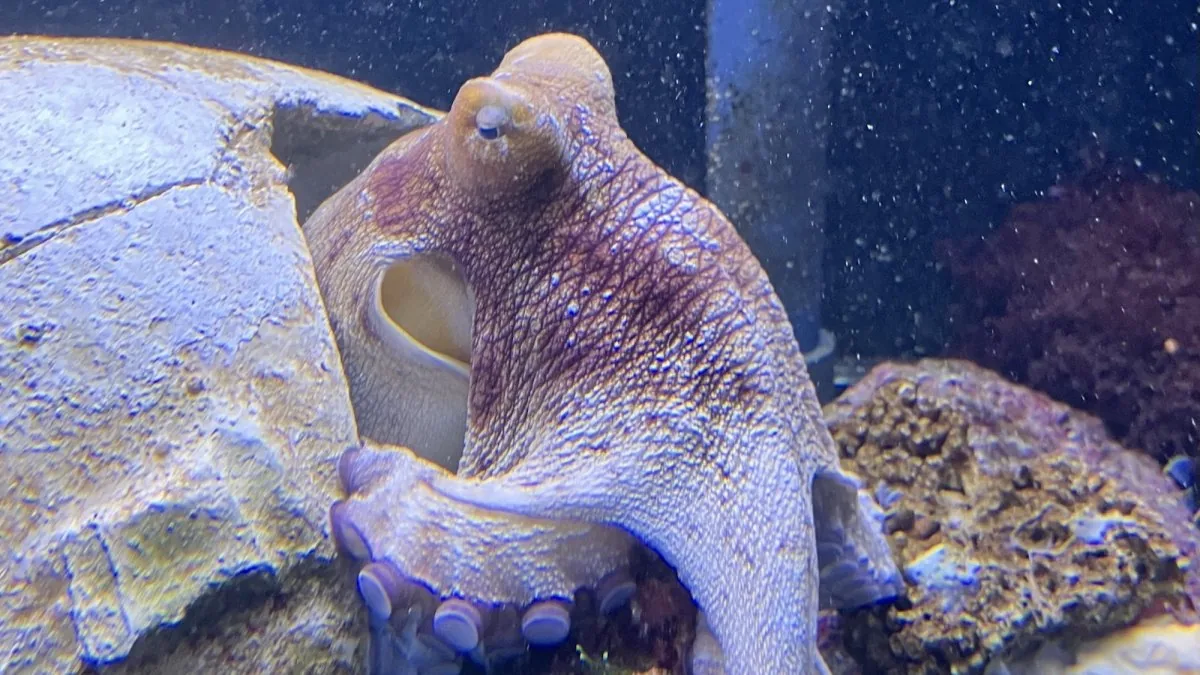
Octopus Squeeze Lessons for Robotics
Soft robotics needs fresh ideas. Wenci Xin and Cecilia Laschi from the National University of Singapore study how animal locomotion can solve persistent engineering challenges when search-and-rescue teams deploy probes into collapsed buildings [1]. Current exploration probes rely almost exclusively on slender snake-like frames to slide through narrow crevices in search of survivors. While these snake robots navigate rubble piles effectively, their long and narrow bodies leave almost no room for essential rescue gear.
Those elongated frames impose severe payload limits during field deployments (such as earthquake rubble inspection). How can robots gain flexibility without sacrificing equipment space? Slender snake bodies lack interior volume for packing cameras, gas sensors, or robotic gripping tools. “All existing search-and-rescue and exploration robots have slender snake-like bodies, to help them move through narrow gaps,” said Xin. That geometric constraint restricts what tasks the machines can perform once they reach a confined cavity [2].
Engineering teams hope that understanding octopus squeeze dynamics will aid soft robotics by inspiring wider, multi-limbed machines capable of temporary shape changes. “This incredible capability could enable robots to overcome environmental limitations and enter spaces that are difficult to reach,” said Xin. A robot modeled on octopus locomotion could carry large sensor packages in a bulbous core, using coordinated arm shifts to compress its body only when passing through narrow openings [3].
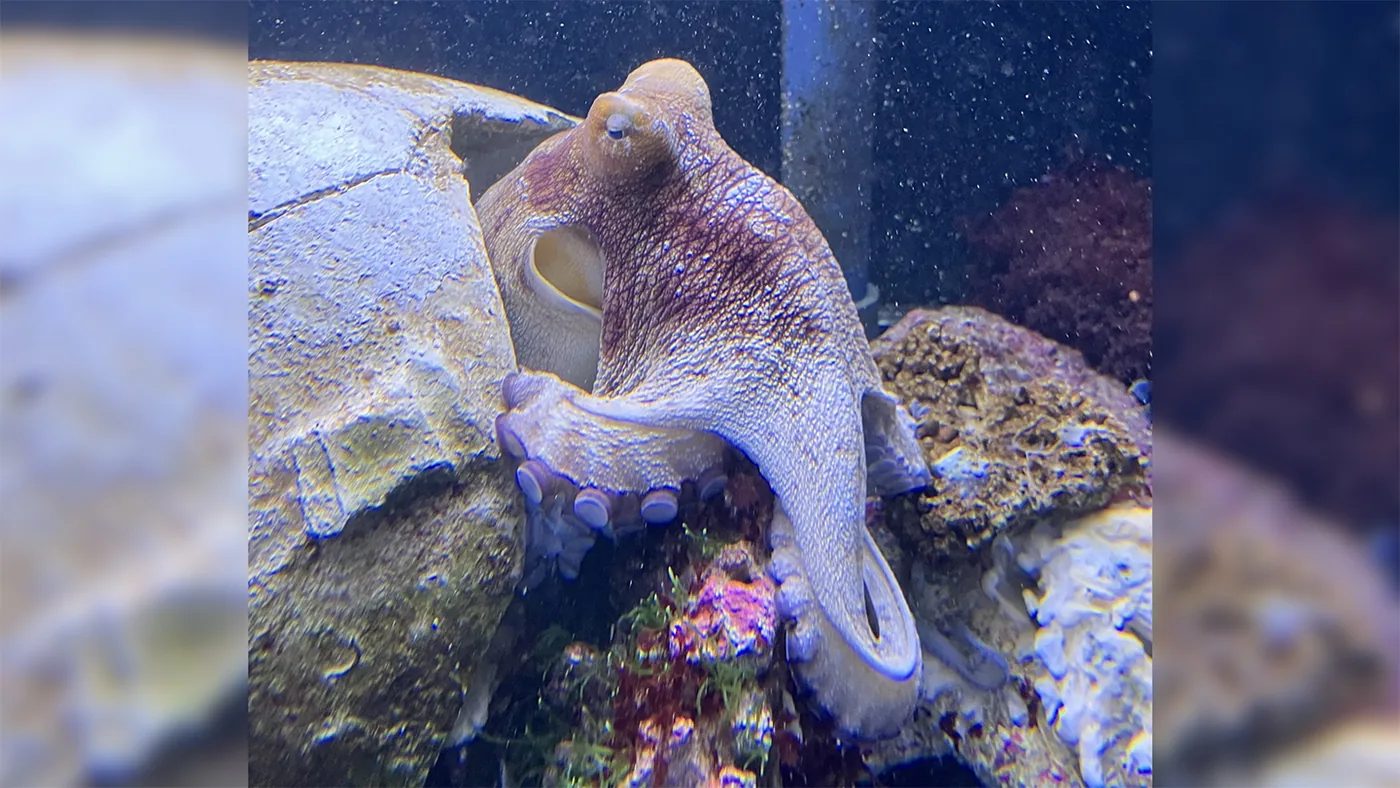
Open Questions on Slits and Tubes
Remember Inky, the octopus that famously fled from New Zealand’s national aquarium? The animal slipped from its enclosure, scrambled across the floor, and vanished down a fifty-meter drainpipe directly into Hawke’s Bay. Sneaking through small spaces is second nature for cephalopods, which routinely Houdini their way off fishing vessels and out of holding tanks. Robyn Crook studies evolutionary biology at San Francisco State University outside this project. She said that formal research on octopus escape maneuvers has lagged far behind public awareness [3].
“It’s one of the most characteristic behaviors of octopuses in popular awareness, but the strategies octopuses use have not really been examined systematically,” said Crook. Studying how octopuses navigate different types of openings provides essential clues for future robotics, Crook said, because wild reefs present irregular barriers (such as elongated rock crevices or tubular hollows). Future trials on octopus squeeze maneuvers may test whether animals alter their limb coordination when encountering narrow slits rather than symmetrical holes [3].
These laboratory trials prove that an octopus will attempt a tight passage if it senses that its rigid cartilage case can clear the boundary. By combining sensory probing with flexible arm repositioning, common octopuses turn potentially hazardous gaps into accessible escape routes. As biologists and roboticists expand their tests to other species and varied opening shapes, these eight-armed contortionists will continue offering practical lessons in biomechanics and adaptive movement [4].
- ACADEMIC JOURNAL Xin, W., Kuba, M. J., Gutnick, T., Abed-Navandi, D., & Laschi, C. (2026). Overcoming environmental constraints: octopus uses 3-step or 4-step strategies to squeeze through small holes. Journal of Experimental Biology, 229(21). [Article Link]
- ONLINE NEWS Phys.org. (2026). How octopuses squeeze through too-small gaps. [Article Link]
- ONLINE NEWS Bradford, N. (2026). How octopuses squeeze through tiny openings, step by step. Science News. [Article Link]
- ONLINE NEWS Paul, A. (2026). How do octopuses squeeze through tiny holes? Popular Science. [Article Link]
APA 7: PerEXP Teamworks. (2026, November 6). Octopus Squeeze Tests Show How Cephalopods Clear Narrow Gaps. PerEXP Teamworks. https://perexpteamworks.com/en/octopus-squeeze-through-small-openings/


