




OpenAI announced major research results in math, computer science, and physics on Monday, claiming solutions to several old problems that have puzzled scientists for decades. The San Francisco lab said it will work with outside expert “shepherds” to decide how to share two of those findings with the wider research world [1]. But university scholars quickly objected to the plan, arguing that limiting early access to chosen specialists creates an unfair barrier to independent verification [3]. These OpenAI breakthroughs arrive after months of friction between AI labs and academic scholars who want raw machine outputs posted openly on preprint servers [2].
Scope of the New OpenAI Breakthroughs
The math claim focuses on the Kakeya conjecture, an open problem asking how little space is needed to turn a unit needle in every direction. Earlier this year, NYU math scholar Hong Wang won a Fields Medal in part for proving the three-dimensional case of that problem. OpenAI asserted that its model solved the conjecture in all dimensions, sharing the raw machine output with outside scholars. Brown University professor Brendan Hassett said the claim “looks well supported,” though he said he hasn’t checked the formalization in Lean, a software tool used to check proofs by computer [1].
In physics, the lab studied quantum chromodynamics, the part of the Standard Model explaining the strong nuclear force that binds quarks. That work links to Yang-Mills theory, a pillar of physics and a Millennium Prize problem, though OpenAI did not resolve the famous mass gap. The computer science result claims to disprove the exponential time hypothesis, which posits that certain hard problems can’t run faster than brute force. That result connects directly to P versus NP. The math result came first [1].
The wide scope of the findings shows how fast OpenAI expands under chief executive Sam Altman. Founded in December 2015 as a non-profit by Altman and Elon Musk, who later left, the firm gained backing from Microsoft and built tools like ChatGPT and Codex. Today the lab competes with Anthropic and Google DeepMind in frontier reasoning [5]. Outside scholars call the latest claims big, but say testing OpenAI breakthroughs needs full proofs [1].
Selective Access Through Expert Shepherds
Instead of sharing all three results the same way, OpenAI set up different release paths. The lab posted the raw math output openly for scholars to read. In computer science, the firm chose an outside team to explain the proof. The physics paper stays locked, with OpenAI deferring to outside specialists on how to share the text. The proof remains under wraps [1].
University faculty objected to the plan, arguing that private labs should not pick who gets early access to science. Constantin Kogler at the Institute for Advanced Study liked seeing three problems instead of hundreds dumped earlier, but objected to locked doors. “It doesn’t make any sense that first only a few distinguished scientists can look at them,” Kogler said. Andreas Karch, a physics professor at the University of Texas at Austin, called the chosen group a disaster and warned that big tech firms should not pick winners and losers in science. Karch asked why OpenAI can’t release the proof right now [1].
The Advisory Group on Mathematics and Artificial Intelligence, an independent panel known as AGMAI, warned against this practice just one day before the announcement. The panel said giving early previews to select names borrows academic prestige while causing delays and biased access. After Monday’s news, AGMAI urged OpenAI to publish both natural-language texts and Lean outputs for the physics study immediately, pointing out that since the formalization is done, no scientific reason justifies keeping the files private [1].

Earlier Friction and the August Meeting
The dispute follows months of strain between top math scholars and AI labs. In August, OpenAI met with roughly 40 mathematicians to talk about how the academic discipline should respond if machine systems outpace human capabilities in the near future. Attendees asked the firm not to share results through brief blog posts or tweets, urging formal papers instead. Northwestern University math scholar Bryna Kra said attendees felt excitement and dread, but noted that OpenAI ignored their advice when it dumped hundreds of unvetted preprints onto GitHub in early October [2].
Rivalry between AI labs has also fueled disputes over credit and ethics. In September, New York University professor Tristan Buckmaster accused OpenAI of front-running research he did with Anthropic researcher Levent Alpöge on a Millennium Prize problem after both scholars used OpenAI software tools to help their unpublished work. OpenAI researcher Sébastien Bubeck reportedly pressed Buckmaster to leave Alpöge off any paper so Anthropic would not gain credit. Meeting notes show Bubeck warned Buckmaster: “If you don’t want me to be nice, then I don’t have to be nice”. Nestor Guillen, a visiting math professor at NYU, said peers see mobster habits as tech labs amass power. Both groups want credit [2].
Math scholars also disliked hasty social media posts. Alpöge posted on social media that he had solved an 87-year-old math problem right after the soccer tournament final. Kra said math by tweet or press release fails to protect the academic world that originally created the fertile ground on which these models trained [2].
Why OpenAI Breakthroughs Divide the Field
The clash over recent releases reflects split views on evaluating OpenAI breakthroughs in pure science. Stanford University math professor Jared Duker Lichtman said finding a path that pleases everyone is hard. “My sense is that for any approach, there is going to be someone who is upset,” Lichtman said, suggesting the firm seeks the least offensive option. OpenAI says it tests different models and knows each choice has tradeoffs [1].
Other scholars argue that small process changes cannot fix the main dilemma facing the field. Georgia Institute of Technology professor Xiaoyu He said OpenAI puts on a show of care without fixing the real trouble: machines now solve hard problems so fast without human help that resulting papers are hard to read and verify. Similar friction erupted in earlier debates when mathematicians confronted AI in mathematics after OpenAI claims on unverified proofs. The gap widens [1].
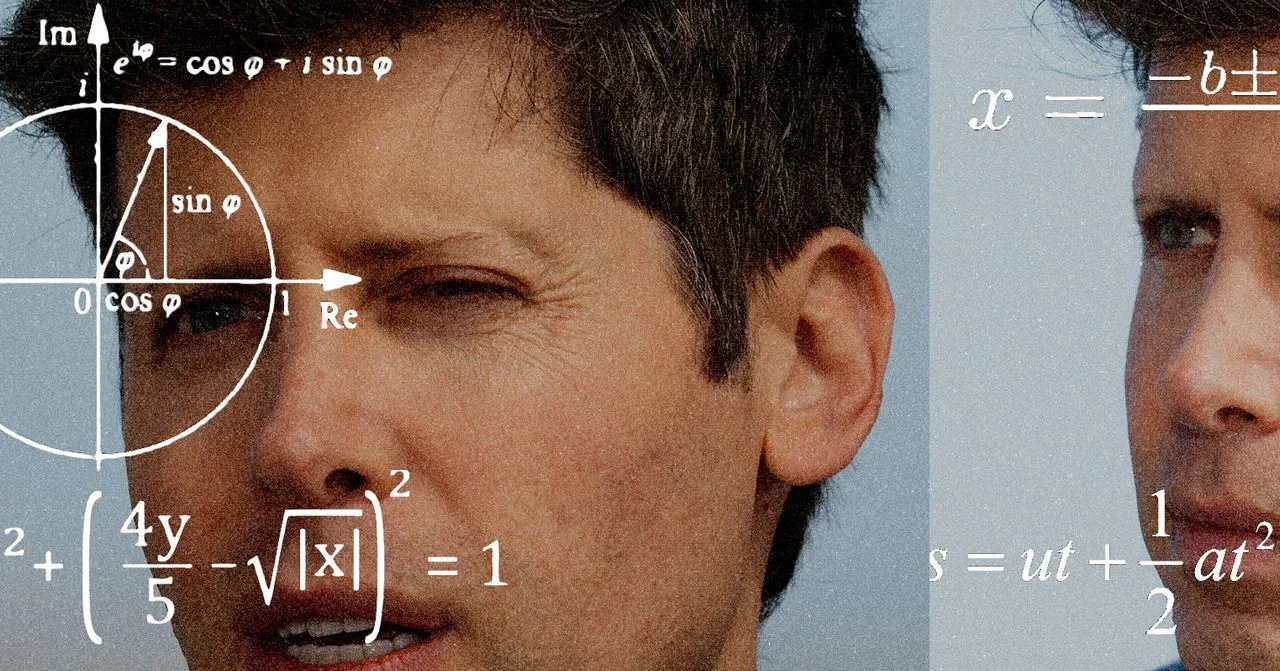
OpenAI says its systems will aid rather than replace human scholars. Company spokesperson Lindsay McCallum said the lab does not think the future of math is set and wants to work with scholars. Sébastien Bubeck said smart models let mathematicians tackle bigger goals and link pure theory to real problems. But faculty worry that IPO plans and tech races could sideline old scientific rules. The two firms race for prestige [2].
Calls for Independent Verification and Open Repositories
Scholars have built independent tools to handle machine-generated proofs outside private control. Researchers set up Hexagon as a store for synthetic math findings, and Palomar as a registry for machine-checked proofs. Yet big labs have not changed their ways to use these public tools. Kra pointed out that more than 4,000 mathematicians signed the Leiden declaration, calling on commercial developers to adhere to established academic standards in open science [2].
Faculty say open access is vital for testing new OpenAI breakthroughs without private barriers. Brown University professor Brendan Hassett said letting teams around the globe study raw findings helps speed the safe adoption of new tools. Karch argued that sharing Lean proofs right away lets the full field understand the work without waiting on secret review teams. Without open data, peers cannot test claims on Yang-Mills theory or the exponential time hypothesis [1].
While some tech workers think AI could soon end traditional math careers, scholars reject that view. Kra said this shift is scary, but gives people a chance to think bigger [2]. Singlink Bot and tech analysts reported that whether AI labs share discoveries openly or keep rationing access through chosen gatekeepers is now the central test for the field [4].
- ONLINE NEWS Hart, R. (2026, October 27). Researchers are getting tired of OpenAI gatekeeping its breakthroughs. The Verge. [Article Link]
- ONLINE NEWS Ward, I. (2026, October 6). OpenAI is pissing off a bunch of mathematicians—again. WIRED. [Article Link]
- ONLINE NEWS New York Weekly Times. (2026, October 27). Researchers are getting tired of OpenAI gatekeeping its breakthroughs. [Article Link]
- WEBSITE Singlink Bot. (2026, October 27). Researchers grow tired of OpenAI gatekeeping its breakthroughs. [Article Link]
- WEBSITE NewsNow US. (2021, March 23). OpenAI. [Article Link]
- WEBSITE World Neural. (2026, October 27). Researchers are getting tired of OpenAI gatekeeping its breakthroughs. [Article Link]


