





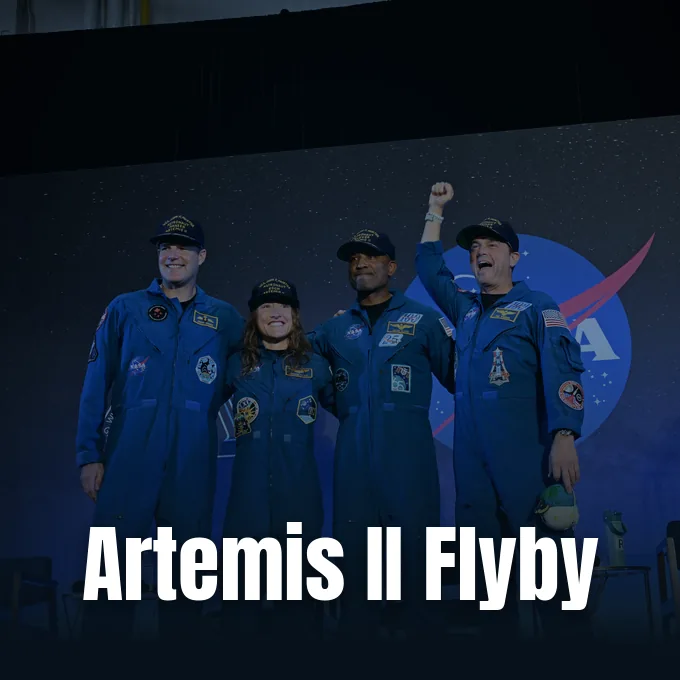
When four astronauts completed a ten-day lunar voyage in April 2026, they pushed human spaceflight farther from Earth than any previous expedition. The NASA Artemis crew—Commander Reid Wiseman, Pilot Victor Glover, Mission Specialist Christina Koch, and Canadian Space Agency Mission Specialist Jeremy Hansen—orbited the Moon aboard the Orion spacecraft. Their high-speed flight broke historical trajectory records and validated deep-space life-support systems. On September 30, the astronauts gather at the University of Houston’s Fertitta Center to discuss the mission and conclude their post-flight campaign [1].
Houston Event for the NASA Artemis Crew
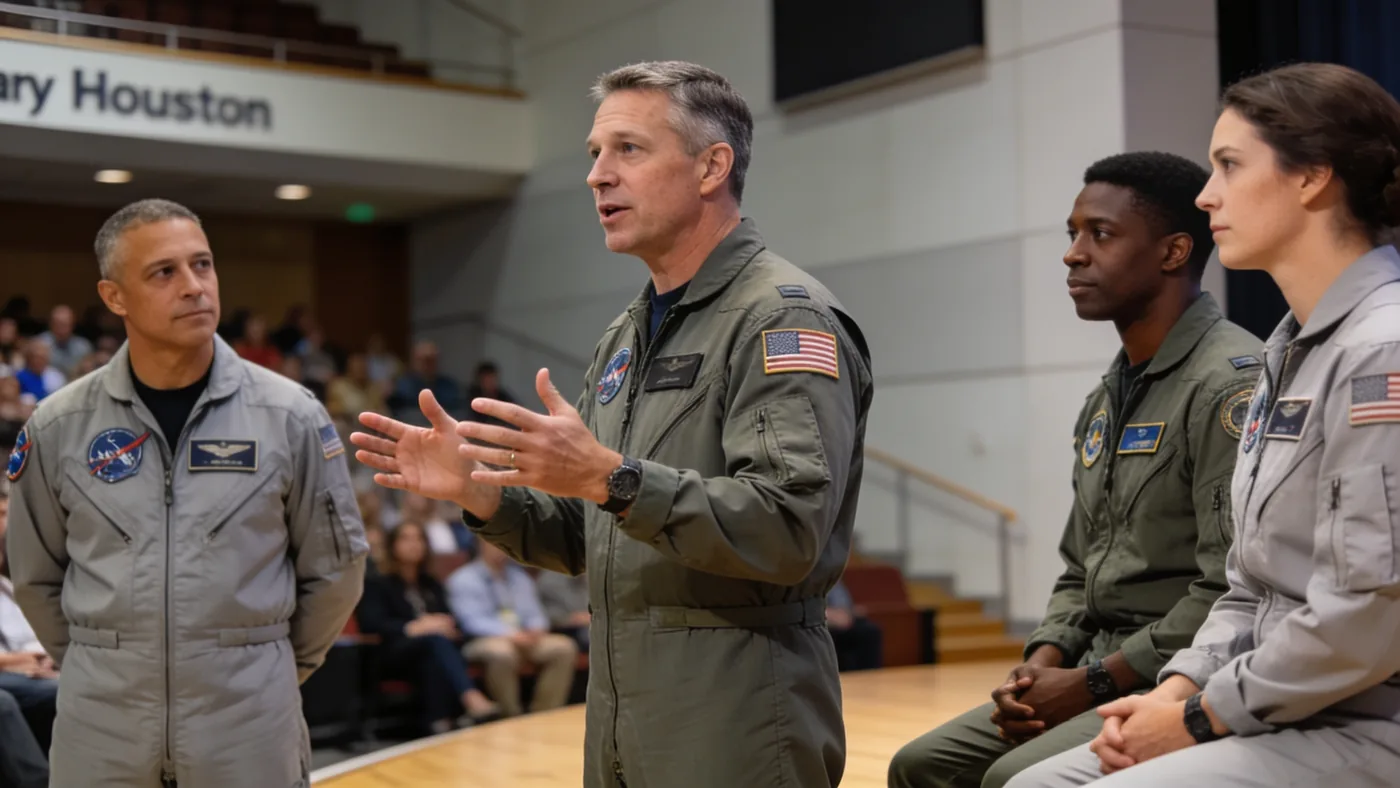
The University of Houston will host the Artemis II astronauts on Wednesday, September 30, for a free public presentation at the Fertitta Center. Scheduled for 7 p.m. CDT, the evening provides Houston residents an opportunity to hear directly from the spacefarers about flying beyond lunar orbit. Industry and community partners organized the event to commemorate the formal conclusion of the flight campaign and technical debriefs for the NASA Artemis crew. Accredited journalists will join a dedicated question period with Wiseman, Glover, Koch, and Hansen at 5:45 p.m., just ahead of the main presentation. Kenna Pell at Johnson Space Center coordinated media credentials, requiring advance registration by noon on the day of the event [1].
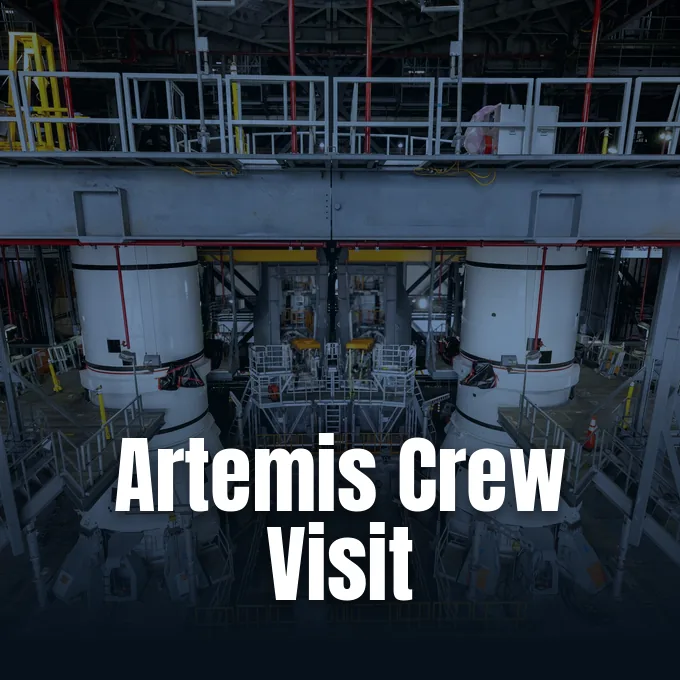
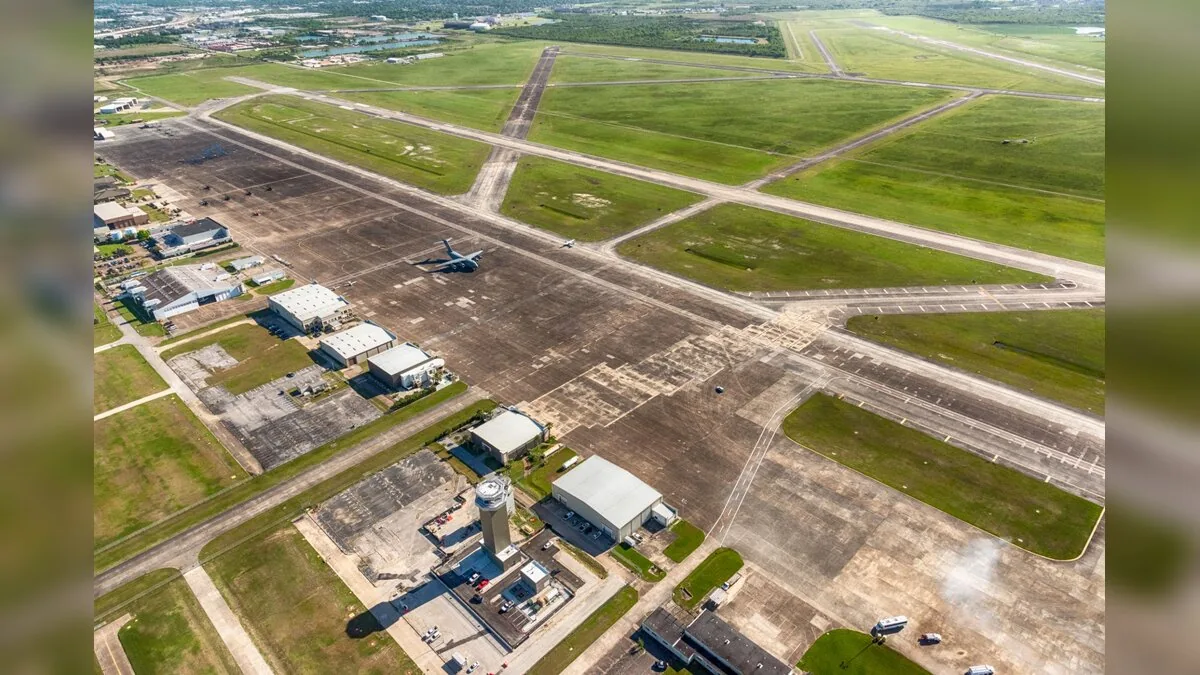
While earlier analysis tracked Why Artemis 3 Mission Crew Toured Kennedy Booster Stacking to observe launch vehicle assembly for an eventual surface landing, Wednesday’s gathering focuses strictly on reviewing completed deep-space flight milestones. Unlike ongoing ground preparations in Florida, the Houston presentation highlights the post-mission operational review of a completed lunar flyby. Flight operations personnel previously welcomed the astronauts back to Texas following a Pacific Ocean splashdown on April 10 that concluded roughly ten days of continuous flight [1]. The crew touched down at Ellington Airport near Johnson Space Center on April 11 to reunite with families and flight controllers [2].
NASA Administrator Jared Isaacman and Canadian Space Agency President Lisa Campbell welcomed the four returning astronauts at Ellington Field. Both leaders commended the flight’s operational rigor [6].
Why Did NASA Launch Artemis 2?
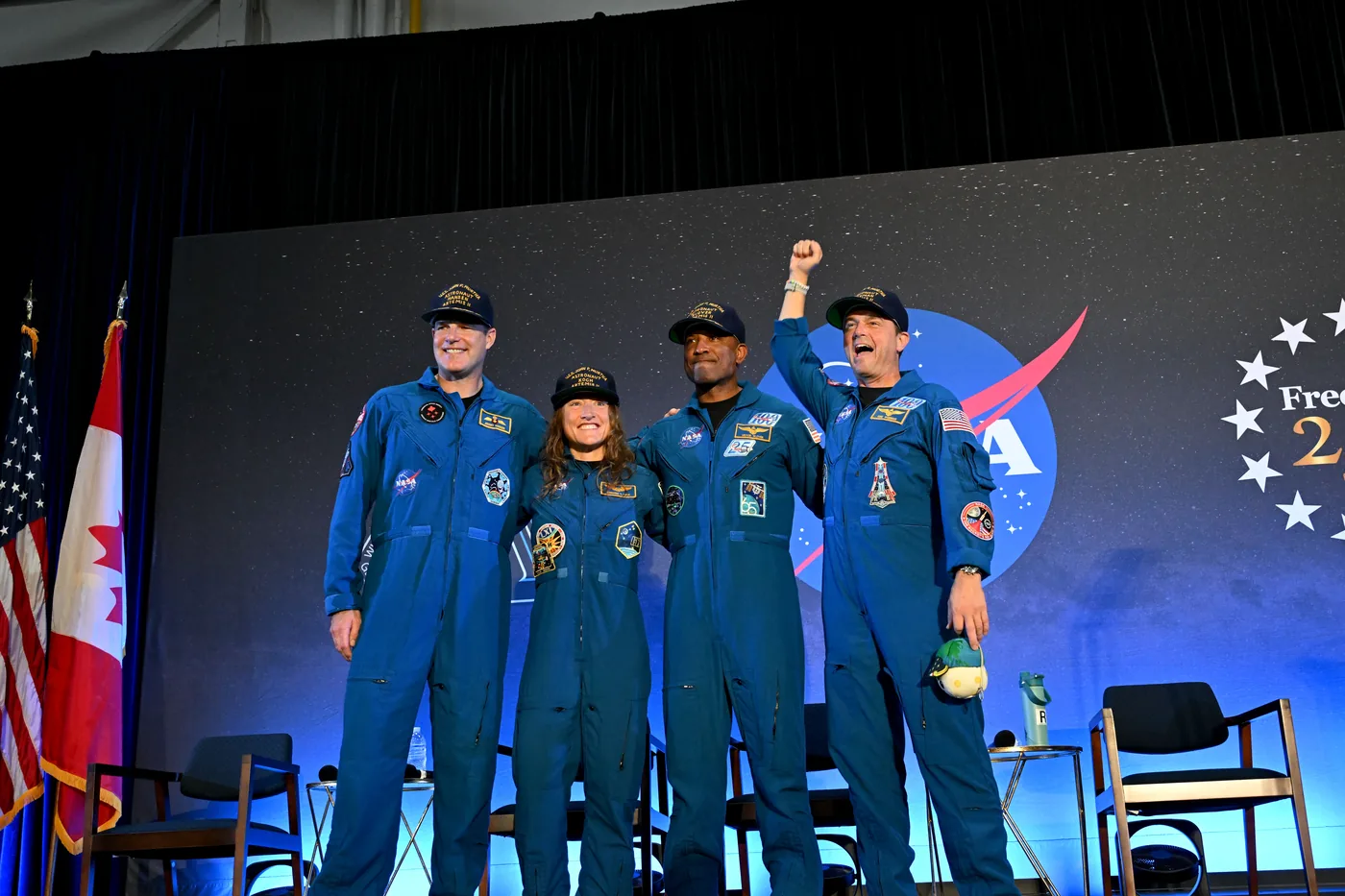
NASA launched Artemis II to conduct the first crewed operational flight test of the Space Launch System rocket and Orion spacecraft around the Moon before sending astronauts to land on the lunar surface [4]. Four astronauts flew the test mission. Commander Reid Wiseman, Pilot Victor Glover, Mission Specialist Christina Koch, and Canadian Space Agency astronaut Jeremy Hansen evaluated cockpit displays, manual handling qualities, and communication links across deep-space distances [1]. The expedition validated that life-support systems inside the capsule could sustain human life while navigating complex orbital transfers outside low Earth orbit [4].
Flight operations built upon the automated demonstration accomplished during Artemis I while establishing concrete baselines for future lunar surface campaigns. Artemis II did not attempt a lunar landing, functioning instead as a high-altitude trial of environmental controls, guidance computers, and deep-space telemetry. Engineering telemetry gathered during the ten-day voyage directly informs hardware integration for upcoming surface missions. The NASA Artemis crew verified that every primary capsule subsystem could endure radiation and extreme thermal conditions in deep space before engineers commit future expeditions to a surface descent [4].
International cooperation served as a foundational pillar for the flight architecture. Hansen’s assignment to the crew reflected close bilateral agreements between NASA and the Canadian Space Agency, ensuring joint operational training across multiple space centers. These coordinated mission operations mirror broader multilateral Artemis Accords data sharing initiatives designed to establish transparent standards for lunar research. By testing procedures with an international crew, the flight established administrative and operational precedents for multinational lunar exploration [6].
Flight Records of the Artemis II Crew
Formal recognition from aviation and aerospace organizations underscores the historical scale of the April journey. During the presentation at the Fertitta Center, the National Aeronautic Association will present official World Record certificates to the four astronauts [1]. Samantha Magill noted that representatives from FAI and the Aero Club of Canada joined the ceremony in Houston to celebrate the verified marks of the NASA Artemis crew. The awards confirm new absolute distance and altitude records for human spaceflight [7].
Telemetry records confirm that the spacecraft exceeded the distance benchmark established by Apollo 13 in 1970 [4]. Following launch on April 1, the spacecraft reached an altitude of 70,149 kilometers on April 2. By April 6, Orion reached a maximum Earth-relative separation of 406,767 kilometers according to aeronautic certification logs, while NASA flight telemetry recorded 406,771 kilometers, representing approximately 252,756 miles from Earth [4, 7]. That figure represents the farthest distance from Earth that any human crew has ever traveled [1].
Orbital mechanics dictate that distance from Earth changes continuously as a spacecraft travels along a lunar free-return trajectory. The 406,771-kilometer measurement describes a precise point-in-time maximum rather than a stationary position maintained during the mission. Because the Moon orbits Earth while the spacecraft loops behind it, the vehicle’s Earth-relative distance reflects combined celestial motions rather than the total mileage traveled along the flight path. Navigators calculated this trajectory with remarkable precision [4].

Technical Systems Tested by NASA Artemis Astronauts
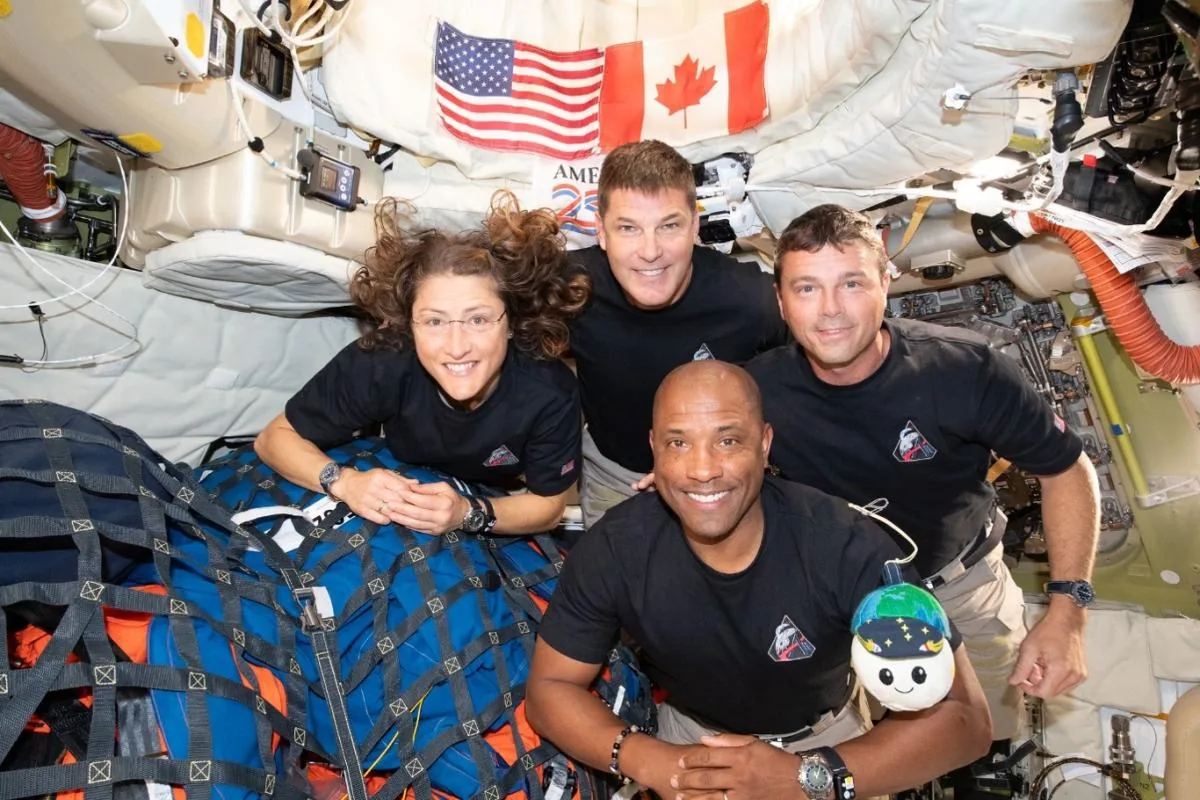
Life-support and environmental control hardware faced continuous testing as the crew completed their ten-day voyage. Inside the cabin, the crew monitored air revitalization loops, water recycling systems, and thermal radiators designed to protect astronauts from extreme temperature swings in cislunar space [4]. Wiseman, Glover, Koch, and Hansen tracked spacecraft navigation data using digital flight consoles, verifying that manual override capabilities responded accurately in case automated thruster sequences required intervention [1]. The astronauts also carried a plush zero-gravity indicator named Rise, which floated freely inside Orion once the capsule achieved microgravity [3].
Atmospheric reentry formed the most punishing phase of the flight test architecture. Entering Earth’s upper atmosphere at lunar return velocities exceeding thirty thousand kilometers per hour, Orion depended on its ablative heat shield to dissipate extreme thermal energy before deploying parachutes over the Pacific Ocean. Orion splashed down on April 10. Specialized recovery teams from NASA and military support units retrieved the capsule, ensuring that the astronauts and internal sensor recorders were safely transferred aboard recovery vessels [1].
Artemis II evaluated flight hardware rather than geological samples. Peer-reviewed scientific datasets in journals like Nature await future surface exploration landings [4]. Separate deep-space observations, such as astrophysical research on H2 emission in the Orion Bar using the James Webb Space Telescope, highlight how related preprint studies undergo extended analysis before formal peer review [8].
Why NASA Artemis II?
NASA designated Artemis II as a dedicated lunar flyby because flying an experienced crew around the Moon on a free-return trajectory validated Orion’s deep-space transportation architecture without the operational risks inherent to a surface descent [4]. Wiseman commanded the four-person flight [1]. By sending astronauts beyond low Earth orbit for the first time in more than 50 years, the agency verified that the combined Space Launch System and Orion systems could safely transport crews across lunar distances and return them through atmospheric reentry. Historical benchmarks achieved by the NASA Artemis crew validated core flight reliability before embarking on complex surface exploration [4].
Ceremonial honors in late summer emphasized the historical significance of the accomplishment. On August 28, President Donald Trump hosted the Artemis II astronauts at Johnson Space Center in Houston to recognize their flight milestones. During the ceremony, Trump presented the astronauts with the Congressional Space Medal of Honor, noting that the crew had made history by advancing human exploration farther than any previous generation. The official presentation highlighted the strategic and technological importance of human spaceflight leadership [4].
Program architects view the flyby as a vital technical bridge connecting the Apollo era with twenty-first-century lunar exploration. While Apollo 13 reached extreme distances during an in-flight emergency in 1970, Artemis II navigated its lunar trajectory by deliberate engineering design [4]. The spacecraft tested modern composite structures, advanced digital avionics, and high-efficiency optical communication links capable of supporting long-duration exploration. These validated capabilities establish a foundation for sustained presence on the Moon and inform technical concepts for eventual crewed voyages to Mars [1].
Post-Flight Transitions at Johnson Space Center
Personnel updates at NASA reflect the natural progression of lunar exploration assignments as the agency shifts focus toward future Artemis missions. Late-September announcements confirmed that Commander Reid Wiseman and Pilot Victor Glover transitioned into emeritus roles at Johnson Space Center in Houston. Both veteran aviators completed their designated Artemis II debriefing duties, allowing management to leverage their flight experience while younger astronaut classes prepare for intensive surface-landing simulations. Operational leadership continues to evolve as program objectives expand toward deep-space operations [4].
Wednesday’s public presentation at the Fertitta Center marks the official conclusion of the crew’s post-flight public appearances. Tickets for the evening session remain available online to the public at no charge, offering students, engineers, and community members direct access to the astronauts’ personal accounts of cislunar spaceflight. Media representatives planning to attend the 5:45 p.m. question-and-answer session must finalize their credentials through Kenna Pell at Johnson Space Center before noon on September 30. The Fertitta Center event remains free [1].
Flight dynamics specialists and propulsion engineers continue to examine telemetry from Orion’s heat shield, maneuvering thrusters, and power systems to refine flight models for Artemis III. The 252,756 miles traversed during the mission proved that modern spacecraft can safeguard astronauts across deep space, yet open technical questions remain regarding lunar landing dynamics, surface dust mitigation, and extended extravehicular life support [1, 4]. Flight teams will apply the empirical records gathered across 406,771 kilometers to ensure that subsequent expeditions to the lunar surface operate with proven safety margins [4].
- PRESS RELEASE Johnson Space Center Office. (2026, September 28). Meet NASA’s Artemis II crew during Houston public event. NASA. [Article Link]
- WEBSITE HQ Web Team. (2026, April 15). Artemis II crew returns to Houston. NASA. [Article Link]
- ONLINE NEWS Worldnewsdotcom. (2026, September 28). Meet NASA’s Artemis II crew during Houston public event. Worldnewsdotcom. [Article Link]
- ONLINE NEWS Lavender, G. (2026, September 28). Artemis II crew set for Houston event after record lunar flyby. Science.Report. [Article Link]
- ONLINE NEWS PressBee. (2026, September 28). Meet NASA’s Artemis II crew during Houston public event. PressBee. [Article Link]
- ONLINE NEWS Allen, S. (2026, April 11). NASA schedules Artemis II crew welcome event in Houston following historic mission. TDPel Media. [Article Link]
- WEBSITE Magill, S. (2026, September 28). Meet NASA’s Artemis II crew during Houston public event. LinkedIn. [Article Link]
- PREPRINT JWST Research Team. (2026). H2 emission in the Orion Bar, NGC7023 and the Horsehead Nebula observed with the James Webb Space Telescope. arXiv. [Preprint]. [Article Link]
APA 7: TWs Editor. (2026, September 30). NASA Artemis Crew Gathers in Houston After Record Lunar Flyby. https://perexpteamworks.com/.


3 comments