




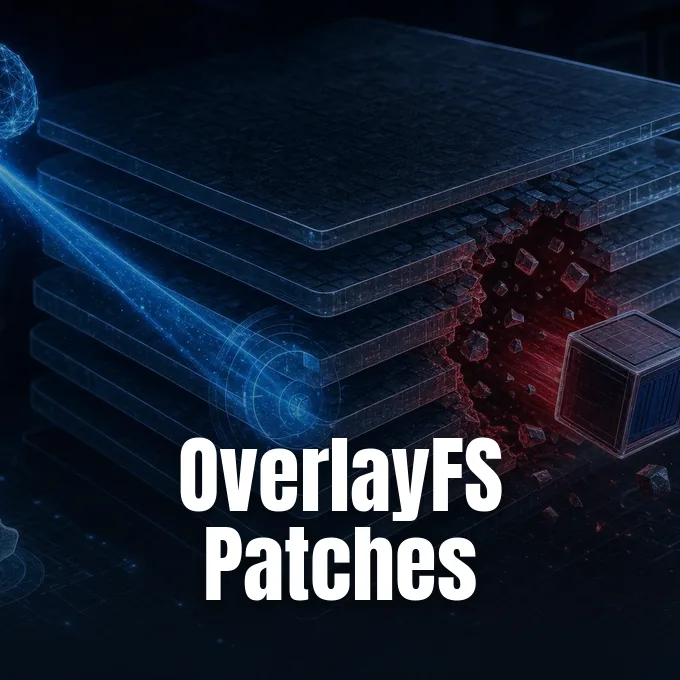
Linux kernel maintainers merged a batch of bug fixes for the OverlayFS union mount file system ahead of the Linux 7.4 merge window, with several patches slated for backporting to active stable releases [1]. The fixes stem from an AI-assisted OverlayFS code review conducted by Chris Mason, known for his work on Btrfs [3]. Flaws touched code that regular users could reach on live hosts.
Fixes Queued for Linux 7.4
The patches arrived ahead of Linux 7.4-rc1. Subsystem co-maintainer Amir Goldstein quickly marked the changes for stable kernel backports after reviewing pull requests sent by Mason [3]. Moving patches to stable trees demands a high bar because regressions can disrupt production servers. Downstream distributions like Ubuntu and Fedora will receive these bug fixes through regular updates [2].
Chris Mason submitted over a dozen patches for OverlayFS after testing automated review workflows against upstream code. The work resolved several distinct bugs. Automated tools caught use-after-free bugs, null pointer dereferences, info leaks, and RCU stalls triggered by remote layers, while Mason wrote the actual patches to fix each condition. The update also repairs data loss issues tied to nfs_export operations and corrects a regression in the override_creds mount option that had persisted since kernel v6.16. In addition, the patches fix a flaw involving empty security.capability extended attributes during copy-up tasks, where any local user could previously set the attribute to block file copying [3]. Two casefold fixes round out the pull request.
The news site Phoronix reported that AI code review tools flagged these defects before human reviewers stepped in [1]. Reviewers treated Mason’s submissions like any normal pull request, applying regular peer review standards before merging the tree [2]. Upstream leads checked every line by hand.
What the OverlayFS Code Review Found
The results show how an OverlayFS code review driven by machine learning can help developers spot subtle regressions that standard tests missed. In this cycle, models flagged suspicious code patterns, but human coders still had to write, test, and vet the final patches. The tools served as an extra set of eyes [2]. Human reviewers keep the established open-source accountability chain intact for every commit entering the tree.
OverlayFS presents a unified view of multiple file trees by placing a writable upper layer over read-only lower layers [5]. Runtimes like Docker rely on these union mounts to build fast container root filesystems [4]. Because copy-up and whiteout routines sit directly on the fast path of file tasks, bugs in these code paths can harm stability on shared hosts [2]. A single flaw can leak data between tenants.

At the Linux Storage, Filesystem, Memory Management, and BPF Summit, co-maintainer Amir Goldstein reviewed the history of OverlayFS with Miklos Szeredi, who originally built the code. Goldstein recalled that Szeredi once spoke of a time when the file system would be finished. Szeredi later added support for user namespaces. Christian Brauner moved OverlayFS to the new mount API to separate mount credentials from access credentials, while Lennart Poettering and Ted Ts’o discussed introspection needs for systemd sysext images and David Howells raised questions about nested whiteout handling. Jake Edge reported on these discussions for LWN.net [5].
Container Risks and Privilege Leaks
Filesystem bugs carry sharp risks in cloud platforms because containers share the underlying host kernel. Earlier in 2026, security analysts at InnoVirtuoso detailed how an AI static scan exposed CVE-2026-31431, a severe OverlayFS race condition dating back to 2017. The bug held a CVSS v3.1 score of 8.8. It allowed a guest container user to break namespace walls and seize root power on the host. Mandiant tracked live intrusions using the exploit, prompting CISA to add the CVE to its Known Exploited Vulnerabilities catalog. Attackers could query kubelet ports 10250 and 10255, steal tokens from /var/lib/kubelet, or tap cloud metadata at 169.254.169.254 on AWS, GCP, and Azure. Distros like Ubuntu 24.04 LTS and Fedora 42 quickly rolled out patched kernels [4].
That breach showed why storage bugs draw quick attention from security teams. When a defect lets an unprivileged process bypass permission checks during copy-up, container walls drop. Defenses like AppArmor, SELinux, and seccomp filters block certain syscalls, but they can’t fully patch a broken kernel race condition [4]. The kernel remains the single point of failure.
Because the fixes merged for Linux 7.4 resolve flaws that regular users can hit, administrators face clear patching duties [3]. A flaw in OverlayFS can let a rogue container harm neighbor apps on Kubernetes clusters [2]. Applying vendor updates promptly keeps cloud nodes safe against local privilege escalation [4].
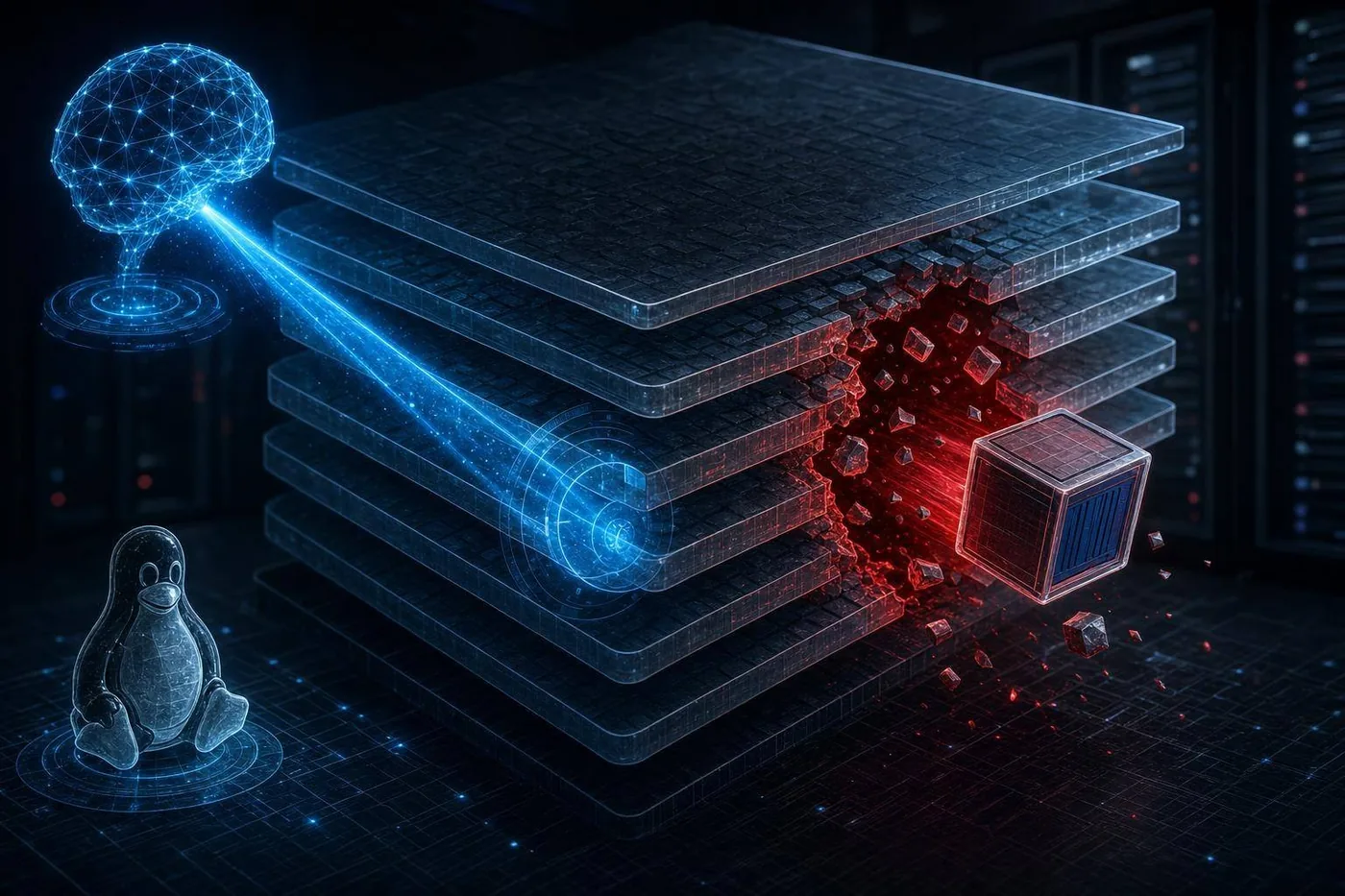
OverlayFS Code Review Meets Human Triage
While this OverlayFS code review produced useful fixes, automated review tools often deliver mixed results in daily use. A research study examined 31,073 review comments from CodeRabbit on GitHub, finding that developers rejected 56.3% of bot suggestions. About 43.3% of rejected comments were false positives, and 10.0% fell outside the scope of the pull request. Only 36.4% gained acceptance [6].
False alerts explain why kernel maintainers stay careful. An empirical study of 54,791 automated review notes across 342 Python repos using tools like GitHub Copilot, Cursor, Codex, Devin, and Claude showed that unresolved comments often stemmed from design choices bots could not grasp. Another test on 250 CVE patch pairs revealed that framing code as clean reduced vulnerability detection by 16% to 93%, with Claude Code tricked 88% of the time and Copilot 35% of the time. In 2018, Google set a rule for its Tricorder tool requiring effective false positives to stay below 10% to prevent developer burnout [6].
Static tools also struggle with real bugs. In a benchmark of 319 real vulnerabilities across 92 C and C++ repositories, static security analyzers warned inside the vulnerable function only 52% of the time. Worse, 76% of those warnings pointed at unrelated lines. As Per Harald Borgen noted on The Scrimba Blog, automated tools spot syntax drift well but miss deep system logic [6].
Stable Releases and Governance
The arrival of these OverlayFS code review fixes proves that bots help when guided by experienced developers. Chris Mason ran AI code reviews to find edge-case flaws, but he personally wrote the patches and submitted them for public review [3]. Reviewers judged each change on technical merit.
Upstream maintainers face similar pressures during the merge window, as seen when sound subsystem maintainer Takashi Iwai processed a Linux 7.4 sound pull amid an AI patch flood while filtering automated contributions. Maintainers must weigh productivity gains against the risk of review queues getting clogged by low-quality machine suggestions. The OverlayFS batch succeeded because the findings pointed to genuine flaws that passed rigorous inspection [2].
With the fixes merged ahead of Linux 7.4-rc1, maintainers are backporting the code to stable releases [1]. Linux admins running Docker and Kubernetes should watch distro package channels for new kernel builds [2]. The rollout brings real fixes to live servers while showing how open-source teams can safely adopt AI review tools.
- ONLINE NEWS Phoronix. (2026). OverlayFS Sees Many Fixes Thanks To AI Code Review. [Article Link]
- ONLINE NEWS Linux.org.hk. (2026, November 1). AI Code Review Flags OverlayFS Bugs Heading Into Linux 7.4. [Article Link]
- ONLINE NEWS Linuxeden. (2026, November 1). AI Code Review Discovers OverlayFS Flaws Merged Into Linux 7.4. [Article Link]
- WEBSITE InnoVirtuoso. (2026, May 11). AI-Assisted Scan Exposes Linux Kernel OverlayFS Vulnerability (CVE-2026-31431) Driving Container Escapes. [Article Link]
- ONLINE NEWS Edge, J. (2026, June 12). An overlayfs update. LWN.net. [Article Link]
- WEBSITE Borgen, P. H. (2026, August 21). AI Code Review: How It Works and What It Misses [2026]. The Scrimba Blog. [Article Link]


