





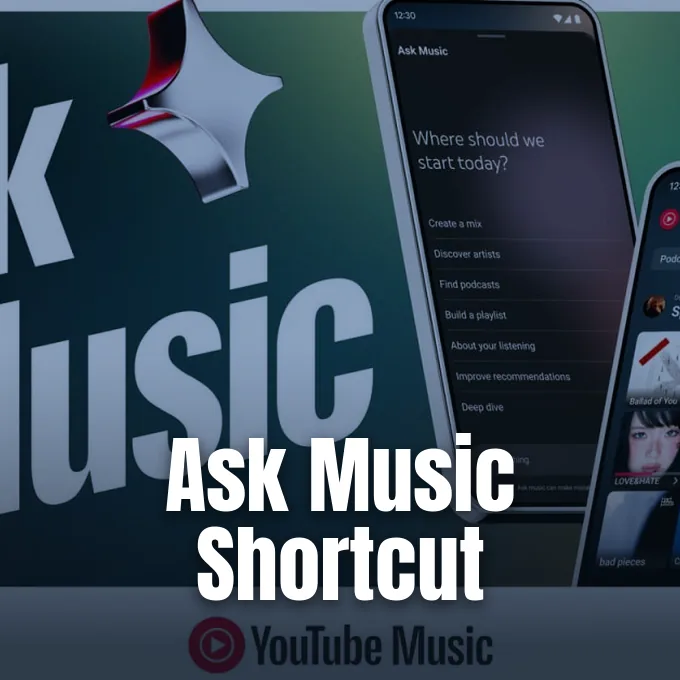
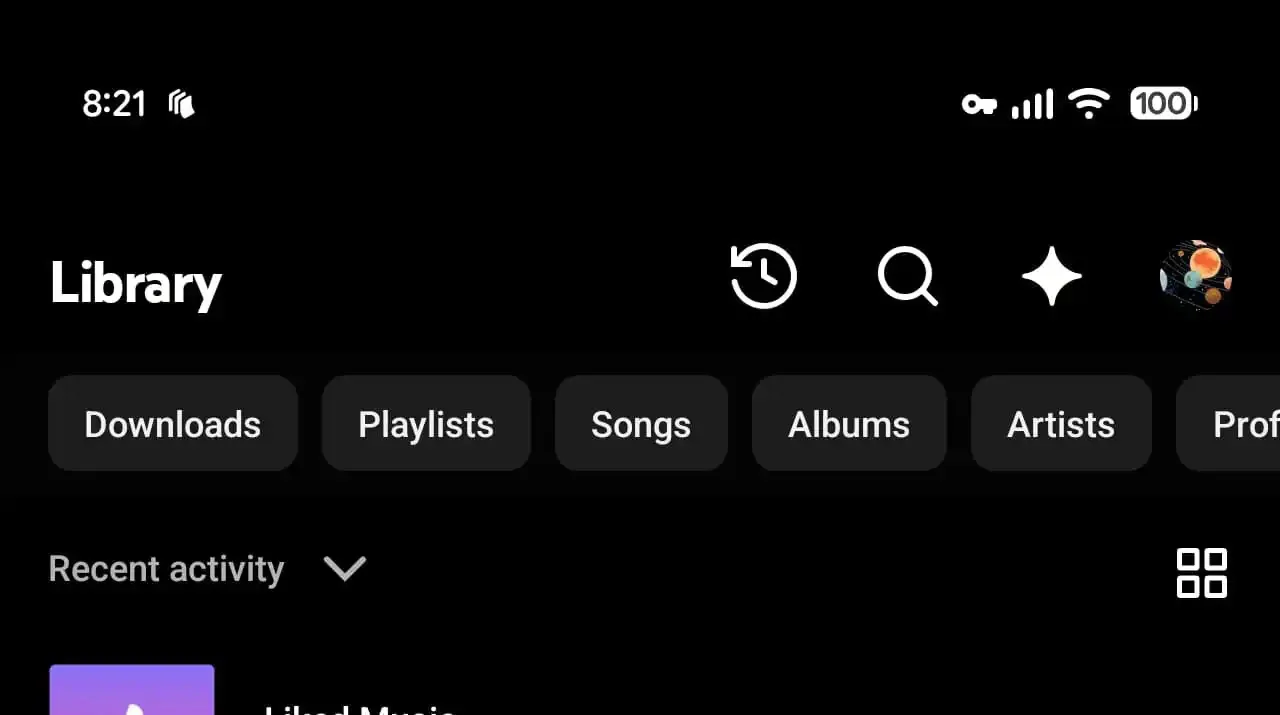
YouTube Music is rolling out a corner Gemini button on Android and iOS to give listeners instant access to its Ask Music conversational tool, replacing an older promotional card that previously sat in the Home feed [1]. The server-side rollout began reaching more devices on November 18, 2026, placing a four-pointed sparkle icon in the top right corner of nearly every screen [2].
Gemini Shortcut Placement on App Screens
The new sparkle button appears on the Home feed, the Library tab, the Now Playing view, album pages, and individual playlists [1]. Tapping the icon opens a full-screen sheet instead of taking people to a separate menu, keeping playback controls close at hand while they search for songs. Google uses this same icon placement in Workspace apps like Gmail to launch conversational tools, and plans to bring similar shortcuts to Google Messages in an upcoming release [2]. Listeners can open the chat interface while a song plays, browse suggestions, and return to their queue without interrupting playback [1].
Besides adding the corner button, YouTube Music began removing the Samples tab on Android and iOS to simplify navigation [2]. Listeners can type requests into a text field or tap the microphone icon to speak prompts aloud. Six prompt cards suggest starting points. These shortcuts cover mix creation, artist discovery, podcast recommendations, playlist building, listening insights, and deeper exploration of music lore [1].

The design mirrors how Google places its Gemini spark in web applications, where tools such as in-chat document and PDF editing in Gemini let people work directly inside active conversations. By keeping the music player active beneath the chat window, listeners can adjust what plays next without losing their place in an album. Android Authority writer Hillary Keverenge reported that the rollout spreads through a server-side switch, meaning the button shows up once Google activates it on its servers rather than through an app store download. This delivery method lets developers turn on the feature gradually to watch for software glitches before reaching every user [1].
What Ask Music Does for Playlists
Google introduced the first version of Ask Music in 2024 to help people create custom mixes, expanding the tool earlier in 2026 so listeners can generate entire tracklists by simply typing a descriptive vibe into the prompt box. The tool studies personal YouTube listening history. By evaluating past playback patterns and liked videos, the assistant matches recommendations to artists that a listener already enjoys while surfacing fresh releases from similar genres [1].
In September, YouTube announced that the chatbot would gain new controls so listeners could “customize your queue or dive deeper into artist lore” during playback. 9to5Google editor Abner Li reported that these controls help listeners uncover background stories about performers while fine-tuning the order of upcoming tracks [2]. The assistant can also suggest related bands from similar musical scenes [1].
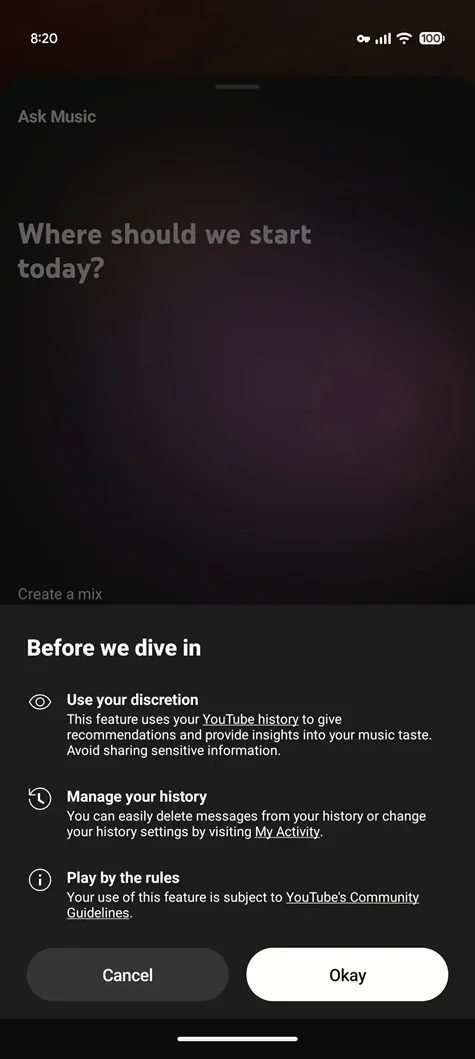
YouTube also previewed a spoken feature called “your podcast lineup” in September, designed as a “personalized AI-audio guide” in the Podcasts feed that delivers a “quick, weekly spoken preview of recommended shows and digs into why you’ll like them, before jumping into the suggested episodes” [2]. The guide pairs with the chat prompt sheet. Listeners can ask the assistant to recommend episodes by topic, discover independent podcast creators, or line up multiple talk shows for daily commutes without scrolling through long directories of individual audio files in the application [1]. These voice summaries bring automated curation into spoken audio feeds. By combining spoken recommendations with text-based suggestions, the app lets listeners discover episodic discussions about music history, industry news, and album analysis directly from the main feed [2].

The Evolution of YouTube Music Streaming
Google debuted the YouTube Music platform in October 2015, releasing the mobile client the following month in tandem with YouTube Red before rebranding the service as YouTube Premium. On May 17, 2018, YouTube announced a major reboot that added a web desktop player, redesigned mobile apps, and Google AI technology to search songs based on lyrics and descriptions. Monthly subscriptions launched at US$9.99 to compete with Spotify and Apple Music, while YouTube Premium cost $11.99. The price matched rival streaming services [3].
In 2018, YouTube Music signed promotional agreements with Dick Clark Productions to sponsor the American Music Awards and Dick Clark’s New Year’s Rockin’ Eve. The audio service arrived on Google Assistant and Google Nest speakers on April 18, 2019, eventually expanding to Tesla vehicles in July 2024. On December 1, 2020, YouTube Music officially replaced Google Play Music as Google’s main audio brand [3].

Google Multimodal AI Development
The artificial intelligence powering these new music tools comes from Gemini, a family of multimodal models developed by Google DeepMind as the successor to LaMDA and PaLM 2. Google CEO Sundar Pichai introduced the architecture at Google I/O on May 10, 2023, explaining that the system processes text, images, video, audio, and computer code together. Its name honors the Latin word for twins, symbolizing the merger of Google Brain and DeepMind as well as NASA’s Project Gemini. Google designed the system to handle different media types together, allowing algorithms to analyze audio patterns along with lyrics and user prompts [4].
DeepMind CEO Demis Hassabis told Wired that Gemini would combine conversational language techniques with planning systems from AlphaGo, the program that defeated Go champion Lee Sedol in 2016. Google co-founder Sergey Brin returned to assist hundreds of engineers from Google Brain and DeepMind, later receiving credit as a core contributor. Because the training pipeline used transcripts from YouTube videos, lawyers filtered materials to protect copyrighted works [4].
On December 6, 2023, Pichai and Hassabis officially announced “Gemini 1.0” during a virtual press conference, rolling out Gemini Ultra for complex tasks, Gemini Pro for general workflows, and Gemini Nano for on-device operations. The models run on custom Tensor Processing Units. Google expanded the architecture with Gemini Flash and Gemini Flash Lite before embedding the technology into Search, Chrome, and Pixel phones, laying the foundation for conversational helpers inside consumer streaming apps like YouTube Music. This system translates mood prompts into functional track queues [4].
Ask Music Availability and Premium Access
Even with the Gemini button appearing across more screens, listeners still can’t use Ask Music without a paid subscription. The feature remains locked behind either a standalone YouTube Music Premium plan or a full YouTube Premium membership [1]. Unpaid accounts play songs with video ads, cap playback at 128 kbit/s in AAC and Opus formats, and disable background audio streaming entirely [3].
Privacy controls tie into Google account settings. Every query, recommendation, and chat exchange logs to the Google My Activity hub, where users can review past conversations or delete them at any time. Ask Music uses this stored history to adjust its suggestions over time, learning which tracks a listener skips and which artists they replay. Users can manage stored logs manually or turn on automatic deletion inside their Google account [1].
Listening habits have evolved through physical formats, tape machines, MP3 players, and smartphones, yet the core desire to discover expressive sound connects back to the Ancient Greek concept of mousiké technē, or the “art of the Muses” described by Homer and Hesiod. In mythology, the muse Polyhymnia presided over sacred music, while cultural scholars like J. H. Kwabena Nketia noted how sound connects speech and dance across global traditions [5]. By putting Gemini a single tap away on every screen, YouTube Music turns playlist curation into an ongoing conversation [2].
- ONLINE NEWS Keverenge, H. (2026, November 18). YouTube Music is making Ask Music easier to access with a dedicated Gemini button. Android Authority. [Article Link]
- ONLINE NEWS Li, A. (2026, November 18). YouTube Music rolling out corner Gemini icon to launch Ask Music. 9to5Google. [Article Link]
- WEBSITE Wikipedia. (n.d.). YouTube Music. [Article Link]
- WEBSITE Wikipedia. (n.d.). Gemini (language model). [Article Link]
- WEBSITE Wikipedia. (n.d.). Music. [Article Link]


