





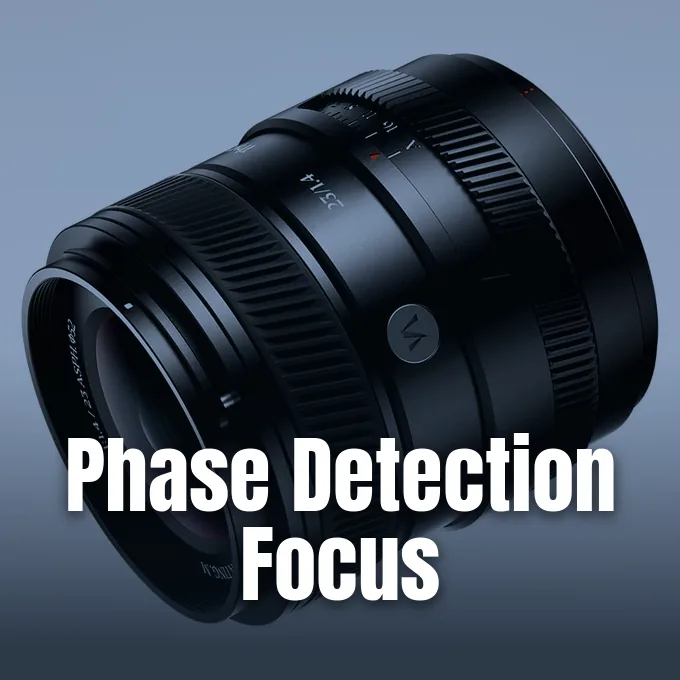
At its core, phase detection autofocus works by splitting incoming light into separate optical paths so a camera can measure subject distance before driving its lens elements. Instead of moving glass back and forth to hunt for sharp edges, the optical assembly divides rays originating from opposite sides of the aperture into paired sensor views. When an object sits outside the focal plane, these two incoming light profiles land out of alignment, revealing both the exact defocus distance and the precise correction direction. Marc Levoy, Nora Willett, and Andrew Adams at Stanford University showed that this geometry allows an autofocus module to instruct the lens drive motor with a single measurement [7]. Nikon and Canon relied on this optical method. Single-lens reflex cameras like the Nikon F4 captured sports through this fast design [11].
- Optical Split Rays in Camera Design
- Inside the Phase Detection Autofocus Module
- How Does Autofocus Work in a Camera?
- Phase Detection Autofocus Compared to Contrast Systems
- Evolution from Leitz Patents to Digital SLRs
- Aperture Limits for Fast Prime Lenses
- Eyewear Optics Using Tunable Alvarez Lenses
- Advanced Algorithms in PDAF and Radar Imaging
Optical Split Rays in Camera Design
In an SLR camera like the Nikon F4, light enters through front lens elements before reaching the body chassis. Aiming light strikes a primary reflex mirror resting at a 45-degree angle, reflecting rays upward into the focusing screen and viewfinder pentaprism. Yet the glass isn’t opaque [7]. A semi-transparent center patch lets part of the incoming beam pass into an angled sub-mirror mounted behind the main glass, directing light down into an autofocus sensor compartment on the camera floor [11]. Without this split reflex design, SLR bodies would flip their mirrors repeatedly just to check optical sharpness.
Inside that lower chamber, incoming light encounters tiny separator optics designed to split optical bundles. Two small microlenses collect rays arriving from opposite margins of the lens exit pupil, directing them onto two matched rows of light sensors. Because these two ray bundles enter from opposite edges of the lens, they sample the subject from two slightly different vantage points separated by a few optical millimeters. That optical separation acts like a miniature rangefinder [7]. When the subject is sharp, the two ray bundles converge at the exact sensor plane, creating the optical foundation for phase detection autofocus across reflex cameras [11].
Astronomers employ similar microlens arrays in a Shack-Hartmann wavefront sensor to measure atmospheric turbulence and correct blurry starlight. Stanford researcher Marc Levoy noted that tracking how light bundles displace across paired sensors resembles light field recording. Camera bodies from Canon and Nikon also combine quiet focus motors with optical image stabilization units to keep incoming light steady during difficult hand-held exposures. By tracking directional ray bundles, optical engineers turn spatial beam displacement into reliable lens positioning instructions. Ray angles dictate focus [7].
Inside the Phase Detection Autofocus Module
The hardware module sitting beneath the mirror box houses silicon sensor chips configured specifically to evaluate phase separation. Each sensor strip consists of one-dimensional pixel rows [7]. These paired pixel lines form individual autofocus points in the viewfinder frame, allowing camera bodies from Canon, Nikon, and Minolta to monitor multiple compositional zones simultaneously by tiling dozens of sensor strips onto a single silicon chip [11]. Every point evaluates a distinct scene coordinate [7].
Sensor orientation plays a key role in how effectively a camera locks focus on diverse subject textures. Standard focus points use a single pair of linear sensor strips oriented along a single axis, which means they easily detect contrast edges running perpendicular to their orientation but can struggle when lines run parallel. To solve this geometric blind spot, camera designers introduced cross-type autofocus points. A cross-type point combines two pairs of sensor strips arranged at 90 degrees to each other, allowing the module to track horizontal and vertical texture lines with equal reliability. Sports and photojournalism cameras like the Canon EOS-1D rely on this cross configuration to maintain positive subject lock regardless of compositional orientation [11].
Professional bodies like the Canon EOS-1V, Minolta 7, Pentax K-1, and Nikon D2X incorporated secondary prisms and wider sensor baselines to achieve tighter tolerances. High-precision points activate when paired with fast lenses offering apertures of f/2.8 or wider. Newer electronic devices like the Librem 5 smartphone place roughly 2% phase detection pixels directly onto the imaging sensor itself [11]. On-sensor pixels enable phase detection autofocus without requiring a reflex mirror box.
How Does Autofocus Work in a Camera?
In a modern camera, autofocus works by reading the spatial separation between paired light intensity patterns and calculating the exact motor shift needed to bring those images into alignment. When light rays strike the dual sensor strips of an autofocus point, each sensor registers a one-dimensional wave of brightness values consisting of peaks and valleys. If an object is out of focus, one sensor sees its brightness peak shifted to the left while the other sees it shifted to the right. The physical distance between these two peaks corresponds to the angular error of incoming light bundles [7]. In phase detection autofocus, cameras translate this optical geometry into an exact mathematical offset.
An onboard processor analyzes these two electronic signals using digital cross-correlation to measure the precise phase shift between them [7]. Does this electronic calculation tell the camera whether the subject sits in front of or behind the intended focus plane? It does so instantly. If the peaks shift inward, the subject is front-focused; if they drift apart, the subject is back-focused [11]. The camera processor calculates both the exact travel distance and the correct rotation direction for the focus ring in a single step [7].
In continuous tracking modes like Canon AI Servo, Nikon AF-C, or Sony AF-C, the system operates as a closed-loop control process. The camera drives the lens to the calculated destination and takes follow-up readings to confirm subject lock. Target velocity and acceleration feed into the predictive tracking calculations [11]. By measuring phase shifts, the camera tracks moving targets without pausing to hunt [7].
Phase Detection Autofocus Compared to Contrast Systems
While phase detection autofocus measures distance through angular light separation, contrast detection evaluates sharpness by analyzing pixel intensity differences on the main imaging sensor. Contrast requires no split mirrors. Mechanically, the optical path is simpler because the body omits secondary sub-mirrors, dedicated prisms, and separate autofocus sensor chips. The camera reads live pixel data directly off the primary sensor array, measuring intensity gradients between adjacent photosites until it identifies maximum edge contrast across the composition [8].
The main limitation of contrast detection is that a single static frame cannot reveal whether the lens is focused in front of or behind the subject. A contrast sensor simply measures a number representing local sharpness; it cannot determine which direction the lens must travel or how far it should move. As a result, the camera drive motor must nudge the optical elements in one direction, take another exposure, and check if contrast values climbed or fell. If contrast drops, the motor reverses direction and sweeps across the focal range until it detects a peak. Photographers call this trial-and-error cycle hunting, and the resulting hesitation slows down shooting [8].
Marc Levoy pointed out that computer vision engineers classify contrast autofocus as a shape-from-focus algorithm, whereas phase detection operates like a shape-from-stereo method. Levoy wrote that “a single observation suffices in principle to focus the lens accurately”. Because phase detection captures two separate views at once, it resolves distance in a single computational pass. Professional filmmakers using Arri or RED camera rigs often bypass autofocus hunting entirely by employing a manual focus puller [8].


Evolution from Leitz Patents to Digital SLRs
The conceptual origins of automated focusing date back to optical patents filed by Leitz between 1960 and 1973. Leica showed an experimental prototype called the Correfot at the Photokina exhibition in 1976, followed by a functioning SLR version in 1978. Meanwhile, consumer camera manufacturers pursued consumer production lines. Konica released the C35 AF in 1977 as the first mass-produced autofocus camera, using an optical rangefinder module. In 1978, Polaroid introduced the SX-70 Sonar OneStep, which used active ultrasonic sound pulses to calculate distance [11]. Early consumer devices proved strong market demand for automated focusing systems across amateur and professional communities.
Single-lens reflex autofocus systems took a major step forward in 1981 when Pentax unveiled the ME-F, featuring body-mounted focus sensors paired with a motorized lens barrel. Nikon followed in 1983 with the F3AF camera. The landmark architectural transformation arrived in 1985 when Minolta released the 7000, integrating both the autofocus sensors and the drive motor inside the camera chassis to mechanically turn the lens barrel through a body-driven coupling pin. This Minolta design set the standard for modern SLRs [11].
In 1987, Canon abandoned its manual FD mount entirely and launched the electronic EF mount, placing quiet electric motors inside individual lens barrels to achieve faster and smoother focus transitions. Pentax introduced distance measurement with its FA series in 1991, while Nikon introduced AF-I and AF-S lenses in 1992 [11]. Today, mirrorless systems from Sony and Canon integrate phase detection pixels onto imaging sensors.
Aperture Limits for Fast Prime Lenses
An autofocus system’s speed and accuracy depend heavily on the maximum geometric aperture of the attached lens. Optical sensors perform best with lenses offering maximum apertures around f/2 to f/2.8. Lenses faster than f/2 admit generous light but project an extremely shallow depth of field. Because the margin for optical error is paper-thin at wide apertures, the internal focus mechanism requires finer motor increments and additional measurement cycles to confirm critical subject sharpness [11].
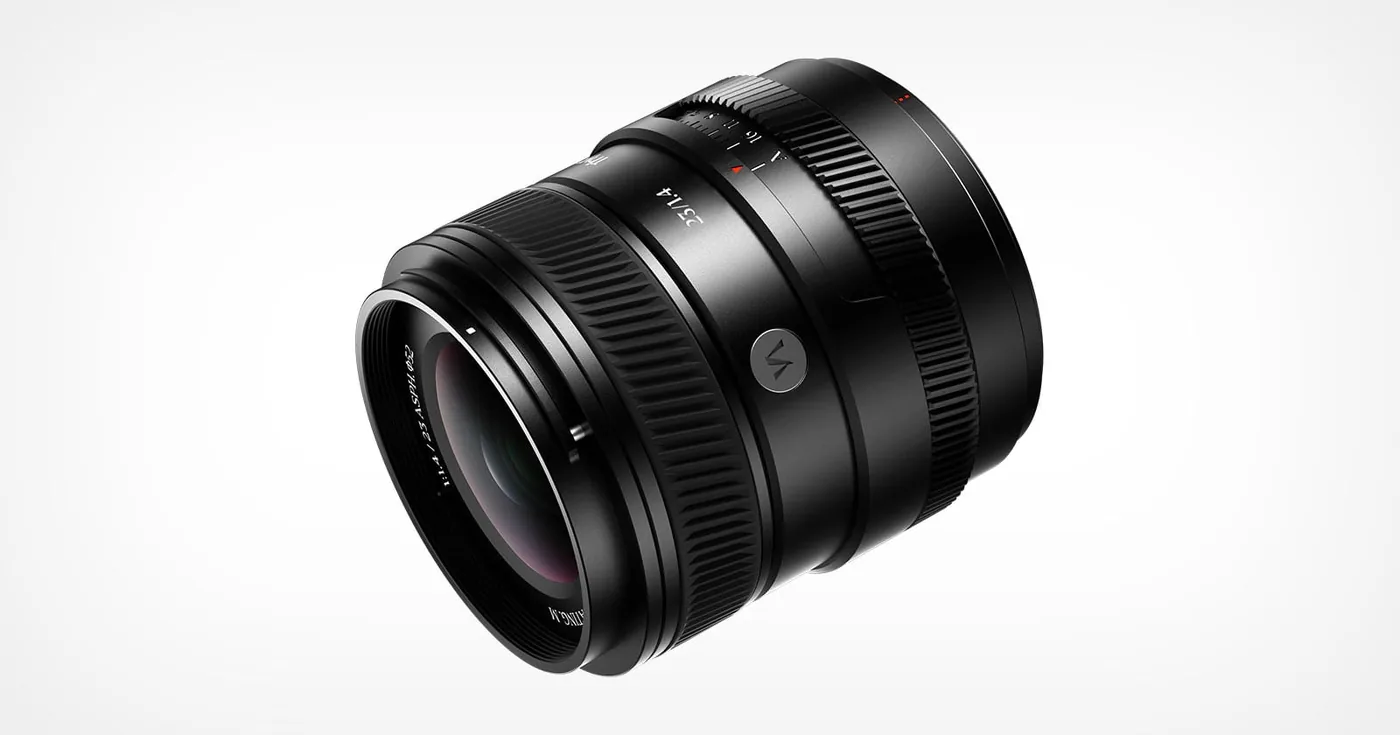
Most consumer camera bodies from Canon and Nikon require an aperture of at least f/5.6 to achieve reliable focus lock, though professional bodies operate at f/8 with teleconverters [11]. In November 2026, lens manufacturer Thypoch released its first autofocus prime lens, the Sculptor 23mm f/1.4 for Fujifilm X-mount cameras, priced at $349. Jeremy Gray reported in PetaPixel that the compact lens houses 12 elements in 10 groups, a 10-bladed aperture, and weighs 283 grams with a length of 71.4 millimeters. With a 52mm filter thread, it undercuts Fujifilm’s 375-gram XF 23mm f/1.4 and Sigma’s 340-gram prime [10].
While variable focal lengths often rely on optical zoom and digital zoom mechanisms to frame subjects, prime optics maintain fixed glass geometry to maximize aperture speed. The Thypoch prime focuses down to 0.25 meters, delivering roughly 0.13x magnification on Fujifilm cameras [10]. Fast primes challenge camera sensors to calculate phase angles accurately even when depth of field spans mere millimeters [11].
Eyewear Optics Using Tunable Alvarez Lenses
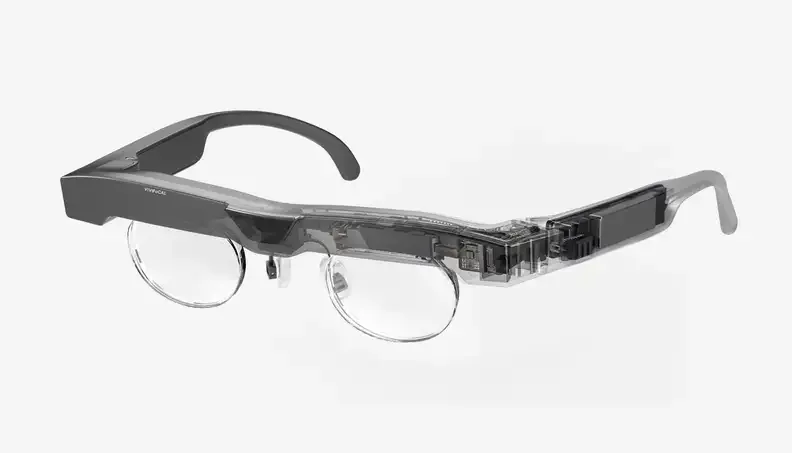
Phase detection concepts and automated focusing technologies have expanded beyond standalone camera housings into wearable vision correction. People suffering from presbyopia lose near vision after age 40, forcing them to juggle reading glasses or awkwardly tilt their heads through progressive lenses until optics company VIVIFoCAL created the S1 autofocus eyewear on Kickstarter for $339. The team showed the prototype at WonderFest 2026 on a 1/35 scale miniature model display. Earlier autofocus glasses appeared at CES in 2011. Wearable autofocus is now real [9].
Rather than relying on fixed multifocal zones, the S1 eyewear uses Alvarez lenses. An Alvarez lens consists of two specially curved optical elements that slide laterally against each other, altering optical power smoothly across the wearer’s full visual field. The device integrates a time-of-flight distance sensor, an onboard microchip, and a miniature motor that shifts the lens elements. When the user looks from a smartphone to the horizon, the glasses calculate distance and refocus in under 0.1 seconds [9].
Standard reading glasses operate at a single fixed distance of 16 inches, but the S1 covers distances from 8 inches to infinity. Led by optical engineer and founder Dr. Zhao, the design team engineered the frames to deliver more than eight hours of continuous battery runtime on a single charge. Users can fine-tune optical power within a ±0.5 diopter range using an accompanying app [9].
Advanced Algorithms in PDAF and Radar Imaging
Digital autofocus systems increasingly blend optical phase data with computational algorithms and deep neural networks. In a 2021 study published in IEEE Transactions on Computational Imaging, researchers Wang, Huang, Cheng, Ma, and Brady proved that neural image analysis can find focus 5 to 10 times faster than contrast methods. While optical phase detection sensors measure focus state directly, artificial intelligence agents learn the mapping between raw image features and focal positions. These learned agents generate dynamic focus trajectories that maintain sharp subject reconstruction in complex three-dimensional scenes [5].
Liquid crystal optics offer another avenue for motor-free focusing. In Optics Express, Galstian, Sova, Asatryan, Presniakov, Zohrabyan, and Evensen built a mobile camera using an electrically tunable liquid crystal lens with a floating transparent electrode. By tuning driving frequency at a fixed voltage, the optical system achieved spherical aberrations below one-tenth of a wavelength over 10 diopters of optical power. Eliminating moving barrels provides silent operation and quick focus convergence for barcode scanning and distant photography [4].
Phase-based autofocus algorithms also serve an important role in radar remote sensing. In synthetic aperture radar imaging, airborne platforms suffer from flight path deviations caused by atmospheric turbulence, prompting researchers Chen, Xing, Yu, Liang, Peng, and Sun to review specialized motion compensation algorithms that correct radar errors [3]. Ash solved single-pulse corrections in closed form using quartic polynomials to restore image sharpness [1]. Zeng, Wang, and Li minimized entropy without rigid assumptions [2]. Evers and Jackson unified these methods into a generalized phase gradient autofocus algorithm, proving that phase estimation techniques govern sharp imaging from handheld cameras to radar satellites [6].
- ACADEMIC JOURNAL Ash, J. N. (2011). An autofocus method for backprojection imagery in synthetic aperture radar. IEEE Geoscience and Remote Sensing Letters, 9(1), 104–108. [Article Link]
- ACADEMIC JOURNAL Zeng, T., Wang, R., & Li, F. (2013). SAR image autofocus utilizing minimum-entropy criterion. IEEE Geoscience and Remote Sensing Letters, 10(6), 1552–1556. [Article Link]
- ACADEMIC JOURNAL Chen, J., Xing, M., Yu, H., Liang, B., Peng, J. X., & Sun, G. (2021). Motion compensation/autofocus in airborne synthetic aperture radar: A review. IEEE Geoscience and Remote Sensing Magazine, 10(1), 185–206. [Article Link]
- ACADEMIC JOURNAL Galstian, T., Sova, O., Asatryan, K. E., Presniakov, V., Zohrabyan, A., & Evensen, M. V. (2017). Optical camera with liquid crystal autofocus lens. Optics Express, 25(24), 29945. [Article Link]
- ACADEMIC JOURNAL Wang, C., Huang, Q., Cheng, M., Ma, Z., & Brady, D. J. (2021). Deep learning for camera autofocus. IEEE Transactions on Computational Imaging, 7, 258–271. [Article Link]
- ACADEMIC JOURNAL Evers, A., & Jackson, J. A. (2019). A generalized phase gradient autofocus algorithm. IEEE Transactions on Computational Imaging, 5(4), 606–619. [Article Link]
- WEBSITE Levoy, M. (2012). Autofocus: Phase detection. Stanford University Computer Science Department. [Article Link]
- WEBSITE Levoy, M. (2012). Autofocus: Contrast detection. Stanford University Computer Science Department. [Article Link]
- ONLINE NEWS Reviewed Content Studio. (2026, November 20). Autofocus glasses are finally here, and they refocus in a tenth of a second. Reviewed. [Article Link]
- ONLINE NEWS Gray, J. (2026, November 20). The Thypoch AF 23mm f/1.4 Sculptor is the lightest and most affordable prime of its kind. PetaPixel. [Article Link]
- WEBSITE Wikipedia contributors. (2026). Autofocus. Wikipedia, The Free Encyclopedia. [Article Link]


