






Blue Origin has postponed the next flight of its New Glenn rocket until January 2027, moving past an earlier internal goal of flying before the end of 2026. Chief executive Dave Limp addressed the New Glenn delay in a private memo sent to staff on Wednesday, pointing to slower reconstruction at the company’s Florida launchpad. The revised schedule adds roughly ten days to the previous calendar as ground crews complete facility repairs following a test explosion earlier in the year [1].
Florida Launchpad Reconstruction
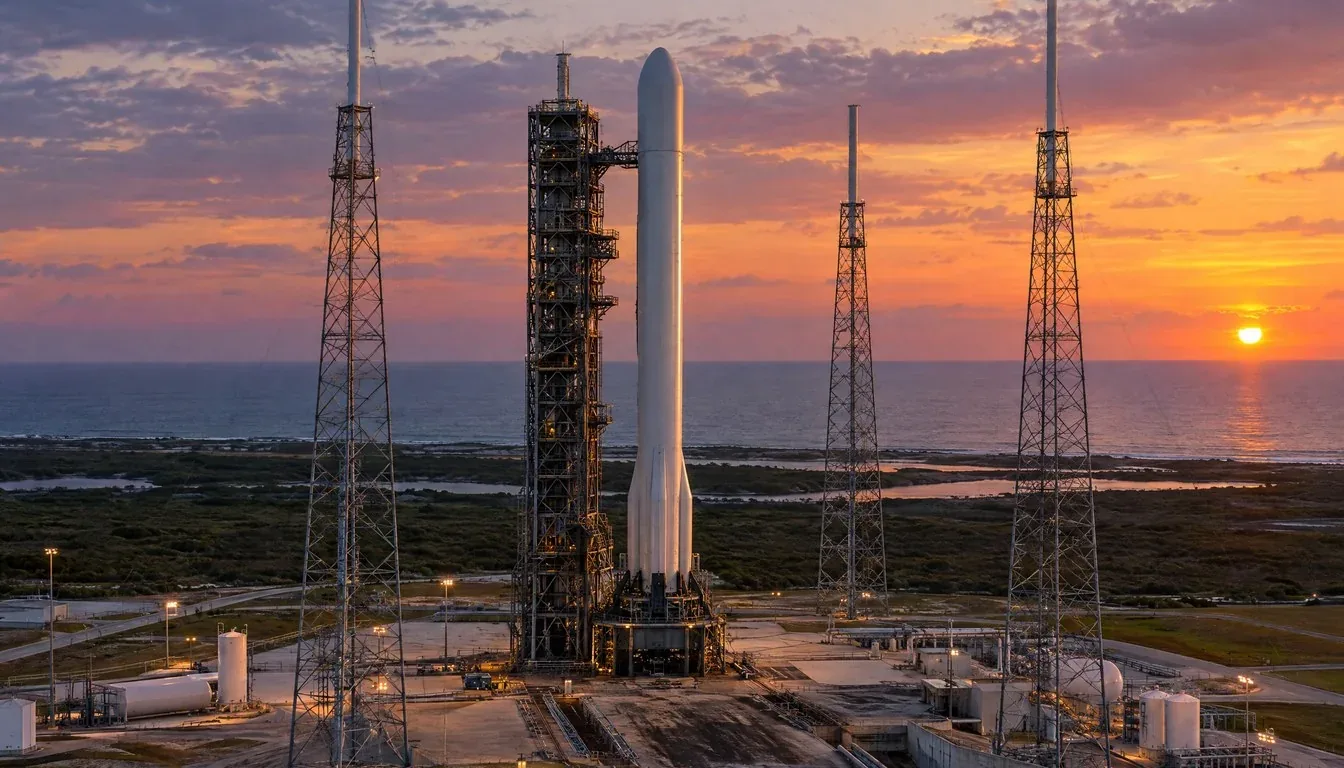
The operational pause began on 28 May 2026 when a New Glenn vehicle exploded during a hot-fire engine test at Cape Canaveral, Florida. The blast destroyed the rocket and inflicted heavy damage on Blue Origin’s only Florida pad built to handle the heavy booster, forcing technicians to halt upcoming flights. Ground crews have spent six months clearing damaged hardware, rebuilding propellant plumbing, and reinforcing launch fixtures so the complex can safely host orbital missions. In June, Blue Origin acknowledged that engineers had not yet determined the root cause of the engine test failure, meaning pad repairs had to advance while investigation teams continued to review diagnostic data from the accident [2].
Launchpads remain difficult to rebuild because they integrate propellant feedlines, electrical circuits, and flame trenches into one site. Unlike rockets that assemble inside manufacturing hangars, a damaged launch complex can’t be swapped out for a spare when ground hardware fails. Blue Origin relies entirely on this single Florida pad, turning the facility into a single point of failure for flight operations [4].
Crews reworked the pad configuration during the reconstruction effort to improve ground safety and reduce future test hazards. Dave Limp told employees that the recovery team achieved steady progress, though he conceded that “rebuilding at this pace hasn’t been easy.” Technicians must complete construction and verify that every fuel conduit operates within design limits before rolling out a new vehicle for pre-launch checks [3].
Summer Storms and the New Glenn Delay
Unfavorable weather along the central Florida coast created difficult conditions that slowed outdoor reconstruction crews during the summer and early autumn months. Severe coastal rainstorms and lightning strikes often forced supervisors to halt crane lifts, while recent flash floods in the region inundated ground access roads around Cape Canaveral [4]. Outdoor repair work on heavy launch complexes stops whenever dangerous weather moves through the area, and waterlogged ground can stall heavy engineering machinery for days. Blue Origin had to pause construction repeatedly to protect technicians and secure open equipment, which eroded the working margins that managers had reserved for a late-year flight [1].
The resulting New Glenn delay shifts the launch target by roughly ten days compared to Blue Origin’s previous internal timetable. That prior plan targeted a liftoff before the end of 2026, but weather-related delays pushed the operational window into January 2027. Reporting from CNBC and the Financial Times confirmed the revised month, though Blue Origin has not yet named an exact launch date [1].
Public attention had focused on a December flight after Blue Origin founder Jeff Bezos commented on the schedule during an October interview. Speaking on Fox News, Bezos said the company was aiming to launch New Glenn in December, joking that liftoff would arrive “probably December 31st.” That remark reflected internal hopes of returning to flight before the year ended, but the additional repair days required at Cape Canaveral carried the target into the new year [1].



Dave Limp’s Message to Employees
Chief executive Dave Limp addressed the revised launch timing in an internal memo distributed to company personnel on Wednesday, seeking to keep workforce morale steady while pad reconstruction concludes. The memo, later reviewed and reported by Bloomberg, CNBC, and the Financial Times, presented the delay as a manageable shift within a demanding spaceflight development program. Limp wrote to staff: “This small adjustment doesn’t diminish what we’ve accomplished or the importance of the work still ahead.” He reinforced that message by defining the company’s core focus, writing to employees: “Returning New Glenn to flight remains our top priority — it’s worth it.” His words sought to remind staff that technical care on the ground matters more than meeting arbitrary calendar deadlines [1].
The leadership statement aimed to balance transparency about the slip with continued confidence in the launch vehicle. By framing the delay as a minor adjustment, Limp sought to reassure customers and flight controllers that the rocket itself had not suffered a permanent design failure. Blue Origin declined to issue an official public statement on the memo after details reached financial media outlets [2].
What the internal communication omitted proved equally revealing for analysts tracking the program. Limp did not provide a specific launch day in January, nor did he discuss the payload manifest or the status of technical fixes on the rocket. Naming only a broad launch month gives Blue Origin operating leeway to conduct ground qualification tests without triggering another public missed date [4].

Impact of the New Glenn Delay on Amazon
The New Glenn delay impacts Amazon, which had contracted the upcoming mission to deploy 48 Amazon Leo internet satellites into low Earth orbit as part of its commercial space internet service. The launch was originally scheduled to take place just days after the May engine test, but the pad explosion grounded the rocket and forced Amazon to place its spacecraft into temporary storage. Amazon is investing heavily to build out its satellite constellation to offer broadband access worldwide, meaning each postponed mission slows deployment timelines and delays the point when the network can generate operating revenue. Ground teams must now keep those satellites flight-ready until the Florida pad receives final clearance [3].
Regulatory requirements create urgency for Amazon’s deployment schedule. The Federal Communications Commission (FCC) has already cut Amazon’s spectrum priority for satellites that were not launched within earlier regulatory timeframes. Operating rules require satellite builders to meet launch quotas to maintain their priority access to communication frequencies, meaning further flight delays could weaken Amazon’s standing against competing space networks [2].
Because Jeff Bezos founded both Amazon and Blue Origin, the connection between the two firms draws considerable attention in the space sector. Amazon signed large launch agreements with Blue Origin to secure heavy-lift capacity for its broadband constellation, but New Glenn’s extended grounding has kept those payloads waiting in storage. Proving that the rocket can fly customer satellites without incident is a key step Blue Origin must take to establish commercial credibility [5].
Flight History and Artemis Lander Goals
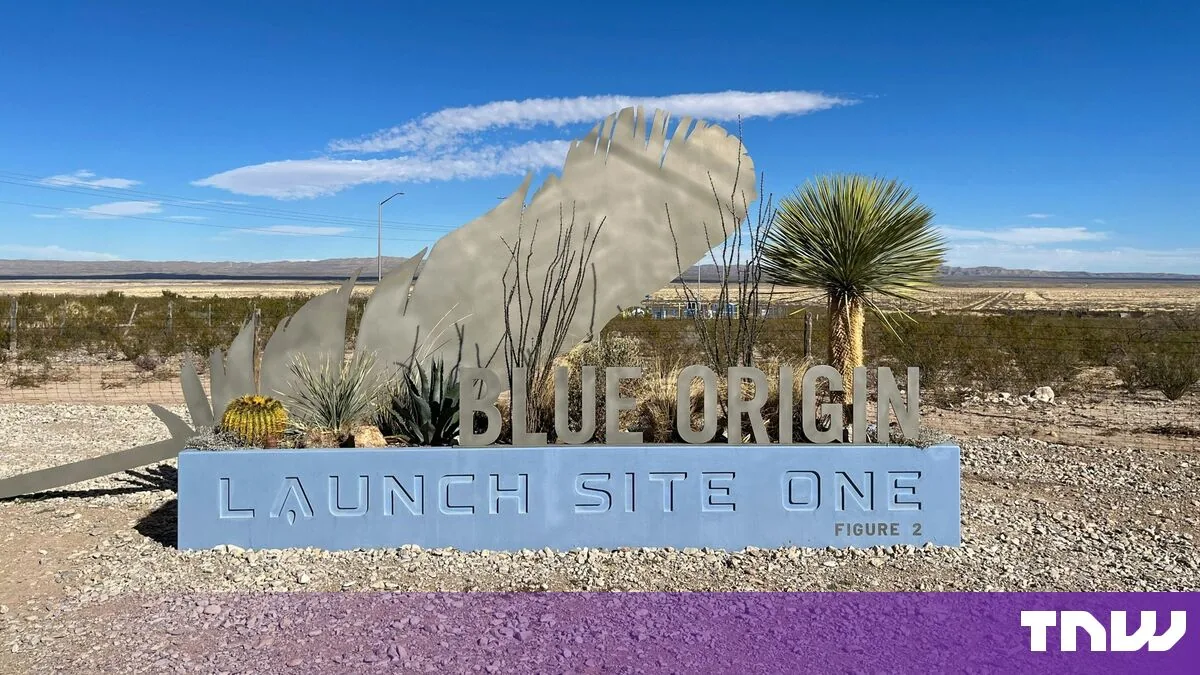
New Glenn is a two-stage heavy launcher that stands 98 metres tall (322 feet), designed to deliver massive payloads into low Earth orbit and deep space. The rocket debuted in 2025 and has logged only three launches since entering service, giving it a brief operating history compared to veteran orbital vehicles. NASA selected the vehicle for deep-space exploration, expanding the Blue Origin NASA launch catalog to include heavy government hardware as the agency prepares for future robotic and crewed initiatives. Because the rocket has flown so few times, each mission remains important for gathering propulsion data that engineers need to validate ground handling and flight software [4].
The New Glenn delay also impacts planning for NASA’s Artemis lunar program. Blue Origin holds agency contracts to develop its Blue Moon lander, a spacecraft designed to transport astronauts to the lunar surface under the Artemis initiative [2]. While NASA aims to land humans on the Moon in 2028, prolonged delays to New Glenn’s flight cadence could tighten the testing timeline required to qualify the lunar lander [4].
Competitive pressure from Elon Musk’s SpaceX reinforces Blue Origin’s drive to resume launches. SpaceX maintains a rapid launch pace with its Falcon rockets, securing a dominant share of private and government payloads while Blue Origin works to return its primary vehicle to flight. To support ongoing capital needs, Blue Origin raised outside investment for the first time in July 2026 at a $130 billion valuation [2]. The company announced fresh funding for its Florida facilities last month, pursuing a goal of achieving multiple launches per week by the end of the decade [3].
- ONLINE NEWS Peters, J. (2026, November 5). Blue Origin’s next launch now won’t happen until 2027. The Verge. [Article Link]
- ONLINE NEWS Stanciuc, A.-M. (2026, November 5). Blue Origin delays New Glenn’s return to flight until January. The Next Web. [Article Link]
- ONLINE NEWS Schepkov, V. (2026, November 5). Blue Origin delays New Glenn launches to January 2027. Yahoo! Finance. [Article Link]
- ONLINE NEWS Bennett, L. (2026, November 5). Blue Origin New Glenn Slips to Jan 2027: 3rd Delay [2026]. Shattered. [Article Link]
- ONLINE NEWS Chen, M. (2026, November 5). Blue Origin New Glenn Delayed to Jan 2027 [Updated 2026]. Tech Insider. [Article Link]
- ONLINE NEWS The Front Page. (2026, November 5). Blue Origin Pushes New Glenn Rocket Launch to January 2027. The Front Page. [Article Link]


